Minutes: hike remains possible, not base case (3.50%–3.75%)
The January 27–28, 2026 FOMC minutes kept the policy rate at 3.50%–3.75% and preserved two‑sided optionality. Officials debated whether persistent inflation might still require an upward adjustment, while emphasizing patience.
Several policymakers appeared wary of cutting too quickly, with discussion that a hike could be warranted if inflation fails to ease, according to Bloomberg. The emphasis remained on incoming data rather than a preset path.
Almost all participants favored holding rates steady at the January meeting, as reported by FXStreet. The stance reflects a desire to assess whether recent disinflation can continue without risking labor‑market stability.
Why it matters: inflation stickiness versus labor‑market risks
Policymakers are balancing sticky price pressures against softening pockets of employment. The risk‑management frame aims to avoid reigniting inflation while guarding against unnecessary labor‑market damage.
In that context, the minutes underscored conditionality: “several participants” indicated that “upward adjustments” could be considered if inflation stays above target, according to the FOMC minutes. The symmetry is intentional, signaling neither a default hike nor a rapid pivot to cuts.
Many officials want to see inflation fall further before supporting additional cuts this year, per the Associated Press. That bias helps anchor expectations and reduces the chance of a premature easing that could unmoor inflation progress.
Immediate impact: policy optionality and cautious market positioning
The minutes preserve flexibility: a hike remains possible, but not the base case. Markets are likely to read the document as a commitment to data dependence and risk control.
Positioning has turned more cautious, with investors awaiting additional inflation and labor‑market prints to validate disinflation momentum. A higher‑for‑longer stance remains plausible if price pressures linger.
At the time of this writing, Bitcoin trades near $66,900, with elevated 30‑day volatility and a neutral 14‑day RSI. Such cross‑asset context often reflects rate‑path uncertainty rather than directional conviction.
Who stands where among FOMC officials and analysts
Officials split: several see hike risk; others favor holding or cuts
Officials remain divided on the next move. Concerns that inflation could remain stubbornly high were highlighted in coverage of the minutes, as reported by Free Malaysia Today. Others are comfortable with an extended hold while evaluating the durability of disinflation before considering cuts.
Analysts similarly split on timing, with a tilt toward later‑2026 easing if inflation cools further, as noted by Fortune. The shared theme is conditionality: policy will adjust as the data clarify the balance of risks.
Named voices: Goolsbee cautious on cuts; Bowman open to easing
Chicago Fed President Austan Goolsbee has urged caution on additional cuts after opposing a prior reduction, reflecting a preference to hold steady until disinflation is clearer, according to Investopedia. His remarks align with the minutes’ emphasis on evidence‑driven moves.
Fed Governor Michelle Bowman has signaled that rates may have room to fall if labor‑market fragilities emerge, as reported by The wall street Journal. Her openness to easing remains contingent on continued inflation progress and employment conditions.
FAQ about FOMC minutes
What did the Jan. 27–28, 2026 FOMC minutes say about inflation and the risk of an upward adjustment?
They kept hikes on the table if inflation proves persistent, while most favored holding steady. The committee emphasized two‑sided risk management and data dependence.
When are rate cuts most likely to begin, according to economists and the minutes?
Economists generally expect cuts later in 2026, contingent on clearer disinflation and stable employment. The minutes did not pre‑commit to a timetable.
| DISCLAIMER: The information on this website is provided as general market commentary and does not constitute investment advice. We encourage you to do your own research before investing. |


Other Posts









- Amplify 2024: Ohio’s Premier Blockchain Summit
- Polymarket Announces U.S. Beta Relaunch Amid Market Buzz
- China, US Conclude Trade Talks with Focus on Cooperation
- Crypto Weekly: NYSE Backs OKX, Kraken Gets Fed Access, BTC Sells
- CELO holds as Celo reviews Opera 160M token claim
- Michael Saylor Denies Bitcoin Sell-Off Amid Large BTC Transfer
- Court Upholds Fed’s Rejection of Custodia Bank’s Request
- EU Opens Antitrust Probe Into Deutsche Boerse and Nasdaq Derivatives Dealings
- Kazakhstan Explores Crypto Reserves Backed by National Funds
- JPMorgan Increases Holdings in BlackRock’s Bitcoin ETF
- Nordea Bank Introduces Bitcoin ETP Trading for Nordic Customers
- XRP Spot ETF Launches on Nasdaq Amid Market Fluctuations
- JPMorgan Chase Launches 24/7 Digital Deposit Token for Clients
- Crypto Leaders Address Macro Volatility Amid Market Shifts
- Former CFO Convicted for $35M Fraudulent Crypto Investment
- Peter Schiff Challenges Michael Saylor on MSTR’s Business Model
- Thailand Orders Worldcoin to Delete 1.2 Million Biometric Records
- UK Proposes New DeFi Tax Framework to Ease User Burden
- U.S. Treasury Proposes New Tax Relief Regulations
- Uniswap’s UNIfication Proposal Gains Massive Preliminary Support
- Amplify 2024: Ohio’s Premier Blockchain Summit
- Polymarket Announces U.S. Beta Relaunch Amid Market Buzz
- China, US Conclude Trade Talks with Focus on Cooperation
- Crypto Weekly: NYSE Backs OKX, Kraken Gets Fed Access, BTC Sells
- CELO holds as Celo reviews Opera 160M token claim
- Michael Saylor Denies Bitcoin Sell-Off Amid Large BTC Transfer
- Court Upholds Fed’s Rejection of Custodia Bank’s Request
- EU Opens Antitrust Probe Into Deutsche Boerse and Nasdaq Derivatives Dealings
- Kazakhstan Explores Crypto Reserves Backed by National Funds
- JPMorgan Increases Holdings in BlackRock’s Bitcoin ETF
- Nordea Bank Introduces Bitcoin ETP Trading for Nordic Customers
- XRP Spot ETF Launches on Nasdaq Amid Market Fluctuations
- JPMorgan Chase Launches 24/7 Digital Deposit Token for Clients
- Crypto Leaders Address Macro Volatility Amid Market Shifts
- Former CFO Convicted for $35M Fraudulent Crypto Investment
- Peter Schiff Challenges Michael Saylor on MSTR’s Business Model
- Thailand Orders Worldcoin to Delete 1.2 Million Biometric Records
- UK Proposes New DeFi Tax Framework to Ease User Burden
- U.S. Treasury Proposes New Tax Relief Regulations
- Uniswap’s UNIfication Proposal Gains Massive Preliminary Support
- Amplify 2024: Ohio’s Premier Blockchain Summit
- Polymarket Announces U.S. Beta Relaunch Amid Market Buzz
- China, US Conclude Trade Talks with Focus on Cooperation
- Crypto Weekly: NYSE Backs OKX, Kraken Gets Fed Access, BTC Sells
- CELO holds as Celo reviews Opera 160M token claim
- Michael Saylor Denies Bitcoin Sell-Off Amid Large BTC Transfer
- Court Upholds Fed’s Rejection of Custodia Bank’s Request
- EU Opens Antitrust Probe Into Deutsche Boerse and Nasdaq Derivatives Dealings
- Kazakhstan Explores Crypto Reserves Backed by National Funds
- JPMorgan Increases Holdings in BlackRock’s Bitcoin ETF
- Nordea Bank Introduces Bitcoin ETP Trading for Nordic Customers
- XRP Spot ETF Launches on Nasdaq Amid Market Fluctuations
- JPMorgan Chase Launches 24/7 Digital Deposit Token for Clients
- Crypto Leaders Address Macro Volatility Amid Market Shifts
- Former CFO Convicted for $35M Fraudulent Crypto Investment
- Peter Schiff Challenges Michael Saylor on MSTR’s Business Model
- Thailand Orders Worldcoin to Delete 1.2 Million Biometric Records
- UK Proposes New DeFi Tax Framework to Ease User Burden
- U.S. Treasury Proposes New Tax Relief Regulations
- Uniswap’s UNIfication Proposal Gains Massive Preliminary Support
Latest

Crypto CEX Is Becoming a Historical Species as DEXs and ETFs Rise

Digital Asset Investment Products See $414M Outflow — First in Five Weeks

USDD TVL Hits $1.93 Billion Record High — What’s Driving the Surge








Press Release
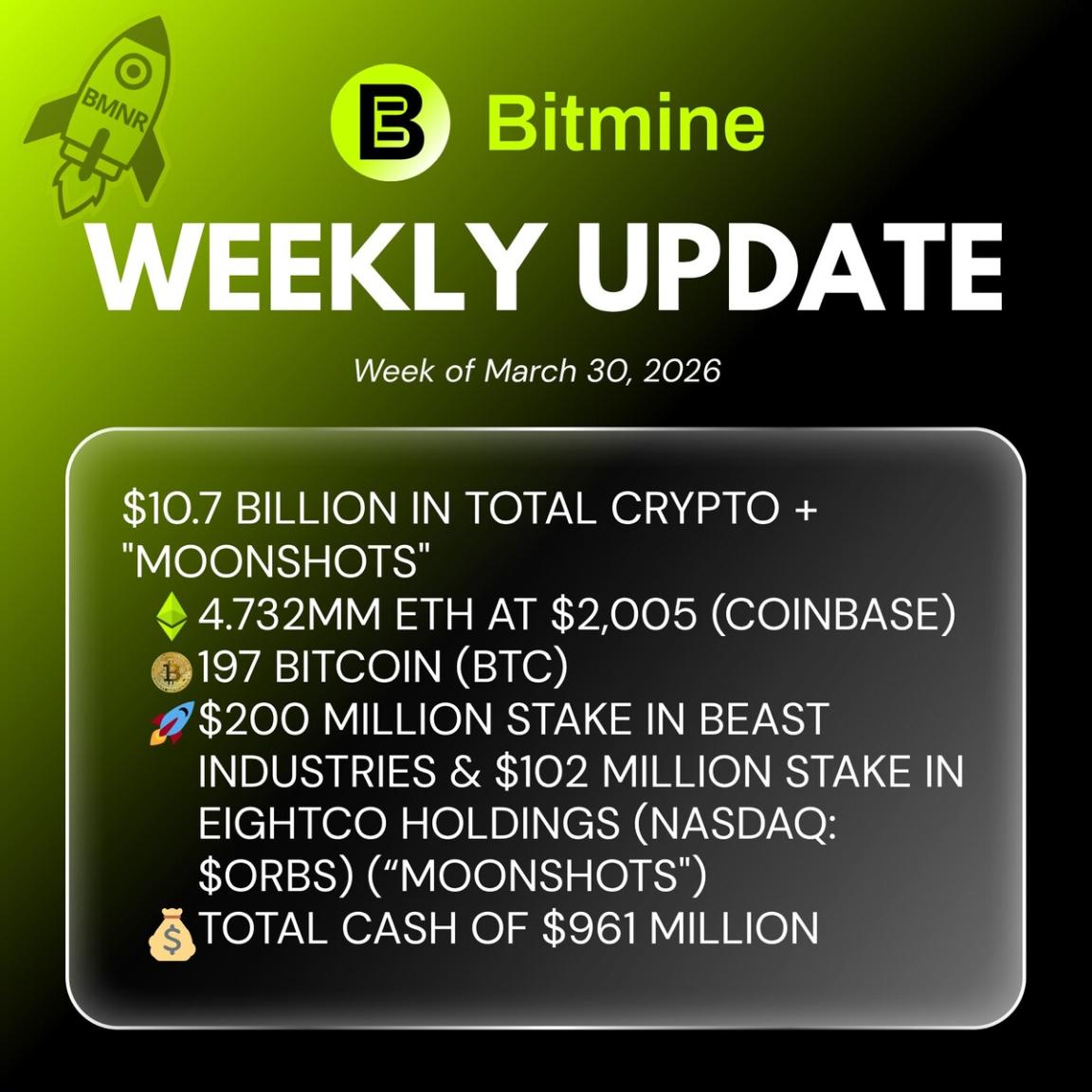
Bitmine Immersion Technologies (BMNR) Announces ETH Holdings Reach 4.732 Million Tokens, and Total Crypto and Total Cash Holdings of $10.7 Billion

TxFlow L1 Mainnet Launch Marks a New Phase for Multi-Application On-Chain Finance