Bitcoin Fear & Greed Index today: extreme fear and what it means
The bitcoin fear & Greed Index fell to 5 amid the latest sell-off, as reported by CoinDesk. A single-digit reading signals extreme fear and a capitulation-like mood among market participants.
Based on data from Alternative.me, the index ranges from 0 (Extreme Fear) to 100 (Extreme Greed) and is designed to condense volatility, momentum, and volume dynamics into a single sentiment gauge. Extremely low scores can coincide with stressed liquidity, sharper intraday swings, and reduced risk tolerance.
Extreme fear can precede tradable rebounds, but it does not guarantee a durable bottom. Historically, single-metric signals are more reliable when cross-checked with flows and key levels.
Why it plunged: liquidations, ETF flows, and sentiment drivers
A wave of forced deleveraging accelerated the drop. as bitcoin slipped under $63,000, long liquidations erased roughly hundreds of millions of dollars, according to CryptoRank, with broader market spillovers intensifying the move.
Sentiment had already weakened after weeks of choppy trading before sellers regained control, as noted by Coinpedia. Narratives around softer spot bitcoin ETF activity have compounded the bearish tone, and investors are watching whether outflows stabilize.
Leverage dynamics matter because thin liquidity can amplify price reactions to order imbalances. In this context, even modest net ETF outflows or muted inflows can reinforce risk-off conditions.
Immediate impact on Bitcoin price, volatility, and risk
At the time of this writing, recent coverage noted Bitcoin trading back above $64,000 while the index sat at extreme fear, as reported by CoinDesk. The figures indicate very high volatility, consistent with wide intraday ranges and elevated gap risk around key levels.
When fear spikes, correlations across crypto assets often rise, and stress can migrate to miners and leveraged holders. In such phases, liquidation cascades can repeat until positioning normalizes and spot demand absorbs sell pressure.
What to watch next: levels, flows, and institutional signals
200-week moving average and $55k–$65k support-resistance zone
The 200-week moving average remains a widely tracked long-term trend gauge. Price behavior relative to this line, alongside the $55,000–$65,000 area, may help define whether current conditions evolve into stabilization or further retests.
In practice, technicians look for whether bounces hold above prior breakdown levels in this range. Sustained acceptance above the midpoint of the zone would suggest fading downside momentum; repeated failures could imply lingering supply.
Institutional context: Bitwise views and Standard Chartered caution
Institutional commentary reflects a split between cautious positioning and selective contrarian interest. Bitwise Asset Management has highlighted deeply bearish sentiment while pointing to more moderate signs of technical strain than in past breakdowns.
“Declining institutional interest and softer ETF trading volumes are warning signs,” said Standard Chartered. Read through this lens, the next few sessions of ETF flow data may carry outsized weight for near-term direction.
FAQ about Bitcoin Fear & Greed Index
Is extreme fear historically a buy signal for Bitcoin, and over what timeframes has it worked best?
Extreme fear has sometimes preceded rebounds over weeks to a few months, but outcomes vary. It’s more informative when aligned with stabilizing flows and key technical levels.
How has Bitcoin performed after the Fear & Greed Index drops below 10, compared with other sentiment or on-chain indicators?
Single-digit readings have preceded tactical bounces, but consistency is mixed. Comparing with ETF flows, liquidation trends, and major moving averages improves context.
| DISCLAIMER: The information on this website is provided as general market commentary and does not constitute investment advice. We encourage you to do your own research before investing. |


Other Posts









- Amplify 2024: Ohio’s Premier Blockchain Summit
- Polymarket Announces U.S. Beta Relaunch Amid Market Buzz
- China, US Conclude Trade Talks with Focus on Cooperation
- Crypto Weekly: NYSE Backs OKX, Kraken Gets Fed Access, BTC Sells
- CELO holds as Celo reviews Opera 160M token claim
- DeriW Launches Edge Hour Trading Competition Platform for Derivatives Traders
- Michael Saylor Denies Bitcoin Sell-Off Amid Large BTC Transfer
- Court Upholds Fed’s Rejection of Custodia Bank’s Request
- EU Opens Antitrust Probe Into Deutsche Boerse and Nasdaq Derivatives Dealings
- Kazakhstan Explores Crypto Reserves Backed by National Funds
- JPMorgan Increases Holdings in BlackRock’s Bitcoin ETF
- Nordea Bank Introduces Bitcoin ETP Trading for Nordic Customers
- XRP Spot ETF Launches on Nasdaq Amid Market Fluctuations
- JPMorgan Chase Launches 24/7 Digital Deposit Token for Clients
- Crypto Leaders Address Macro Volatility Amid Market Shifts
- Former CFO Convicted for $35M Fraudulent Crypto Investment
- Peter Schiff Challenges Michael Saylor on MSTR’s Business Model
- Thailand Orders Worldcoin to Delete 1.2 Million Biometric Records
- UK Proposes New DeFi Tax Framework to Ease User Burden
- U.S. Treasury Proposes New Tax Relief Regulations
- Amplify 2024: Ohio’s Premier Blockchain Summit
- Polymarket Announces U.S. Beta Relaunch Amid Market Buzz
- China, US Conclude Trade Talks with Focus on Cooperation
- Crypto Weekly: NYSE Backs OKX, Kraken Gets Fed Access, BTC Sells
- CELO holds as Celo reviews Opera 160M token claim
- DeriW Launches Edge Hour Trading Competition Platform for Derivatives Traders
- Michael Saylor Denies Bitcoin Sell-Off Amid Large BTC Transfer
- Court Upholds Fed’s Rejection of Custodia Bank’s Request
- EU Opens Antitrust Probe Into Deutsche Boerse and Nasdaq Derivatives Dealings
- Kazakhstan Explores Crypto Reserves Backed by National Funds
- JPMorgan Increases Holdings in BlackRock’s Bitcoin ETF
- Nordea Bank Introduces Bitcoin ETP Trading for Nordic Customers
- XRP Spot ETF Launches on Nasdaq Amid Market Fluctuations
- JPMorgan Chase Launches 24/7 Digital Deposit Token for Clients
- Crypto Leaders Address Macro Volatility Amid Market Shifts
- Former CFO Convicted for $35M Fraudulent Crypto Investment
- Peter Schiff Challenges Michael Saylor on MSTR’s Business Model
- Thailand Orders Worldcoin to Delete 1.2 Million Biometric Records
- UK Proposes New DeFi Tax Framework to Ease User Burden
- U.S. Treasury Proposes New Tax Relief Regulations
- Amplify 2024: Ohio’s Premier Blockchain Summit
- Polymarket Announces U.S. Beta Relaunch Amid Market Buzz
- China, US Conclude Trade Talks with Focus on Cooperation
- Crypto Weekly: NYSE Backs OKX, Kraken Gets Fed Access, BTC Sells
- CELO holds as Celo reviews Opera 160M token claim
- DeriW Launches Edge Hour Trading Competition Platform for Derivatives Traders
- Michael Saylor Denies Bitcoin Sell-Off Amid Large BTC Transfer
- Court Upholds Fed’s Rejection of Custodia Bank’s Request
- EU Opens Antitrust Probe Into Deutsche Boerse and Nasdaq Derivatives Dealings
- Kazakhstan Explores Crypto Reserves Backed by National Funds
- JPMorgan Increases Holdings in BlackRock’s Bitcoin ETF
- Nordea Bank Introduces Bitcoin ETP Trading for Nordic Customers
- XRP Spot ETF Launches on Nasdaq Amid Market Fluctuations
- JPMorgan Chase Launches 24/7 Digital Deposit Token for Clients
- Crypto Leaders Address Macro Volatility Amid Market Shifts
- Former CFO Convicted for $35M Fraudulent Crypto Investment
- Peter Schiff Challenges Michael Saylor on MSTR’s Business Model
- Thailand Orders Worldcoin to Delete 1.2 Million Biometric Records
- UK Proposes New DeFi Tax Framework to Ease User Burden
- U.S. Treasury Proposes New Tax Relief Regulations
Latest

U.S. Bitcoin ETF Sees 3,353 BTC Inflow, Ethereum ETF Adds 29,225 ETH

Pharos Network and OKX Wallet Launch ‘Stake Before the Stake’ Event

Press Release
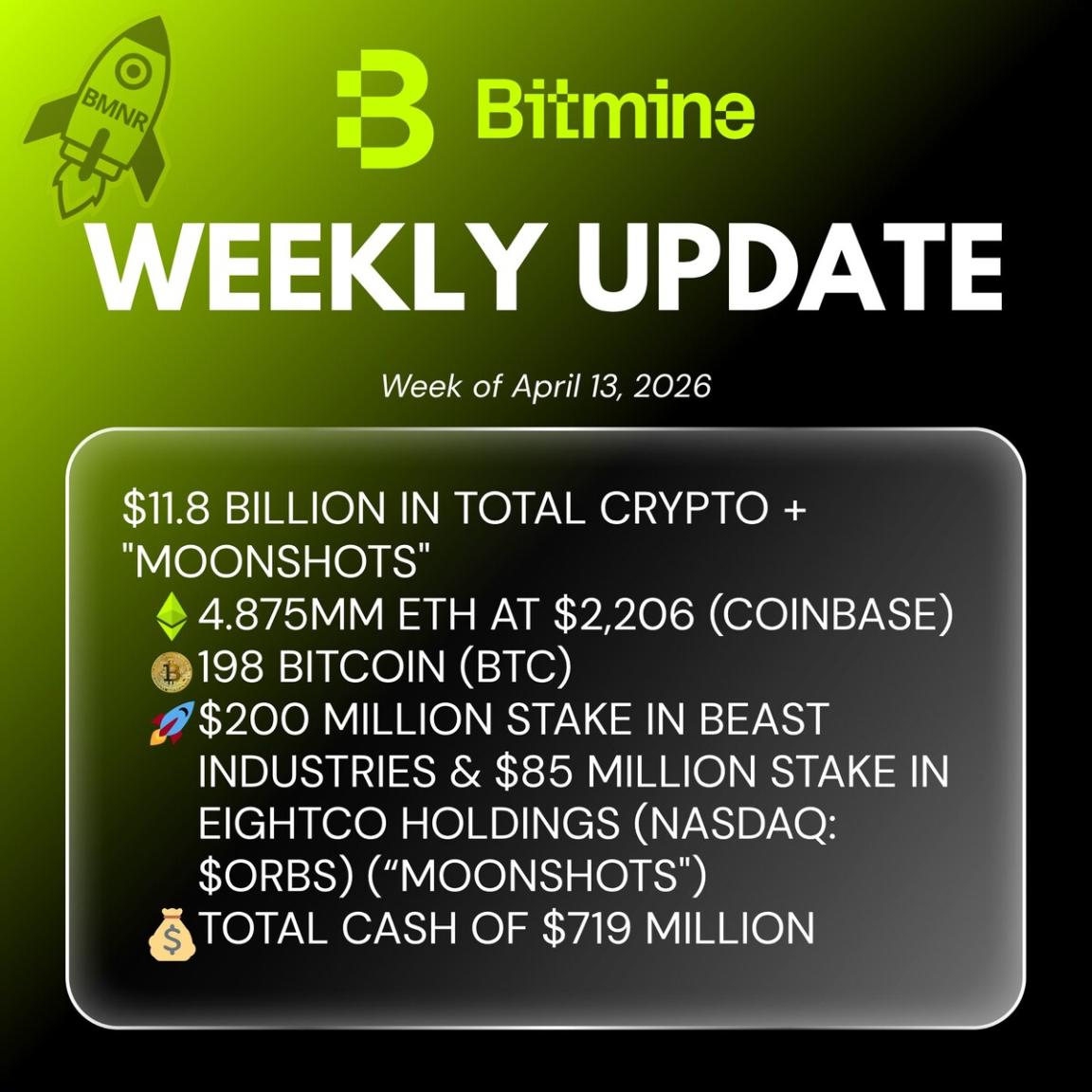
Bitmine Immersion Technologies (BMNR) Announces ETH Holdings Reach 4.875 Million Tokens, and Total Crypto and Total Cash Holdings of $11.8 Billion

Cango’s HPC and AI Inference Subsidiary, EcoHash, Begins Commercial Operations