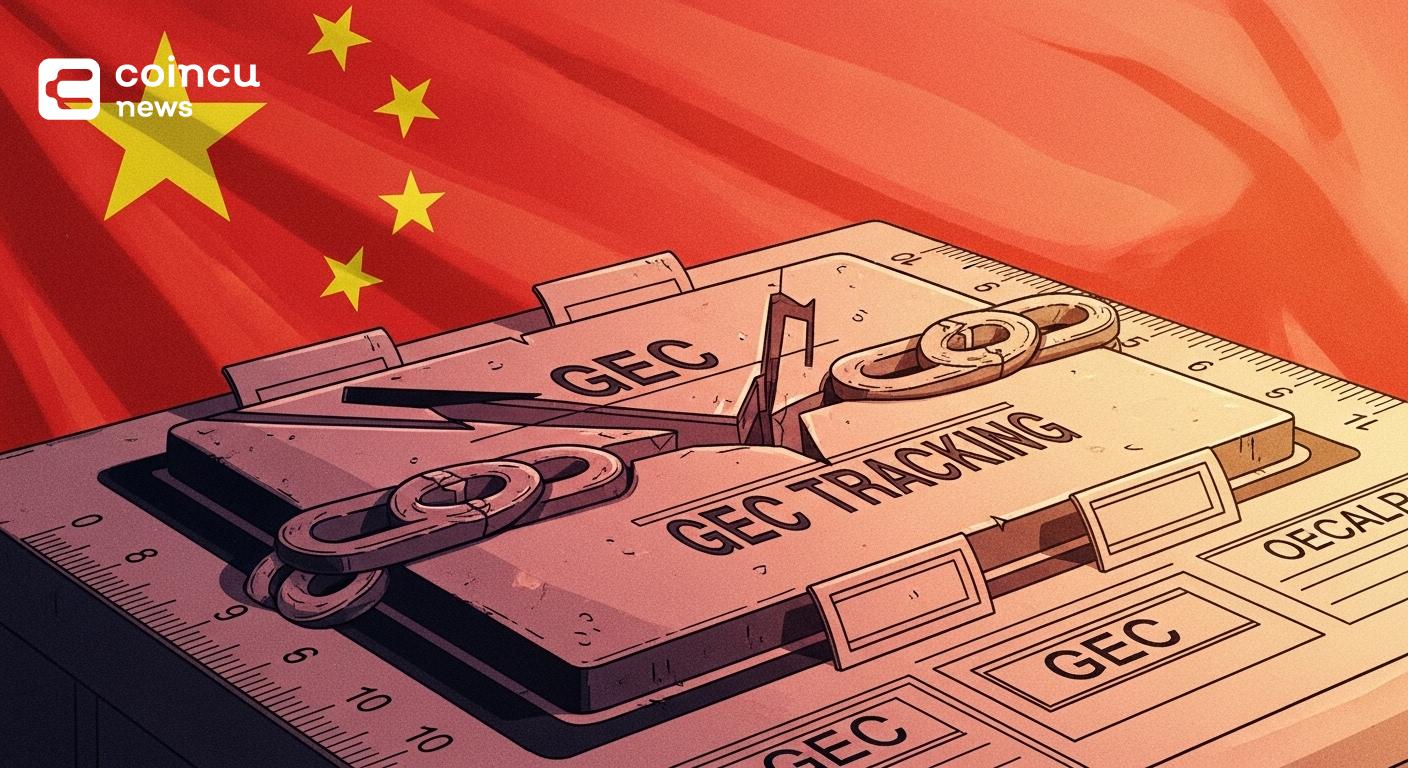
State Council mandates blockchain-based full-chain certification for green power
China’s State Council has mandated the full introduction of technologies such as blockchain to implement end-to-end certification for green power production, transactions, and consumption, according to the State Council. The policy frames traceability and anti–double counting as core requirements across the green power lifecycle.
The move signals a step toward verifiable green attributes that can be consistently recorded, transferred, and retired. It also indicates closer integration between physical metering data and market instruments, including Green Electricity Certificates (GECs).
The policy targets infrastructure and governance, not cryptocurrencies. It concerns data integrity, auditability, and lifecycle controls for renewable generation and its associated environmental attributes.
Why full-chain certification matters for China’s Green Electricity Certificate (GEC) framework
China’s GEC framework has faced credibility gaps, including oversupply, administrative rather than market-led demand, risks of double counting, and low temporal granularity, according to an academic review in Energies (MDPI, Dec. 2025). Higher-fidelity traceability is assessed as foundational to restore trust, enable robust ESG claims, and support carbon accounting.
Institutional technologists emphasize that lifecycle verification can automate issuance and settlement while reducing manual errors. The approach aligns metering, market records, and consumption proofs, allowing certificates to carry time, location, and source attributes.
“Blockchain can help ‘thoroughly record information’ and eliminate risks of errors, making green power certificate processes more automatic, efficient, and reliable,” said Wang Dong, Head of State Grid Blockchain Technology (Beijing).
Immediate impact on GEC issuance, trading, consumption, and reporting
Issuance is poised to tighten through stronger links between metered renewable output and certificate creation. A tamper-evident ledger can bind certificate volumes to measured generation and curtail issuance beyond physically verified output.
Trading could incorporate attributes like time matching and grid location. As reported by CoinEdition, the National Development and Reform Commission emphasizes verification “throughout production, transaction, and consumption,” which supports attribute-rich certificates and downstream compliance use.
On consumption and reporting, enterprises could disclose hourly or sub-hourly matching, strengthening ESG narratives and facilitating granular carbon accounting. Adoption timelines and coverage will likely vary by province, market segment, and data-readiness.
Nationwide rollout faces practical constraints, scalability, cross-provincial data exchange, and physical-to-digital data integrity, according to ECNS. Progress depends on coordinated metering standards, market design, and governance for identity, privacy, and audits.
At the time of this writing, Energy Web Token (EWT) is priced at $0.4684 with volatility at 17.94%, RSI 24.94, and bearish sentiment. These figures provide context on energy–blockchain markets and do not reflect policy outcomes.
How full-chain certification will work across the power lifecycle
From metering to certificate issuance, trading, and retirement
Generation meters produce time-stamped readings that anchor issuance. Certificates are minted against verified output, traded with provenance data, and retired on consumption, creating an auditable chain that prevents reuse or over-claiming.
Higher temporal granularity for credible ESG and carbon accounting
Hourly or finer matching can align consumption with renewable output windows. This reduces residual emissions claims uncertainty and supports audit-ready disclosures aligned to high-integrity carbon accounting principles.
FAQ about blockchain
How will blockchain track green electricity from generation through trading to consumption to prevent double counting?
It anchors meter readings on a tamper-evident ledger, tokenizes verified attributes, and retires certificates at consumption, preventing re-use and enabling auditable, end-to-end provenance.
What problems in China’s current Green Electricity Certificate (GEC) system does full-chain certification aim to fix?
It targets oversupply, administrative demand distortions, double-counting risks, and coarse time-matching, aiming to improve credibility, transparency, and auditability for markets and disclosures.
| DISCLAIMER: The information on this website is provided as general market commentary and does not constitute investment advice. We encourage you to do your own research before investing. |


Other Posts









- Amplify 2024: Ohio’s Premier Blockchain Summit
- Polymarket Announces U.S. Beta Relaunch Amid Market Buzz
- China, US Conclude Trade Talks with Focus on Cooperation
- Crypto Weekly: NYSE Backs OKX, Kraken Gets Fed Access, BTC Sells
- Michael Saylor Denies Bitcoin Sell-Off Amid Large BTC Transfer
- Court Upholds Fed’s Rejection of Custodia Bank’s Request
- EU Opens Antitrust Probe Into Deutsche Boerse and Nasdaq Derivatives Dealings
- Kazakhstan Explores Crypto Reserves Backed by National Funds
- Nordea Bank Introduces Bitcoin ETP Trading for Nordic Customers
- JPMorgan Increases Holdings in BlackRock’s Bitcoin ETF
- XRP Spot ETF Launches on Nasdaq Amid Market Fluctuations
- CELO holds as Celo reviews Opera 160M token claim
- JPMorgan Chase Launches 24/7 Digital Deposit Token for Clients
- Crypto Leaders Address Macro Volatility Amid Market Shifts
- Former CFO Convicted for $35M Fraudulent Crypto Investment
- Peter Schiff Challenges Michael Saylor on MSTR’s Business Model
- Thailand Orders Worldcoin to Delete 1.2 Million Biometric Records
- U.S. Treasury Proposes New Tax Relief Regulations
- UK Proposes New DeFi Tax Framework to Ease User Burden
- Uniswap’s UNIfication Proposal Gains Massive Preliminary Support
- Amplify 2024: Ohio’s Premier Blockchain Summit
- Polymarket Announces U.S. Beta Relaunch Amid Market Buzz
- China, US Conclude Trade Talks with Focus on Cooperation
- Crypto Weekly: NYSE Backs OKX, Kraken Gets Fed Access, BTC Sells
- Michael Saylor Denies Bitcoin Sell-Off Amid Large BTC Transfer
- Court Upholds Fed’s Rejection of Custodia Bank’s Request
- EU Opens Antitrust Probe Into Deutsche Boerse and Nasdaq Derivatives Dealings
- Kazakhstan Explores Crypto Reserves Backed by National Funds
- Nordea Bank Introduces Bitcoin ETP Trading for Nordic Customers
- JPMorgan Increases Holdings in BlackRock’s Bitcoin ETF
- XRP Spot ETF Launches on Nasdaq Amid Market Fluctuations
- CELO holds as Celo reviews Opera 160M token claim
- JPMorgan Chase Launches 24/7 Digital Deposit Token for Clients
- Crypto Leaders Address Macro Volatility Amid Market Shifts
- Former CFO Convicted for $35M Fraudulent Crypto Investment
- Peter Schiff Challenges Michael Saylor on MSTR’s Business Model
- Thailand Orders Worldcoin to Delete 1.2 Million Biometric Records
- U.S. Treasury Proposes New Tax Relief Regulations
- UK Proposes New DeFi Tax Framework to Ease User Burden
- Uniswap’s UNIfication Proposal Gains Massive Preliminary Support
- Amplify 2024: Ohio’s Premier Blockchain Summit
- Polymarket Announces U.S. Beta Relaunch Amid Market Buzz
- China, US Conclude Trade Talks with Focus on Cooperation
- Crypto Weekly: NYSE Backs OKX, Kraken Gets Fed Access, BTC Sells
- Michael Saylor Denies Bitcoin Sell-Off Amid Large BTC Transfer
- Court Upholds Fed’s Rejection of Custodia Bank’s Request
- EU Opens Antitrust Probe Into Deutsche Boerse and Nasdaq Derivatives Dealings
- Kazakhstan Explores Crypto Reserves Backed by National Funds
- Nordea Bank Introduces Bitcoin ETP Trading for Nordic Customers
- JPMorgan Increases Holdings in BlackRock’s Bitcoin ETF
- XRP Spot ETF Launches on Nasdaq Amid Market Fluctuations
- CELO holds as Celo reviews Opera 160M token claim
- JPMorgan Chase Launches 24/7 Digital Deposit Token for Clients
- Crypto Leaders Address Macro Volatility Amid Market Shifts
- Former CFO Convicted for $35M Fraudulent Crypto Investment
- Peter Schiff Challenges Michael Saylor on MSTR’s Business Model
- Thailand Orders Worldcoin to Delete 1.2 Million Biometric Records
- U.S. Treasury Proposes New Tax Relief Regulations
- UK Proposes New DeFi Tax Framework to Ease User Burden
- Uniswap’s UNIfication Proposal Gains Massive Preliminary Support
Latest

Bitcoin Drops to Lowest Level Since March 2 as $300M in Longs Liquidated


Coinbase (COIN) Stock Falls Over 3% as Crypto Equities Drop at U.S. Market Open








Press Release
Novava Launches a Game-Changing Futures-First Crypto Exchange for Serious Traders
SoCrazy Positions Itself as Solana’s Dedicated GambleFi Infrastructure Layer