- Interest-bearing digital renminbi will begin on January 1, 2026.
- Chinese banks will treat digital renminbi similarly to traditional savings accounts.
- Industry leaders endorse the policy for its strategic significance.
Lu Lei, Deputy Governor of the People’s Bank of China, announced interest will be paid on digital renminbi wallet balances under new management system effective January 1, 2026.
This initiative enhances asset-liability management, encourages banks’ involvement, and positions digital renminbi as a deposit-like instrument, potentially boosting adoption.
Key Developments, Impact, and Reactions
Chinese banks will offer interest on digital renminbi similar to traditional savings accounts. This aligns with enhancing digital currency’s role, encouraging widespread use. Banks gain flexibility in managing these balances, assured by deposit insurance, while non-bank institutions see parity in regulatory treatment.
Responses have been positive among industry leaders, recognizing the strategic significance of this policy. Wu Wei, Shanghai’s Executive Vice Mayor, praised the initiative at the e-CNY International Operation Center, foreseeing a strengthened financial center role. With no impact reports on major cryptocurrencies or tokens, broader market effects remain speculative.
“The upgrading and evolving of the monetary and payment systems in the digital era is a historical inevitability. The PBOC is committed to providing open, inclusive, and innovative solutions to improve the global cross-border payment system.” — Lu Lei, Deputy Governor, People’s Bank of China
Digital Renminbi’s Potential for Global Financial Integration
Did you know? The People’s Bank of China’s recent policy parallels historical shifts in the digital currency landscape, potentially driving the e-CNY towards internationalized financial integration.
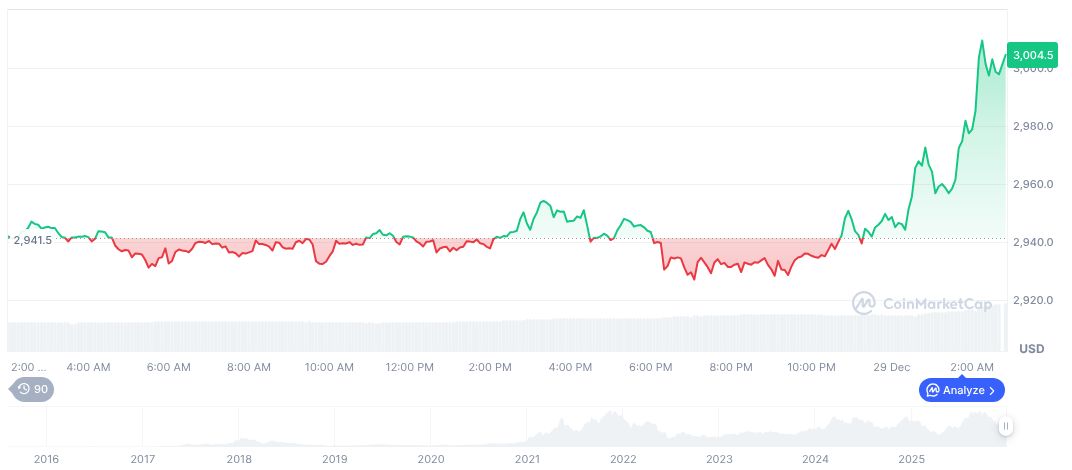
Ethereum (ETH) trades at $3,015.79 as of December 29, 2025, with a market cap of $363.99 billion, marking a 2.62% increase over 24 hours, according to CoinMarketCap. Despite recent declines, the 60-day period saw a notable -23.36%. Crypto valuation may fluctuate, but tangible gains echo the digital industry’s resilience.
Insights from Coincu research indicate China’s strategy could underscore a transformative phase for digital currencies. Such measures grant renewed validity to state-backed digital innovations. Implications for both regulated and decentralized financial ecosystems could be substantial, bolstered by historical trends and shifting regulatory landscapes.
| DISCLAIMER: The information on this website is provided as general market commentary and does not constitute investment advice. We encourage you to do your own research before investing. |

No tags available.


Other Posts









- Amplify 2024: Ohio’s Premier Blockchain Summit
- Polymarket Announces U.S. Beta Relaunch Amid Market Buzz
- China, US Conclude Trade Talks with Focus on Cooperation
- Crypto Weekly: NYSE Backs OKX, Kraken Gets Fed Access, BTC Sells
- CELO holds as Celo reviews Opera 160M token claim
- DeriW Launches Edge Hour Trading Competition Platform for Derivatives Traders
- Michael Saylor Denies Bitcoin Sell-Off Amid Large BTC Transfer
- Court Upholds Fed’s Rejection of Custodia Bank’s Request
- EU Opens Antitrust Probe Into Deutsche Boerse and Nasdaq Derivatives Dealings
- Kazakhstan Explores Crypto Reserves Backed by National Funds
- JPMorgan Increases Holdings in BlackRock’s Bitcoin ETF
- Nordea Bank Introduces Bitcoin ETP Trading for Nordic Customers
- XRP Spot ETF Launches on Nasdaq Amid Market Fluctuations
- JPMorgan Chase Launches 24/7 Digital Deposit Token for Clients
- Crypto Leaders Address Macro Volatility Amid Market Shifts
- Former CFO Convicted for $35M Fraudulent Crypto Investment
- Peter Schiff Challenges Michael Saylor on MSTR’s Business Model
- Thailand Orders Worldcoin to Delete 1.2 Million Biometric Records
- UK Proposes New DeFi Tax Framework to Ease User Burden
- U.S. Treasury Proposes New Tax Relief Regulations
- Amplify 2024: Ohio’s Premier Blockchain Summit
- Polymarket Announces U.S. Beta Relaunch Amid Market Buzz
- China, US Conclude Trade Talks with Focus on Cooperation
- Crypto Weekly: NYSE Backs OKX, Kraken Gets Fed Access, BTC Sells
- CELO holds as Celo reviews Opera 160M token claim
- DeriW Launches Edge Hour Trading Competition Platform for Derivatives Traders
- Michael Saylor Denies Bitcoin Sell-Off Amid Large BTC Transfer
- Court Upholds Fed’s Rejection of Custodia Bank’s Request
- EU Opens Antitrust Probe Into Deutsche Boerse and Nasdaq Derivatives Dealings
- Kazakhstan Explores Crypto Reserves Backed by National Funds
- JPMorgan Increases Holdings in BlackRock’s Bitcoin ETF
- Nordea Bank Introduces Bitcoin ETP Trading for Nordic Customers
- XRP Spot ETF Launches on Nasdaq Amid Market Fluctuations
- JPMorgan Chase Launches 24/7 Digital Deposit Token for Clients
- Crypto Leaders Address Macro Volatility Amid Market Shifts
- Former CFO Convicted for $35M Fraudulent Crypto Investment
- Peter Schiff Challenges Michael Saylor on MSTR’s Business Model
- Thailand Orders Worldcoin to Delete 1.2 Million Biometric Records
- UK Proposes New DeFi Tax Framework to Ease User Burden
- U.S. Treasury Proposes New Tax Relief Regulations
- Amplify 2024: Ohio’s Premier Blockchain Summit
- Polymarket Announces U.S. Beta Relaunch Amid Market Buzz
- China, US Conclude Trade Talks with Focus on Cooperation
- Crypto Weekly: NYSE Backs OKX, Kraken Gets Fed Access, BTC Sells
- CELO holds as Celo reviews Opera 160M token claim
- DeriW Launches Edge Hour Trading Competition Platform for Derivatives Traders
- Michael Saylor Denies Bitcoin Sell-Off Amid Large BTC Transfer
- Court Upholds Fed’s Rejection of Custodia Bank’s Request
- EU Opens Antitrust Probe Into Deutsche Boerse and Nasdaq Derivatives Dealings
- Kazakhstan Explores Crypto Reserves Backed by National Funds
- JPMorgan Increases Holdings in BlackRock’s Bitcoin ETF
- Nordea Bank Introduces Bitcoin ETP Trading for Nordic Customers
- XRP Spot ETF Launches on Nasdaq Amid Market Fluctuations
- JPMorgan Chase Launches 24/7 Digital Deposit Token for Clients
- Crypto Leaders Address Macro Volatility Amid Market Shifts
- Former CFO Convicted for $35M Fraudulent Crypto Investment
- Peter Schiff Challenges Michael Saylor on MSTR’s Business Model
- Thailand Orders Worldcoin to Delete 1.2 Million Biometric Records
- UK Proposes New DeFi Tax Framework to Ease User Burden
- U.S. Treasury Proposes New Tax Relief Regulations
Latest


Polkadot Bridge Vulnerability Exploited as 1 Billion DOT Is Minted on Ethereum and Sold Off

Chen Maobo Says Stablecoin Licensing Will Take ‘Small Steps, Quick Steps’
Press Release

Polkadot’s $145M Legacy vs. DOGEBALL’s Future: These are the Best Cryptos to Buy Now

Enhanced Secures $1M in Strategic Pre-Seed Funding to Bring Structured Yield to More Assets Onchain