








- Zhao Zhongxiu proposes FTZ pilot for stablecoin regulation in China.
- Focused on establishing fintech infrastructure and risk management.
- PBOC maintains crypto ban amidst global regulatory efforts.
On December 21, an article by Zhao Zhongxiu of the University of International Business and Economics suggested pilot stablecoin regulations in Free Trade Zones like Qianhai and Hainan.
Such pilots aim to enhance China’s financial technology landscape, testing stablecoin regulation in targeted regions without affecting mainland market stability.
China Proposes Stablecoin Trials in Key Free Trade Zones
Zhao Zhongxiu’s proposal for FTZ pilot programs reflects a strategic shift towards aligning with global stablecoin trends. Free Trade Zones such as Qianhai and Hainan figure prominently in the plan, aiming to establish a “Cross-Border FinTech Lab” and an offshore RMB stablecoin innovation pilot.
Immediate implications include laying the groundwork for digital trade enhancement and creating a stablecoin “whitelist”. These efforts emphasize strengthening blockchain infrastructure while implementing rigorous risk control measures, including transparent reserve audits.
“Our aim is to explore innovative frameworks such as a Cross-Border FinTech Lab and a stablecoin whitelist to enhance the stability of digital currencies in designated zones.” — Zhao Zhongxiu
Market reactions indicate cautious optimism. Although no direct statements from major crypto figures have been observed, the proposal aligns with existing stablecoin frameworks, encouraging dialogue on digital finance’s future in China. The People’s Bank of China remains firm on existing crypto trading bans.
Hong Kong’s Influence and Market Data Insights
Did you know? The Hong Kong Stablecoin Ordinance, effective August 2025, mandates banking-level standards for issuance, influencing China’s regulatory approach in Free Trade Zones.
Ethereum (ETH) is currently priced at $2,975.87 with a market cap of $359.17 billion and dominance of 12.04%. Its 24-hour trading volume, reported by CoinMarketCap, stands at $7.69 billion, reflecting a -66.39% change. ETH’s 30-day price change shows a 6.06% increase, contrasting with a 30.82% drop over the last 90 days.
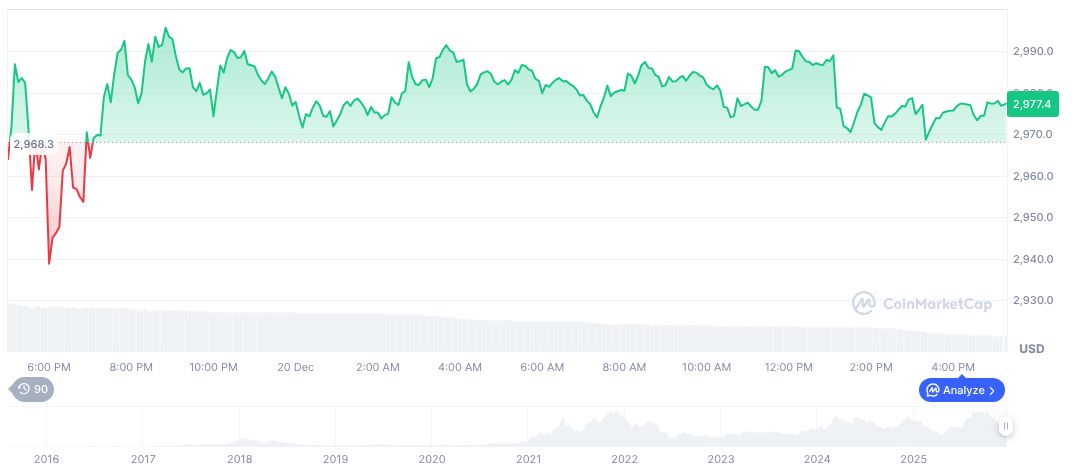
The Coincu research team suggests these stablecoin initiatives could bolster China’s financial infrastructure, encouraging fintech innovation while maintaining compliance. Such regulatory frameworks might attract digital finance activities, with potential benefits in digital trade and financial technology advancements.
| DISCLAIMER: The information on this website is provided as general market commentary and does not constitute investment advice. We encourage you to do your own research before investing. |

No tags available.


Other Posts









- Amplify 2024: Ohio’s Premier Blockchain Summit
- Polymarket Announces U.S. Beta Relaunch Amid Market Buzz
- China, US Conclude Trade Talks with Focus on Cooperation
- Crypto Weekly: NYSE Backs OKX, Kraken Gets Fed Access, BTC Sells
- CELO holds as Celo reviews Opera 160M token claim
- DeriW Launches Edge Hour Trading Competition Platform for Derivatives Traders
- Michael Saylor Denies Bitcoin Sell-Off Amid Large BTC Transfer
- Court Upholds Fed’s Rejection of Custodia Bank’s Request
- EU Opens Antitrust Probe Into Deutsche Boerse and Nasdaq Derivatives Dealings
- Kazakhstan Explores Crypto Reserves Backed by National Funds
- JPMorgan Increases Holdings in BlackRock’s Bitcoin ETF
- Nordea Bank Introduces Bitcoin ETP Trading for Nordic Customers
- XRP Spot ETF Launches on Nasdaq Amid Market Fluctuations
- JPMorgan Chase Launches 24/7 Digital Deposit Token for Clients
- Crypto Leaders Address Macro Volatility Amid Market Shifts
- Former CFO Convicted for $35M Fraudulent Crypto Investment
- Peter Schiff Challenges Michael Saylor on MSTR’s Business Model
- Thailand Orders Worldcoin to Delete 1.2 Million Biometric Records
- UK Proposes New DeFi Tax Framework to Ease User Burden
- U.S. Treasury Proposes New Tax Relief Regulations
- Amplify 2024: Ohio’s Premier Blockchain Summit
- Polymarket Announces U.S. Beta Relaunch Amid Market Buzz
- China, US Conclude Trade Talks with Focus on Cooperation
- Crypto Weekly: NYSE Backs OKX, Kraken Gets Fed Access, BTC Sells
- CELO holds as Celo reviews Opera 160M token claim
- DeriW Launches Edge Hour Trading Competition Platform for Derivatives Traders
- Michael Saylor Denies Bitcoin Sell-Off Amid Large BTC Transfer
- Court Upholds Fed’s Rejection of Custodia Bank’s Request
- EU Opens Antitrust Probe Into Deutsche Boerse and Nasdaq Derivatives Dealings
- Kazakhstan Explores Crypto Reserves Backed by National Funds
- JPMorgan Increases Holdings in BlackRock’s Bitcoin ETF
- Nordea Bank Introduces Bitcoin ETP Trading for Nordic Customers
- XRP Spot ETF Launches on Nasdaq Amid Market Fluctuations
- JPMorgan Chase Launches 24/7 Digital Deposit Token for Clients
- Crypto Leaders Address Macro Volatility Amid Market Shifts
- Former CFO Convicted for $35M Fraudulent Crypto Investment
- Peter Schiff Challenges Michael Saylor on MSTR’s Business Model
- Thailand Orders Worldcoin to Delete 1.2 Million Biometric Records
- UK Proposes New DeFi Tax Framework to Ease User Burden
- U.S. Treasury Proposes New Tax Relief Regulations
- Amplify 2024: Ohio’s Premier Blockchain Summit
- Polymarket Announces U.S. Beta Relaunch Amid Market Buzz
- China, US Conclude Trade Talks with Focus on Cooperation
- Crypto Weekly: NYSE Backs OKX, Kraken Gets Fed Access, BTC Sells
- CELO holds as Celo reviews Opera 160M token claim
- DeriW Launches Edge Hour Trading Competition Platform for Derivatives Traders
- Michael Saylor Denies Bitcoin Sell-Off Amid Large BTC Transfer
- Court Upholds Fed’s Rejection of Custodia Bank’s Request
- EU Opens Antitrust Probe Into Deutsche Boerse and Nasdaq Derivatives Dealings
- Kazakhstan Explores Crypto Reserves Backed by National Funds
- JPMorgan Increases Holdings in BlackRock’s Bitcoin ETF
- Nordea Bank Introduces Bitcoin ETP Trading for Nordic Customers
- XRP Spot ETF Launches on Nasdaq Amid Market Fluctuations
- JPMorgan Chase Launches 24/7 Digital Deposit Token for Clients
- Crypto Leaders Address Macro Volatility Amid Market Shifts
- Former CFO Convicted for $35M Fraudulent Crypto Investment
- Peter Schiff Challenges Michael Saylor on MSTR’s Business Model
- Thailand Orders Worldcoin to Delete 1.2 Million Biometric Records
- UK Proposes New DeFi Tax Framework to Ease User Burden
- U.S. Treasury Proposes New Tax Relief Regulations
Latest

BTC Below $67,901 Could Trigger $2.148B CEX Long Liquidations: Data

Nasdaq Seeks Extension for BlackRock IBIT and ETHA ETF Transition

U.S. Treasury to Propose AML and Sanctions Rules for Stablecoin Issuers
Press Release

Wirex and Utorg Bring Seamless Crypto-to-Card Spending to 2M+ Users Worldwide

BC.GAME Launches BC Engine: Instant $BC, Auto-Staked and Paid Hourly in BCD
