
Official status: No confirmed resignation; Lagarde says she’ll finish term
Rumors that Christine Lagarde could step down early from the European Central Bank have circulated, but there is no confirmed resignation. As reported by The Guardian, she has publicly rejected an early exit and said she intends to finish her term through October 2027.
European leaders have weighed whether to accelerate discussions on a potential successor amid political uncertainty, according to Equiti. Separately, Anadolu Ajansı reported she had evaluated an earlier departure ahead of France’s 2027 presidential election.
Why the rumors matter for ECB succession and policy continuity
Analysts at UBS and Nomura have assessed that any near‑term monetary policy shift would likely be limited, given the ECB’s consensus‑driven framework. However, they noted that the optics of leadership timing could affect perceptions of institutional independence.
Addressing the speculation, Lagarde has emphasized continuity in prior remarks. “I have always been driven by my mandate, and I’m determined to complete my term. Period,” said Christine Lagarde, President of the European Central Bank.
The Financial Times has reported discussions that an exit before April 2027 could allow leaders such as Emmanuel Macron and Friedrich Merz to shape the succession. That framing underscores why timing, rather than immediate policy, remains the focal point for markets and policymakers.
Immediate implications for the digital euro timeline and governance
The European Commission said in October 2023 that it welcomed the ECB’s move from investigation to preparation for a digital euro, including work on design, user experience, and legal and technical options. That phase sets the procedural groundwork but does not constitute a decision to issue.
Lawmakers have raised questions about infrastructure resilience and privacy safeguards, according to CoinDesk. Separately, Bursa.ro reported that banks warn a retail central bank digital currency could pressure profitability, favoring private‑sector payment solutions instead.
Euronews has linked leadership timing to momentum on the digital euro, noting concern that a handover before key legislative milestones could slow direction or alter priorities. The risk is about pace and design choices rather than the project’s legal feasibility.
Editorial debates reflect the project’s breadth and trade‑offs. “A Swiss Army knife, but lacks precision for any specific problem,” said Fernando Navarrete, a parliamentary rapporteur, as cited by Cyprus Mail in the context of reform delays.
At the time of this writing, XRP is quoted at 1.47 with 13.46% implied volatility and an RSI of 43.54, indicating a choppy, neutral‑leaning backdrop. These are descriptive metrics and not forward guidance.
ECB succession scenarios, contenders, and political timing
Leading candidates named in coverage: Knot, Hernández de Cos, Schnabel, Nagel
Coverage has repeatedly named Klaas Knot, Pablo Hernández de Cos, Isabel Schnabel, and Joachim Nagel among leading possibilities, as reported by MarketWatch. Each would signal different emphases on communication style, hawk‑dove balance, and operating‑framework nuance, though broad continuity is expected.
How political calendars could shape timing and perceived independence
Mundoamerica described how fears of a 2027 French election outcome favorable to eurosceptic forces have accelerated leadership discussions. Advancing a decision could be read as safeguarding perceived independence, even if policy settings remain consensus‑driven.
FAQ about Christine Lagarde resignation
Who are the leading candidates to succeed Lagarde at the ECB and how would the selection process work?
Reported contenders include Klaas Knot, Pablo Hernández de Cos, Isabel Schnabel, and Joachim Nagel. Coverage has highlighted early timing debates among EU leaders amid political uncertainty.
How could an early exit by Lagarde impact the digital euro timeline and governance?
It could slow or shift momentum and design priorities. Lawmakers have stressed privacy, infrastructure resilience, and banking‑sector effects as open issues during the preparation phase.
| DISCLAIMER: The information on this website is provided as general market commentary and does not constitute investment advice. We encourage you to do your own research before investing. |


Other Posts









- Amplify 2024: Ohio’s Premier Blockchain Summit
- Polymarket Announces U.S. Beta Relaunch Amid Market Buzz
- China, US Conclude Trade Talks with Focus on Cooperation
- Crypto Weekly: NYSE Backs OKX, Kraken Gets Fed Access, BTC Sells
- CELO holds as Celo reviews Opera 160M token claim
- Michael Saylor Denies Bitcoin Sell-Off Amid Large BTC Transfer
- Court Upholds Fed’s Rejection of Custodia Bank’s Request
- EU Opens Antitrust Probe Into Deutsche Boerse and Nasdaq Derivatives Dealings
- Kazakhstan Explores Crypto Reserves Backed by National Funds
- JPMorgan Increases Holdings in BlackRock’s Bitcoin ETF
- Nordea Bank Introduces Bitcoin ETP Trading for Nordic Customers
- XRP Spot ETF Launches on Nasdaq Amid Market Fluctuations
- JPMorgan Chase Launches 24/7 Digital Deposit Token for Clients
- Crypto Leaders Address Macro Volatility Amid Market Shifts
- Former CFO Convicted for $35M Fraudulent Crypto Investment
- Peter Schiff Challenges Michael Saylor on MSTR’s Business Model
- Thailand Orders Worldcoin to Delete 1.2 Million Biometric Records
- UK Proposes New DeFi Tax Framework to Ease User Burden
- U.S. Treasury Proposes New Tax Relief Regulations
- Uniswap’s UNIfication Proposal Gains Massive Preliminary Support
- Amplify 2024: Ohio’s Premier Blockchain Summit
- Polymarket Announces U.S. Beta Relaunch Amid Market Buzz
- China, US Conclude Trade Talks with Focus on Cooperation
- Crypto Weekly: NYSE Backs OKX, Kraken Gets Fed Access, BTC Sells
- CELO holds as Celo reviews Opera 160M token claim
- Michael Saylor Denies Bitcoin Sell-Off Amid Large BTC Transfer
- Court Upholds Fed’s Rejection of Custodia Bank’s Request
- EU Opens Antitrust Probe Into Deutsche Boerse and Nasdaq Derivatives Dealings
- Kazakhstan Explores Crypto Reserves Backed by National Funds
- JPMorgan Increases Holdings in BlackRock’s Bitcoin ETF
- Nordea Bank Introduces Bitcoin ETP Trading for Nordic Customers
- XRP Spot ETF Launches on Nasdaq Amid Market Fluctuations
- JPMorgan Chase Launches 24/7 Digital Deposit Token for Clients
- Crypto Leaders Address Macro Volatility Amid Market Shifts
- Former CFO Convicted for $35M Fraudulent Crypto Investment
- Peter Schiff Challenges Michael Saylor on MSTR’s Business Model
- Thailand Orders Worldcoin to Delete 1.2 Million Biometric Records
- UK Proposes New DeFi Tax Framework to Ease User Burden
- U.S. Treasury Proposes New Tax Relief Regulations
- Uniswap’s UNIfication Proposal Gains Massive Preliminary Support
- Amplify 2024: Ohio’s Premier Blockchain Summit
- Polymarket Announces U.S. Beta Relaunch Amid Market Buzz
- China, US Conclude Trade Talks with Focus on Cooperation
- Crypto Weekly: NYSE Backs OKX, Kraken Gets Fed Access, BTC Sells
- CELO holds as Celo reviews Opera 160M token claim
- Michael Saylor Denies Bitcoin Sell-Off Amid Large BTC Transfer
- Court Upholds Fed’s Rejection of Custodia Bank’s Request
- EU Opens Antitrust Probe Into Deutsche Boerse and Nasdaq Derivatives Dealings
- Kazakhstan Explores Crypto Reserves Backed by National Funds
- JPMorgan Increases Holdings in BlackRock’s Bitcoin ETF
- Nordea Bank Introduces Bitcoin ETP Trading for Nordic Customers
- XRP Spot ETF Launches on Nasdaq Amid Market Fluctuations
- JPMorgan Chase Launches 24/7 Digital Deposit Token for Clients
- Crypto Leaders Address Macro Volatility Amid Market Shifts
- Former CFO Convicted for $35M Fraudulent Crypto Investment
- Peter Schiff Challenges Michael Saylor on MSTR’s Business Model
- Thailand Orders Worldcoin to Delete 1.2 Million Biometric Records
- UK Proposes New DeFi Tax Framework to Ease User Burden
- U.S. Treasury Proposes New Tax Relief Regulations
- Uniswap’s UNIfication Proposal Gains Massive Preliminary Support
Latest

Crypto Stocks Edge Higher Premarket as Coinbase (COIN) Rises 0.78%

Crypto CEX Is Becoming a Historical Species as DEXs and ETFs Rise

Digital Asset Investment Products See $414M Outflow — First in Five Weeks








Press Release
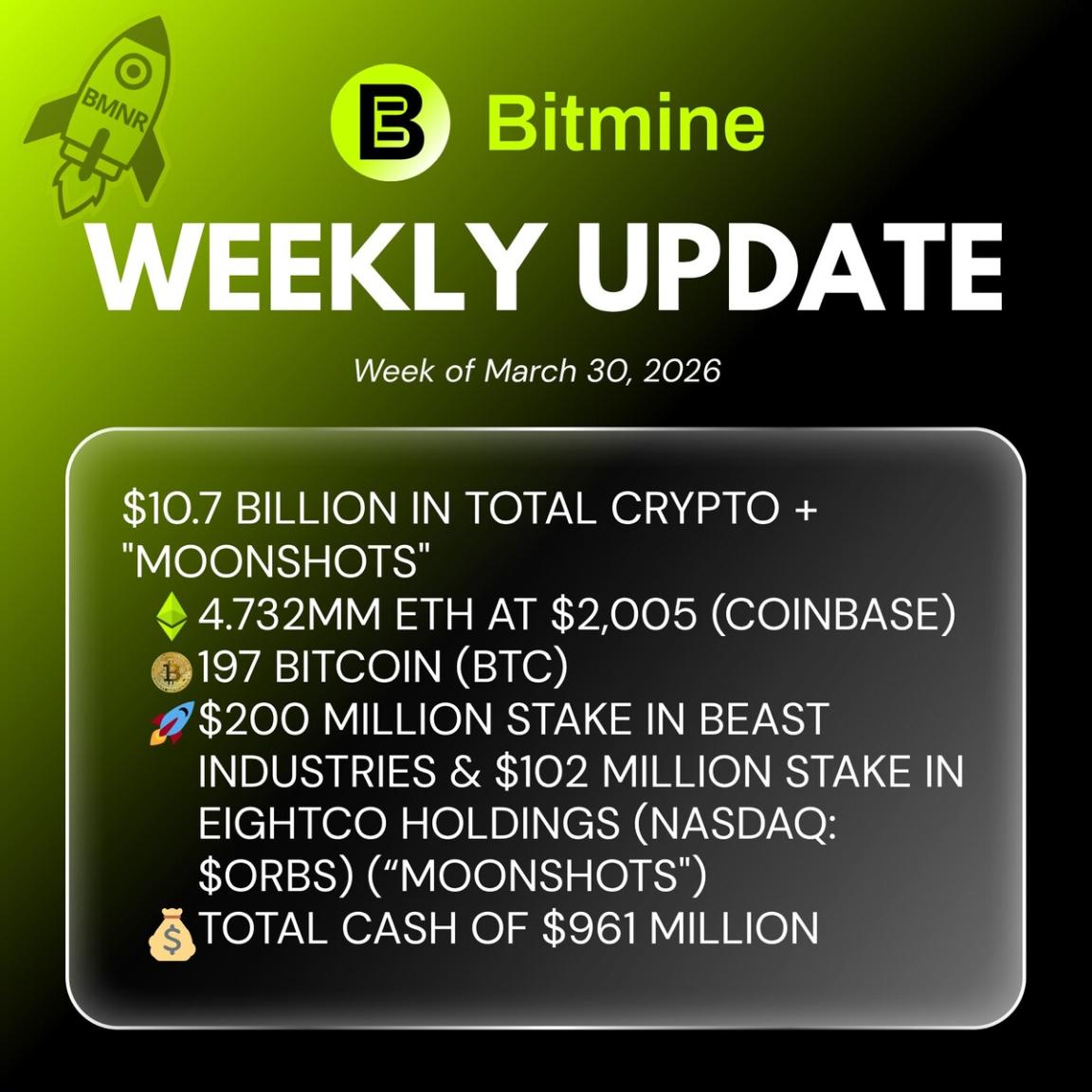
Bitmine Immersion Technologies (BMNR) Announces ETH Holdings Reach 4.732 Million Tokens, and Total Crypto and Total Cash Holdings of $10.7 Billion

TxFlow L1 Mainnet Launch Marks a New Phase for Multi-Application On-Chain Finance