January 2026 U.S. PPI 0.5% m/m, hotter than expected
the u.S. Producer Price Index (PPI) for final demand rose 0.5% month over month in January and 2.9% year over year, based on data from the Bureau of Labor Statistics. The upside surprise points to firmer wholesale pricing pressures at the start of 2026.
The January gain also marked an acceleration from December’s revised 0.4% monthly increase, as reported by Barron’s. Together, the figures suggest disinflation progress may be uneven across the supply pipeline.
Why this matters for inflation, core PPI, and services
Services categories and wholesale trade margins were key drivers of the January increase, according to coverage by Chosun Biz. That composition matters because services inflation tends to be stickier and more tied to labor and margin dynamics than goods.
Core producer pressures warrant close monitoring since they exclude volatile components and better reflect underlying trend. Persistent firmness in services can slow overall inflation improvement even if goods prices are stable.
Stronger wholesale prices can pass through to consumers with lags and partial offsets. The breadth of gains across services and margins often increases the risk of persistence.
Immediate market impact and what it implies for Fed cuts
An upside PPI surprise typically nudges investors to reassess the timing and magnitude of policy easing. The firmer wholesale reading reduces confidence in near‑term rate cuts until more evidence shows inflation durably moving toward target.
Media assessments emphasized the surprise and the risk of slower disinflation before the next policy decisions. “Wholesale prices rose at a faster-than-expected pace in January,” said CNBC, underscoring how the print challenged easing hopes.
For the federal reserve, the data argue for patience and data dependence. Officials have not issued new public remarks on this specific release, and any path to cuts likely hinges on forthcoming CPI and PCE readings.
At the time of this writing, bitcoin trades near $66,209 with high day-to-day volatility and neutral momentum, reflecting a cautious tone across risk assets.
Data definitions and BLS methodology
Headline versus core PPI and trade-services margins
Headline PPI captures final-demand prices across goods, services, and construction. Core measures commonly exclude volatile components such as food, energy, and often trade-services margins to focus on underlying trend.
Trade-services margins in PPI track the difference between selling prices and acquisition costs, not list prices. Because margins can shift quickly with demand, they are a meaningful driver of monthly volatility.
Release cadence, revisions, and interpreting MoM versus YoY
PPI is published monthly, and prior months can be revised as additional source data arrive. Month-over-month readings highlight current momentum, while year-over-year figures reflect base effects and longer‑run direction.
Interpreting both views together helps distinguish signal from noise. Revisions can change the month-to-month narrative, so context from multiple prints is essential.
FAQ about January 2026 U.S. PPI
How does core PPI compare to headline PPI in January, and what does that say about services inflation?
Services and trade margins led January’s gains, implying core pressures remained firm. That points to potentially stickier services inflation than goods.
Will a hotter PPI feed into CPI and PCE, and on what lag should we expect pass-through?
Pass-through is typically partial and staggered. Effects may appear over subsequent months, varying by category, competitive dynamics, and contracts.
| DISCLAIMER: The information on this website is provided as general market commentary and does not constitute investment advice. We encourage you to do your own research before investing. |


Other Posts









- Amplify 2024: Ohio’s Premier Blockchain Summit
- Polymarket Announces U.S. Beta Relaunch Amid Market Buzz
- China, US Conclude Trade Talks with Focus on Cooperation
- Crypto Weekly: NYSE Backs OKX, Kraken Gets Fed Access, BTC Sells
- CELO holds as Celo reviews Opera 160M token claim
- DeriW Launches Edge Hour Trading Competition Platform for Derivatives Traders
- Michael Saylor Denies Bitcoin Sell-Off Amid Large BTC Transfer
- Court Upholds Fed’s Rejection of Custodia Bank’s Request
- EU Opens Antitrust Probe Into Deutsche Boerse and Nasdaq Derivatives Dealings
- Kazakhstan Explores Crypto Reserves Backed by National Funds
- JPMorgan Increases Holdings in BlackRock’s Bitcoin ETF
- Nordea Bank Introduces Bitcoin ETP Trading for Nordic Customers
- XRP Spot ETF Launches on Nasdaq Amid Market Fluctuations
- JPMorgan Chase Launches 24/7 Digital Deposit Token for Clients
- Crypto Leaders Address Macro Volatility Amid Market Shifts
- Former CFO Convicted for $35M Fraudulent Crypto Investment
- Peter Schiff Challenges Michael Saylor on MSTR’s Business Model
- Thailand Orders Worldcoin to Delete 1.2 Million Biometric Records
- UK Proposes New DeFi Tax Framework to Ease User Burden
- U.S. Treasury Proposes New Tax Relief Regulations
- Amplify 2024: Ohio’s Premier Blockchain Summit
- Polymarket Announces U.S. Beta Relaunch Amid Market Buzz
- China, US Conclude Trade Talks with Focus on Cooperation
- Crypto Weekly: NYSE Backs OKX, Kraken Gets Fed Access, BTC Sells
- CELO holds as Celo reviews Opera 160M token claim
- DeriW Launches Edge Hour Trading Competition Platform for Derivatives Traders
- Michael Saylor Denies Bitcoin Sell-Off Amid Large BTC Transfer
- Court Upholds Fed’s Rejection of Custodia Bank’s Request
- EU Opens Antitrust Probe Into Deutsche Boerse and Nasdaq Derivatives Dealings
- Kazakhstan Explores Crypto Reserves Backed by National Funds
- JPMorgan Increases Holdings in BlackRock’s Bitcoin ETF
- Nordea Bank Introduces Bitcoin ETP Trading for Nordic Customers
- XRP Spot ETF Launches on Nasdaq Amid Market Fluctuations
- JPMorgan Chase Launches 24/7 Digital Deposit Token for Clients
- Crypto Leaders Address Macro Volatility Amid Market Shifts
- Former CFO Convicted for $35M Fraudulent Crypto Investment
- Peter Schiff Challenges Michael Saylor on MSTR’s Business Model
- Thailand Orders Worldcoin to Delete 1.2 Million Biometric Records
- UK Proposes New DeFi Tax Framework to Ease User Burden
- U.S. Treasury Proposes New Tax Relief Regulations
- Amplify 2024: Ohio’s Premier Blockchain Summit
- Polymarket Announces U.S. Beta Relaunch Amid Market Buzz
- China, US Conclude Trade Talks with Focus on Cooperation
- Crypto Weekly: NYSE Backs OKX, Kraken Gets Fed Access, BTC Sells
- CELO holds as Celo reviews Opera 160M token claim
- DeriW Launches Edge Hour Trading Competition Platform for Derivatives Traders
- Michael Saylor Denies Bitcoin Sell-Off Amid Large BTC Transfer
- Court Upholds Fed’s Rejection of Custodia Bank’s Request
- EU Opens Antitrust Probe Into Deutsche Boerse and Nasdaq Derivatives Dealings
- Kazakhstan Explores Crypto Reserves Backed by National Funds
- JPMorgan Increases Holdings in BlackRock’s Bitcoin ETF
- Nordea Bank Introduces Bitcoin ETP Trading for Nordic Customers
- XRP Spot ETF Launches on Nasdaq Amid Market Fluctuations
- JPMorgan Chase Launches 24/7 Digital Deposit Token for Clients
- Crypto Leaders Address Macro Volatility Amid Market Shifts
- Former CFO Convicted for $35M Fraudulent Crypto Investment
- Peter Schiff Challenges Michael Saylor on MSTR’s Business Model
- Thailand Orders Worldcoin to Delete 1.2 Million Biometric Records
- UK Proposes New DeFi Tax Framework to Ease User Burden
- U.S. Treasury Proposes New Tax Relief Regulations
Latest

Pharos Network and OKX Wallet Launch ‘Stake Before the Stake’ Event


Bitcoin Slides to $71,000 as Hormuz Tensions Hit Risk Appetite
Press Release
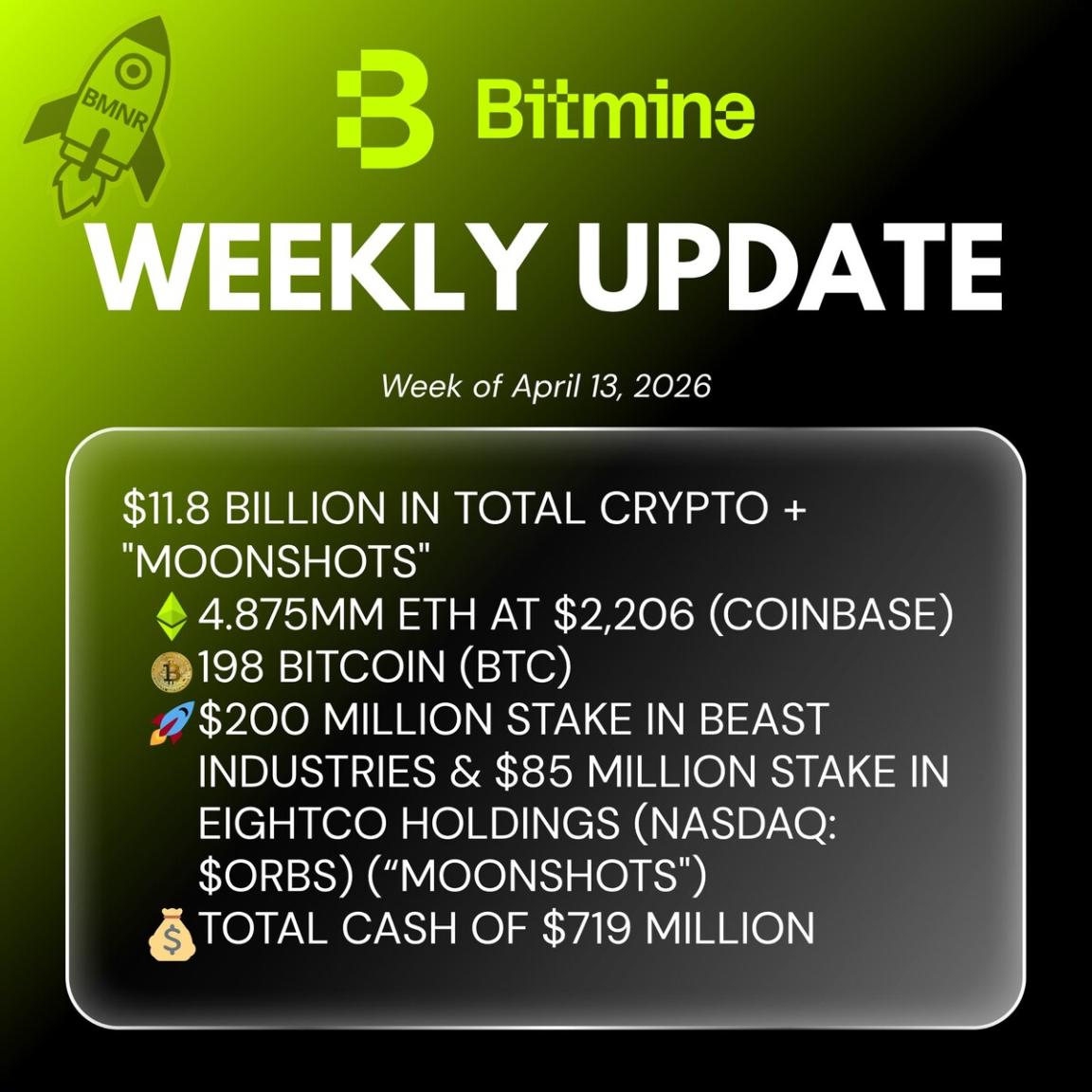
Bitmine Immersion Technologies (BMNR) Announces ETH Holdings Reach 4.875 Million Tokens, and Total Crypto and Total Cash Holdings of $11.8 Billion

Cango’s HPC and AI Inference Subsidiary, EcoHash, Begins Commercial Operations