
Vitalik’s Ethereum scaling roadmap: gas optimizations now, ZK-EVM later
vitalik buterin set out a two-track plan for Ethereum: immediate gas optimizations on L1 and a phased path toward ZK-EVM validation. As reported by CoinDesk, the renewed emphasis returns focus to scaling the base layer alongside L2 growth.
in the near term, gas repricing is central. according to Ethereum Improvement Proposal 8007, the change aligns opcode costs with real resource usage, reducing bottlenecks and enabling safer capacity increases.
Longer term, validation shifts toward proofs. According to the ethereum foundation, a zkEVM attester client would let nodes verify blocks via succinct proofs instead of full re-execution, starting as optional and expanding as systems mature.
Why it matters: safer gas, Glamsterdam, and long-term verification
Repricing gas to reflect CPU, memory, and I/O more accurately should make fees fairer across workloads and create headroom for higher gas limits. The near-term upgrades, often discussed under “Glamsterdam,” build on incremental execution safety rather than a one-off jump.
Blockworks reported that testnets have seen gas limits around 60 million after optimizations tied to Fusaka, with Glamsterdam pursuing additional EIPs to manage resource usage. This framing supports controlled L1 scaling without compromising validator liveness.
A separate research thread scrutinizes enshrined proposer-builder separation. An academic analysis on arXiv highlights a “free option” risk, where builders could skip delivering payloads in volatile periods without sufficient penalties, prompting discussion of mitigations.
Another consideration is cryptography’s long horizon. As noted by crypto.news, the roadmap also contemplates replacing vulnerable primitives to prepare Ethereum for a post-quantum future, aligning with the shift to proof-based verification.
Immediate impact on fees, L2s like Arbitrum, and node performance
Fee impacts should appear uneven at first: operations that were historically underpriced may get costlier, while others get cheaper as execution bottlenecks ease. The intent is not simply “cheaper gas,” but safer, more predictable gas under stress.
For rollups, differentiation remains essential. As reported by Cointelegraph, Arbitrum has emphasized periods of throughput well above 1,000 transactions per second, underscoring that L2s will keep an advantage in peak capacity while L1 focuses on safety and verification.
Node operators should expect heavier worst-case workloads as limits rise. Benchmarked clients, better opcode pricing, and data-availability plumbing are meant to mitigate centralization risks even as hardware pressure increases in the medium term.
At the time of writing, Ethereum (ETH) traded near $1,925.77, with very high volatility of 13.63% and an RSI around 44.2, indicating neutral momentum in the short term.
Who is affected and how to prepare
L2s and builders: Arbitrum, Optimism, Base positioning and focus
L2 teams are likely to position beyond “cheaper Ethereum,” emphasizing app-specific features, privacy, and distinct VMs. Base, Optimism, and Arbitrum can lean into UX, settlement guarantees, and cross-domain tooling as L1 verification improves.
Eli Ben-Sasson, CEO of StarkWare, said, “Say Starknet without saying Starknet,” signaling confidence in specialized ZK-first designs as L2s adapt to an L1 that verifies more with proofs over time.
Operators and developers: gas repricing, limits, and client performance
Operators should monitor client releases that implement gas repricing and measure worst-case block execution on their hardware. Conservative configurations and careful peer selection may help when limits step up.
Developers should review gas-sensitive contracts, storage-heavy patterns, and calldata use. As repricing lands, costs could shift materially between opcodes and data structures, making benchmarks and staged rollouts prudent.
FAQ about Ethereum scaling roadmap
When could Ethereum adopt L1 ZK-EVM and what does the zkEVM attester client actually do for node validation?
Adoption is phased and timing remains unsettled. The attester client verifies blocks via ZK proofs instead of full re-execution, initially as an optional validation path.
Will pushing the gas limit toward 100M lower fees or risk centralization by increasing hardware requirements for nodes?
Higher limits can compress fees but raise hardware demands. Gas repricing aims to reduce worst-case execution. The trade-off remains under active testing and review.
| DISCLAIMER: The information on this website is provided as general market commentary and does not constitute investment advice. We encourage you to do your own research before investing. |


Other Posts









- Amplify 2024: Ohio’s Premier Blockchain Summit
- Polymarket Announces U.S. Beta Relaunch Amid Market Buzz
- China, US Conclude Trade Talks with Focus on Cooperation
- Crypto Weekly: NYSE Backs OKX, Kraken Gets Fed Access, BTC Sells
- CELO holds as Celo reviews Opera 160M token claim
- DeriW Launches Edge Hour Trading Competition Platform for Derivatives Traders
- Michael Saylor Denies Bitcoin Sell-Off Amid Large BTC Transfer
- Court Upholds Fed’s Rejection of Custodia Bank’s Request
- EU Opens Antitrust Probe Into Deutsche Boerse and Nasdaq Derivatives Dealings
- Kazakhstan Explores Crypto Reserves Backed by National Funds
- JPMorgan Increases Holdings in BlackRock’s Bitcoin ETF
- Nordea Bank Introduces Bitcoin ETP Trading for Nordic Customers
- XRP Spot ETF Launches on Nasdaq Amid Market Fluctuations
- JPMorgan Chase Launches 24/7 Digital Deposit Token for Clients
- Crypto Leaders Address Macro Volatility Amid Market Shifts
- Former CFO Convicted for $35M Fraudulent Crypto Investment
- Peter Schiff Challenges Michael Saylor on MSTR’s Business Model
- Thailand Orders Worldcoin to Delete 1.2 Million Biometric Records
- UK Proposes New DeFi Tax Framework to Ease User Burden
- U.S. Treasury Proposes New Tax Relief Regulations
- Amplify 2024: Ohio’s Premier Blockchain Summit
- Polymarket Announces U.S. Beta Relaunch Amid Market Buzz
- China, US Conclude Trade Talks with Focus on Cooperation
- Crypto Weekly: NYSE Backs OKX, Kraken Gets Fed Access, BTC Sells
- CELO holds as Celo reviews Opera 160M token claim
- DeriW Launches Edge Hour Trading Competition Platform for Derivatives Traders
- Michael Saylor Denies Bitcoin Sell-Off Amid Large BTC Transfer
- Court Upholds Fed’s Rejection of Custodia Bank’s Request
- EU Opens Antitrust Probe Into Deutsche Boerse and Nasdaq Derivatives Dealings
- Kazakhstan Explores Crypto Reserves Backed by National Funds
- JPMorgan Increases Holdings in BlackRock’s Bitcoin ETF
- Nordea Bank Introduces Bitcoin ETP Trading for Nordic Customers
- XRP Spot ETF Launches on Nasdaq Amid Market Fluctuations
- JPMorgan Chase Launches 24/7 Digital Deposit Token for Clients
- Crypto Leaders Address Macro Volatility Amid Market Shifts
- Former CFO Convicted for $35M Fraudulent Crypto Investment
- Peter Schiff Challenges Michael Saylor on MSTR’s Business Model
- Thailand Orders Worldcoin to Delete 1.2 Million Biometric Records
- UK Proposes New DeFi Tax Framework to Ease User Burden
- U.S. Treasury Proposes New Tax Relief Regulations
- Amplify 2024: Ohio’s Premier Blockchain Summit
- Polymarket Announces U.S. Beta Relaunch Amid Market Buzz
- China, US Conclude Trade Talks with Focus on Cooperation
- Crypto Weekly: NYSE Backs OKX, Kraken Gets Fed Access, BTC Sells
- CELO holds as Celo reviews Opera 160M token claim
- DeriW Launches Edge Hour Trading Competition Platform for Derivatives Traders
- Michael Saylor Denies Bitcoin Sell-Off Amid Large BTC Transfer
- Court Upholds Fed’s Rejection of Custodia Bank’s Request
- EU Opens Antitrust Probe Into Deutsche Boerse and Nasdaq Derivatives Dealings
- Kazakhstan Explores Crypto Reserves Backed by National Funds
- JPMorgan Increases Holdings in BlackRock’s Bitcoin ETF
- Nordea Bank Introduces Bitcoin ETP Trading for Nordic Customers
- XRP Spot ETF Launches on Nasdaq Amid Market Fluctuations
- JPMorgan Chase Launches 24/7 Digital Deposit Token for Clients
- Crypto Leaders Address Macro Volatility Amid Market Shifts
- Former CFO Convicted for $35M Fraudulent Crypto Investment
- Peter Schiff Challenges Michael Saylor on MSTR’s Business Model
- Thailand Orders Worldcoin to Delete 1.2 Million Biometric Records
- UK Proposes New DeFi Tax Framework to Ease User Burden
- U.S. Treasury Proposes New Tax Relief Regulations
Latest


Binance Alpha GENIUS Airdrop Delay: What Binance Wallet Confirmed

Sentient APAC Head Anita to Attend ChainCatcher Hong Kong Crypto 2026 Forum
Press Release
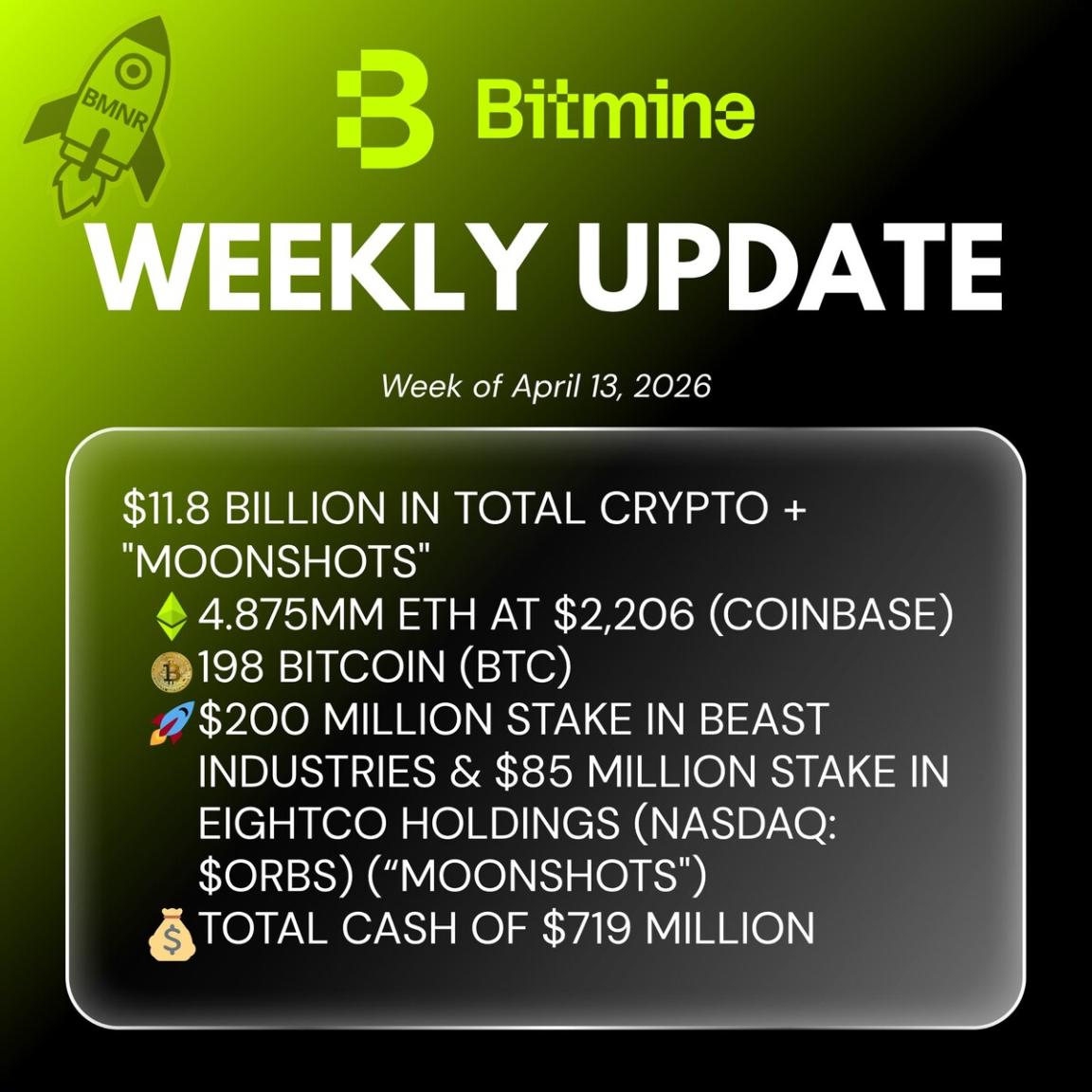
Bitmine Immersion Technologies (BMNR) Announces ETH Holdings Reach 4.875 Million Tokens, and Total Crypto and Total Cash Holdings of $11.8 Billion

Cango’s HPC and AI Inference Subsidiary, EcoHash, Begins Commercial Operations