Google Gemini AI agents support tasks on Pentagon unclassified networks
Google will provide Gemini-powered AI agents to the U.S. Department of Defense for unclassified work on Pentagon networks, according to news.bloomberglaw.com/federal-contracting/google-to-provide-pentagon-with-ai-agents-for-unclassified-work” target=”_blank” rel=”nofollow noopener”>Bloomberg Law (https://news.bloomberglaw.com/federal-contracting/google-to-provide-pentagon-with-ai-agents-for-unclassified-work?utm_source=openai). Under Secretary of Defense for Research & Engineering Emil Michael announced the agents will initially operate on unclassified networks serving the department’s 3+ million personnel. The department has also signaled interest in expanding agents to classified or top-secret systems, but the current phase remains unclassified.
This deployment is framed as support for tasks on Pentagon unclassified networks. It also sets up immediate governance questions as military demand meets provider‑imposed safety guardrails.
Why this matters for governance, ethics, and defense operations
As reported by TechRadar (https://www.techradar.com/pro/security/pentagon-may-sever-anthropic-relationship-over-ai-safeguards-claude-maker-expresses-concerns-over-hard-limits-around-fully-autonomous-weapons-and-mass-domestic-surveillance?utm_source=openai), the Defense Secretary has urged companies to permit broader AI use for “all lawful purposes,” signaling pressure to relax model restrictions. That posture elevates procurement, compliance, and oversight implications across defense workflows. Providers with hard limits may face contract friction if language appears to enable autonomy beyond their policies.
Academic work highlights that risk rises as AI agent autonomy increases and human oversight diminishes, based on arXiv research (https://arxiv.org/abs/2502.02649?utm_source=openai). For defense operations, that dynamic makes auditability, escalation thresholds, and accountability assignments central to safe deployment.
Anthropic represents a contrasting approach, refusing to relax guardrails around fully autonomous weapons or mass domestic surveillance. “cannot in good conscience” comply with those aspects, said Dario Amodei, CEO, as reported by AP News (https://apnews.com/article/9b28dda41bdb52b6a378fa9fc80b8fda?utm_source=openai). The stance underscores how vendor policies can limit certain defense applications even when use might be legally permissible.
Immediate impact, limits, and next steps signaled by DoD
The immediate impact is bounded: Google Gemini AI agents are limited to Pentagon unclassified networks in this phase. That scope allows operational teams to assess reliability and policy fit before any broader rollout.
Key limits include provider guardrails that disallow certain uses and a departmental push to authorize “all lawful purposes.” Next steps hinge on contract language, risk reviews, and alignment between model guardrails and defense policy.
Key tensions: autonomy, surveillance, and provider guardrails
DoD push for all lawful purposes versus hard guardrails
The department’s call for “all lawful purposes” creates friction with providers that maintain hard safety limits. The crux is how far autonomy can extend while preserving human responsibility and oversight. This tension will shape scoping, acceptance criteria, and escalation paths for AI agents.
Anthropic’s refusal on autonomous weapons and mass surveillance risks
Anthropic has drawn a clear red line by refusing uses tied to fully autonomous weapons or mass domestic surveillance, as reflected in its leadership’s public statements. That position narrows certain defense pathways and prioritizes human‑controlled systems.
FAQ about Google Gemini AI agents
Will the DoD expand these AI agents from unclassified to classified or top-secret systems, and on what timeline?
The department has signaled interest in expanding to classified or top-secret networks; no public timeline has been disclosed.
How does Anthropic’s refusal to relax guardrails affect Pentagon AI procurement and policy?
It reduces eligible models and pressures contracts to preserve strict guardrails, influencing acceptable-use language, oversight expectations, and which capabilities the Pentagon can adopt.
| DISCLAIMER: The information on this website is provided as general market commentary and does not constitute investment advice. We encourage you to do your own research before investing. |


Other Posts









- Amplify 2024: Ohio’s Premier Blockchain Summit
- Polymarket Announces U.S. Beta Relaunch Amid Market Buzz
- China, US Conclude Trade Talks with Focus on Cooperation
- Crypto Weekly: NYSE Backs OKX, Kraken Gets Fed Access, BTC Sells
- CELO holds as Celo reviews Opera 160M token claim
- Michael Saylor Denies Bitcoin Sell-Off Amid Large BTC Transfer
- Court Upholds Fed’s Rejection of Custodia Bank’s Request
- EU Opens Antitrust Probe Into Deutsche Boerse and Nasdaq Derivatives Dealings
- Kazakhstan Explores Crypto Reserves Backed by National Funds
- JPMorgan Increases Holdings in BlackRock’s Bitcoin ETF
- Nordea Bank Introduces Bitcoin ETP Trading for Nordic Customers
- XRP Spot ETF Launches on Nasdaq Amid Market Fluctuations
- JPMorgan Chase Launches 24/7 Digital Deposit Token for Clients
- Crypto Leaders Address Macro Volatility Amid Market Shifts
- Former CFO Convicted for $35M Fraudulent Crypto Investment
- Peter Schiff Challenges Michael Saylor on MSTR’s Business Model
- Thailand Orders Worldcoin to Delete 1.2 Million Biometric Records
- UK Proposes New DeFi Tax Framework to Ease User Burden
- U.S. Treasury Proposes New Tax Relief Regulations
- Uniswap’s UNIfication Proposal Gains Massive Preliminary Support
- Amplify 2024: Ohio’s Premier Blockchain Summit
- Polymarket Announces U.S. Beta Relaunch Amid Market Buzz
- China, US Conclude Trade Talks with Focus on Cooperation
- Crypto Weekly: NYSE Backs OKX, Kraken Gets Fed Access, BTC Sells
- CELO holds as Celo reviews Opera 160M token claim
- Michael Saylor Denies Bitcoin Sell-Off Amid Large BTC Transfer
- Court Upholds Fed’s Rejection of Custodia Bank’s Request
- EU Opens Antitrust Probe Into Deutsche Boerse and Nasdaq Derivatives Dealings
- Kazakhstan Explores Crypto Reserves Backed by National Funds
- JPMorgan Increases Holdings in BlackRock’s Bitcoin ETF
- Nordea Bank Introduces Bitcoin ETP Trading for Nordic Customers
- XRP Spot ETF Launches on Nasdaq Amid Market Fluctuations
- JPMorgan Chase Launches 24/7 Digital Deposit Token for Clients
- Crypto Leaders Address Macro Volatility Amid Market Shifts
- Former CFO Convicted for $35M Fraudulent Crypto Investment
- Peter Schiff Challenges Michael Saylor on MSTR’s Business Model
- Thailand Orders Worldcoin to Delete 1.2 Million Biometric Records
- UK Proposes New DeFi Tax Framework to Ease User Burden
- U.S. Treasury Proposes New Tax Relief Regulations
- Uniswap’s UNIfication Proposal Gains Massive Preliminary Support
- Amplify 2024: Ohio’s Premier Blockchain Summit
- Polymarket Announces U.S. Beta Relaunch Amid Market Buzz
- China, US Conclude Trade Talks with Focus on Cooperation
- Crypto Weekly: NYSE Backs OKX, Kraken Gets Fed Access, BTC Sells
- CELO holds as Celo reviews Opera 160M token claim
- Michael Saylor Denies Bitcoin Sell-Off Amid Large BTC Transfer
- Court Upholds Fed’s Rejection of Custodia Bank’s Request
- EU Opens Antitrust Probe Into Deutsche Boerse and Nasdaq Derivatives Dealings
- Kazakhstan Explores Crypto Reserves Backed by National Funds
- JPMorgan Increases Holdings in BlackRock’s Bitcoin ETF
- Nordea Bank Introduces Bitcoin ETP Trading for Nordic Customers
- XRP Spot ETF Launches on Nasdaq Amid Market Fluctuations
- JPMorgan Chase Launches 24/7 Digital Deposit Token for Clients
- Crypto Leaders Address Macro Volatility Amid Market Shifts
- Former CFO Convicted for $35M Fraudulent Crypto Investment
- Peter Schiff Challenges Michael Saylor on MSTR’s Business Model
- Thailand Orders Worldcoin to Delete 1.2 Million Biometric Records
- UK Proposes New DeFi Tax Framework to Ease User Burden
- U.S. Treasury Proposes New Tax Relief Regulations
- Uniswap’s UNIfication Proposal Gains Massive Preliminary Support
Latest

Digital Asset Investment Products See $414M Outflow — First in Five Weeks

USDD TVL Hits $1.93 Billion Record High — What’s Driving the Surge

US Non-Farm Payrolls March 2026: What Crypto Traders Need to Know This Week








Press Release
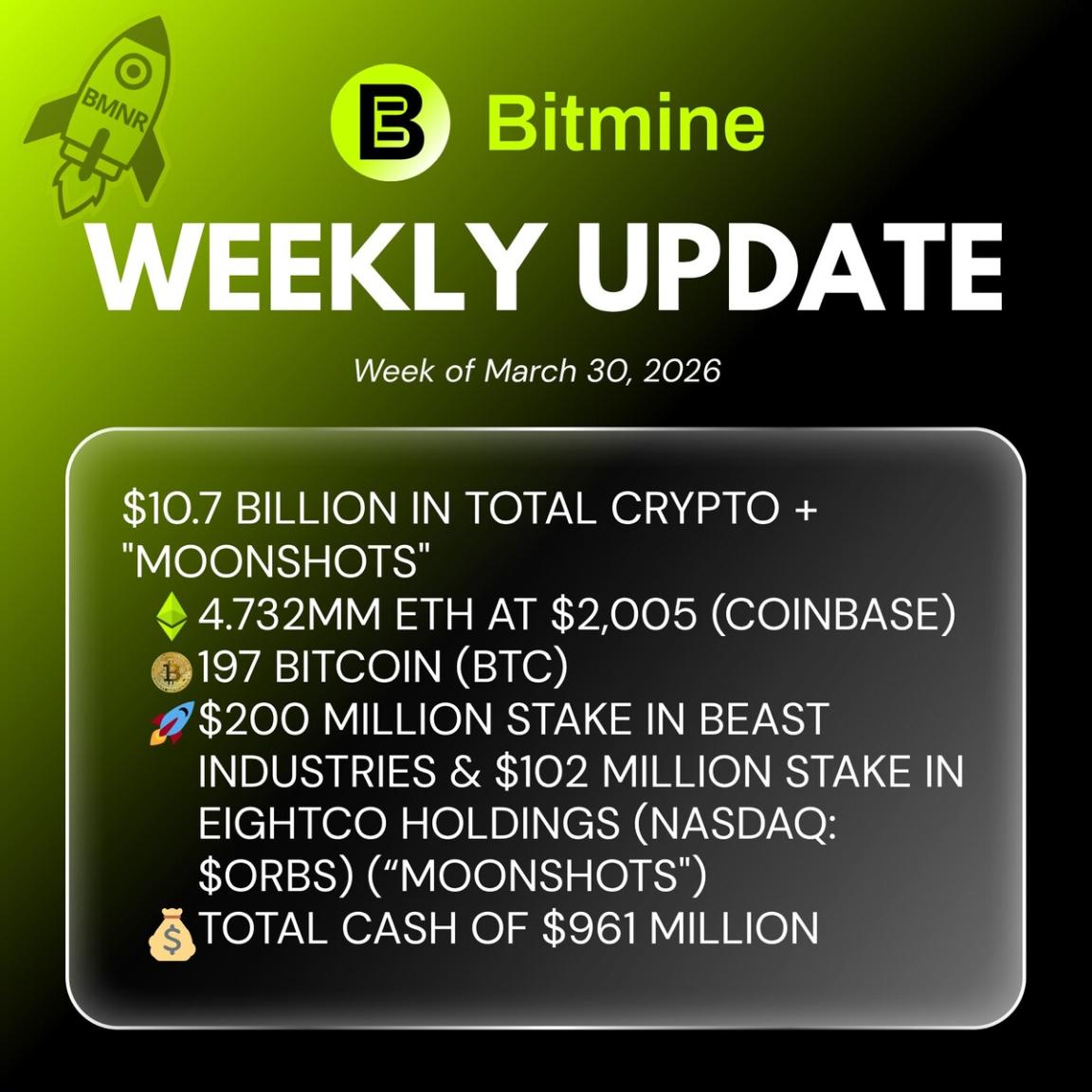
Bitmine Immersion Technologies (BMNR) Announces ETH Holdings Reach 4.732 Million Tokens, and Total Crypto and Total Cash Holdings of $10.7 Billion

TxFlow L1 Mainnet Launch Marks a New Phase for Multi-Application On-Chain Finance