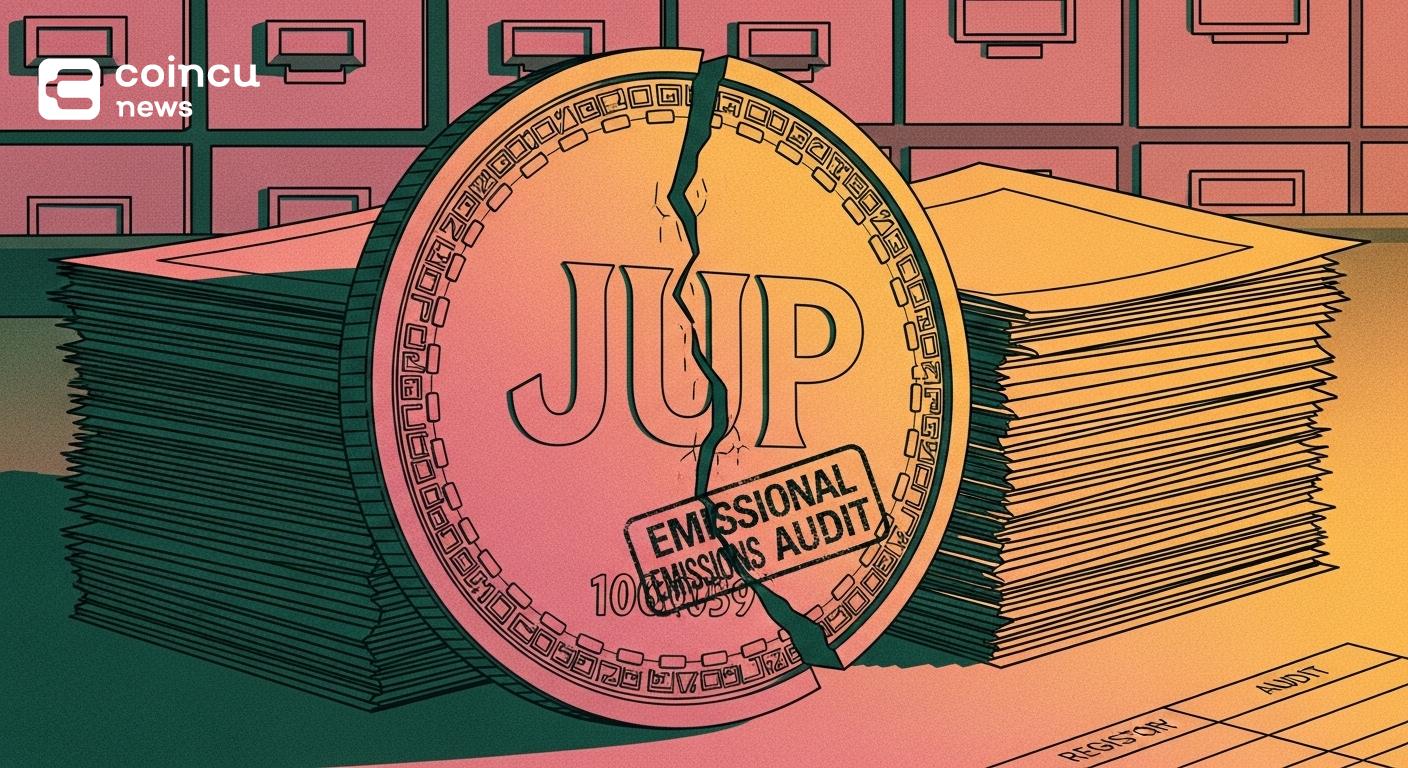
What Jupiter’s Going Green proposal changes to achieve JUP net zero
Jupiter’s “Going Green” plan targets zero net JUP emissions by eliminating net new token releases for the foreseeable future. According to Coinfomania, the DAO proposal would pause team unlocks and delay the Jupuary airdrop to curb dilution.
Documentation on the governance forum outlines an accounting-based approach for team allocations: suspend token emissions, record credits, and offset any sales via open‑market buybacks. The forum draft also describes matching Mercurial stakeholder vesting with purchases to neutralize supply impact, according to discuss.jup.ag.
PANewsLab notes the blueprint consolidates three levers, postponed Jupuary, suspended team vesting via credits and offsets, and Mercurial‑related unlock offsets, to drive net zero emissions across the major sources of supply.
Why this matters for dilution, incentives, and Jupuary airdrop
Cutting net emissions reduces ongoing dilution risk by offsetting newly released tokens, though it does not guarantee price outcomes. As noted by The Defiant, predictable tokenomics and lower FDV overhang can be important for market confidence when demand is uncertain.
Odaily reported the proposal aims to “reduce the net release of JUP to zero for the foreseeable future.” This framing clarifies the plan’s focus on neutralizing issuance rather than burning existing supply, and it highlights the airdrop and vesting trade‑offs.
Analysts at OneKey have noted earlier supply‑side steps, such as a reported multi‑billion JUP reduction and founder locks, that improved optics but did not, on their own, prevent drawdowns tied to unlock events. The new plan attempts to address that specific vector by neutralizing net flow.
Immediate impact, governance timeline, and Kash-led proposal status
Bitget News reports Jupiter COO Kash initiated the net‑zero emissions proposal on the governance forum, indicating a formal community process is underway. The immediate effect, if approved, would be a paused Jupuary, suspended team unlocks using credits, and active offsets for specified stakeholder vesting.
Governance typically proceeds from forum discussion to a formal DAO vote; the draft indicates an intent to act “for the foreseeable future,” with execution details to be defined through governance. Near‑term market effects depend on implementation pace, buyback capacity, and stakeholder behavior.
At the time of this writing, based on data from CoinMarketCap, JUP trades near $0.1647, with very high 12.80% volatility and an RSI around 41.5. These figures provide context and do not imply future performance.
Stakeholder reactions and open questions on net zero plan
Support, concerns, and trade-offs voiced by holders and analysts
Community threads on Reddit reflect support for tighter supply discipline and improved alignment between the team and holders. Others voice concern that postponing or cancelling Jupuary could disappoint eligible users and shift expectations around previously anticipated distributions.
Analyst commentary frames the plan as a response to persistent dilution concerns and incentive design, with supporters citing clearer supply signaling. Skeptics note that demand remains a separate challenge, so net zero may stabilize supply without addressing usage growth.
Uncertainties: team credits, buyback scope, and offsets execution
Open questions include how team credits translate to compensation, the size and cadence of buybacks used to offset sales, and how Mercurial‑related offsets are tracked and executed in volatile markets. Clarity here will influence perceived execution risk.
FAQ about Jupiter Going Green proposal
What is the status of the Jupuary airdrop and how will postponement or cancellation affect holders?
The draft contemplates postponing Jupuary to reduce net emissions. If delayed or cancelled, expected distributions would not occur on the prior timeline, altering short‑term supply dynamics.
How does pausing team token unlocks and using buybacks/offsets reduce selling pressure?
Suspending unlocks and recording credits removes scheduled issuance. Matching sales with open‑market purchases offsets net flow, aiming to neutralize dilution and lower immediate sell‑side overhang.
| DISCLAIMER: The information on this website is provided as general market commentary and does not constitute investment advice. We encourage you to do your own research before investing. |


Other Posts









- Amplify 2024: Ohio’s Premier Blockchain Summit
- Polymarket Announces U.S. Beta Relaunch Amid Market Buzz
- China, US Conclude Trade Talks with Focus on Cooperation
- Crypto Weekly: NYSE Backs OKX, Kraken Gets Fed Access, BTC Sells
- CELO holds as Celo reviews Opera 160M token claim
- Michael Saylor Denies Bitcoin Sell-Off Amid Large BTC Transfer
- Court Upholds Fed’s Rejection of Custodia Bank’s Request
- EU Opens Antitrust Probe Into Deutsche Boerse and Nasdaq Derivatives Dealings
- Kazakhstan Explores Crypto Reserves Backed by National Funds
- JPMorgan Increases Holdings in BlackRock’s Bitcoin ETF
- Nordea Bank Introduces Bitcoin ETP Trading for Nordic Customers
- XRP Spot ETF Launches on Nasdaq Amid Market Fluctuations
- JPMorgan Chase Launches 24/7 Digital Deposit Token for Clients
- Crypto Leaders Address Macro Volatility Amid Market Shifts
- Former CFO Convicted for $35M Fraudulent Crypto Investment
- Peter Schiff Challenges Michael Saylor on MSTR’s Business Model
- Thailand Orders Worldcoin to Delete 1.2 Million Biometric Records
- U.S. Treasury Proposes New Tax Relief Regulations
- UK Proposes New DeFi Tax Framework to Ease User Burden
- Uniswap’s UNIfication Proposal Gains Massive Preliminary Support
- Amplify 2024: Ohio’s Premier Blockchain Summit
- Polymarket Announces U.S. Beta Relaunch Amid Market Buzz
- China, US Conclude Trade Talks with Focus on Cooperation
- Crypto Weekly: NYSE Backs OKX, Kraken Gets Fed Access, BTC Sells
- CELO holds as Celo reviews Opera 160M token claim
- Michael Saylor Denies Bitcoin Sell-Off Amid Large BTC Transfer
- Court Upholds Fed’s Rejection of Custodia Bank’s Request
- EU Opens Antitrust Probe Into Deutsche Boerse and Nasdaq Derivatives Dealings
- Kazakhstan Explores Crypto Reserves Backed by National Funds
- JPMorgan Increases Holdings in BlackRock’s Bitcoin ETF
- Nordea Bank Introduces Bitcoin ETP Trading for Nordic Customers
- XRP Spot ETF Launches on Nasdaq Amid Market Fluctuations
- JPMorgan Chase Launches 24/7 Digital Deposit Token for Clients
- Crypto Leaders Address Macro Volatility Amid Market Shifts
- Former CFO Convicted for $35M Fraudulent Crypto Investment
- Peter Schiff Challenges Michael Saylor on MSTR’s Business Model
- Thailand Orders Worldcoin to Delete 1.2 Million Biometric Records
- U.S. Treasury Proposes New Tax Relief Regulations
- UK Proposes New DeFi Tax Framework to Ease User Burden
- Uniswap’s UNIfication Proposal Gains Massive Preliminary Support
- Amplify 2024: Ohio’s Premier Blockchain Summit
- Polymarket Announces U.S. Beta Relaunch Amid Market Buzz
- China, US Conclude Trade Talks with Focus on Cooperation
- Crypto Weekly: NYSE Backs OKX, Kraken Gets Fed Access, BTC Sells
- CELO holds as Celo reviews Opera 160M token claim
- Michael Saylor Denies Bitcoin Sell-Off Amid Large BTC Transfer
- Court Upholds Fed’s Rejection of Custodia Bank’s Request
- EU Opens Antitrust Probe Into Deutsche Boerse and Nasdaq Derivatives Dealings
- Kazakhstan Explores Crypto Reserves Backed by National Funds
- JPMorgan Increases Holdings in BlackRock’s Bitcoin ETF
- Nordea Bank Introduces Bitcoin ETP Trading for Nordic Customers
- XRP Spot ETF Launches on Nasdaq Amid Market Fluctuations
- JPMorgan Chase Launches 24/7 Digital Deposit Token for Clients
- Crypto Leaders Address Macro Volatility Amid Market Shifts
- Former CFO Convicted for $35M Fraudulent Crypto Investment
- Peter Schiff Challenges Michael Saylor on MSTR’s Business Model
- Thailand Orders Worldcoin to Delete 1.2 Million Biometric Records
- U.S. Treasury Proposes New Tax Relief Regulations
- UK Proposes New DeFi Tax Framework to Ease User Burden
- Uniswap’s UNIfication Proposal Gains Massive Preliminary Support
Latest

Coinbase Prediction Markets Backlash: CEO Brian Armstrong Apologizes, Blames Bug

CLARITY Act Failure Could Trigger Stronger US Encryption Supervision, Analysts Warn

21Shares to Distribute ETH and SOL ETF Staking Proceeds to Investors on March 31








Press Release

TxFlow L1 Mainnet Launch Marks a New Phase for Multi-Application On-Chain Finance
Novava Launches a Game-Changing Futures-First Crypto Exchange for Serious Traders