What the xPoints program is and what it signals for token issuance
Kraken’s affiliated platform xStocks has launched the xPoints program, a step presented as potentially paving the way for token issuance. The program signals preparatory work on distribution and compliance pathways for future tokenized instruments.
xStocks are positioned as tokenized exposures to listed equities, distinct from direct shareholdings. As reported by Ainvest, current disclosures state that holders have no voting rights or distribution entitlements, limiting what counts as ‘true’ equity ownership.
Why xPoints matters for Kraken xStocks, MiFID II, and investors
For Kraken and Backed Finance, xPoints can help align issuance mechanics with existing European market rules and investor protections. According to CySEC, xStocks falls within the scope of the EU’s MiFID II framework, shaping conduct, custody, and marketing requirements (https://www.compliancecorylated.com/news/krakens-tokenised-stocks-follow-regulatory-footstep-of-robinhood/).
Leadership frames tokenized equities as interoperable assets across venues and chains. “The vision is that you can buy an xStock on Kraken, you can withdraw it, and then you can deposit on Coinbase … you can leverage it on Kamino,” said Adam Levi, co-founder & CEO of Backed, as reported by Blockworks (https://blockworks.co/news/backed-tokenized-equities-xstocks-kraken).
Immediate availability, rights, and U.S. access limitations
xPoints is immediately available on the affiliated platform. However, acquiring xStocks or any future tokens does not currently convey shareholder rights like votes or dividends; disclosures describe synthetic or derivative exposure rather than direct legal ownership.
Availability is restricted for U.S. persons. According to the U.S. Securities and Exchange Commission, tokens that mirror equities are likely to be treated as securities, which drives registration and distribution constraints.
Regulatory classification: EU MiFID II versus U.S. SEC context
Within the EU, instruments in MiFID II scope are subject to investor protection, best-execution, and market infrastructure rules. This classification influences how any tokenized equity exposure is offered, reported, and held in custody.
In the United States, classification as a security would require registration or reliance on exemptions and could limit retail access, as reported by Institutional Investor (https://www.institutionalinvestor.com/article/tokenized-equities-push-go-mainstream-rulebook-isn-t-ready).
What legal steps precede true equity token issuance
Before any ‘true’ equity token issuance, issuers typically require appropriate licensing, prospectus or offering documentation, SPV structures to hold underlying shares, regulated custody, and geographic restrictions. According to Elliptic, practical adoption hinges on robust compliance and risk-management frameworks.
Key risks, limitations, and Backed Finance custody/SPV mechanics
The absence of direct shareholder rights remains a primary limitation and a source of institutional friction, as reported by CoinTelegraph (https://cointelegraph.com/magazine/tokenized-stocks-take-over-world-robinhood-kraken-pros-cons-crypto/). Disclosures emphasizing synthetic design underscore that these instruments are not ordinary shares.
Backed Finance structures are designed for 1:1 asset backing via an issuer or SPV, with tokens operable on networks such as Solana, Ethereum, and TON, as reported by Decrypt (https://decrypt.co/352833/kraken-backed-xstocks-tokenized-us-stocks-telegram-ton). Such custody and issuance mechanics are central to investor protection and redemption logic.
FAQ about Kraken xStocks
Do xStocks holders get real shareholder rights like voting and dividends?
Current disclosures indicate no direct voting or dividend rights; exposure is typically synthetic or via wrappers rather than legal share ownership.
Are xStocks and xPoints available to U.S. investors, and how do SEC rules apply?
They are not offered to U.S. persons under current frameworks; such tokens are likely securities, implicating registration or exemptions and distribution restrictions.
| DISCLAIMER: The information on this website is provided as general market commentary and does not constitute investment advice. We encourage you to do your own research before investing. |


Other Posts









- Amplify 2024: Ohio’s Premier Blockchain Summit
- Polymarket Announces U.S. Beta Relaunch Amid Market Buzz
- China, US Conclude Trade Talks with Focus on Cooperation
- Crypto Weekly: NYSE Backs OKX, Kraken Gets Fed Access, BTC Sells
- CELO holds as Celo reviews Opera 160M token claim
- Michael Saylor Denies Bitcoin Sell-Off Amid Large BTC Transfer
- Court Upholds Fed’s Rejection of Custodia Bank’s Request
- EU Opens Antitrust Probe Into Deutsche Boerse and Nasdaq Derivatives Dealings
- Kazakhstan Explores Crypto Reserves Backed by National Funds
- JPMorgan Increases Holdings in BlackRock’s Bitcoin ETF
- Nordea Bank Introduces Bitcoin ETP Trading for Nordic Customers
- XRP Spot ETF Launches on Nasdaq Amid Market Fluctuations
- JPMorgan Chase Launches 24/7 Digital Deposit Token for Clients
- Crypto Leaders Address Macro Volatility Amid Market Shifts
- Former CFO Convicted for $35M Fraudulent Crypto Investment
- Peter Schiff Challenges Michael Saylor on MSTR’s Business Model
- Thailand Orders Worldcoin to Delete 1.2 Million Biometric Records
- UK Proposes New DeFi Tax Framework to Ease User Burden
- U.S. Treasury Proposes New Tax Relief Regulations
- Uniswap’s UNIfication Proposal Gains Massive Preliminary Support
- Amplify 2024: Ohio’s Premier Blockchain Summit
- Polymarket Announces U.S. Beta Relaunch Amid Market Buzz
- China, US Conclude Trade Talks with Focus on Cooperation
- Crypto Weekly: NYSE Backs OKX, Kraken Gets Fed Access, BTC Sells
- CELO holds as Celo reviews Opera 160M token claim
- Michael Saylor Denies Bitcoin Sell-Off Amid Large BTC Transfer
- Court Upholds Fed’s Rejection of Custodia Bank’s Request
- EU Opens Antitrust Probe Into Deutsche Boerse and Nasdaq Derivatives Dealings
- Kazakhstan Explores Crypto Reserves Backed by National Funds
- JPMorgan Increases Holdings in BlackRock’s Bitcoin ETF
- Nordea Bank Introduces Bitcoin ETP Trading for Nordic Customers
- XRP Spot ETF Launches on Nasdaq Amid Market Fluctuations
- JPMorgan Chase Launches 24/7 Digital Deposit Token for Clients
- Crypto Leaders Address Macro Volatility Amid Market Shifts
- Former CFO Convicted for $35M Fraudulent Crypto Investment
- Peter Schiff Challenges Michael Saylor on MSTR’s Business Model
- Thailand Orders Worldcoin to Delete 1.2 Million Biometric Records
- UK Proposes New DeFi Tax Framework to Ease User Burden
- U.S. Treasury Proposes New Tax Relief Regulations
- Uniswap’s UNIfication Proposal Gains Massive Preliminary Support
- Amplify 2024: Ohio’s Premier Blockchain Summit
- Polymarket Announces U.S. Beta Relaunch Amid Market Buzz
- China, US Conclude Trade Talks with Focus on Cooperation
- Crypto Weekly: NYSE Backs OKX, Kraken Gets Fed Access, BTC Sells
- CELO holds as Celo reviews Opera 160M token claim
- Michael Saylor Denies Bitcoin Sell-Off Amid Large BTC Transfer
- Court Upholds Fed’s Rejection of Custodia Bank’s Request
- EU Opens Antitrust Probe Into Deutsche Boerse and Nasdaq Derivatives Dealings
- Kazakhstan Explores Crypto Reserves Backed by National Funds
- JPMorgan Increases Holdings in BlackRock’s Bitcoin ETF
- Nordea Bank Introduces Bitcoin ETP Trading for Nordic Customers
- XRP Spot ETF Launches on Nasdaq Amid Market Fluctuations
- JPMorgan Chase Launches 24/7 Digital Deposit Token for Clients
- Crypto Leaders Address Macro Volatility Amid Market Shifts
- Former CFO Convicted for $35M Fraudulent Crypto Investment
- Peter Schiff Challenges Michael Saylor on MSTR’s Business Model
- Thailand Orders Worldcoin to Delete 1.2 Million Biometric Records
- UK Proposes New DeFi Tax Framework to Ease User Burden
- U.S. Treasury Proposes New Tax Relief Regulations
- Uniswap’s UNIfication Proposal Gains Massive Preliminary Support
Latest

Digital Asset Investment Products See $414M Outflow — First in Five Weeks

USDD TVL Hits $1.93 Billion Record High — What’s Driving the Surge

US Non-Farm Payrolls March 2026: What Crypto Traders Need to Know This Week








Press Release
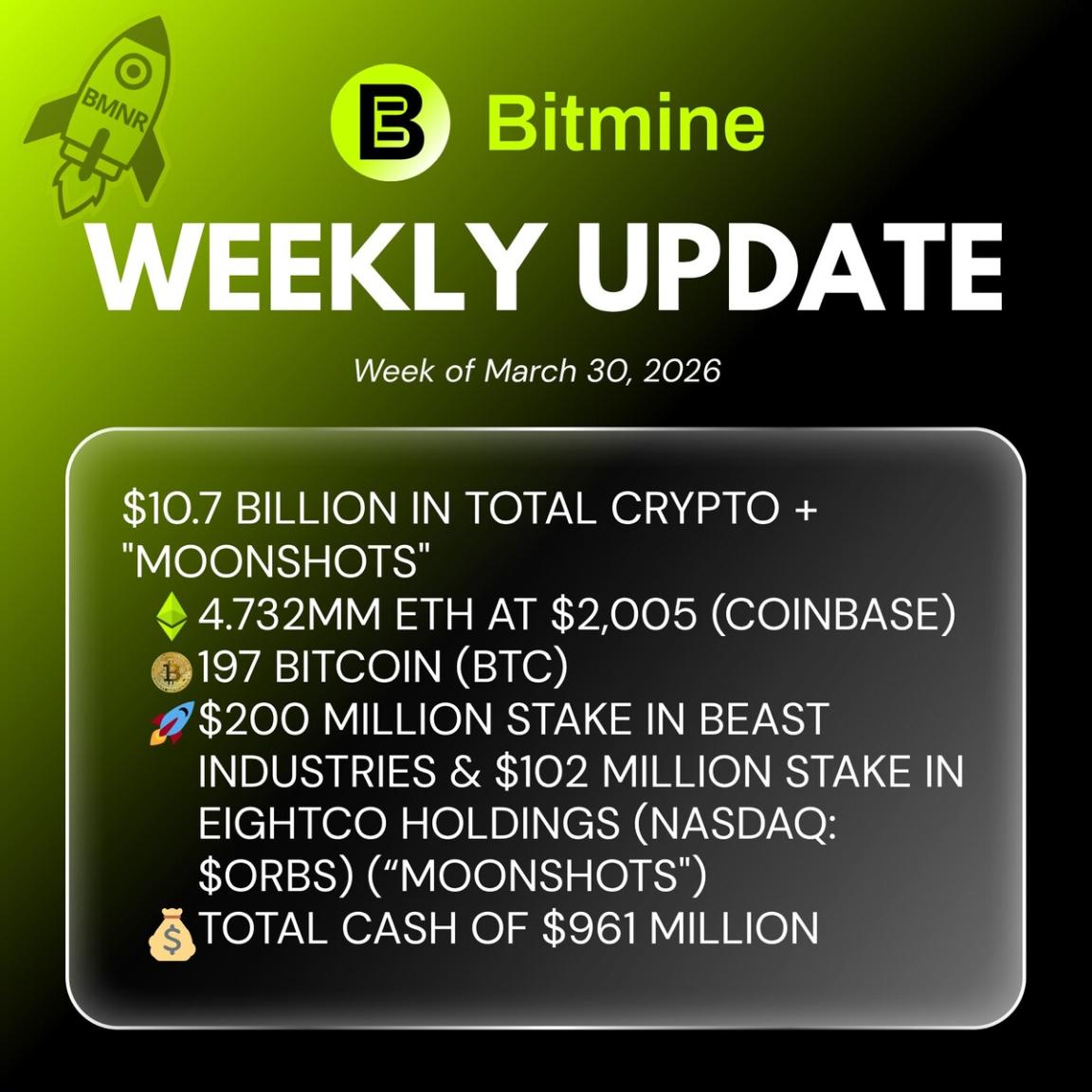
Bitmine Immersion Technologies (BMNR) Announces ETH Holdings Reach 4.732 Million Tokens, and Total Crypto and Total Cash Holdings of $10.7 Billion
TxFlow L1 Mainnet Launch Marks a New Phase for Multi-Application On-Chain Finance