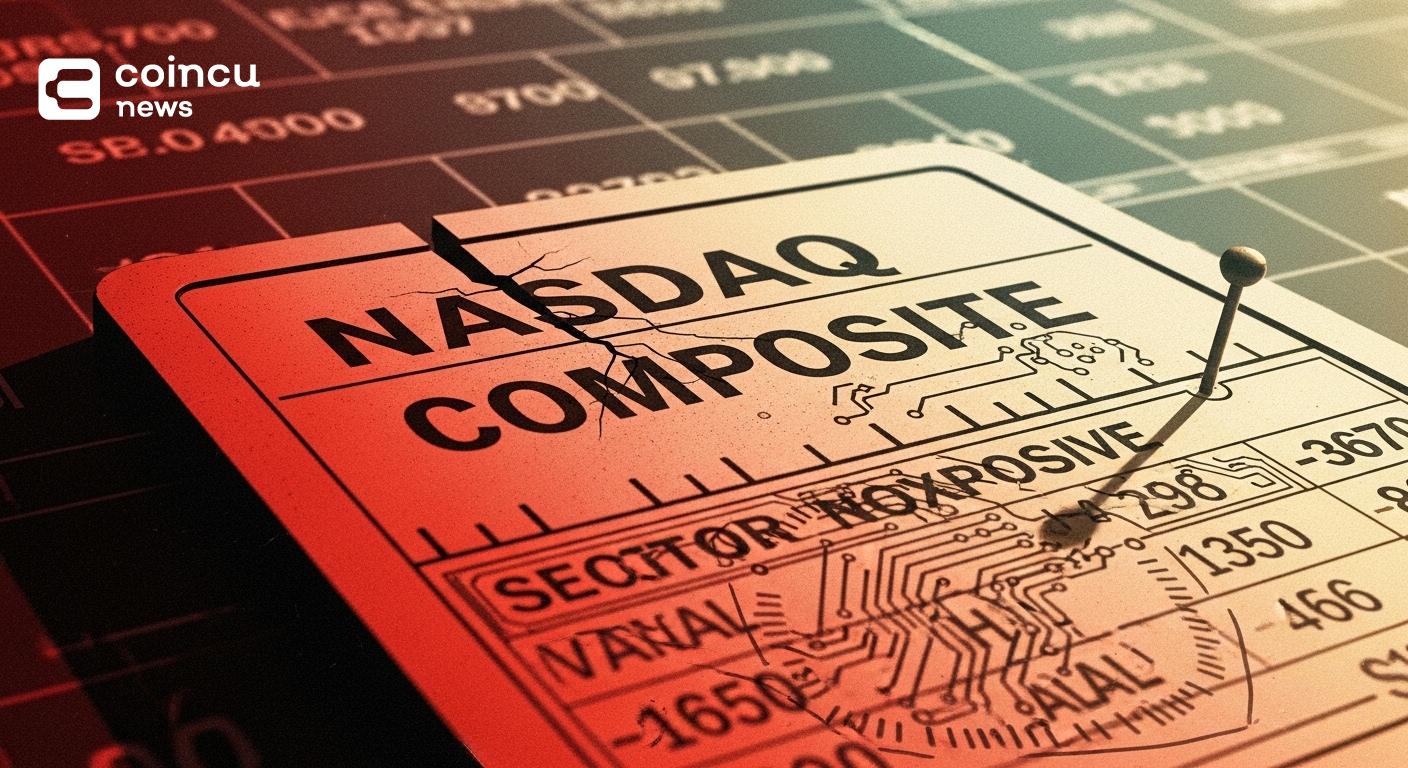
Nasdaq falls more than 1.5% on AI valuation concerns, rotation
US stocks extended losses as the tech-heavy Nasdaq Composite fell more than 1.5%, reflecting renewed anxiety over stretched AI-linked valuations and leadership concentration. Profit-taking in mega-cap technology names pressured broader benchmarks and reinforced a shift toward perceived value and cash-flow resilience.
The downdraft followed a strong multi-month run in growth leaders, leaving the index more sensitive to earnings updates, guidance tone, and interest-rate expectations. While the move was led by large-cap tech, other sectors showed relative strength, tempering the broader risk-off tone.
Why it matters: sector rotation and correction risk
AI-driven leaders carry outsized index weights, so valuation compression can disproportionately affect headline indices. According to aa.com.tr, goldman sachs CEO David Solomon has warned of a possible 10–20% equity-market drawdown over the next 12–24 months amid elevated valuations and complacency.
Historically, pullbacks of this magnitude occur without a singular macro shock, particularly after powerful rallies. Concentration risk also raises sensitivity to guidance revisions and bond-yield shifts, increasing the likelihood of episodic volatility.
Immediate impacts: Nasdaq Composite tests 50-day; tech lags, energy leads
Technicians highlighted the Nasdaq Composite’s 50-day moving average as a near-term support gauge during the slide, with traders watching for confirmation of momentum. According to Investing.com, technical commentary noted ongoing rotation into materials, consumer staples, and energy as technology underperformed in early February.
The style shift favored cash-generative and valuation-supported groups, while higher-multiple segments absorbed the brunt of de-risking. This rotation helped cushion broader benchmarks even as mega-cap weakness weighed on growth indices.
What to watch next and how to position
Key levels and catalysts: 50-day MAs, yields, CPI/PCE, Fed, guidance
Focus remains on the 50-day moving averages across major indices and large-cap growth benchmarks as tactical support. Treasury yields, upcoming CPI and PCE inflation prints, federal reserve communications, and corporate guidance are the primary catalysts that could extend or arrest momentum.
At the time of this writing, the Invesco QQQ Trust showed a YTD daily total return of -0.76% and a 52-week range of 402.39–637.01, based on data from Invesco. These figures underscore how even after strong multi-quarter advances, short-term drawdowns can coexist with intact longer-term uptrends.
Investors commonly evaluate diversification, position sizing, and time horizons when navigating 10–20% pullback scenarios. Maintaining a clear distinction between cyclical volatility and thesis impairment can help frame risk without assuming certainty over near-term outcomes.
Institutional views: Goldman Sachs and Morgan Stanley on drawdowns
Major houses have urged balance as AI enthusiasm meets valuation reality, noting that corrections can be part of a normal cycle. “We should welcome the possibility that there would be drawdowns, 10 to 15% drawdowns that are not driven by some sort of macro cliff effect,” said Ted Pick, CEO at Morgan Stanley, as reported by finews.asia.
FAQ about Nasdaq falls more than 1.5%
Are AI and mega-cap tech stocks overvalued, and how does that raise market correction risk?
Valuations in AI and mega-cap tech are elevated versus fundamentals, increasing sensitivity to earnings guidance and rates, which can heighten correction risk, per recent Goldman and Morgan Stanley cautions.
Which sectors are investors rotating into as tech underperforms, and why?
Flows have favored energy, consumer staples, and materials as investors prioritize cash-flow resilience and valuation support when high-multiple technology leadership weakens.
| DISCLAIMER: The information on this website is provided as general market commentary and does not constitute investment advice. We encourage you to do your own research before investing. |


Other Posts









- Amplify 2024: Ohio’s Premier Blockchain Summit
- Polymarket Announces U.S. Beta Relaunch Amid Market Buzz
- China, US Conclude Trade Talks with Focus on Cooperation
- Crypto Weekly: NYSE Backs OKX, Kraken Gets Fed Access, BTC Sells
- Michael Saylor Denies Bitcoin Sell-Off Amid Large BTC Transfer
- Court Upholds Fed’s Rejection of Custodia Bank’s Request
- EU Opens Antitrust Probe Into Deutsche Boerse and Nasdaq Derivatives Dealings
- Kazakhstan Explores Crypto Reserves Backed by National Funds
- Nordea Bank Introduces Bitcoin ETP Trading for Nordic Customers
- JPMorgan Increases Holdings in BlackRock’s Bitcoin ETF
- XRP Spot ETF Launches on Nasdaq Amid Market Fluctuations
- JPMorgan Chase Launches 24/7 Digital Deposit Token for Clients
- Crypto Leaders Address Macro Volatility Amid Market Shifts
- Former CFO Convicted for $35M Fraudulent Crypto Investment
- Peter Schiff Challenges Michael Saylor on MSTR’s Business Model
- Thailand Orders Worldcoin to Delete 1.2 Million Biometric Records
- U.S. Treasury Proposes New Tax Relief Regulations
- UK Proposes New DeFi Tax Framework to Ease User Burden
- Uniswap’s UNIfication Proposal Gains Massive Preliminary Support
- WLFI Under Fire: Analyst Warns Hyperliquid Could Be Next
- Amplify 2024: Ohio’s Premier Blockchain Summit
- Polymarket Announces U.S. Beta Relaunch Amid Market Buzz
- China, US Conclude Trade Talks with Focus on Cooperation
- Crypto Weekly: NYSE Backs OKX, Kraken Gets Fed Access, BTC Sells
- Michael Saylor Denies Bitcoin Sell-Off Amid Large BTC Transfer
- Court Upholds Fed’s Rejection of Custodia Bank’s Request
- EU Opens Antitrust Probe Into Deutsche Boerse and Nasdaq Derivatives Dealings
- Kazakhstan Explores Crypto Reserves Backed by National Funds
- Nordea Bank Introduces Bitcoin ETP Trading for Nordic Customers
- JPMorgan Increases Holdings in BlackRock’s Bitcoin ETF
- XRP Spot ETF Launches on Nasdaq Amid Market Fluctuations
- JPMorgan Chase Launches 24/7 Digital Deposit Token for Clients
- Crypto Leaders Address Macro Volatility Amid Market Shifts
- Former CFO Convicted for $35M Fraudulent Crypto Investment
- Peter Schiff Challenges Michael Saylor on MSTR’s Business Model
- Thailand Orders Worldcoin to Delete 1.2 Million Biometric Records
- U.S. Treasury Proposes New Tax Relief Regulations
- UK Proposes New DeFi Tax Framework to Ease User Burden
- Uniswap’s UNIfication Proposal Gains Massive Preliminary Support
- WLFI Under Fire: Analyst Warns Hyperliquid Could Be Next
- Amplify 2024: Ohio’s Premier Blockchain Summit
- Polymarket Announces U.S. Beta Relaunch Amid Market Buzz
- China, US Conclude Trade Talks with Focus on Cooperation
- Crypto Weekly: NYSE Backs OKX, Kraken Gets Fed Access, BTC Sells
- Michael Saylor Denies Bitcoin Sell-Off Amid Large BTC Transfer
- Court Upholds Fed’s Rejection of Custodia Bank’s Request
- EU Opens Antitrust Probe Into Deutsche Boerse and Nasdaq Derivatives Dealings
- Kazakhstan Explores Crypto Reserves Backed by National Funds
- Nordea Bank Introduces Bitcoin ETP Trading for Nordic Customers
- JPMorgan Increases Holdings in BlackRock’s Bitcoin ETF
- XRP Spot ETF Launches on Nasdaq Amid Market Fluctuations
- JPMorgan Chase Launches 24/7 Digital Deposit Token for Clients
- Crypto Leaders Address Macro Volatility Amid Market Shifts
- Former CFO Convicted for $35M Fraudulent Crypto Investment
- Peter Schiff Challenges Michael Saylor on MSTR’s Business Model
- Thailand Orders Worldcoin to Delete 1.2 Million Biometric Records
- U.S. Treasury Proposes New Tax Relief Regulations
- UK Proposes New DeFi Tax Framework to Ease User Burden
- Uniswap’s UNIfication Proposal Gains Massive Preliminary Support
- WLFI Under Fire: Analyst Warns Hyperliquid Could Be Next
Latest

YZi Labs Head: Majority Investments Are Equity, Projects Should Not Rush Token Issuance

OCBC Bank: USD Weakness Is Reviving Gold Safe Haven Demand in 2026

Backpack Denies Insider Involvement in BP Token Price Manipulation on Polymarket








Press Release
NeoPass unveils a compliant solution for accessing digital assets across the CIS region

RIV Coin Launches on Solana to Bridge Institutional Capital with DeFi Infrastructure