








Boston Fed signals risk of higher structural unemployment beyond rate policy
Fresh research and on-the-record remarks are centering a risk that U.S. unemployment could become more structural, limiting what interest-rate policy can achieve. According to the Boston Fed, a working paper on “assessing maximum employment” underscores tools used to separate cyclical softness from deeper labor-market shifts.
If labor demand is durably reshaped by technology and mismatches, the jobless rate consistent with stable inflation may be drifting higher. That would leave the central bank’s conventional lever, moving the policy rate, less effective at restoring pre-shock employment dynamics.
Why it matters: limits of monetary policy and NAIRU
Monetary policy mainly counteracts cyclical slack. Structural unemployment reflects frictions like skill mismatches or technology-driven shifts that rate cuts cannot quickly repair. In that context, NAIRU, the unemployment rate consistent with stable prices, could rise, implying a different “full employment” benchmark.
Several policymakers have cautioned that interest rates alone cannot offset technology-driven dislocations. “If we are having structural change, then we really need to lean into that truth, and set interest rates accordingly,” said Raphael Bostic, president of the Atlanta Fed, as reported by Investing.com.
Immediate impact: Beveridge curve and labor indicators to watch
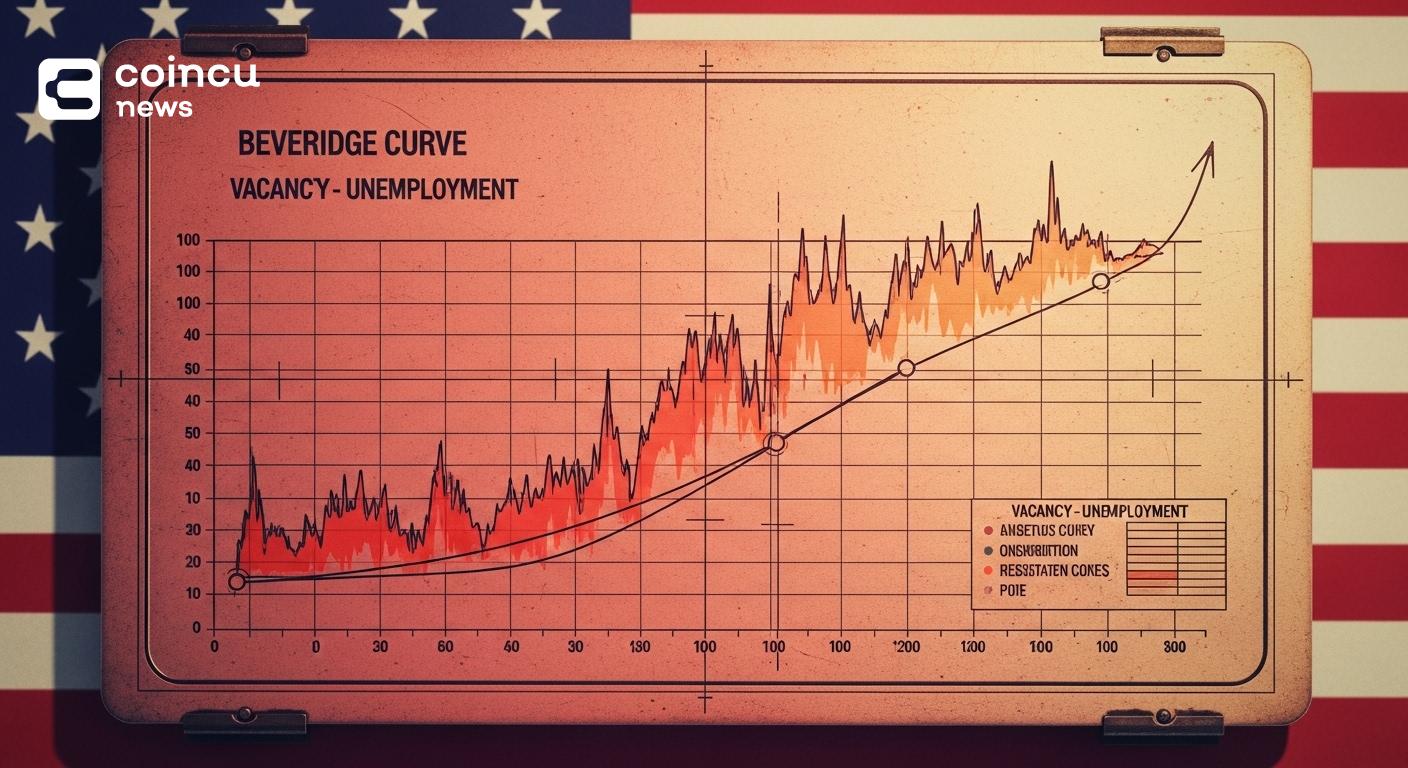
Diagnosing structural pressure relies on how key series behave together. The Boston Fed paper highlights vacancy-unemployment dynamics (the Beveridge curve), labor force participation, wage growth, and worker flows as a toolkit to judge whether frictions are rising or matching efficiency is deteriorating.
A sustained outward shift in the Beveridge curve, more openings for a given unemployment rate, can indicate worse matching or sectoral reallocation frictions. According to the federal reserve, Michael Barr has also warned about skill mismatches if transformative AI outpaces re-training capacity. “Many displaced workers would have obsolete skills, and skill mismatch could lead to a structural increase in unemployment,” said Michael Barr, Vice Chair for Supervision.
What non-monetary policies could help, and what’s next
Re-skilling, job matching, and fiscal support beyond Fed tools
If structural frictions are rising, faster re-skilling, improved job matching, and targeted fiscal support become central. These tools address root causes, skills and mobility, rather than aggregate demand.
Training aligned with in-demand roles, support for worker transitions, and institutions that speed matching can narrow mismatches. Complementary safety nets can cushion incomes while workers retrain, reducing long-duration joblessness.
Upcoming signals: Fed speeches, labor data, and reassessment triggers
Watch official speeches, the vacancy-to-unemployment ratio and Beveridge curve shifts, wage growth relative to productivity, participation trends, and worker flows for confirmation of structural strain. Persistent wage cooling with still-elevated vacancies may suggest matching frictions rather than cyclical slack alone.
At the time of this writing, broader market sentiment remains cautious: Bitcoin (BTC) traded near $63,097, with very high volatility around 10.68% and a bearish sentiment gauge; the 14-day RSI was close to 32.62. These figures are contextual and do not imply a market view.
FAQ about structural unemployment
Can the Federal Reserve lower interest rates to offset structural unemployment?
It can mitigate cyclical slack, but structural mismatches, like skills and placement, often persist despite lower rates, according to the officials’ cautions and research cited above.
Which indicators show whether unemployment is structural versus cyclical?
Watch Beveridge curve shifts, the vacancies-to-unemployment ratio, wage growth versus productivity, labor force participation, and worker flows for signs of persistent frictions.
| DISCLAIMER: The information on this website is provided as general market commentary and does not constitute investment advice. We encourage you to do your own research before investing. |


Other Posts









- Amplify 2024: Ohio’s Premier Blockchain Summit
- Polymarket Announces U.S. Beta Relaunch Amid Market Buzz
- China, US Conclude Trade Talks with Focus on Cooperation
- Crypto Weekly: NYSE Backs OKX, Kraken Gets Fed Access, BTC Sells
- CELO holds as Celo reviews Opera 160M token claim
- DeriW Launches Edge Hour Trading Competition Platform for Derivatives Traders
- Michael Saylor Denies Bitcoin Sell-Off Amid Large BTC Transfer
- Court Upholds Fed’s Rejection of Custodia Bank’s Request
- EU Opens Antitrust Probe Into Deutsche Boerse and Nasdaq Derivatives Dealings
- Kazakhstan Explores Crypto Reserves Backed by National Funds
- JPMorgan Increases Holdings in BlackRock’s Bitcoin ETF
- Nordea Bank Introduces Bitcoin ETP Trading for Nordic Customers
- XRP Spot ETF Launches on Nasdaq Amid Market Fluctuations
- JPMorgan Chase Launches 24/7 Digital Deposit Token for Clients
- Crypto Leaders Address Macro Volatility Amid Market Shifts
- Former CFO Convicted for $35M Fraudulent Crypto Investment
- Peter Schiff Challenges Michael Saylor on MSTR’s Business Model
- Thailand Orders Worldcoin to Delete 1.2 Million Biometric Records
- UK Proposes New DeFi Tax Framework to Ease User Burden
- U.S. Treasury Proposes New Tax Relief Regulations
- Amplify 2024: Ohio’s Premier Blockchain Summit
- Polymarket Announces U.S. Beta Relaunch Amid Market Buzz
- China, US Conclude Trade Talks with Focus on Cooperation
- Crypto Weekly: NYSE Backs OKX, Kraken Gets Fed Access, BTC Sells
- CELO holds as Celo reviews Opera 160M token claim
- DeriW Launches Edge Hour Trading Competition Platform for Derivatives Traders
- Michael Saylor Denies Bitcoin Sell-Off Amid Large BTC Transfer
- Court Upholds Fed’s Rejection of Custodia Bank’s Request
- EU Opens Antitrust Probe Into Deutsche Boerse and Nasdaq Derivatives Dealings
- Kazakhstan Explores Crypto Reserves Backed by National Funds
- JPMorgan Increases Holdings in BlackRock’s Bitcoin ETF
- Nordea Bank Introduces Bitcoin ETP Trading for Nordic Customers
- XRP Spot ETF Launches on Nasdaq Amid Market Fluctuations
- JPMorgan Chase Launches 24/7 Digital Deposit Token for Clients
- Crypto Leaders Address Macro Volatility Amid Market Shifts
- Former CFO Convicted for $35M Fraudulent Crypto Investment
- Peter Schiff Challenges Michael Saylor on MSTR’s Business Model
- Thailand Orders Worldcoin to Delete 1.2 Million Biometric Records
- UK Proposes New DeFi Tax Framework to Ease User Burden
- U.S. Treasury Proposes New Tax Relief Regulations
- Amplify 2024: Ohio’s Premier Blockchain Summit
- Polymarket Announces U.S. Beta Relaunch Amid Market Buzz
- China, US Conclude Trade Talks with Focus on Cooperation
- Crypto Weekly: NYSE Backs OKX, Kraken Gets Fed Access, BTC Sells
- CELO holds as Celo reviews Opera 160M token claim
- DeriW Launches Edge Hour Trading Competition Platform for Derivatives Traders
- Michael Saylor Denies Bitcoin Sell-Off Amid Large BTC Transfer
- Court Upholds Fed’s Rejection of Custodia Bank’s Request
- EU Opens Antitrust Probe Into Deutsche Boerse and Nasdaq Derivatives Dealings
- Kazakhstan Explores Crypto Reserves Backed by National Funds
- JPMorgan Increases Holdings in BlackRock’s Bitcoin ETF
- Nordea Bank Introduces Bitcoin ETP Trading for Nordic Customers
- XRP Spot ETF Launches on Nasdaq Amid Market Fluctuations
- JPMorgan Chase Launches 24/7 Digital Deposit Token for Clients
- Crypto Leaders Address Macro Volatility Amid Market Shifts
- Former CFO Convicted for $35M Fraudulent Crypto Investment
- Peter Schiff Challenges Michael Saylor on MSTR’s Business Model
- Thailand Orders Worldcoin to Delete 1.2 Million Biometric Records
- UK Proposes New DeFi Tax Framework to Ease User Burden
- U.S. Treasury Proposes New Tax Relief Regulations
Latest

Morph Stablecoin Report: $33T Annual Volume, 10% Cross-Border Payments by 2030

Bitcoin Whale Reopens $10.09M Short After Liquidation: On-Chain Signals to Watch

Pharos Network Raises $44M Series A With SNZ Holding Participation
Press Release

Wirex and Utorg Bring Seamless Crypto-to-Card Spending to 2M+ Users Worldwide

BC.GAME Launches BC Engine: Instant $BC, Auto-Staked and Paid Hourly in BCD
