





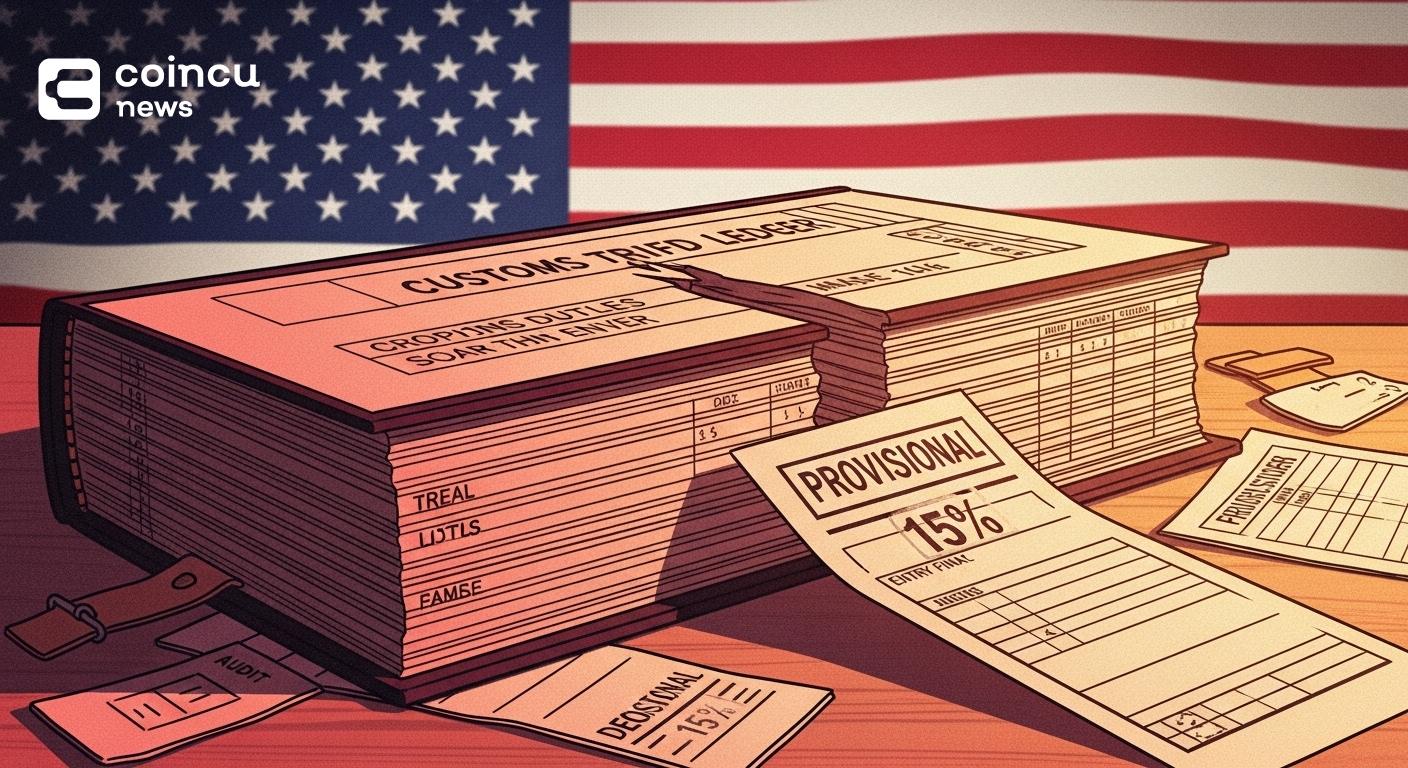
What the 10%–15% global import tariff covers right now
After a 6–3 U.S. supreme court ruling struck down earlier tariffs issued under IEEPA, the administration imposed a 10% tariff on all U.S. imports from all countries, as reported by news/trump-imposes-10-global-tariff-after-stinging-court-rebuke/article_c62d3862-dc17-5321-902b-5209074a32dd.html” target=”_blank” rel=”nofollow noopener”>KTEN. The policy is framed as global and applies irrespective of origin while legal and diplomatic reviews proceed.
Within a day, the White House moved to raise the rate to a 15% global import tariff, according to The New York Times’ tariff tracker. This escalation followed the Court’s decision and was presented as a revised legal path for broad-based duties.
The global scope intersects with trade commitments involving the European Union, the United Kingdom, Japan, Vietnam, and India, as reported by Al Jazeera. How those agreements interact with a universal tariff remains a central point of uncertainty for traders and governments.
Why it matters: Section 122 and Supreme Court fallout
The Supreme Court’s decision invalidating earlier IEEPA-based tariffs forced a rapid legal pivot to Section 122 of the Trade Act of 1974. Section 122 is historically linked to balance-of-payments emergencies, so the breadth of a blanket global tariff invites scrutiny, as analyzed by Chatham House.
“‘The head-spinning changes … have left the American and foreign business communities, US consumers, and foreign governments with more questions than answers,’” said Bruce Stokes, Associate Fellow, at Chatham House. He noted Section 122 has not been used on this scale and is likely to face challenges tied to its balance-of-payments standard.
Former IMF chief economist Gita Gopinath backed legal arguments by Neal Katyal that Section 122 is meant for balance-of-payments crises, not trade deficits, as reported by The Times of India. Their view highlights a key threshold that courts may need to assess if litigation proceeds.
The Court’s ruling also raises the prospect of refunds for duties collected under the now-invalidated IEEPA actions, with potential government exposure above $100 billion, based on ICIS reporting. Timing and procedures for any claims remain subject to subsequent guidance and court orders.
Immediate impact: prices, supply chains, EU and industry reactions
Economists see uncertainty curbing price cuts and delaying investment plans, with companies unlikely to reverse earlier tariff-related pricing strategies, as reported by The Washington Post. The net effect could be slower capex decisions while firms reassess margin impacts and sourcing options.
EU officials urged the United States to honor prior transatlantic commitments and criticized the policy volatility, as reported by AP News. European responses signal that talks on carve-outs or coordination may be necessary to stabilize trade relations.
Seafood importers warn of cost pass-through because most U.S. seafood is imported, putting consumer prices and industry employment at risk, as reported by The Boston Globe. “The tariffs will raise costs for seafood … threatening both price availability for consumers and the 1.6 million U.S. jobs tied to the seafood industry,” said Lisa Wallenda Picard, President and CEO, National Fisheries Institute.
Analysts tracking earlier measures observed the average U.S. tariff burden had already climbed into the low-teens, indicating a structural shift in trade costs with broad sectoral reach, as reported by WDRB. That shift complicates inventory planning, supplier diversification, and cash flow management.
What importers should do now: compliance and contracts
Immediate compliance actions and pricing clauses to review
Operational teams typically align landed-cost models to a 10%–15% baseline while monitoring legal developments. Contract reviews often focus on tariff pass-through, tax change, and surcharge clauses to address duty shocks.
Commercial terms are commonly reassessed to allocate logistics and customs responsibilities under evolving tariff exposure. Internal controls and documentation help reconcile purchase orders, invoices, and duty payments for potential audits or later adjustments.
Finance and treasury teams may revisit cash flow buffers to accommodate higher duties and possible bond or collateral needs. Clear records can support any future claims processes if policy or court outcomes change.
Risk scenarios: litigation outlook, exemption discussions, refund exposure
Section 122’s balance-of-payments test is likely to be litigated, with outcomes shaping duration, scope, and any partial unwinds. Supply chain strategies may remain in a holding pattern until clarity emerges.
Exemption discussions continue alongside diplomacy. The U.S. Trade Representative has indicated an intent to honor existing trade deals even under the new framework, as reported by The Guardian.
Refund exposure and eligibility hinge on final court orders and agency implementation. Firms may track entry-level data and duty remittances to align with any eventual procedures.
At the time of this writing, Apple Inc. (AAPL) was quoted at 261.40, up 0.31% intraday, based on Nasdaq real-time data. This market snapshot offers context, not an investment view.
FAQ about Section 122 of the Trade Act of 1974
Is using Section 122 legal in this case, and how does the balance-of-payments standard apply?
It is contested. Experts note Section 122 targets balance-of-payments emergencies, not trade deficits, as reported by The Times of India.
Will existing U.S. trade deals (EU, UK, Japan, etc.) be honored or receive exemptions under the new tariff?
The U.S. Trade Representative signaled intent to honor existing agreements, with details pending, as reported by The Guardian.
| DISCLAIMER: The information on this website is provided as general market commentary and does not constitute investment advice. We encourage you to do your own research before investing. |


Other Posts








- Amplify 2024: Ohio’s Premier Blockchain Summit
- Polymarket Announces U.S. Beta Relaunch Amid Market Buzz
- China, US Conclude Trade Talks with Focus on Cooperation
- Michael Saylor Denies Bitcoin Sell-Off Amid Large BTC Transfer
- Court Upholds Fed’s Rejection of Custodia Bank’s Request
- EU Opens Antitrust Probe Into Deutsche Boerse and Nasdaq Derivatives Dealings
- Kazakhstan Explores Crypto Reserves Backed by National Funds
- Nordea Bank Introduces Bitcoin ETP Trading for Nordic Customers
- JPMorgan Increases Holdings in BlackRock’s Bitcoin ETF
- U.S. Treasury Proposes New Tax Relief Regulations
- Radiant Capital Faces $50M Loss in Major Security Breach
- SEGG Media Unveils $300 Million Crypto Reserve Plan
- 21Shares Files S-1 With SEC to Launch Hyperliquid ($HYPE) ETF
- Hong Kong Sentences Influencer for Unlicensed Investment Advice
- Franklin Templeton Signals TradFi and Crypto Integration
- Crypto Leaders Address Macro Volatility Amid Market Shifts
- JPMorgan Chase Launches 24/7 Digital Deposit Token for Clients
- MicroStrategy Retains Spot in Nasdaq 100 Amid Criticism
- HashKey Prices IPO at High End, Raises $206 Million
- Capital A and Standard Chartered Explore Malaysia Stablecoin Launch
- Amplify 2024: Ohio’s Premier Blockchain Summit
- Polymarket Announces U.S. Beta Relaunch Amid Market Buzz
- China, US Conclude Trade Talks with Focus on Cooperation
- Michael Saylor Denies Bitcoin Sell-Off Amid Large BTC Transfer
- Court Upholds Fed’s Rejection of Custodia Bank’s Request
- EU Opens Antitrust Probe Into Deutsche Boerse and Nasdaq Derivatives Dealings
- Kazakhstan Explores Crypto Reserves Backed by National Funds
- Nordea Bank Introduces Bitcoin ETP Trading for Nordic Customers
- JPMorgan Increases Holdings in BlackRock’s Bitcoin ETF
- U.S. Treasury Proposes New Tax Relief Regulations
- Radiant Capital Faces $50M Loss in Major Security Breach
- SEGG Media Unveils $300 Million Crypto Reserve Plan
- 21Shares Files S-1 With SEC to Launch Hyperliquid ($HYPE) ETF
- Hong Kong Sentences Influencer for Unlicensed Investment Advice
- Franklin Templeton Signals TradFi and Crypto Integration
- Crypto Leaders Address Macro Volatility Amid Market Shifts
- JPMorgan Chase Launches 24/7 Digital Deposit Token for Clients
- MicroStrategy Retains Spot in Nasdaq 100 Amid Criticism
- HashKey Prices IPO at High End, Raises $206 Million
- Capital A and Standard Chartered Explore Malaysia Stablecoin Launch
- Amplify 2024: Ohio’s Premier Blockchain Summit
- Polymarket Announces U.S. Beta Relaunch Amid Market Buzz
- China, US Conclude Trade Talks with Focus on Cooperation
- Michael Saylor Denies Bitcoin Sell-Off Amid Large BTC Transfer
- Court Upholds Fed’s Rejection of Custodia Bank’s Request
- EU Opens Antitrust Probe Into Deutsche Boerse and Nasdaq Derivatives Dealings
- Kazakhstan Explores Crypto Reserves Backed by National Funds
- Nordea Bank Introduces Bitcoin ETP Trading for Nordic Customers
- JPMorgan Increases Holdings in BlackRock’s Bitcoin ETF
- U.S. Treasury Proposes New Tax Relief Regulations
- Radiant Capital Faces $50M Loss in Major Security Breach
- SEGG Media Unveils $300 Million Crypto Reserve Plan
- 21Shares Files S-1 With SEC to Launch Hyperliquid ($HYPE) ETF
- Hong Kong Sentences Influencer for Unlicensed Investment Advice
- Franklin Templeton Signals TradFi and Crypto Integration
- Crypto Leaders Address Macro Volatility Amid Market Shifts
- JPMorgan Chase Launches 24/7 Digital Deposit Token for Clients
- MicroStrategy Retains Spot in Nasdaq 100 Amid Criticism
- HashKey Prices IPO at High End, Raises $206 Million
- Capital A and Standard Chartered Explore Malaysia Stablecoin Launch
Latest









Press Release
Phemex Completes Full Integration of Ondo Finance Tokenized Equity Suite

Unicity Labs Raises $3M to Scale Autonomous Agentic Marketplaces