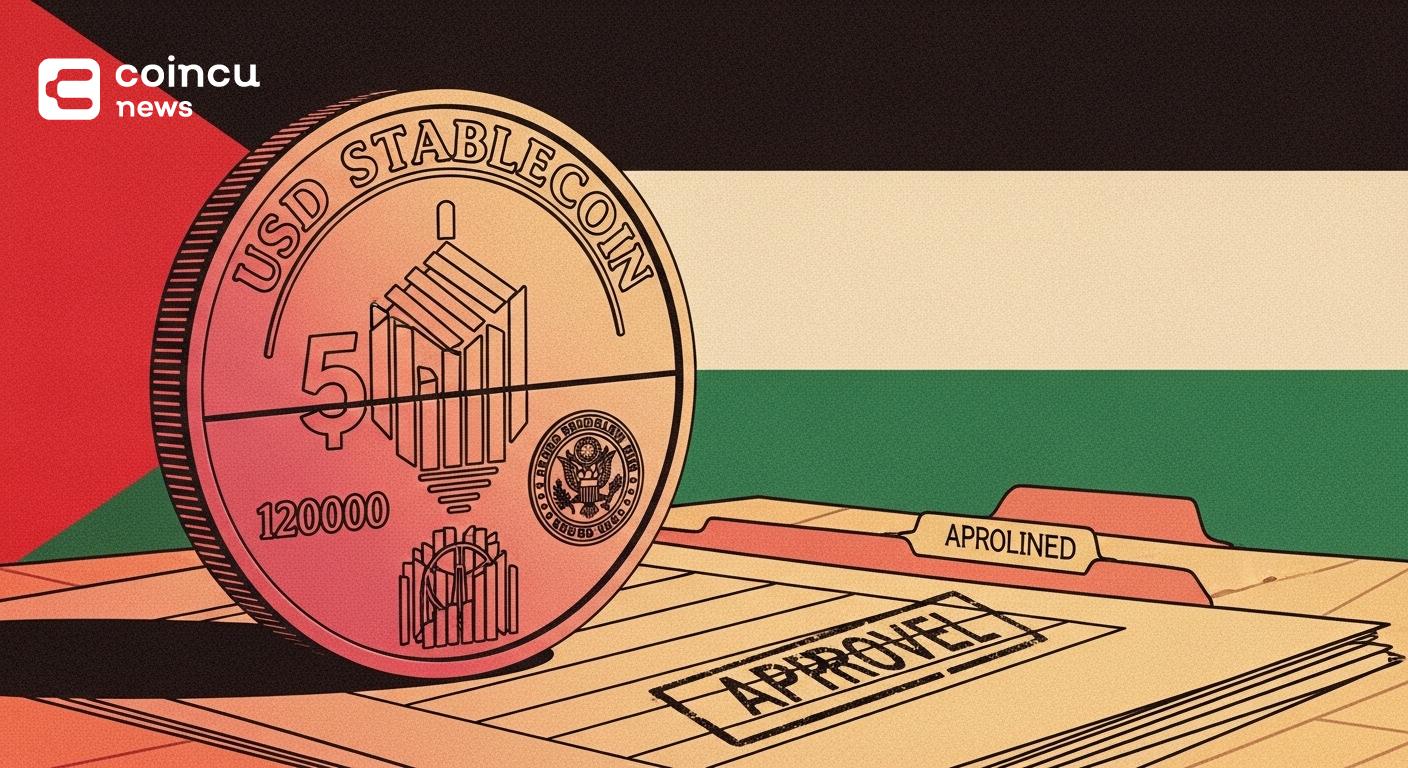
What Trump’s Board of Peace Gaza USD-pegged stablecoin entails now
Officials involved with Donald Trump’s Board of Peace are exploring a USD‑pegged stablecoin for Gaza to support economic activity, as reported by Cointelegraph. A 14‑member committee and an Office of the High Representative have joined the talks, and membership reportedly requires a $1 billion contribution.
Crypto Valley Journal has described the plan as preliminary and aimed at providing a digital payment tool rather than replacing the shekel, dollar, or dinar. The report also notes severe banking damage with very few ATMs functioning, and that adviser Liran Tancman presented the concept in Washington on February 19, 2026.
Why it matters for payments, aid delivery, and oversight
If pursued, a USD‑pegged instrument could streamline aid disbursement, payroll, and merchant payments where cash access is constrained. It could also enable programmatic controls and audit trails, raising both opportunities for transparency and questions about who exercises oversight.
One report summarized the initiative’s aim before detailing the surrounding talks. “Officials working with Donald Trump’s Board of Peace are considering a US dollar‑backed stablecoin for reviving Gaza’s devastated economy,” said the Financial Times.
Real‑world outcomes would hinge on design choices: who issues and controls the token, how reserves are safeguarded, and how identities, data, and sanctions compliance are handled. These elements would shape humanitarian utility, user protection, and the balance between financial inclusion and external control.
Immediate impact, feasibility, and constraints in Gaza today
Feasibility depends on electricity, connectivity, device access, identity verification, and merchant onboarding, alongside reliable cash‑in and cash‑out points. Without these basics, a digital instrument would struggle to deliver broad utility.
Integration with the West Bank, Israel, and regional banks remains an open question; creating Gaza‑specific rails could risk economic fragmentation if poorly coordinated, as noted by Bitcoinist. Interoperability and settlement arrangements would be decisive for trade and remittances.
Given the plan is at an exploratory stage, timelines, legal authority, and regulatory approvals remain uncertain. Implementation would likely require phased pilots, technical standards, and public reporting to build trust.
Governance, reserves, and UN Security Council context
Al Jazeera reports that the National Committee for the Administration of Gaza, supervised by the Board of Peace, emphasizes restoring core services and long‑term, self‑sustaining governance; its mission statement does not mention stablecoins. Any digital currency initiative would need to align with that stated focus.
Debate over United Nations Security Council Resolution 2803 includes concerns raised by human rights experts about external oversight and self‑determination, according to Wikipedia. A gaza stablecoin would be assessed against those sovereignty and governance questions.
At the time of this writing, Coinbase Global (COIN) closed at $164.32 and traded at $164.81 after hours, based on data from NasdaqGS. This contextual market snapshot does not imply any relationship to the Gaza proposal.
Issuer, reserve custody, auditor, wallets, off-ramps: operating model
Public reporting has not specified issuance authority, reserve custody, audit arrangements, wallet distribution, or cash‑in/cash‑out rails. Clarity on these elements is necessary for legal oversight, risk management, and usability.
The 14‑member committee and the Office of the High Representative involved in talks would likely influence governance frameworks and disclosures. Detailed operating rules have not been published.
KYC/AML, sanctions, data privacy, and currency interoperability
Any rollout would need robust KYC/AML controls and sanctions compliance proportional to humanitarian aims. Data minimization, consent, and privacy safeguards are essential to prevent misuse and unintended profiling of civilians.
Interoperability with the shekel, US dollar, and Jordanian dinar is critical for trade, remittances, and cross‑border settlements. Absent coordination, a siloed system could impede economic integration.
FAQ about Gaza stablecoin
Who would issue, regulate, and audit a Gaza USD-pegged stablecoin, and how would reserves be safeguarded?
No issuer, regulator, auditor, or reserve custodian has been formally named; details remain under discussion in Board of Peace–led talks.
How would a stablecoin affect Gaza’s monetary sovereignty and its financial ties with the West Bank, Israel, and regional banks?
Impacts hinge on governance and integration; risks include fragmentation and external control, while benefits require interoperability and credible oversight across existing currency rails.
| DISCLAIMER: The information on this website is provided as general market commentary and does not constitute investment advice. We encourage you to do your own research before investing. |


Other Posts








- Amplify 2024: Ohio’s Premier Blockchain Summit
- Polymarket Announces U.S. Beta Relaunch Amid Market Buzz
- China, US Conclude Trade Talks with Focus on Cooperation
- Crypto Weekly: NYSE Backs OKX, Kraken Gets Fed Access, BTC Sells
- CELO holds as Celo reviews Opera 160M token claim
- DeriW Launches Edge Hour Trading Competition Platform for Derivatives Traders
- Michael Saylor Denies Bitcoin Sell-Off Amid Large BTC Transfer
- Court Upholds Fed’s Rejection of Custodia Bank’s Request
- EU Opens Antitrust Probe Into Deutsche Boerse and Nasdaq Derivatives Dealings
- Kazakhstan Explores Crypto Reserves Backed by National Funds
- JPMorgan Increases Holdings in BlackRock’s Bitcoin ETF
- Nordea Bank Introduces Bitcoin ETP Trading for Nordic Customers
- XRP Spot ETF Launches on Nasdaq Amid Market Fluctuations
- JPMorgan Chase Launches 24/7 Digital Deposit Token for Clients
- Crypto Leaders Address Macro Volatility Amid Market Shifts
- Former CFO Convicted for $35M Fraudulent Crypto Investment
- Peter Schiff Challenges Michael Saylor on MSTR’s Business Model
- Thailand Orders Worldcoin to Delete 1.2 Million Biometric Records
- UK Proposes New DeFi Tax Framework to Ease User Burden
- U.S. Treasury Proposes New Tax Relief Regulations
- Amplify 2024: Ohio’s Premier Blockchain Summit
- Polymarket Announces U.S. Beta Relaunch Amid Market Buzz
- China, US Conclude Trade Talks with Focus on Cooperation
- Crypto Weekly: NYSE Backs OKX, Kraken Gets Fed Access, BTC Sells
- CELO holds as Celo reviews Opera 160M token claim
- DeriW Launches Edge Hour Trading Competition Platform for Derivatives Traders
- Michael Saylor Denies Bitcoin Sell-Off Amid Large BTC Transfer
- Court Upholds Fed’s Rejection of Custodia Bank’s Request
- EU Opens Antitrust Probe Into Deutsche Boerse and Nasdaq Derivatives Dealings
- Kazakhstan Explores Crypto Reserves Backed by National Funds
- JPMorgan Increases Holdings in BlackRock’s Bitcoin ETF
- Nordea Bank Introduces Bitcoin ETP Trading for Nordic Customers
- XRP Spot ETF Launches on Nasdaq Amid Market Fluctuations
- JPMorgan Chase Launches 24/7 Digital Deposit Token for Clients
- Crypto Leaders Address Macro Volatility Amid Market Shifts
- Former CFO Convicted for $35M Fraudulent Crypto Investment
- Peter Schiff Challenges Michael Saylor on MSTR’s Business Model
- Thailand Orders Worldcoin to Delete 1.2 Million Biometric Records
- UK Proposes New DeFi Tax Framework to Ease User Burden
- U.S. Treasury Proposes New Tax Relief Regulations
- Amplify 2024: Ohio’s Premier Blockchain Summit
- Polymarket Announces U.S. Beta Relaunch Amid Market Buzz
- China, US Conclude Trade Talks with Focus on Cooperation
- Crypto Weekly: NYSE Backs OKX, Kraken Gets Fed Access, BTC Sells
- CELO holds as Celo reviews Opera 160M token claim
- DeriW Launches Edge Hour Trading Competition Platform for Derivatives Traders
- Michael Saylor Denies Bitcoin Sell-Off Amid Large BTC Transfer
- Court Upholds Fed’s Rejection of Custodia Bank’s Request
- EU Opens Antitrust Probe Into Deutsche Boerse and Nasdaq Derivatives Dealings
- Kazakhstan Explores Crypto Reserves Backed by National Funds
- JPMorgan Increases Holdings in BlackRock’s Bitcoin ETF
- Nordea Bank Introduces Bitcoin ETP Trading for Nordic Customers
- XRP Spot ETF Launches on Nasdaq Amid Market Fluctuations
- JPMorgan Chase Launches 24/7 Digital Deposit Token for Clients
- Crypto Leaders Address Macro Volatility Amid Market Shifts
- Former CFO Convicted for $35M Fraudulent Crypto Investment
- Peter Schiff Challenges Michael Saylor on MSTR’s Business Model
- Thailand Orders Worldcoin to Delete 1.2 Million Biometric Records
- UK Proposes New DeFi Tax Framework to Ease User Burden
- U.S. Treasury Proposes New Tax Relief Regulations
Latest


Michael Saylor: Strategy’s 2.05% Bitcoin Return Can Create ‘Infinite Cycle’

Press Release

Polkadot’s $145M Legacy vs. DOGEBALL’s Future: These are the Best Cryptos to Buy Now
Enhanced Secures $1M in Strategic Pre-Seed Funding to Bring Structured Yield to More Assets Onchain