Vitalik Buterin Says Ethereum Should Scale Bandwidth, Not Speed
In Brief
- Buterin says physics and decentralization limit how fast Ethereum consensus can run
- Ethereum should act as a global coordination layer, with L2s handling speed use cases
- ETH tests key $3,020–$3,050 support after losing a major technical level
Vitalik Buterin stated that Ethereum must prioritize bandwidth scaling over latency reduction to maintain decentralization. He explained that reducing latency faces physical and economic constraints, including the speed of light and the need for global node access.
Ethereum’s bandwidth, however, can grow safely with technologies like PeerDAS and zero-knowledge proofs. These tools enable scaling thousands of times beyond the current limits while preserving security and accessibility.
Layer 2s to Handle High-Speed Applications
Buterin emphasized that Ethereum should act as a global coordination infrastructure, not a platform for sub-second applications. He positioned the base layer as the “world heartbeat,” with speed-focused apps moving to Layer 2 chains.
AI and localized use cases may need “city chains” with faster response times than Ethereum can support. In contrast, Ethereum’s Layer 2 ecosystem can handle such needs while maintaining the base layer’s decentralization.
Technical improvements may reduce block times to 2–4 seconds without tradeoffs. However, Buterin explained that pushing further would compromise decentralization and exclude home-based nodes.
He also noted Ethereum’s role is similar to Linux or BitTorrent: global, decentralized, and dependable. While Ethereum won’t match centralized systems on speed, it can still provide reliable consensus and infrastructure.
Recent growth in new addresses, now reaching 292,000 daily, reflects increasing adoption post-Fusaka upgrade. Meanwhile, major banks like JPMorgan and Deutsche Bank continue to build Ethereum-based financial products.
Ethereum remains limited by consumer-grade hardware capacity, including bandwidth, CPU use, and storage. But developers can still achieve significant scaling through safe architectural changes and Layer 2 expansion.
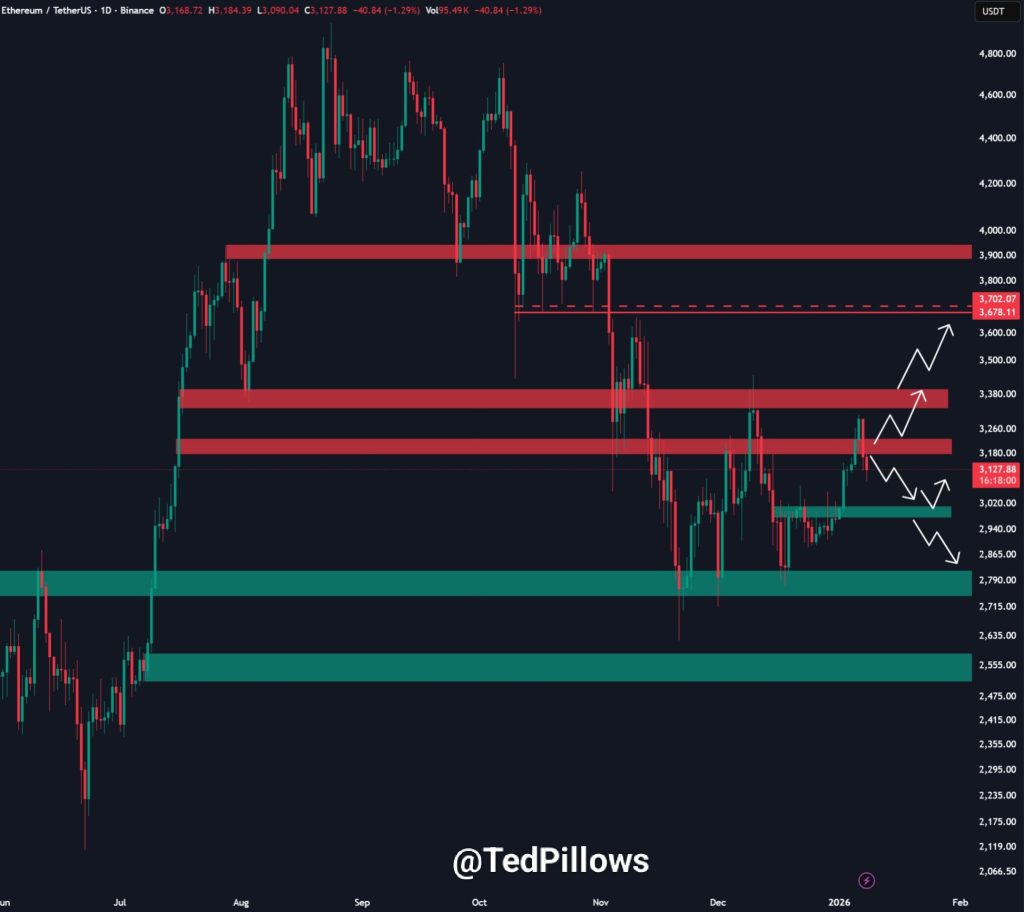
Meanwhile, Ethereum’s price action shows weakness as it loses key support. The $3,020–$3,050 range is the next major support zone to watch. Holding this level may lead to a reversal, but failure could invite further downside.
| DISCLAIMER: The information on this website is provided as general market commentary and does not constitute investment advice. We encourage you to do your own research before investing. |


Other Posts









- Amplify 2024: Ohio’s Premier Blockchain Summit
- Polymarket Announces U.S. Beta Relaunch Amid Market Buzz
- China, US Conclude Trade Talks with Focus on Cooperation
- Michael Saylor Denies Bitcoin Sell-Off Amid Large BTC Transfer
- Court Upholds Fed’s Rejection of Custodia Bank’s Request
- EU Opens Antitrust Probe Into Deutsche Boerse and Nasdaq Derivatives Dealings
- Kazakhstan Explores Crypto Reserves Backed by National Funds
- Nordea Bank Introduces Bitcoin ETP Trading for Nordic Customers
- JPMorgan Increases Holdings in BlackRock’s Bitcoin ETF
- XRP Spot ETF Launches on Nasdaq Amid Market Fluctuations
- JPMorgan Chase Launches 24/7 Digital Deposit Token for Clients
- Crypto Leaders Address Macro Volatility Amid Market Shifts
- Former CFO Convicted for $35M Fraudulent Crypto Investment
- Peter Schiff Challenges Michael Saylor on MSTR’s Business Model
- U.S. Treasury Proposes New Tax Relief Regulations
- Japan to Reduce Cryptocurrency Tax to 20%
- Yala Injects $5.5 Million Amid Recovery Efforts
- Amazon seeks to raise about $12 billion through a U.S. bond offering
- Radiant Capital Faces $50M Loss in Major Security Breach
- SEGG Media Unveils $300 Million Crypto Reserve Plan
- Amplify 2024: Ohio’s Premier Blockchain Summit
- Polymarket Announces U.S. Beta Relaunch Amid Market Buzz
- China, US Conclude Trade Talks with Focus on Cooperation
- Michael Saylor Denies Bitcoin Sell-Off Amid Large BTC Transfer
- Court Upholds Fed’s Rejection of Custodia Bank’s Request
- EU Opens Antitrust Probe Into Deutsche Boerse and Nasdaq Derivatives Dealings
- Kazakhstan Explores Crypto Reserves Backed by National Funds
- Nordea Bank Introduces Bitcoin ETP Trading for Nordic Customers
- JPMorgan Increases Holdings in BlackRock’s Bitcoin ETF
- XRP Spot ETF Launches on Nasdaq Amid Market Fluctuations
- JPMorgan Chase Launches 24/7 Digital Deposit Token for Clients
- Crypto Leaders Address Macro Volatility Amid Market Shifts
- Former CFO Convicted for $35M Fraudulent Crypto Investment
- Peter Schiff Challenges Michael Saylor on MSTR’s Business Model
- U.S. Treasury Proposes New Tax Relief Regulations
- Japan to Reduce Cryptocurrency Tax to 20%
- Yala Injects $5.5 Million Amid Recovery Efforts
- Amazon seeks to raise about $12 billion through a U.S. bond offering
- Radiant Capital Faces $50M Loss in Major Security Breach
- SEGG Media Unveils $300 Million Crypto Reserve Plan
- Amplify 2024: Ohio’s Premier Blockchain Summit
- Polymarket Announces U.S. Beta Relaunch Amid Market Buzz
- China, US Conclude Trade Talks with Focus on Cooperation
- Michael Saylor Denies Bitcoin Sell-Off Amid Large BTC Transfer
- Court Upholds Fed’s Rejection of Custodia Bank’s Request
- EU Opens Antitrust Probe Into Deutsche Boerse and Nasdaq Derivatives Dealings
- Kazakhstan Explores Crypto Reserves Backed by National Funds
- Nordea Bank Introduces Bitcoin ETP Trading for Nordic Customers
- JPMorgan Increases Holdings in BlackRock’s Bitcoin ETF
- XRP Spot ETF Launches on Nasdaq Amid Market Fluctuations
- JPMorgan Chase Launches 24/7 Digital Deposit Token for Clients
- Crypto Leaders Address Macro Volatility Amid Market Shifts
- Former CFO Convicted for $35M Fraudulent Crypto Investment
- Peter Schiff Challenges Michael Saylor on MSTR’s Business Model
- U.S. Treasury Proposes New Tax Relief Regulations
- Japan to Reduce Cryptocurrency Tax to 20%
- Yala Injects $5.5 Million Amid Recovery Efforts
- Amazon seeks to raise about $12 billion through a U.S. bond offering
- Radiant Capital Faces $50M Loss in Major Security Breach
- SEGG Media Unveils $300 Million Crypto Reserve Plan
Latest











Press Release
Bybit Launches AI Skills: Powering AI Agents for Crypto Trading With Zero Setup, 253 API Endpoints and Growing

Eightco (NASDAQ: ORBS) Secures $125M in Institutional Commitments Led by Bitmine (NYSE: BMNR), Cathie Wood’s ARK Invest, and Payward to Expand into Next Generation Technology