Bitcoin draws scrutiny as Ray Dalio questions store of value
Ray Dalio (Bridgewater): Bitcoin isn’t a safe haven or store of value
ray dalio, founder of Bridgewater Associates, has reiterated that Bitcoin should not be treated as a long-term store of value or a safe-haven asset. As reported by YoutoCoin, he framed this view around structural and adoption risks that, in his assessment, differentiate Bitcoin from established reserve assets.
According to that coverage, Dalio’s rationale includes Bitcoin’s on-chain traceability, potential future threats from quantum computing, correlation with risk assets, and limited official-sector uptake relative to gold. In practice, these factors weaken the case for “Bitcoin store of value” claims during periods when investors seek resilience.
Bitcoin vs gold: Dalio’s reasons, from traceability to central-bank uptake
Dalio’s comparison of Bitcoin vs gold emphasizes operational and institutional frictions rather than ideology. According to BitcoinWorld, he has argued that Bitcoin’s privacy is overstated and its traceability undermines its safe-haven pitch because transparent ledgers can facilitate surveillance and enforcement in ways that gold’s bearer form does not.
The same coverage highlights quantum-computing risk as a long-dated but non-trivial tail risk for cryptography, which feeds into valuation and custody considerations for multi-decade reserve assets. Even if timelines are uncertain, institutional allocators weigh threat surfaces that could impair durability.
Finally, Dalio’s framing points to central-bank behavior: gold is embedded in reserve management, while Bitcoin’s official-sector uptake remains limited. That divergence matters for liquidity, lender-of-last-resort dynamics, and cross-border settlement credibility during systemic stress.
What Dalio’s stance means for Bitcoin store of value claims
A safe haven is expected to appreciate or hold value during risk-off episodes, while a store of value should preserve purchasing power across cycles. Dalio’s critique implies Bitcoin’s observed correlation with risk assets challenges its safe-haven status, and its short operating history complicates multi-decade store-of-value claims.
His view does not preclude niche or tactical roles for Bitcoin in diversified portfolios, but it conditions those roles on risk tolerance, regulatory posture, and time horizon. The implication is analytical, not prescriptive: investors should separate technological promise from reserve-asset readiness.
For context, a recent period saw the Nasdaq crypto Index register a modest gain, reflecting mixed performance across major digital assets. Based on data from the Nasdaq Crypto Index, short bursts of momentum have not resolved the longer debate over durability and crisis behavior.
Risks, critiques, and brief context on Dalio’s view
Expert critiques aligning with Dalio: Roubini, Taleb, Harvey, Hanke
A number of economists and market scholars echo elements of Dalio’s skepticism, particularly around volatility, monetary functionality, and institutional risk. As reported by Business Insider, economist Nouriel Roubini argued that Bitcoin “is neither… a stable store of value,” challenging its monetary credentials and reserve-asset narrative.
Volatility is a recurring theme in academic and practitioner critiques. Campbell Harvey has emphasized that Bitcoin’s drawdown and volatility profile undermines its reliability as a store of value, noting on LinkedIn that it is not a pure substitute for gold in portfolio construction terms.
Other economists stress the absence of intrinsic yield or industrial utility. Steve Hanke has described Bitcoin’s price spikes and crashes as symptoms of speculative behavior rather than underlying economic value, according to CCN.com, which weakens safe-haven claims during funding shocks.
Dalio’s past remarks: small BTC exposure, ‘brilliant invention,’ gold preference
Contextually, Dalio has acknowledged the innovation while staying cautious about the reserve-asset case. In 2021, “a brilliant invention,” said Ray Dalio, founder of Bridgewater Associates, describing Bitcoin’s design while still favoring gold for reserve purposes.
Public remarks also indicate he has maintained only a small Bitcoin exposure while consistently expressing a preference for gold. That mix, technical appreciation, limited allocation, and gold-first reserve logic, aligns with his current stance on safe-haven suitability.
FAQ about Ray Dalio Bitcoin
Why does Ray Dalio argue gold is superior to Bitcoin as a reserve asset?
He points to gold’s entrenched central-bank reserves, deep liquidity, and history, versus Bitcoin’s traceability, quantum risk, and limited official adoption.
Does Bitcoin’s volatility and correlation with tech stocks undermine its safe-haven narrative?
Yes. Elevated volatility and risk-asset correlation challenge the expectation that it reliably holds value during market stress.
| DISCLAIMER: The information on this website is provided as general market commentary and does not constitute investment advice. We encourage you to do your own research before investing. |


Other Posts









- Amplify 2024: Ohio’s Premier Blockchain Summit
- Polymarket Announces U.S. Beta Relaunch Amid Market Buzz
- China, US Conclude Trade Talks with Focus on Cooperation
- Crypto Weekly: NYSE Backs OKX, Kraken Gets Fed Access, BTC Sells
- CELO holds as Celo reviews Opera 160M token claim
- DeriW Launches Edge Hour Trading Competition Platform for Derivatives Traders
- Michael Saylor Denies Bitcoin Sell-Off Amid Large BTC Transfer
- Court Upholds Fed’s Rejection of Custodia Bank’s Request
- EU Opens Antitrust Probe Into Deutsche Boerse and Nasdaq Derivatives Dealings
- Kazakhstan Explores Crypto Reserves Backed by National Funds
- JPMorgan Increases Holdings in BlackRock’s Bitcoin ETF
- Nordea Bank Introduces Bitcoin ETP Trading for Nordic Customers
- XRP Spot ETF Launches on Nasdaq Amid Market Fluctuations
- JPMorgan Chase Launches 24/7 Digital Deposit Token for Clients
- Crypto Leaders Address Macro Volatility Amid Market Shifts
- Former CFO Convicted for $35M Fraudulent Crypto Investment
- Peter Schiff Challenges Michael Saylor on MSTR’s Business Model
- Thailand Orders Worldcoin to Delete 1.2 Million Biometric Records
- UK Proposes New DeFi Tax Framework to Ease User Burden
- U.S. Treasury Proposes New Tax Relief Regulations
- Amplify 2024: Ohio’s Premier Blockchain Summit
- Polymarket Announces U.S. Beta Relaunch Amid Market Buzz
- China, US Conclude Trade Talks with Focus on Cooperation
- Crypto Weekly: NYSE Backs OKX, Kraken Gets Fed Access, BTC Sells
- CELO holds as Celo reviews Opera 160M token claim
- DeriW Launches Edge Hour Trading Competition Platform for Derivatives Traders
- Michael Saylor Denies Bitcoin Sell-Off Amid Large BTC Transfer
- Court Upholds Fed’s Rejection of Custodia Bank’s Request
- EU Opens Antitrust Probe Into Deutsche Boerse and Nasdaq Derivatives Dealings
- Kazakhstan Explores Crypto Reserves Backed by National Funds
- JPMorgan Increases Holdings in BlackRock’s Bitcoin ETF
- Nordea Bank Introduces Bitcoin ETP Trading for Nordic Customers
- XRP Spot ETF Launches on Nasdaq Amid Market Fluctuations
- JPMorgan Chase Launches 24/7 Digital Deposit Token for Clients
- Crypto Leaders Address Macro Volatility Amid Market Shifts
- Former CFO Convicted for $35M Fraudulent Crypto Investment
- Peter Schiff Challenges Michael Saylor on MSTR’s Business Model
- Thailand Orders Worldcoin to Delete 1.2 Million Biometric Records
- UK Proposes New DeFi Tax Framework to Ease User Burden
- U.S. Treasury Proposes New Tax Relief Regulations
- Amplify 2024: Ohio’s Premier Blockchain Summit
- Polymarket Announces U.S. Beta Relaunch Amid Market Buzz
- China, US Conclude Trade Talks with Focus on Cooperation
- Crypto Weekly: NYSE Backs OKX, Kraken Gets Fed Access, BTC Sells
- CELO holds as Celo reviews Opera 160M token claim
- DeriW Launches Edge Hour Trading Competition Platform for Derivatives Traders
- Michael Saylor Denies Bitcoin Sell-Off Amid Large BTC Transfer
- Court Upholds Fed’s Rejection of Custodia Bank’s Request
- EU Opens Antitrust Probe Into Deutsche Boerse and Nasdaq Derivatives Dealings
- Kazakhstan Explores Crypto Reserves Backed by National Funds
- JPMorgan Increases Holdings in BlackRock’s Bitcoin ETF
- Nordea Bank Introduces Bitcoin ETP Trading for Nordic Customers
- XRP Spot ETF Launches on Nasdaq Amid Market Fluctuations
- JPMorgan Chase Launches 24/7 Digital Deposit Token for Clients
- Crypto Leaders Address Macro Volatility Amid Market Shifts
- Former CFO Convicted for $35M Fraudulent Crypto Investment
- Peter Schiff Challenges Michael Saylor on MSTR’s Business Model
- Thailand Orders Worldcoin to Delete 1.2 Million Biometric Records
- UK Proposes New DeFi Tax Framework to Ease User Burden
- U.S. Treasury Proposes New Tax Relief Regulations
Latest


U.S. Bitcoin ETF Sees 3,353 BTC Inflow, Ethereum ETF Adds 29,225 ETH

Pharos Network and OKX Wallet Launch ‘Stake Before the Stake’ Event
Press Release
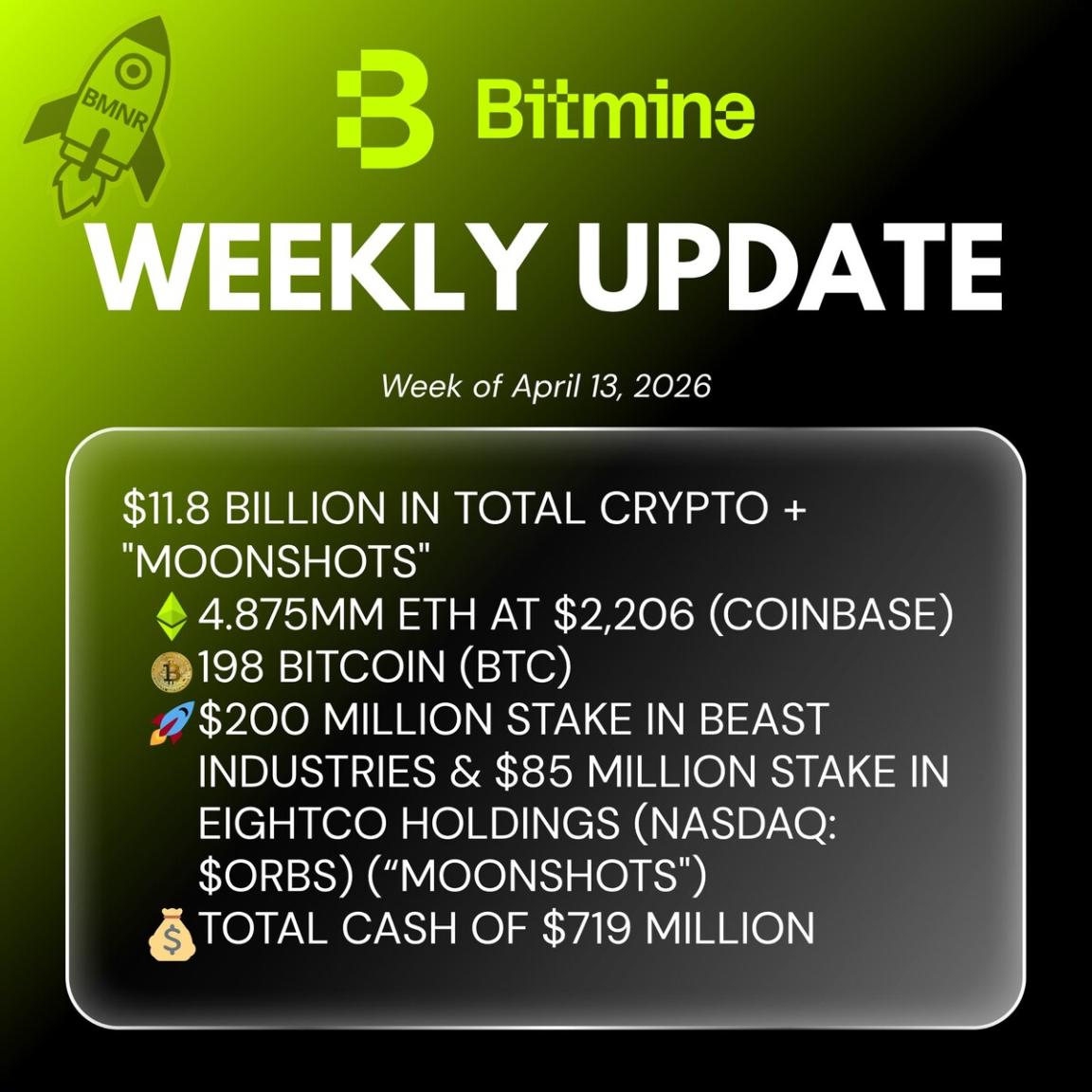
Bitmine Immersion Technologies (BMNR) Announces ETH Holdings Reach 4.875 Million Tokens, and Total Crypto and Total Cash Holdings of $11.8 Billion

Cango’s HPC and AI Inference Subsidiary, EcoHash, Begins Commercial Operations