





- JPMorgan revises Fed rate outlook to a 2027 hike.
- Previously expected a 25 bp cut in 2026.
- Impact on future monetary policy strategies.
On January 12, PANews reported that JPMorgan Chase now anticipates a 25 basis points interest rate hike by the Federal Reserve in Q3 2027, reversing earlier forecasts.
This shift indicates caution amid economic uncertainties, potentially impacting financial markets and influencing investor strategies globally.
JPMorgan Predicts 2027 Rate Hike, Shifting Market Strategies
JPMorgan Chase, a prominent financial institution, has updated its Federal Reserve interest rate expectations. JPMorgan now predicts a 25 basis point rate increase in 2027, a shift from its earlier forecast of a rate cut in 2026. The change was reported on January 12, emphasizing the bank’s strategic forecast realignment.
The revised forecast indicates a notable shift away from a predicted rate cut in 2026. This adjustment suggests a potentially prolonged tightening cycle from the Federal Reserve, likely affecting broader economic and financial sectors. Market observers anticipate increased volatility based on economic indicators in the coming years.
Michael Feroli, Chief U.S. Economist, J.P. Morgan, remarked, “The divergence between the more dovish FOMC dots and the more hawkish growth and inflation profiles suggests the recent policy action should be seen as an insurance cut, rather than a substantive shift in the Fed’s reaction function.”
Long-Term Economic Implications and Bitcoin Price Trends
Did you know? In the past decade, a 25 basis point change often predicated significant industry shifts, marking strategic pivots in economic policy planning.
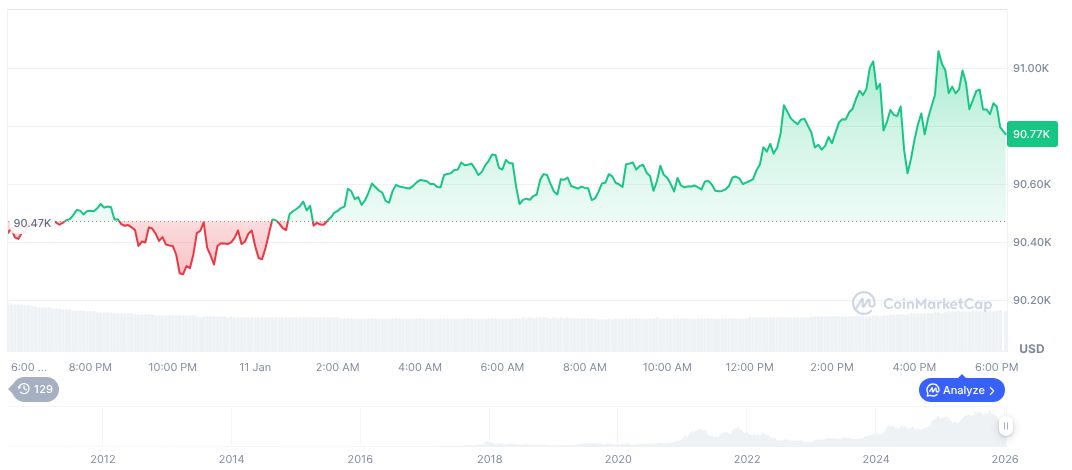
According to CoinMarketCap, Bitcoin’s price stands at $90,534.46, with a market cap of $1.81 trillion. The coin has experienced a 0.31% decline in 24 hours and an 18.63% drop over 90 days. The trading volume surged by 151.54% in the past day.
Recently, the Coincu research team highlighted the potential economic impacts of such forecast changes, asserting that future hikes could stimulate regulatory shifts and influence technological advancements in financial instruments. Such expectations are often grounded in long-term trends and interest rate cycles.
| DISCLAIMER: The information on this website is provided as general market commentary and does not constitute investment advice. We encourage you to do your own research before investing. |
No tags available.


Other Posts







- Amplify 2024: Ohio’s Premier Blockchain Summit
- Polymarket Announces U.S. Beta Relaunch Amid Market Buzz
- Michael Saylor Denies Bitcoin Sell-Off Amid Large BTC Transfer
- U.S. Treasury Proposes New Tax Relief Regulations
- Radiant Capital Faces $50M Loss in Major Security Breach
- SEGG Media Unveils $300 Million Crypto Reserve Plan
- 21Shares Files S-1 With SEC to Launch Hyperliquid ($HYPE) ETF
- Hong Kong Sentences Influencer for Unlicensed Investment Advice
- Franklin Templeton Signals TradFi and Crypto Integration
- China, US Conclude Trade Talks with Focus on Cooperation
- Nordea Bank Introduces Bitcoin ETP Trading for Nordic Customers
- Circle Mints $500 Million USDC on Solana Blockchain
- Court Upholds Fed’s Rejection of Custodia Bank’s Request
- Circle Focuses on Expanding USDC Use in Hong Kong
- Western Union Trials Stablecoin System for Remittance Innovation
- GMGN Completes Compensation for MEV-Affected Users
- Kevin Hassett Emphasizes Fed’s Independence Amid Trump’s Rate Suggestion
- Kazakhstan Explores Crypto Reserves Backed by National Funds
- Is MetaMask Preparing for Its Long-Awaited MASK Token Airdrop?
- EU Opens Antitrust Probe Into Deutsche Boerse and Nasdaq Derivatives Dealings
- Amplify 2024: Ohio’s Premier Blockchain Summit
- Polymarket Announces U.S. Beta Relaunch Amid Market Buzz
- Michael Saylor Denies Bitcoin Sell-Off Amid Large BTC Transfer
- U.S. Treasury Proposes New Tax Relief Regulations
- Radiant Capital Faces $50M Loss in Major Security Breach
- SEGG Media Unveils $300 Million Crypto Reserve Plan
- 21Shares Files S-1 With SEC to Launch Hyperliquid ($HYPE) ETF
- Hong Kong Sentences Influencer for Unlicensed Investment Advice
- Franklin Templeton Signals TradFi and Crypto Integration
- China, US Conclude Trade Talks with Focus on Cooperation
- Nordea Bank Introduces Bitcoin ETP Trading for Nordic Customers
- Circle Mints $500 Million USDC on Solana Blockchain
- Court Upholds Fed’s Rejection of Custodia Bank’s Request
- Circle Focuses on Expanding USDC Use in Hong Kong
- Western Union Trials Stablecoin System for Remittance Innovation
- GMGN Completes Compensation for MEV-Affected Users
- Kevin Hassett Emphasizes Fed’s Independence Amid Trump’s Rate Suggestion
- Kazakhstan Explores Crypto Reserves Backed by National Funds
- Is MetaMask Preparing for Its Long-Awaited MASK Token Airdrop?
- EU Opens Antitrust Probe Into Deutsche Boerse and Nasdaq Derivatives Dealings
- Amplify 2024: Ohio’s Premier Blockchain Summit
- Polymarket Announces U.S. Beta Relaunch Amid Market Buzz
- Michael Saylor Denies Bitcoin Sell-Off Amid Large BTC Transfer
- U.S. Treasury Proposes New Tax Relief Regulations
- Radiant Capital Faces $50M Loss in Major Security Breach
- SEGG Media Unveils $300 Million Crypto Reserve Plan
- 21Shares Files S-1 With SEC to Launch Hyperliquid ($HYPE) ETF
- Hong Kong Sentences Influencer for Unlicensed Investment Advice
- Franklin Templeton Signals TradFi and Crypto Integration
- China, US Conclude Trade Talks with Focus on Cooperation
- Nordea Bank Introduces Bitcoin ETP Trading for Nordic Customers
- Circle Mints $500 Million USDC on Solana Blockchain
- Court Upholds Fed’s Rejection of Custodia Bank’s Request
- Circle Focuses on Expanding USDC Use in Hong Kong
- Western Union Trials Stablecoin System for Remittance Innovation
- GMGN Completes Compensation for MEV-Affected Users
- Kevin Hassett Emphasizes Fed’s Independence Amid Trump’s Rate Suggestion
- Kazakhstan Explores Crypto Reserves Backed by National Funds
- Is MetaMask Preparing for Its Long-Awaited MASK Token Airdrop?
- EU Opens Antitrust Probe Into Deutsche Boerse and Nasdaq Derivatives Dealings
Latest


Chainlink Trades Between $11.9 and $14.5, Setting Up for a Potential Price Shift

Federal Reserve Chair Subpoena Sparks Investigation Over Interest Rate Pressures








Press Release
Bitmine Immersion Technologies (BMNR) Announces ETH Holdings Reach 4.168 Million Tokens, and Total Crypto and Total Cash Holdings of $14.0 Billion

Evernorth and Doppler Finance Collaborate to Power Institutional XRP Infrastructure