Iran strikes U.S. bases in Qatar, Bahrain, and Oman
Iran launched coordinated strikes against U.S. military bases and interests across the Gulf, hitting targets in Qatar, Bahrain, and Oman. According to PBS NewsHour, the attacks form part of Iran’s widening retaliation after earlier U.S.–Israeli operations.
Identified targets include the Al Udeid Air Base strike in Qatar, activity near the u.S. Fifth Fleet in Bahrain, and a Duqm Port attack in Oman. Authorities in multiple capitals issued emergency statements and reviewed air-defense postures.
Qatari coverage highlighted the Oman maritime incident and its sovereignty implications, as reported by Doha news. Host-nation sensitivities are acute where U.S. assets operate under bilateral security agreements.
Bahrain described impacts around the U.S. Fifth Fleet in Bahrain as treacherous and a blatant violation of sovereignty, as reported by Yahoo News. Local alerts and force-protection measures were raised pending further assessments.
Why the Gulf strikes matter for regional security and sovereignty
These strikes test the balance between host-nation sovereignty and the presence of foreign forces. Under international law, third-country territory remains protected even when hosting allied bases, centering debates on necessity, consent, and proportionality.
As reported by BBC News, the conflict widened after the death of Iran’s Supreme Leader, extending geographic risk beyond Iran, Israel, and Iraq. This shift complicates de-escalation channels and raises cross-border spillover risks.
The Washington Post assessed that escalation now threatens hundreds of millions of civilians across additional states. Civilian protection, airspace management, and maritime safety are immediate concerns for governments and insurers.
Oman has positioned itself as a mediator and urged restraint, especially around its strategic coastline. “This is not your war,” said Foreign Minister Badr al-Busaidi, calling for urgent de-escalation, according to Al Jazeera.
The Atlantic Council argued that Iran’s decision to target Gulf states like Qatar, Bahrain, and Oman could reshape regional alignments, energy security, and maritime risk for years. Regional diplomacy will likely hinge on host-nation consent and crisis hotlines.
Immediate impacts: Al Udeid Air Base, Fifth Fleet, Duqm Port
At Al Udeid Air Base, a central hub for U.S. air operations, security and flight postures were tightened while damage assessments proceeded. The Al Udeid Air Base strike underscores exposure of coalition logistics and C2 nodes.
In Bahrain, the presence of the U.S. Fifth Fleet concentrates maritime command-and-control. Heightened vigilance likely extends to port calls, force protection, and air-defense readiness across linked facilities.
Oman’s Duqm Port attack highlights vulnerabilities along the Arabian Sea logistics chain and adjacent shipping lanes. Any sustained disruption could pressure regional bunkering, repair schedules, and marine insurance costs.
U.S. officials signaled a firm posture after the attacks. “Any attacks on American forces will be met without hesitation,” said Defense Secretary Pete Hegseth, as reported by The Guardian.
Based on Chainalysis data, roughly $10.3 million in crypto left Iranian exchanges after the February 28 airstrikes, echoing prior stress patterns. Such flows often track flight-to-custody behavior during geopolitical shocks.
Elliptic separately observed a 700% surge in outgoing transactions at Nobitex within minutes of the initial strikes. TRM Labs estimated about USD 11 billion in crypto activity linked to Iran since 2025 and noted an 80% post-strike volume contraction.
At the time of this writing, Bitcoin traded near $66,491 with high volatility and neutral momentum readings. These snapshots are descriptive and do not imply forward direction.
What we know and what we don’t know now
Verified: Al Udeid Air Base strike, U.S. Fifth Fleet in Bahrain, Duqm Port attack in Oman
Confirmed targets include the Al Udeid Air Base strike in Qatar, impacts near the U.S. Fifth Fleet in Bahrain, and a Duqm Port attack in Oman. Host governments and regional media acknowledged these incidents.
Pending confirmation: casualties, damage assessments, follow-on operations
Official casualty figures, comprehensive damage assessments, and potential follow-on operations remain unconfirmed. Authorities indicate updates will follow once site surveys and command reviews are complete.
FAQ about Al Udeid Air Base strike
How did Qatar, Bahrain, and Oman respond to strikes in their territory and airspace, and what steps are they taking now?
Qatar condemned airspace violations; Bahrain decried attacks near the Fifth Fleet; Oman urged de-escalation. Governments elevated alert levels while coordinating assessments and diplomatic consultations.
What is the U.S. response and military posture after the attacks, and could American forces escalate further?
Washington signaled readiness to respond and tightened force protection at regional facilities. Any escalation remains conditional on threat assessments, allied coordination, and proportionality under international law.
| DISCLAIMER: The information on this website is provided as general market commentary and does not constitute investment advice. We encourage you to do your own research before investing. |


Other Posts









- Amplify 2024: Ohio’s Premier Blockchain Summit
- Polymarket Announces U.S. Beta Relaunch Amid Market Buzz
- China, US Conclude Trade Talks with Focus on Cooperation
- Crypto Weekly: NYSE Backs OKX, Kraken Gets Fed Access, BTC Sells
- CELO holds as Celo reviews Opera 160M token claim
- DeriW Launches Edge Hour Trading Competition Platform for Derivatives Traders
- Michael Saylor Denies Bitcoin Sell-Off Amid Large BTC Transfer
- Court Upholds Fed’s Rejection of Custodia Bank’s Request
- EU Opens Antitrust Probe Into Deutsche Boerse and Nasdaq Derivatives Dealings
- Kazakhstan Explores Crypto Reserves Backed by National Funds
- JPMorgan Increases Holdings in BlackRock’s Bitcoin ETF
- Nordea Bank Introduces Bitcoin ETP Trading for Nordic Customers
- XRP Spot ETF Launches on Nasdaq Amid Market Fluctuations
- JPMorgan Chase Launches 24/7 Digital Deposit Token for Clients
- Crypto Leaders Address Macro Volatility Amid Market Shifts
- Former CFO Convicted for $35M Fraudulent Crypto Investment
- Peter Schiff Challenges Michael Saylor on MSTR’s Business Model
- Thailand Orders Worldcoin to Delete 1.2 Million Biometric Records
- UK Proposes New DeFi Tax Framework to Ease User Burden
- U.S. Treasury Proposes New Tax Relief Regulations
- Amplify 2024: Ohio’s Premier Blockchain Summit
- Polymarket Announces U.S. Beta Relaunch Amid Market Buzz
- China, US Conclude Trade Talks with Focus on Cooperation
- Crypto Weekly: NYSE Backs OKX, Kraken Gets Fed Access, BTC Sells
- CELO holds as Celo reviews Opera 160M token claim
- DeriW Launches Edge Hour Trading Competition Platform for Derivatives Traders
- Michael Saylor Denies Bitcoin Sell-Off Amid Large BTC Transfer
- Court Upholds Fed’s Rejection of Custodia Bank’s Request
- EU Opens Antitrust Probe Into Deutsche Boerse and Nasdaq Derivatives Dealings
- Kazakhstan Explores Crypto Reserves Backed by National Funds
- JPMorgan Increases Holdings in BlackRock’s Bitcoin ETF
- Nordea Bank Introduces Bitcoin ETP Trading for Nordic Customers
- XRP Spot ETF Launches on Nasdaq Amid Market Fluctuations
- JPMorgan Chase Launches 24/7 Digital Deposit Token for Clients
- Crypto Leaders Address Macro Volatility Amid Market Shifts
- Former CFO Convicted for $35M Fraudulent Crypto Investment
- Peter Schiff Challenges Michael Saylor on MSTR’s Business Model
- Thailand Orders Worldcoin to Delete 1.2 Million Biometric Records
- UK Proposes New DeFi Tax Framework to Ease User Burden
- U.S. Treasury Proposes New Tax Relief Regulations
- Amplify 2024: Ohio’s Premier Blockchain Summit
- Polymarket Announces U.S. Beta Relaunch Amid Market Buzz
- China, US Conclude Trade Talks with Focus on Cooperation
- Crypto Weekly: NYSE Backs OKX, Kraken Gets Fed Access, BTC Sells
- CELO holds as Celo reviews Opera 160M token claim
- DeriW Launches Edge Hour Trading Competition Platform for Derivatives Traders
- Michael Saylor Denies Bitcoin Sell-Off Amid Large BTC Transfer
- Court Upholds Fed’s Rejection of Custodia Bank’s Request
- EU Opens Antitrust Probe Into Deutsche Boerse and Nasdaq Derivatives Dealings
- Kazakhstan Explores Crypto Reserves Backed by National Funds
- JPMorgan Increases Holdings in BlackRock’s Bitcoin ETF
- Nordea Bank Introduces Bitcoin ETP Trading for Nordic Customers
- XRP Spot ETF Launches on Nasdaq Amid Market Fluctuations
- JPMorgan Chase Launches 24/7 Digital Deposit Token for Clients
- Crypto Leaders Address Macro Volatility Amid Market Shifts
- Former CFO Convicted for $35M Fraudulent Crypto Investment
- Peter Schiff Challenges Michael Saylor on MSTR’s Business Model
- Thailand Orders Worldcoin to Delete 1.2 Million Biometric Records
- UK Proposes New DeFi Tax Framework to Ease User Burden
- U.S. Treasury Proposes New Tax Relief Regulations
Latest

Pharos Network and OKX Wallet Launch ‘Stake Before the Stake’ Event


Bitcoin Slides to $71,000 as Hormuz Tensions Hit Risk Appetite
Press Release
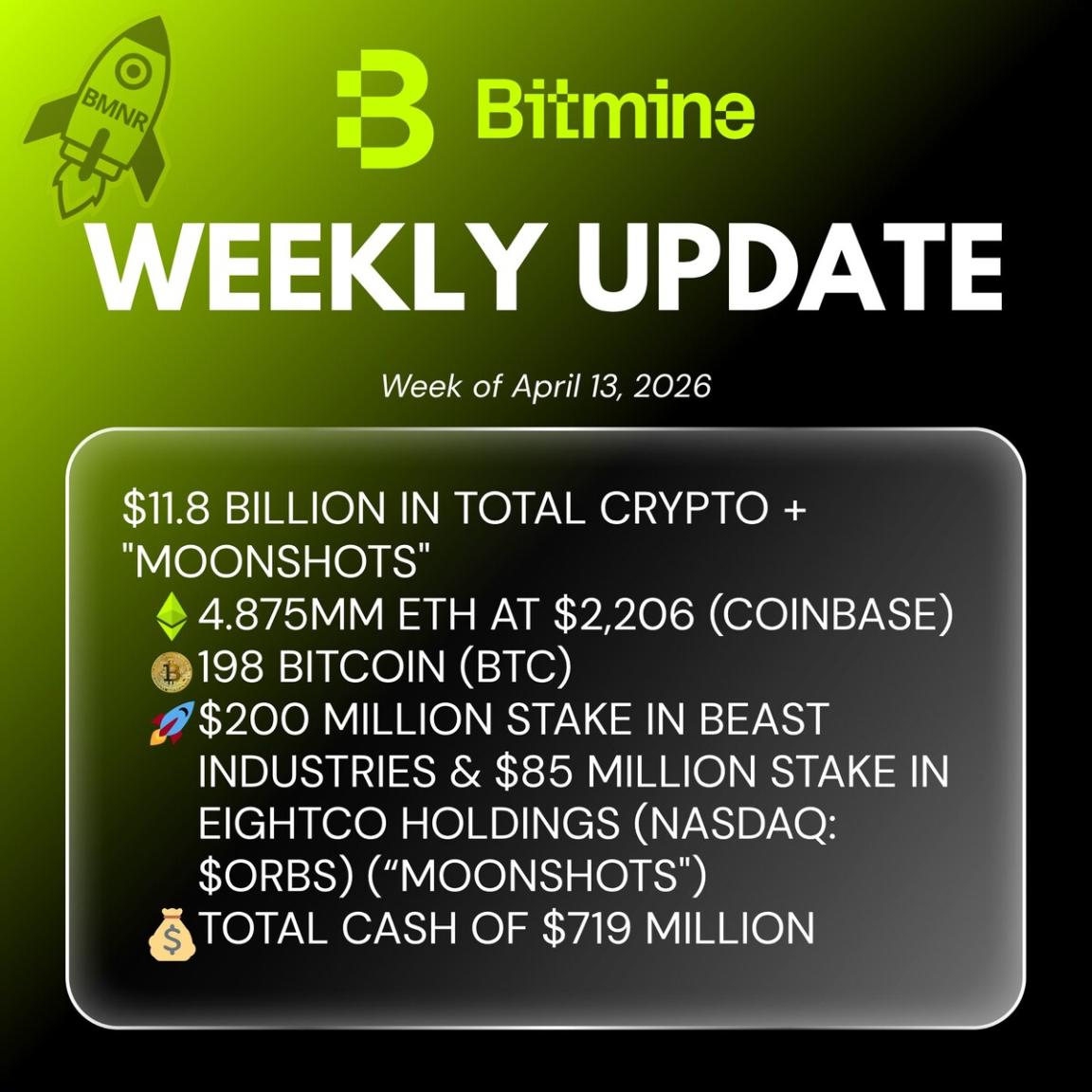
Bitmine Immersion Technologies (BMNR) Announces ETH Holdings Reach 4.875 Million Tokens, and Total Crypto and Total Cash Holdings of $11.8 Billion

Cango’s HPC and AI Inference Subsidiary, EcoHash, Begins Commercial Operations