Updated July 9, 2026
Quick Answer
If you want the short version, the Solana DEX platforms most worth comparing in 2026 are Jupiter, Raydium, Orca, Meteora, and Drift.
They are not the same kind of venue:
- Jupiter is the clearest route-aggregation layer
- Raydium is still one of the most recognizable Solana swap venues
- Orca remains a strong AMM reference point
- Meteora matters for users comparing liquidity structure beyond a basic swap
- Drift belongs here because many Solana users are really comparing spot-style DEXes with perps venues
That is the cleaner way to evaluate Solana DEXes now. Start with trading job, not logo familiarity.
Why the Best Solana DEX Depends on What You Want to Trade
Solana users do not all need the same kind of exchange.
Some want:
- the best route for a normal token swap
- an AMM they already trust
- stable or concentrated liquidity strategies
- perpetual futures rather than spot swaps
That is why a useful Solana DEX article should compare models, not pretend every user wants the same trade path.
Quick Comparison
| Platform | Best for | Core model | Strongest point | Main caveat |
|---|---|---|---|---|
| Jupiter | users who want best-route execution | DEX aggregator | strong routing and product breadth | depends on underlying venues |
| Raydium | mainstream Solana spot users | AMM and trading venue | broad recognition in Solana DeFi | not every trade path is best just because it is familiar |
| Orca | users who want a cleaner AMM comparison point | AMM and liquidity infrastructure | simple product identity | narrower than a full routing layer |
| Meteora | users comparing more specialized liquidity structures | liquidity and vault-focused Solana DeFi stack | useful beyond plain swap UI | more specialized than casual swappers need |
| Drift | users who want Solana perps | perpetual futures venue | strong trading-native fit | not a simple spot DEX |
1. Jupiter
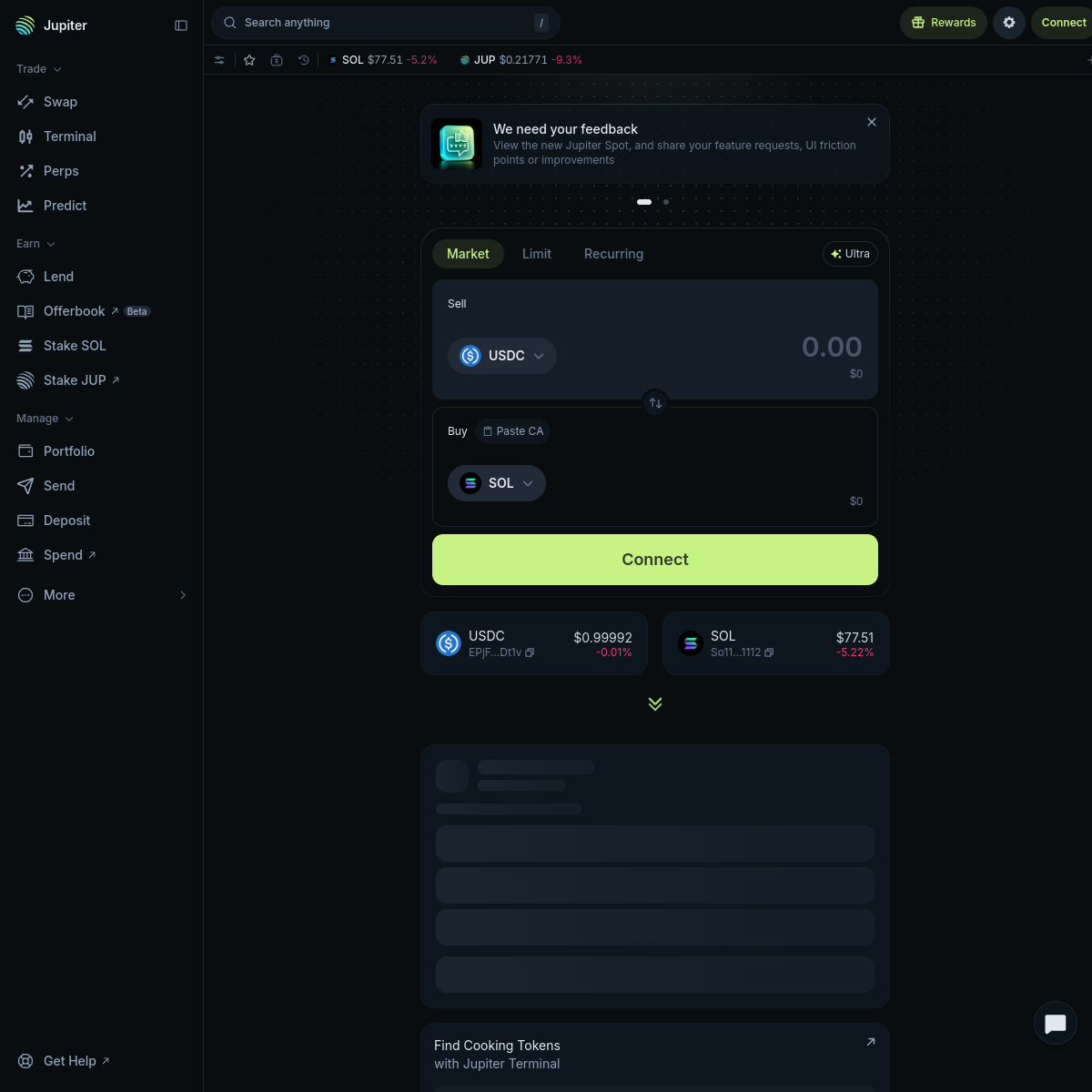
Jupiter belongs at the top because many Solana users are not choosing one pool anymore. They are choosing a route.
Its homepage describes Jupiter as the home of onchain finance, with swapping, borrowing, lending, perps, prediction markets, and more. In practical terms, it is the cleanest starting point for users who want execution-first routing on Solana.
Why it made the list:
- strongest aggregator identity
- broad Solana relevance
- useful for both beginners and more active users
What looks strongest in 2026:
- route-first mindset is still the right default for many Solana swaps
- strong product awareness across the Solana ecosystem
- broader product surface than a single-pool AMM
What remains weaker:
- users still need to understand the venues and tokens behind the route
- aggregation does not remove token or contract risk
Who it may suit:
- Solana users who want the best route rather than one brand
- users swapping across many assets
2. Raydium
Raydium remains one of the most recognizable Solana DEX names and still matters as a core comparison point.
Its official swap interface and docs continue to frame it as a trading venue built around onchain liquidity, and its product identity remains easy for readers to understand.
Why it made the list:
- long-running relevance on Solana
- strong brand recognition
- still a useful baseline venue in the Solana DEX conversation
What looks strongest in 2026:
- familiar Solana DeFi presence
- easy reference point for mainstream Solana users
What remains weaker:
- not every swap should default to one venue when routing options exist
- familiarity can hide better pathing elsewhere
Who it may suit:
- mainstream Solana traders
- users who want a familiar spot-swap venue
3. Orca
Orca stays relevant because it is one of the clearest AMM and liquidity-infrastructure reference points on Solana.
Its homepage explicitly calls Orca Solana’s leading AMM and liquidity infrastructure protocol. That clarity is useful because many readers still need a cleaner AMM comparison point, not a broad trading portal.
Why it made the list:
- clear Solana AMM identity
- strong educational value in a DEX comparison
- useful contrast with Jupiter’s aggregator model
What looks strongest in 2026:
- easier conceptual fit for users learning Solana DEX basics
- strong product focus
What remains weaker:
- not as broad a front door as a routing layer
- users comparing many trade paths may still prefer Jupiter first
Who it may suit:
- users who want a recognizable AMM
- LPs and Solana DeFi learners
4. Meteora
Meteora matters because not every Solana DEX user is only comparing a basic swap box.
Its homepage emphasizes stable assets and dynamic vaults, which makes it useful as a liquidity-structure comparison point rather than only a mainstream swap venue.
Why it made the list:
- useful for readers looking beyond simple swaps
- relevant to Solana liquidity design
- expands the article beyond the most obvious brand names
What looks strongest in 2026:
- stronger fit for more specialized liquidity discussion
- helps readers think about infrastructure, not just trading UI
What remains weaker:
- more specialized than the average casual trader needs
- less intuitive for beginners than a plain AMM or aggregator
Who it may suit:
- LPs
- more advanced Solana DeFi users
5. Drift
Drift belongs here because a meaningful share of Solana DEX demand is actually perps demand.
Its site describes the product clearly around perpetual futures. That makes it a different kind of DEX platform from Jupiter, Raydium, or Orca, but still highly relevant when users search for where active trading happens on Solana.
Why it made the list:
- strong Solana trading relevance
- useful contrast between spot-style venues and perps venues
What looks strongest in 2026:
- better fit for active traders than a simple swap venue
- helps separate casual DEX intent from leverage-heavy trading intent
What remains weaker:
- not a beginner spot-swap tool
- higher behavioral and risk complexity than standard DEX usage
Who it may suit:
- active traders
- readers specifically looking for onchain perps on Solana
FAQ
What is the best Solana DEX in 2026?
There is no one answer for every user. Jupiter is the best route-first default for many users, Raydium and Orca remain strong spot references, and Drift matters if the user really wants perps.
Is Jupiter better than Raydium?
Not in every sense. Jupiter is stronger for route aggregation. Raydium is a direct venue and still a major Solana DEX brand. The better choice depends on whether you want a route engine or a familiar venue.
Is Drift a DEX?
It is best treated as a decentralized trading platform focused on perpetuals, not a simple spot AMM. It still belongs in the broader Solana DEX conversation because many users are comparing trading venues, not just swap pools.
Further Reading
- How to stake SOL with Phantom Wallet
- Best DeFi wallets in 2026
- Best decentralized crypto exchanges in 2026
References


- China, US Conclude Trade Talks with Focus on Cooperation
- Crypto Weekly: NYSE Backs OKX, Kraken Gets Fed Access, BTC Sells
- Court Upholds Fed’s Rejection of Custodia Bank’s Request
- Former CFO Convicted for $35M Fraudulent Crypto Investment
- DeriW Launches Edge Hour Trading Competition Platform for Derivatives Traders
- Michael Saylor Denies Bitcoin Sell-Off Amid Large BTC Transfer
- Buy Dogecoin on eToro: Step-by-Step Guide for Beginners (2024)
- Kazakhstan Explores Crypto Reserves Backed by National Funds
- JPMorgan Increases Holdings in BlackRock’s Bitcoin ETF
- Nordea Bank Introduces Bitcoin ETP Trading for Nordic Customers
- XRP Spot ETF Launches on Nasdaq Amid Market Fluctuations
- Peter Schiff Challenges Michael Saylor on MSTR’s Business Model
- Thailand Orders Worldcoin to Delete 1.2 Million Biometric Records
- UK Proposes New DeFi Tax Framework to Ease User Burden
- WLFI Under Fire: Analyst Warns Hyperliquid Could Be Next
- Ancient Ethereum Whale Moves $1.19 Billion After Decade
- BlackRock Receives Large Crypto Transfers from Coinbase
- SEC Scrutiny on ALT5 Sigma’s Leadership Disclosure Timing
- Yala Injects $5.5 Million Amid Recovery Efforts
- Radiant Capital Faces $50M Loss in Major Security Breach
- China, US Conclude Trade Talks with Focus on Cooperation
- Crypto Weekly: NYSE Backs OKX, Kraken Gets Fed Access, BTC Sells
- Court Upholds Fed’s Rejection of Custodia Bank’s Request
- Former CFO Convicted for $35M Fraudulent Crypto Investment
- DeriW Launches Edge Hour Trading Competition Platform for Derivatives Traders
- Michael Saylor Denies Bitcoin Sell-Off Amid Large BTC Transfer
- Buy Dogecoin on eToro: Step-by-Step Guide for Beginners (2024)
- Kazakhstan Explores Crypto Reserves Backed by National Funds
- JPMorgan Increases Holdings in BlackRock’s Bitcoin ETF
- Nordea Bank Introduces Bitcoin ETP Trading for Nordic Customers
- XRP Spot ETF Launches on Nasdaq Amid Market Fluctuations
- Peter Schiff Challenges Michael Saylor on MSTR’s Business Model
- Thailand Orders Worldcoin to Delete 1.2 Million Biometric Records
- UK Proposes New DeFi Tax Framework to Ease User Burden
- WLFI Under Fire: Analyst Warns Hyperliquid Could Be Next
- Ancient Ethereum Whale Moves $1.19 Billion After Decade
- BlackRock Receives Large Crypto Transfers from Coinbase
- SEC Scrutiny on ALT5 Sigma’s Leadership Disclosure Timing
- Yala Injects $5.5 Million Amid Recovery Efforts
- Radiant Capital Faces $50M Loss in Major Security Breach
- China, US Conclude Trade Talks with Focus on Cooperation
- Crypto Weekly: NYSE Backs OKX, Kraken Gets Fed Access, BTC Sells
- Court Upholds Fed’s Rejection of Custodia Bank’s Request
- Former CFO Convicted for $35M Fraudulent Crypto Investment
- DeriW Launches Edge Hour Trading Competition Platform for Derivatives Traders
- Michael Saylor Denies Bitcoin Sell-Off Amid Large BTC Transfer
- Buy Dogecoin on eToro: Step-by-Step Guide for Beginners (2024)
- Kazakhstan Explores Crypto Reserves Backed by National Funds
- JPMorgan Increases Holdings in BlackRock’s Bitcoin ETF
- Nordea Bank Introduces Bitcoin ETP Trading for Nordic Customers
- XRP Spot ETF Launches on Nasdaq Amid Market Fluctuations
- Peter Schiff Challenges Michael Saylor on MSTR’s Business Model
- Thailand Orders Worldcoin to Delete 1.2 Million Biometric Records
- UK Proposes New DeFi Tax Framework to Ease User Burden
- WLFI Under Fire: Analyst Warns Hyperliquid Could Be Next
- Ancient Ethereum Whale Moves $1.19 Billion After Decade
- BlackRock Receives Large Crypto Transfers from Coinbase
- SEC Scrutiny on ALT5 Sigma’s Leadership Disclosure Timing
- Yala Injects $5.5 Million Amid Recovery Efforts
- Radiant Capital Faces $50M Loss in Major Security Breach

Uniswap Launches Earn Feature for USDC, USDT, and ETH Deposits


Circle Obtains New York State Limited Purpose Trust License: What It Means

Performa Marks One Year Live with Major Upgrade for Digital-Native SMBs

Zoomex to Attend Coinfest Asia 2026 as Gold Sponsor and Host Summer Bay Party in Bali