Andreessen Horowitz’s crypto division has unveiled Crypto Fund 5, a $2.2 billion vehicle dedicated to backing Web3 entrepreneurs, marking the venture giant’s fifth dedicated crypto fund and a signal of renewed institutional conviction in blockchain infrastructure.
The fund was announced on May 5, 2026, with a16z crypto framing it as a bet on crypto’s transition from speculative trading to real financial utility. The firm’s partners, Chris Dixon, Ali Yahya, Guy Wuollet, and Eddy Lazzarin, described the fund’s mission as “turning new infrastructure into products people use every day.”
The raise brings a16z crypto’s accumulated capital to more than $9.8 billion across five funds. Fortune also reported that Eddy Lazzarin was promoted to general partner alongside the announcement.
A Smaller Fund With a Sharper Thesis
Crypto Fund 5 is roughly half the size of a16z crypto’s $4.5 billion Fund 4, which closed in May 2022 during the tail end of the previous bull cycle. The smaller raise does not necessarily signal retreat; it reflects a more focused deployment strategy at a different point in the market cycle.
The official announcement highlighted stablecoins, perpetual futures, prediction markets, and onchain lending as evidence that crypto has entered a “financial-utility phase.” Rather than chasing broad exposure, a16z is concentrating on sectors where blockchain technology has already demonstrated product-market fit.
This targeted approach echoes the kind of infrastructure bets visible across the industry. Projects building financial rails, such as those in the AI agent payments space, represent the type of utility-first thesis a16z appears to be pursuing.
U.S. Regulatory Confidence as a Catalyst
One underreported dimension of the fund launch is its explicit regulatory framing. The announcement stated that regulation is “moving in the right direction” and cited the GENIUS Act as an example of clearer stablecoin policy enabling broader institutional participation.
This positions Fund 5 as partly a bet on the U.S. regulatory environment. By tying the raise to legislative progress, a16z is signaling to limited partners that the compliance risk that weighed on crypto venture in 2023 and 2024 has materially diminished.
The regulatory angle also distinguishes the fund from competitor raises. Fund 5 is described as “100% dedicated to investing in crypto entrepreneurs,” suggesting a16z sees the current policy window as favorable for backing early-stage teams building in the United States.
Where the Capital Is Likely to Flow
The sectors a16z flagged in its announcement, stablecoins, perpetual futures, prediction markets, and onchain lending, provide a clear map of where the $2.2 billion may be deployed. Each of these verticals has seen meaningful adoption growth over the past 18 months.
Stablecoin transaction volumes have surged globally, and the GENIUS Act would formalize their regulatory treatment in the U.S. Perpetual futures remain the dominant trading instrument on crypto exchanges, while prediction markets have expanded from niche experiments into products with real user traction.
Onchain lending protocols have rebuilt after the credit collapses of 2022, with newer designs emphasizing overcollateralization and transparent risk management. Early-stage companies building tooling and infrastructure around these verticals are the most likely Fund 5 recipients.
Growth-stage opportunities may also feature in the portfolio. Companies that have proven unit economics in DeFi infrastructure or stablecoin payments but need capital to scale distribution fit the fund’s thesis of converting infrastructure into mainstream products.
Market Backdrop: Neutral Sentiment at Launch
The fund announcement arrived with Bitcoin trading at $81,398, up 1.3% over 24 hours. The total crypto market cap stood at approximately $2.77 trillion.
The Fear & Greed Index printed 50 on the day of the announcement, squarely in neutral territory. The timing suggests a16z is neither chasing euphoria nor bottom-fishing; the fund closed during a period of relative market calm rather than at a sentiment extreme.
This matters for fund performance. Venture funds that deploy during neutral-to-cautious market conditions historically avoid overpaying for early-stage equity, a pattern that recent Bitcoin-focused investment vehicles have also tried to exploit through cycle-aware allocation strategies.
What to Watch After the Fund Launch
The most immediate signal will be Fund 5’s first portfolio announcements. a16z crypto typically leads or co-leads seed and Series A rounds, so the initial batch of investments will reveal whether the firm is prioritizing DeFi infrastructure, stablecoin payments, or newer verticals like onchain prediction markets.
For crypto founders, the fund’s closure opens a new pool of capital at a time when venture fundraising has been uneven. Startups building in the sectors a16z explicitly named, particularly stablecoins and onchain lending, are the most obvious beneficiaries.
Competitor response will also matter. Other major crypto-focused funds, including Paradigm, Polychain, and Multicoin, may accelerate their own fundraising timelines now that a16z has set the benchmark for 2026 vintage funds.
The GENIUS Act’s legislative trajectory is worth tracking alongside the fund’s deployment. If the stablecoin bill advances through Congress, it would validate the regulatory thesis a16z has staked $2.2 billion on and potentially accelerate deal flow in the payments and compliance infrastructure space.
Disclaimer: This article is for informational purposes only and does not constitute financial or investment advice. Cryptocurrency and digital asset markets carry significant risk. Always do your own research before making decisions.
No tags available.


Other Posts








- China, US Conclude Trade Talks with Focus on Cooperation
- Crypto Weekly: NYSE Backs OKX, Kraken Gets Fed Access, BTC Sells
- Court Upholds Fed’s Rejection of Custodia Bank’s Request
- DeriW Launches Edge Hour Trading Competition Platform for Derivatives Traders
- Former CFO Convicted for $35M Fraudulent Crypto Investment
- Michael Saylor Denies Bitcoin Sell-Off Amid Large BTC Transfer
- Buy Dogecoin on eToro: Step-by-Step Guide for Beginners (2024)
- Kazakhstan Explores Crypto Reserves Backed by National Funds
- JPMorgan Increases Holdings in BlackRock’s Bitcoin ETF
- Nordea Bank Introduces Bitcoin ETP Trading for Nordic Customers
- XRP Spot ETF Launches on Nasdaq Amid Market Fluctuations
- Peter Schiff Challenges Michael Saylor on MSTR’s Business Model
- Thailand Orders Worldcoin to Delete 1.2 Million Biometric Records
- UK Proposes New DeFi Tax Framework to Ease User Burden
- WLFI Under Fire: Analyst Warns Hyperliquid Could Be Next
- Ancient Ethereum Whale Moves $1.19 Billion After Decade
- BlackRock Receives Large Crypto Transfers from Coinbase
- SEC Scrutiny on ALT5 Sigma’s Leadership Disclosure Timing
- Yala Injects $5.5 Million Amid Recovery Efforts
- Radiant Capital Faces $50M Loss in Major Security Breach
- China, US Conclude Trade Talks with Focus on Cooperation
- Crypto Weekly: NYSE Backs OKX, Kraken Gets Fed Access, BTC Sells
- Court Upholds Fed’s Rejection of Custodia Bank’s Request
- DeriW Launches Edge Hour Trading Competition Platform for Derivatives Traders
- Former CFO Convicted for $35M Fraudulent Crypto Investment
- Michael Saylor Denies Bitcoin Sell-Off Amid Large BTC Transfer
- Buy Dogecoin on eToro: Step-by-Step Guide for Beginners (2024)
- Kazakhstan Explores Crypto Reserves Backed by National Funds
- JPMorgan Increases Holdings in BlackRock’s Bitcoin ETF
- Nordea Bank Introduces Bitcoin ETP Trading for Nordic Customers
- XRP Spot ETF Launches on Nasdaq Amid Market Fluctuations
- Peter Schiff Challenges Michael Saylor on MSTR’s Business Model
- Thailand Orders Worldcoin to Delete 1.2 Million Biometric Records
- UK Proposes New DeFi Tax Framework to Ease User Burden
- WLFI Under Fire: Analyst Warns Hyperliquid Could Be Next
- Ancient Ethereum Whale Moves $1.19 Billion After Decade
- BlackRock Receives Large Crypto Transfers from Coinbase
- SEC Scrutiny on ALT5 Sigma’s Leadership Disclosure Timing
- Yala Injects $5.5 Million Amid Recovery Efforts
- Radiant Capital Faces $50M Loss in Major Security Breach
- China, US Conclude Trade Talks with Focus on Cooperation
- Crypto Weekly: NYSE Backs OKX, Kraken Gets Fed Access, BTC Sells
- Court Upholds Fed’s Rejection of Custodia Bank’s Request
- DeriW Launches Edge Hour Trading Competition Platform for Derivatives Traders
- Former CFO Convicted for $35M Fraudulent Crypto Investment
- Michael Saylor Denies Bitcoin Sell-Off Amid Large BTC Transfer
- Buy Dogecoin on eToro: Step-by-Step Guide for Beginners (2024)
- Kazakhstan Explores Crypto Reserves Backed by National Funds
- JPMorgan Increases Holdings in BlackRock’s Bitcoin ETF
- Nordea Bank Introduces Bitcoin ETP Trading for Nordic Customers
- XRP Spot ETF Launches on Nasdaq Amid Market Fluctuations
- Peter Schiff Challenges Michael Saylor on MSTR’s Business Model
- Thailand Orders Worldcoin to Delete 1.2 Million Biometric Records
- UK Proposes New DeFi Tax Framework to Ease User Burden
- WLFI Under Fire: Analyst Warns Hyperliquid Could Be Next
- Ancient Ethereum Whale Moves $1.19 Billion After Decade
- BlackRock Receives Large Crypto Transfers from Coinbase
- SEC Scrutiny on ALT5 Sigma’s Leadership Disclosure Timing
- Yala Injects $5.5 Million Amid Recovery Efforts
- Radiant Capital Faces $50M Loss in Major Security Breach



Bitget Stock Token AUM Exceeds $100 Million, Volume Tops $670 Million

Bitcoin Suisse Advances Middle East Expansion, Receives Financial Services Permission in Abu Dhabi
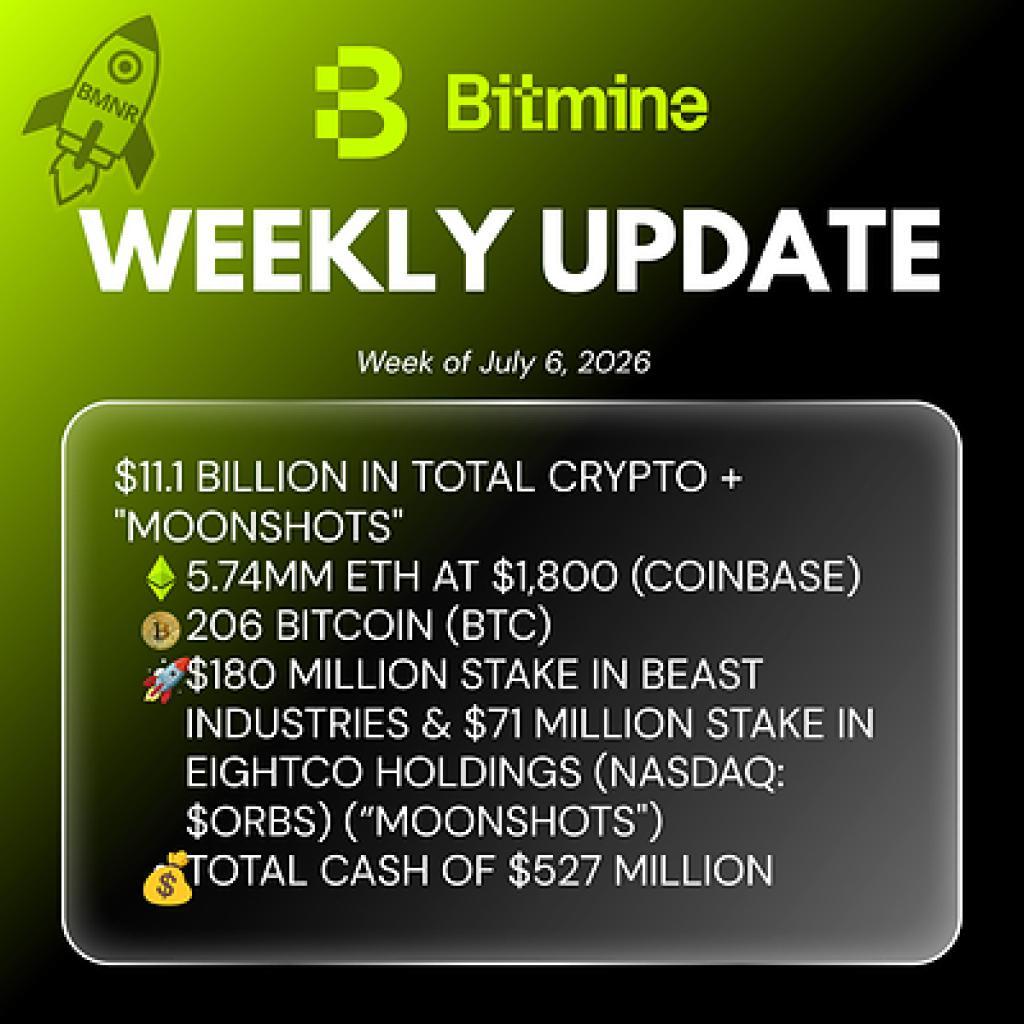
Bitmine Immersion Technologies (BMNR) Announces Total Crypto and Cash Holdings Top $11.1 Billion Now