30 Million USDT Transfer to Binance Detected On-Chain: What It May Signal
A transfer of 30 million USDT to Binance has been detected on-chain, drawing attention from traders monitoring large stablecoin movements for signals about near-term market positioning.
The transfer was flagged by on-chain tracking data, which identified the destination as a Binance-associated wallet. USDT, issued by Tether, is the most widely used dollar-pegged stablecoin for exchange funding and trading activity.
While the movement is confirmed on-chain, the identity of the sender and the intent behind the transfer remain unknown. Large stablecoin deposits to exchanges are often interpreted as preparation for trading activity, but they can also reflect routine treasury operations, over-the-counter settlement, or internal liquidity management.
Why Large Stablecoin Inflows to Exchanges Draw Attention
When a significant amount of USDT lands on a major exchange like Binance, market participants take notice because stablecoins on exchanges represent potential buying power. A deposit of this size could be staged for spot purchases of Bitcoin, Ethereum, or altcoins.
However, a deposit does not equal execution. The funds may sit idle, be used for derivatives margin, or move off the exchange entirely. Traders who have watched similar USDT transfers to Binance in recent weeks know that not every large inflow translates into visible market impact.
The distinction between liquidity preparation and confirmed trade execution is critical. A 30 million USDT deposit signals readiness to deploy capital, not a guarantee that capital will be deployed in any particular direction.
Possible Interpretations of the Transfer
The most straightforward reading is that a large holder moved stablecoins onto Binance to position for a trade. If the funds are deployed into spot markets, the effect would depend on which assets are targeted and how quickly the capital is allocated. In the context of broader institutional flows, including recent U.S. Bitcoin ETF outflows totaling 4,374 BTC, any fresh capital entering exchanges is worth monitoring.
A neutral interpretation is also plausible. Exchanges regularly receive large stablecoin transfers as part of normal operations. Market makers, institutional desks, and the exchange itself move funds between wallets for operational reasons that have no directional market intent.
A third possibility is that the transfer relates to derivatives activity. Stablecoins deposited as margin for futures or options positions would affect funding rates and open interest rather than spot prices directly. Growing institutional interest in crypto derivatives, reflected in developments like ICE’s plans to launch a hash rate futures market, underscores how exchange-bound capital can flow into instruments beyond simple spot trading.
What Traders Should Monitor Next
The most immediate signal would be whether the deposited USDT remains on Binance or moves again. On-chain watchers can track the destination wallet for subsequent outflows that might indicate the funds were not intended for trading.
On the exchange side, changes in Binance trading volume, order book depth, and funding rates in the hours following the deposit would help confirm whether the capital is being actively deployed. A spike in spot volume on major pairs like BTC/USDT or ETH/USDT shortly after the deposit would strengthen the case for directional intent.
Additional whale-sized stablecoin transfers to Binance or other major exchanges would also be worth watching. A single deposit of this size is notable but not extraordinary for an exchange of Binance’s scale. A cluster of similar transfers would carry more weight as a market signal. Broader equity-market moves in the crypto sector, such as Nakamoto’s reverse stock split targeting a Nasdaq listing, can also shape how traders interpret large capital flows across venues.
Without follow-through in price action or volume, the transfer remains an isolated data point rather than a confirmed catalyst.
FAQ
What does a 30 million USDT transfer to Binance mean?
It means a large holder moved $30 million worth of the Tether stablecoin to a Binance wallet. This could indicate preparation for trading, but it could also be routine treasury management or OTC settlement. The transfer alone does not confirm any specific market action.
Is the transfer automatically bullish?
No. While stablecoin inflows to exchanges are sometimes interpreted as buying power entering the market, the funds could be used for selling (via derivatives shorting), could sit unused, or could represent non-trading activity. Direction depends on how and whether the capital is deployed.
What evidence would strengthen the signal?
Confirmation would come from observable market behavior: increased trading volume on Binance, changes in funding rates, price movement in major pairs, or additional large stablecoin transfers arriving at exchanges in a short window. On-chain tracking of the specific wallet’s subsequent activity would also clarify intent.
Disclaimer: This article is for informational purposes only and does not constitute financial or investment advice. Cryptocurrency and digital asset markets carry significant risk. Always do your own research before making decisions.
No tags available.


Other Posts








- China, US Conclude Trade Talks with Focus on Cooperation
- Crypto Weekly: NYSE Backs OKX, Kraken Gets Fed Access, BTC Sells
- Court Upholds Fed’s Rejection of Custodia Bank’s Request
- Former CFO Convicted for $35M Fraudulent Crypto Investment
- DeriW Launches Edge Hour Trading Competition Platform for Derivatives Traders
- Michael Saylor Denies Bitcoin Sell-Off Amid Large BTC Transfer
- Buy Dogecoin on eToro: Step-by-Step Guide for Beginners (2024)
- Kazakhstan Explores Crypto Reserves Backed by National Funds
- JPMorgan Increases Holdings in BlackRock’s Bitcoin ETF
- Nordea Bank Introduces Bitcoin ETP Trading for Nordic Customers
- XRP Spot ETF Launches on Nasdaq Amid Market Fluctuations
- Peter Schiff Challenges Michael Saylor on MSTR’s Business Model
- Thailand Orders Worldcoin to Delete 1.2 Million Biometric Records
- UK Proposes New DeFi Tax Framework to Ease User Burden
- WLFI Under Fire: Analyst Warns Hyperliquid Could Be Next
- Ancient Ethereum Whale Moves $1.19 Billion After Decade
- BlackRock Receives Large Crypto Transfers from Coinbase
- SEC Scrutiny on ALT5 Sigma’s Leadership Disclosure Timing
- Yala Injects $5.5 Million Amid Recovery Efforts
- Radiant Capital Faces $50M Loss in Major Security Breach
- China, US Conclude Trade Talks with Focus on Cooperation
- Crypto Weekly: NYSE Backs OKX, Kraken Gets Fed Access, BTC Sells
- Court Upholds Fed’s Rejection of Custodia Bank’s Request
- Former CFO Convicted for $35M Fraudulent Crypto Investment
- DeriW Launches Edge Hour Trading Competition Platform for Derivatives Traders
- Michael Saylor Denies Bitcoin Sell-Off Amid Large BTC Transfer
- Buy Dogecoin on eToro: Step-by-Step Guide for Beginners (2024)
- Kazakhstan Explores Crypto Reserves Backed by National Funds
- JPMorgan Increases Holdings in BlackRock’s Bitcoin ETF
- Nordea Bank Introduces Bitcoin ETP Trading for Nordic Customers
- XRP Spot ETF Launches on Nasdaq Amid Market Fluctuations
- Peter Schiff Challenges Michael Saylor on MSTR’s Business Model
- Thailand Orders Worldcoin to Delete 1.2 Million Biometric Records
- UK Proposes New DeFi Tax Framework to Ease User Burden
- WLFI Under Fire: Analyst Warns Hyperliquid Could Be Next
- Ancient Ethereum Whale Moves $1.19 Billion After Decade
- BlackRock Receives Large Crypto Transfers from Coinbase
- SEC Scrutiny on ALT5 Sigma’s Leadership Disclosure Timing
- Yala Injects $5.5 Million Amid Recovery Efforts
- Radiant Capital Faces $50M Loss in Major Security Breach
- China, US Conclude Trade Talks with Focus on Cooperation
- Crypto Weekly: NYSE Backs OKX, Kraken Gets Fed Access, BTC Sells
- Court Upholds Fed’s Rejection of Custodia Bank’s Request
- Former CFO Convicted for $35M Fraudulent Crypto Investment
- DeriW Launches Edge Hour Trading Competition Platform for Derivatives Traders
- Michael Saylor Denies Bitcoin Sell-Off Amid Large BTC Transfer
- Buy Dogecoin on eToro: Step-by-Step Guide for Beginners (2024)
- Kazakhstan Explores Crypto Reserves Backed by National Funds
- JPMorgan Increases Holdings in BlackRock’s Bitcoin ETF
- Nordea Bank Introduces Bitcoin ETP Trading for Nordic Customers
- XRP Spot ETF Launches on Nasdaq Amid Market Fluctuations
- Peter Schiff Challenges Michael Saylor on MSTR’s Business Model
- Thailand Orders Worldcoin to Delete 1.2 Million Biometric Records
- UK Proposes New DeFi Tax Framework to Ease User Burden
- WLFI Under Fire: Analyst Warns Hyperliquid Could Be Next
- Ancient Ethereum Whale Moves $1.19 Billion After Decade
- BlackRock Receives Large Crypto Transfers from Coinbase
- SEC Scrutiny on ALT5 Sigma’s Leadership Disclosure Timing
- Yala Injects $5.5 Million Amid Recovery Efforts
- Radiant Capital Faces $50M Loss in Major Security Breach

Circle Acquires IBM Blockchain Patent Portfolio: What It Means

U.S. Spot Bitcoin ETFs See Second Straight Day of $465M Net Outflows

OneBullEx Mastercard Card Launch Targets Digital Asset Payments
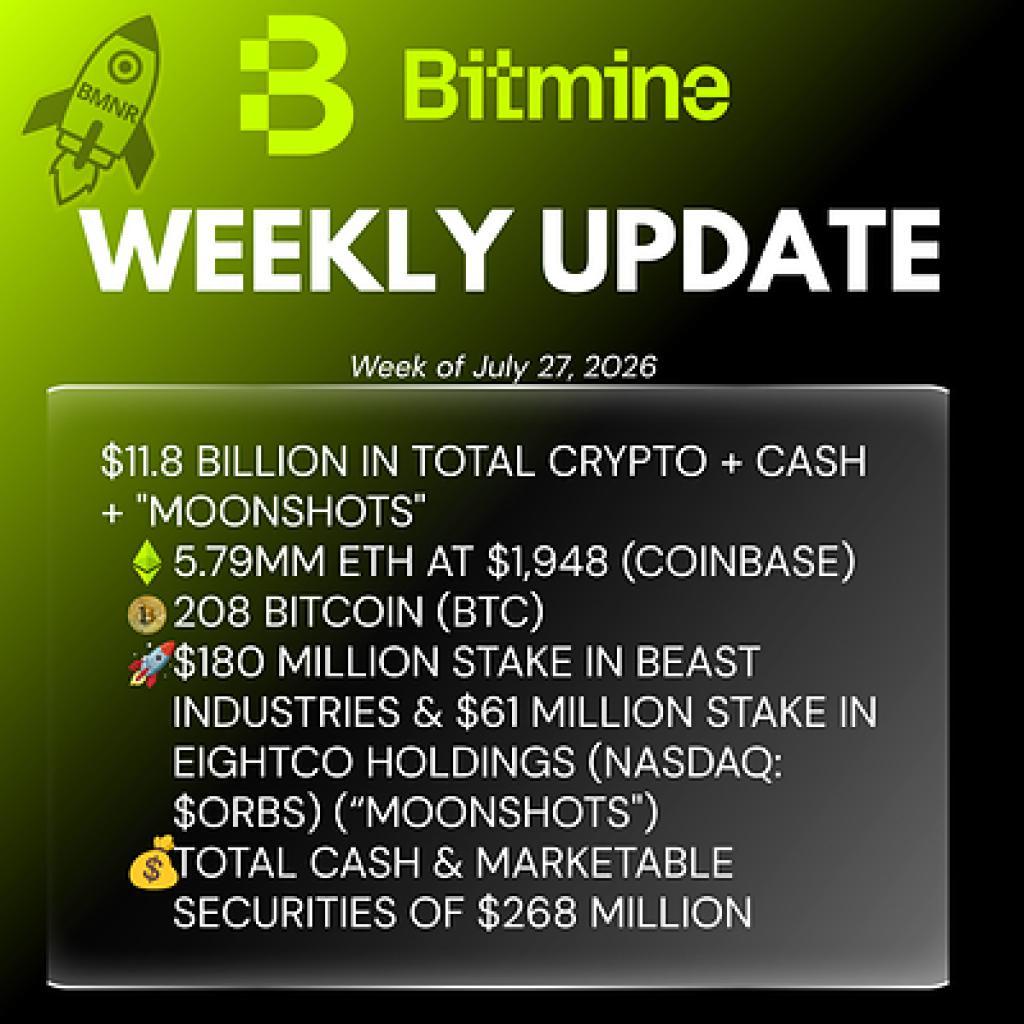
Bitmine Immersion Technologies (BMNR) Announces ETH Holdings Reach 5.79 Million Tokens, and Total Crypto and Total Cash Holdings of $11.8 Billion