U.S. Sanctions Several Iranian Crypto Trading Platforms and Individuals
The U.S. Department of the Treasury has sanctioned several Iranian cryptocurrency trading platforms and related individuals, expanding its enforcement footprint against digital asset networks tied to Iran.
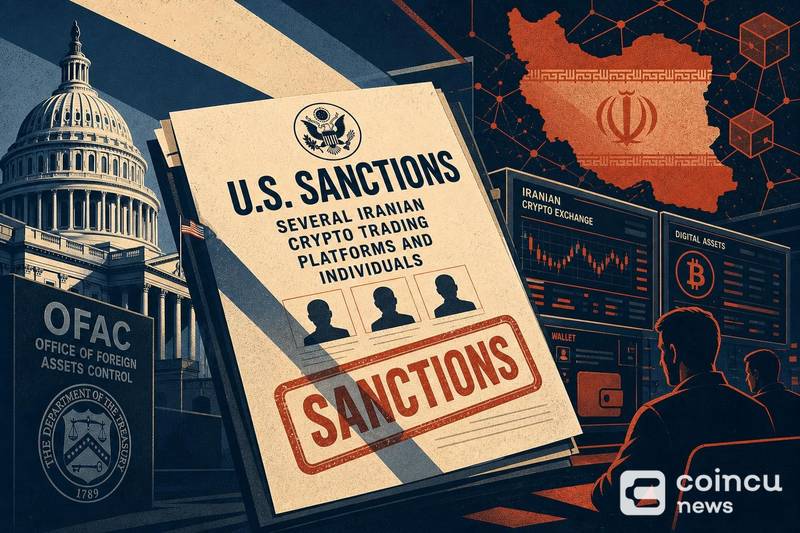
The action, published on OFAC’s recent actions page on June 2, 2026, targets both platform operators and individuals connected to Iranian crypto trading activity. The designations add these entities and persons to the Specially Designated Nationals (SDN) list, effectively cutting them off from the U.S. financial system.
Both platforms and individuals face designation
The sanctions cover multiple Iranian cryptocurrency trading platforms rather than a single entity. By targeting several platforms in a coordinated action, OFAC signaled that it views these services as part of a broader network facilitating Iranian access to digital asset markets.
The inclusion of related individuals alongside the platforms is significant. Naming specific people extends the reach of the sanctions beyond corporate entities, making it harder for operators to simply rebrand or launch replacement services.
This approach mirrors a pattern seen in recent U.S. enforcement, where authorities have increasingly pursued both infrastructure and the people behind it. The Treasury Department’s press releases page has reflected a growing cadence of crypto-related sanctions actions over the past year.
Compliance implications for crypto exchanges
For global cryptocurrency exchanges and service providers, the designations create immediate compliance obligations. Any platform operating under U.S. jurisdiction, or processing transactions involving U.S. persons, must screen against the updated SDN list and block transactions involving the sanctioned entities and individuals.
The action also raises counterparty risk questions. Exchanges that previously interacted with the named platforms, even indirectly, may need to review their transaction histories and flag relevant activity to compliance teams. Firms like Crypto.com, which recently expanded its brokerage integrations, and other major platforms will need to ensure their screening tools reflect the new designations promptly.
Transaction monitoring systems must now account for wallet addresses and identifiers associated with the sanctioned platforms. Failure to do so could expose exchanges to secondary sanctions risk, a consequence that has pushed many platforms toward more aggressive compliance frameworks.
A continuing enforcement trend
The action fits within a broader pattern of U.S. authorities using sanctions tools to target crypto infrastructure tied to sanctioned jurisdictions. By going after both the platforms and the individuals who run them, the Treasury Department is signaling that network-level enforcement, not just entity-level designation, is now standard practice.
This has implications beyond Iran-linked platforms. As U.S. regulators continue to scrutinize on-chain finance activity broadly, compliance teams across the industry are investing more heavily in sanctions screening and risk controls. The expansion of SDN designations to include crypto-native entities has accelerated this trend.
The widening scope of enforcement also touches adjacent sectors. Even companies focused on mobile crypto infrastructure and decentralized networks face growing pressure to implement robust sanctions compliance as U.S. authorities expand their reach into digital asset ecosystems.
For crypto businesses, the practical takeaway is straightforward: sanctions enforcement in the digital asset space is intensifying, and each action is capturing networks rather than isolated actors.
FAQ about the U.S. sanctions on Iranian crypto platforms
What exactly was sanctioned?
OFAC designated several Iranian cryptocurrency trading platforms and related individuals, adding them to the Specially Designated Nationals list. This prohibits U.S. persons and entities from transacting with them.
Are only companies targeted, or individuals too?
Both. The action covers trading platforms as well as individuals connected to those platforms, extending enforcement to the people operating the sanctioned infrastructure.
Why should crypto users and exchanges pay attention?
Any interaction with sanctioned entities or individuals, including processing transactions involving their wallets, could expose users and platforms to legal liability under U.S. sanctions law. Exchanges must update their screening tools to reflect the new designations.
Disclaimer: This article is for informational purposes only and does not constitute financial or investment advice. Cryptocurrency and digital asset markets carry significant risk. Always do your own research before making decisions.
No tags available.


Other Posts







- China, US Conclude Trade Talks with Focus on Cooperation
- Crypto Weekly: NYSE Backs OKX, Kraken Gets Fed Access, BTC Sells
- Court Upholds Fed’s Rejection of Custodia Bank’s Request
- Former CFO Convicted for $35M Fraudulent Crypto Investment
- DeriW Launches Edge Hour Trading Competition Platform for Derivatives Traders
- Michael Saylor Denies Bitcoin Sell-Off Amid Large BTC Transfer
- Buy Dogecoin on eToro: Step-by-Step Guide for Beginners (2024)
- Kazakhstan Explores Crypto Reserves Backed by National Funds
- JPMorgan Increases Holdings in BlackRock’s Bitcoin ETF
- Nordea Bank Introduces Bitcoin ETP Trading for Nordic Customers
- XRP Spot ETF Launches on Nasdaq Amid Market Fluctuations
- Peter Schiff Challenges Michael Saylor on MSTR’s Business Model
- Thailand Orders Worldcoin to Delete 1.2 Million Biometric Records
- UK Proposes New DeFi Tax Framework to Ease User Burden
- WLFI Under Fire: Analyst Warns Hyperliquid Could Be Next
- Ancient Ethereum Whale Moves $1.19 Billion After Decade
- BlackRock Receives Large Crypto Transfers from Coinbase
- SEC Scrutiny on ALT5 Sigma’s Leadership Disclosure Timing
- Yala Injects $5.5 Million Amid Recovery Efforts
- Radiant Capital Faces $50M Loss in Major Security Breach
- China, US Conclude Trade Talks with Focus on Cooperation
- Crypto Weekly: NYSE Backs OKX, Kraken Gets Fed Access, BTC Sells
- Court Upholds Fed’s Rejection of Custodia Bank’s Request
- Former CFO Convicted for $35M Fraudulent Crypto Investment
- DeriW Launches Edge Hour Trading Competition Platform for Derivatives Traders
- Michael Saylor Denies Bitcoin Sell-Off Amid Large BTC Transfer
- Buy Dogecoin on eToro: Step-by-Step Guide for Beginners (2024)
- Kazakhstan Explores Crypto Reserves Backed by National Funds
- JPMorgan Increases Holdings in BlackRock’s Bitcoin ETF
- Nordea Bank Introduces Bitcoin ETP Trading for Nordic Customers
- XRP Spot ETF Launches on Nasdaq Amid Market Fluctuations
- Peter Schiff Challenges Michael Saylor on MSTR’s Business Model
- Thailand Orders Worldcoin to Delete 1.2 Million Biometric Records
- UK Proposes New DeFi Tax Framework to Ease User Burden
- WLFI Under Fire: Analyst Warns Hyperliquid Could Be Next
- Ancient Ethereum Whale Moves $1.19 Billion After Decade
- BlackRock Receives Large Crypto Transfers from Coinbase
- SEC Scrutiny on ALT5 Sigma’s Leadership Disclosure Timing
- Yala Injects $5.5 Million Amid Recovery Efforts
- Radiant Capital Faces $50M Loss in Major Security Breach
- China, US Conclude Trade Talks with Focus on Cooperation
- Crypto Weekly: NYSE Backs OKX, Kraken Gets Fed Access, BTC Sells
- Court Upholds Fed’s Rejection of Custodia Bank’s Request
- Former CFO Convicted for $35M Fraudulent Crypto Investment
- DeriW Launches Edge Hour Trading Competition Platform for Derivatives Traders
- Michael Saylor Denies Bitcoin Sell-Off Amid Large BTC Transfer
- Buy Dogecoin on eToro: Step-by-Step Guide for Beginners (2024)
- Kazakhstan Explores Crypto Reserves Backed by National Funds
- JPMorgan Increases Holdings in BlackRock’s Bitcoin ETF
- Nordea Bank Introduces Bitcoin ETP Trading for Nordic Customers
- XRP Spot ETF Launches on Nasdaq Amid Market Fluctuations
- Peter Schiff Challenges Michael Saylor on MSTR’s Business Model
- Thailand Orders Worldcoin to Delete 1.2 Million Biometric Records
- UK Proposes New DeFi Tax Framework to Ease User Burden
- WLFI Under Fire: Analyst Warns Hyperliquid Could Be Next
- Ancient Ethereum Whale Moves $1.19 Billion After Decade
- BlackRock Receives Large Crypto Transfers from Coinbase
- SEC Scrutiny on ALT5 Sigma’s Leadership Disclosure Timing
- Yala Injects $5.5 Million Amid Recovery Efforts
- Radiant Capital Faces $50M Loss in Major Security Breach


Former FBI Agent Charged With Stealing Nearly $1 Million in Crypto

Coldcard Exploit Raises Questions About Air-Gapped Bitcoin Wallet Security

Bybit.eu Expands European Offering as Bybit Payments GmbH Secures Electronic Money Institution Licence

1win Introduces Seamless Web3 Login and Crypto Deposits via Trust Wallet, MetaMask, and WalletConnect