UXLINK Attacker Swaps 14.6M DAI for 8,298.6 ETH After Exploit
The attacker behind the UXLINK exploit has converted 14.6 million DAI into 8,298.6 ETH, signaling active post-exploit fund repositioning that blockchain investigators and affected users are now closely monitoring.
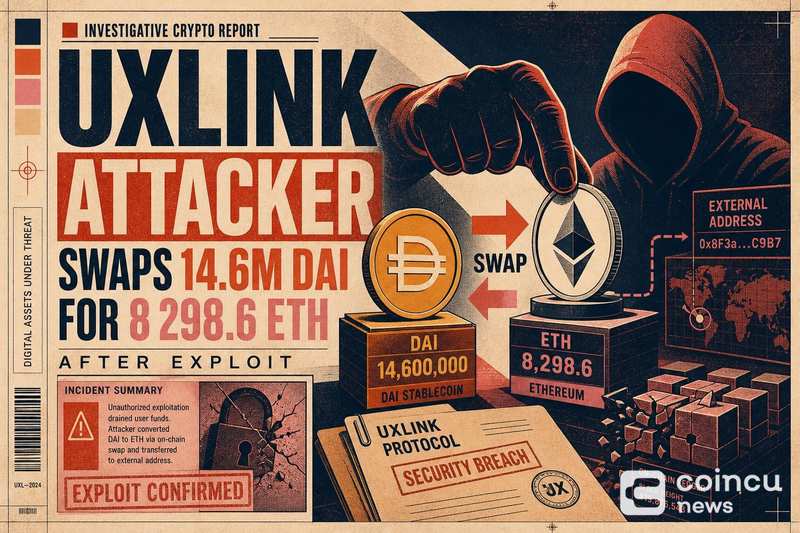
On-chain tracking account Lookonchain flagged the swap, which moved the attacker’s holdings from a dollar-pegged stablecoin into Ethereum’s native asset. The conversion represents a deliberate shift in strategy, moving from passive stablecoin storage to a more liquid and potentially harder-to-trace position.
What the DAI-to-ETH conversion reveals
The core transaction is straightforward: the attacker swapped the full DAI position for 8,298.6 ETH. At the implied exchange rate, this values each ETH at roughly $1,759, consistent with market pricing at the time of the swap.
A stablecoin-to-ETH conversion of this size is notable because it signals active treasury management rather than dormant holding. Attackers who leave funds in stablecoins are often waiting; those who convert into volatile assets are typically preparing for the next phase of fund movement.
The shift also changes the risk profile of the stolen funds. DAI balances are static and easily flagged on exchange deposit screens. ETH, by contrast, can be split across wallets, bridged to other chains, or routed through privacy-enhancing protocols with greater flexibility.
Why ETH over other assets
Ethereum offers the deepest on-chain liquidity of any non-stablecoin asset. For an attacker moving eight figures, ETH provides the widest range of exit routes without significant slippage on subsequent transactions.
Converting into ETH also opens access to cross-chain bridges, decentralized exchanges, and mixer protocols that operate natively on Ethereum. This pattern mirrors strategies seen in previous large-scale exploits, where attackers have used similar approaches to fragment fund trails across growing DeFi infrastructure.
Motive cannot be confirmed from the swap alone. The conversion could reflect an intent to obfuscate, a speculative bet on ETH price appreciation, or preparation for a staged liquidation through multiple smaller transactions.
How investigators could track the ETH from here
Blockchain forensics firms and independent analysts now have a clear starting point: the wallet holding the freshly acquired ETH. Wallet clustering techniques can identify related addresses if the attacker splits the balance across multiple wallets controlled by the same entity.
Exchange deposit monitoring is the most direct interdiction path. Major centralized exchanges run compliance screening that can flag deposits linked to known exploit wallets. If any portion of the ETH reaches a KYC-compliant exchange, it could trigger an automatic freeze, a process that has become increasingly common as institutional digital asset infrastructure matures.
Bridge and mixer watchpoints add another layer. Analysts will monitor whether the ETH moves to protocols like Tornado Cash or cross-chain bridges to networks like Arbitrum, Base, or BNB Chain. Each hop creates new data points that, while complicating tracing, also generate identifiable patterns for experienced investigators.
On-chain monitoring platforms such as Lookonchain continue to publish real-time alerts when flagged wallets execute transactions, giving the broader community visibility into the attacker’s next moves.
What this means for UXLINK users and broader sentiment
For UXLINK users, the attacker’s decision to actively reposition stolen funds diminishes the likelihood of a voluntary return. Exploit recovery often depends on the attacker’s willingness to negotiate, and converting to a volatile asset suggests a longer-term holding or laundering strategy rather than a path toward restitution.
Large exploit-related ETH holdings can also weigh on market sentiment even before any liquidation event occurs. The knowledge that a significant amount of ETH linked to stolen funds could hit the market at any time creates an overhang, similar to how large concentrated holdings across crypto markets can influence price expectations.
The incident reinforces the importance of protocol-level security audits and incident response planning. Projects operating in the DeFi space face persistent exploit risk, and the speed at which attackers can reposition funds underscores the narrow window available for intervention after a breach.
FAQ on the UXLINK attacker’s DAI swap
What exactly was swapped?
The attacker converted 14.6 million DAI, a dollar-pegged stablecoin, into 8,298.6 ETH in a single repositioning move.
Why was ETH chosen over other assets?
ETH offers deep liquidity, broad DeFi integration, and access to cross-chain bridges and privacy protocols, making it a practical choice for moving large sums on-chain.
Can the funds still be traced or recovered?
The ETH remains traceable on the Ethereum blockchain. Recovery depends on whether the funds reach KYC-compliant exchanges where they can be frozen, or whether the attacker successfully fragments the trail through mixers and bridges.
What should affected users monitor next?
Users should watch for wallet activity alerts from on-chain tracking services, any official statements from the UXLINK team regarding recovery efforts, and exchange announcements about flagged deposits linked to the exploit.
Additional source references: source document 1.
Disclaimer: This article is for informational purposes only and does not constitute financial or investment advice. Cryptocurrency and digital asset markets carry significant risk. Always do your own research before making decisions.
No tags available.


Other Posts








- China, US Conclude Trade Talks with Focus on Cooperation
- Crypto Weekly: NYSE Backs OKX, Kraken Gets Fed Access, BTC Sells
- DeriW Launches Edge Hour Trading Competition Platform for Derivatives Traders
- Court Upholds Fed’s Rejection of Custodia Bank’s Request
- Former CFO Convicted for $35M Fraudulent Crypto Investment
- Michael Saylor Denies Bitcoin Sell-Off Amid Large BTC Transfer
- Kazakhstan Explores Crypto Reserves Backed by National Funds
- Buy Dogecoin on eToro: Step-by-Step Guide for Beginners (2024)
- JPMorgan Increases Holdings in BlackRock’s Bitcoin ETF
- Nordea Bank Introduces Bitcoin ETP Trading for Nordic Customers
- XRP Spot ETF Launches on Nasdaq Amid Market Fluctuations
- Crypto Leaders Address Macro Volatility Amid Market Shifts
- Peter Schiff Challenges Michael Saylor on MSTR’s Business Model
- Thailand Orders Worldcoin to Delete 1.2 Million Biometric Records
- UK Proposes New DeFi Tax Framework to Ease User Burden
- WLFI Under Fire: Analyst Warns Hyperliquid Could Be Next
- Ancient Ethereum Whale Moves $1.19 Billion After Decade
- BlackRock Receives Large Crypto Transfers from Coinbase
- SEC Scrutiny on ALT5 Sigma’s Leadership Disclosure Timing
- MoonPay Gains Trust License for Crypto Operations in New York
- China, US Conclude Trade Talks with Focus on Cooperation
- Crypto Weekly: NYSE Backs OKX, Kraken Gets Fed Access, BTC Sells
- DeriW Launches Edge Hour Trading Competition Platform for Derivatives Traders
- Court Upholds Fed’s Rejection of Custodia Bank’s Request
- Former CFO Convicted for $35M Fraudulent Crypto Investment
- Michael Saylor Denies Bitcoin Sell-Off Amid Large BTC Transfer
- Kazakhstan Explores Crypto Reserves Backed by National Funds
- Buy Dogecoin on eToro: Step-by-Step Guide for Beginners (2024)
- JPMorgan Increases Holdings in BlackRock’s Bitcoin ETF
- Nordea Bank Introduces Bitcoin ETP Trading for Nordic Customers
- XRP Spot ETF Launches on Nasdaq Amid Market Fluctuations
- Crypto Leaders Address Macro Volatility Amid Market Shifts
- Peter Schiff Challenges Michael Saylor on MSTR’s Business Model
- Thailand Orders Worldcoin to Delete 1.2 Million Biometric Records
- UK Proposes New DeFi Tax Framework to Ease User Burden
- WLFI Under Fire: Analyst Warns Hyperliquid Could Be Next
- Ancient Ethereum Whale Moves $1.19 Billion After Decade
- BlackRock Receives Large Crypto Transfers from Coinbase
- SEC Scrutiny on ALT5 Sigma’s Leadership Disclosure Timing
- MoonPay Gains Trust License for Crypto Operations in New York
- China, US Conclude Trade Talks with Focus on Cooperation
- Crypto Weekly: NYSE Backs OKX, Kraken Gets Fed Access, BTC Sells
- DeriW Launches Edge Hour Trading Competition Platform for Derivatives Traders
- Court Upholds Fed’s Rejection of Custodia Bank’s Request
- Former CFO Convicted for $35M Fraudulent Crypto Investment
- Michael Saylor Denies Bitcoin Sell-Off Amid Large BTC Transfer
- Kazakhstan Explores Crypto Reserves Backed by National Funds
- Buy Dogecoin on eToro: Step-by-Step Guide for Beginners (2024)
- JPMorgan Increases Holdings in BlackRock’s Bitcoin ETF
- Nordea Bank Introduces Bitcoin ETP Trading for Nordic Customers
- XRP Spot ETF Launches on Nasdaq Amid Market Fluctuations
- Crypto Leaders Address Macro Volatility Amid Market Shifts
- Peter Schiff Challenges Michael Saylor on MSTR’s Business Model
- Thailand Orders Worldcoin to Delete 1.2 Million Biometric Records
- UK Proposes New DeFi Tax Framework to Ease User Burden
- WLFI Under Fire: Analyst Warns Hyperliquid Could Be Next
- Ancient Ethereum Whale Moves $1.19 Billion After Decade
- BlackRock Receives Large Crypto Transfers from Coinbase
- SEC Scrutiny on ALT5 Sigma’s Leadership Disclosure Timing
- MoonPay Gains Trust License for Crypto Operations in New York

Trace Finance Raises $32 Million in Series A Round Led by CoinFund

Ionic Digital May Bitcoin Production Up 21.1%, Holdings Hit 2,861 BTC


First Block, Onpharma Company, and Crito Capital Announce First Solana Sto for U.S. Medical Device Business

Arman Tsarukyan Turns $1 Million Into $5.7 Million on Jack.com After One of the Biggest UFC Upsets of the Year