Bitcoin BIP-110 Signal Window Opens in Under Two Weeks as Support Hits 2.64%
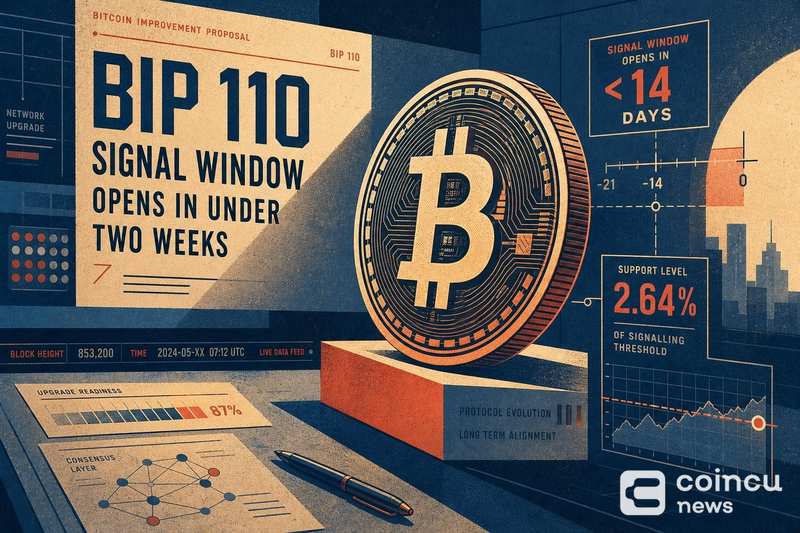
Bitcoin’s BIP-110 mandatory signal window is set to open in under two weeks, with the current support rate standing at 2.64% as the countdown begins. The proposal, which governs how nodes signal readiness, is drawing attention from Bitcoin watchers tracking the runway to that window.
BIP-110 is a Bitcoin Improvement Proposal documented in the public BIP registry, where its specification and rationale are maintained for node operators and developers to review, per the BIP-110 text. The approaching mandatory signal window is the immediate news hook here, and it keeps the focus squarely on Bitcoin rather than broader protocol governance. For related coverage, see U.S. Spot Bitcoin ETFs See Second Straight Day of $465M Net Outflows.
The signal window is the central event driving this story. With less than two weeks until it opens, the timing is the most concrete, confirmable detail available, and it is what readers following the BIP-110 monitor are watching most closely. For related coverage, see Project Eleven launches Bitcoin quantum-fragile coin recovery tool.
Support sits at 2.64% as the window approaches
The single measurable datapoint at this stage is the support rate, which stands at 2.64%. That figure is a current snapshot ahead of the mandatory window, not a final outcome. For related coverage, see The Strategic Bitcoin Reserve Bill Is Now Officially Announced With Positive Community Response.
No historical support trend or comparison is established for this reading, so the number should be read on its own terms. It represents where signaling stands right now, and it is the baseline readers can track as the window nears.
What to watch over the next two weeks
The strongest sense of urgency in this story comes from the short runway. Under two weeks remain before the mandatory signal window opens, which makes this a countdown rather than a settled event.
For Bitcoin users monitoring the process, the practical focus before the window opens is the movement in the signaling figure itself and node participation, both of which can be followed through the public BIP-110 monitoring resources. The relevance here is Bitcoin-specific, tied to how nodes and clients approach the window.
Bitcoin’s client and data-handling debates have already produced adjacent activity, including Runestone’s plan for a client intended to work around BIP-110 data limits, which underscores how closely developers are engaging with the proposal.
Possible paths once signaling begins
With the window opening soon but no downstream results known, only conditional scenarios can be described, and each should be read as a scenario rather than an expectation. Every path here is anchored to the two known inputs: the opening window and the 2.64% support level.
One scenario is that support stays low, remaining near its current reading as the window opens. Another is that the signaling figure rises from the current baseline. A third is a wait-and-see path, in which participation shifts gradually and observers hold off on conclusions until more data is available.
The broader question of what activated proposals could mean for holders connects to ongoing discussion of how Bitcoin forks in 2026 might affect BTC holders, another thread Bitcoin users are following.
FAQ: Bitcoin BIP-110 and the signal window
When does the mandatory signal window open? It is set to open in under two weeks from the current reading, making the timeline the most immediate element of the story.
What does the 2.64% support rate refer to? It is the current signaling support level for BIP-110 as tracked ahead of the mandatory window, presented as a snapshot rather than a final result.
Why should Bitcoin users follow BIP-110 now? Because the window is close and the process is Bitcoin-specific, users tracking node behavior and signaling have a narrow timeframe to watch developments before the window opens.
Disclaimer: This article is for informational purposes only and does not constitute financial or investment advice. Cryptocurrency and digital asset markets carry significant risk. Always do your own research before making decisions.
No tags available.


Other Posts








- China, US Conclude Trade Talks with Focus on Cooperation
- Crypto Weekly: NYSE Backs OKX, Kraken Gets Fed Access, BTC Sells
- Court Upholds Fed’s Rejection of Custodia Bank’s Request
- Former CFO Convicted for $35M Fraudulent Crypto Investment
- DeriW Launches Edge Hour Trading Competition Platform for Derivatives Traders
- Michael Saylor Denies Bitcoin Sell-Off Amid Large BTC Transfer
- Buy Dogecoin on eToro: Step-by-Step Guide for Beginners (2024)
- Kazakhstan Explores Crypto Reserves Backed by National Funds
- JPMorgan Increases Holdings in BlackRock’s Bitcoin ETF
- Nordea Bank Introduces Bitcoin ETP Trading for Nordic Customers
- XRP Spot ETF Launches on Nasdaq Amid Market Fluctuations
- Peter Schiff Challenges Michael Saylor on MSTR’s Business Model
- Thailand Orders Worldcoin to Delete 1.2 Million Biometric Records
- UK Proposes New DeFi Tax Framework to Ease User Burden
- WLFI Under Fire: Analyst Warns Hyperliquid Could Be Next
- Ancient Ethereum Whale Moves $1.19 Billion After Decade
- BlackRock Receives Large Crypto Transfers from Coinbase
- SEC Scrutiny on ALT5 Sigma’s Leadership Disclosure Timing
- Yala Injects $5.5 Million Amid Recovery Efforts
- Radiant Capital Faces $50M Loss in Major Security Breach
- China, US Conclude Trade Talks with Focus on Cooperation
- Crypto Weekly: NYSE Backs OKX, Kraken Gets Fed Access, BTC Sells
- Court Upholds Fed’s Rejection of Custodia Bank’s Request
- Former CFO Convicted for $35M Fraudulent Crypto Investment
- DeriW Launches Edge Hour Trading Competition Platform for Derivatives Traders
- Michael Saylor Denies Bitcoin Sell-Off Amid Large BTC Transfer
- Buy Dogecoin on eToro: Step-by-Step Guide for Beginners (2024)
- Kazakhstan Explores Crypto Reserves Backed by National Funds
- JPMorgan Increases Holdings in BlackRock’s Bitcoin ETF
- Nordea Bank Introduces Bitcoin ETP Trading for Nordic Customers
- XRP Spot ETF Launches on Nasdaq Amid Market Fluctuations
- Peter Schiff Challenges Michael Saylor on MSTR’s Business Model
- Thailand Orders Worldcoin to Delete 1.2 Million Biometric Records
- UK Proposes New DeFi Tax Framework to Ease User Burden
- WLFI Under Fire: Analyst Warns Hyperliquid Could Be Next
- Ancient Ethereum Whale Moves $1.19 Billion After Decade
- BlackRock Receives Large Crypto Transfers from Coinbase
- SEC Scrutiny on ALT5 Sigma’s Leadership Disclosure Timing
- Yala Injects $5.5 Million Amid Recovery Efforts
- Radiant Capital Faces $50M Loss in Major Security Breach
- China, US Conclude Trade Talks with Focus on Cooperation
- Crypto Weekly: NYSE Backs OKX, Kraken Gets Fed Access, BTC Sells
- Court Upholds Fed’s Rejection of Custodia Bank’s Request
- Former CFO Convicted for $35M Fraudulent Crypto Investment
- DeriW Launches Edge Hour Trading Competition Platform for Derivatives Traders
- Michael Saylor Denies Bitcoin Sell-Off Amid Large BTC Transfer
- Buy Dogecoin on eToro: Step-by-Step Guide for Beginners (2024)
- Kazakhstan Explores Crypto Reserves Backed by National Funds
- JPMorgan Increases Holdings in BlackRock’s Bitcoin ETF
- Nordea Bank Introduces Bitcoin ETP Trading for Nordic Customers
- XRP Spot ETF Launches on Nasdaq Amid Market Fluctuations
- Peter Schiff Challenges Michael Saylor on MSTR’s Business Model
- Thailand Orders Worldcoin to Delete 1.2 Million Biometric Records
- UK Proposes New DeFi Tax Framework to Ease User Burden
- WLFI Under Fire: Analyst Warns Hyperliquid Could Be Next
- Ancient Ethereum Whale Moves $1.19 Billion After Decade
- BlackRock Receives Large Crypto Transfers from Coinbase
- SEC Scrutiny on ALT5 Sigma’s Leadership Disclosure Timing
- Yala Injects $5.5 Million Amid Recovery Efforts
- Radiant Capital Faces $50M Loss in Major Security Breach

Bitcoin BIP-110 Signal Window Opens in Under Two Weeks as Support Hits 2.64%


BlackRock ETF Wallet Moves $271M in BTC and ETH to Coinbase Prime
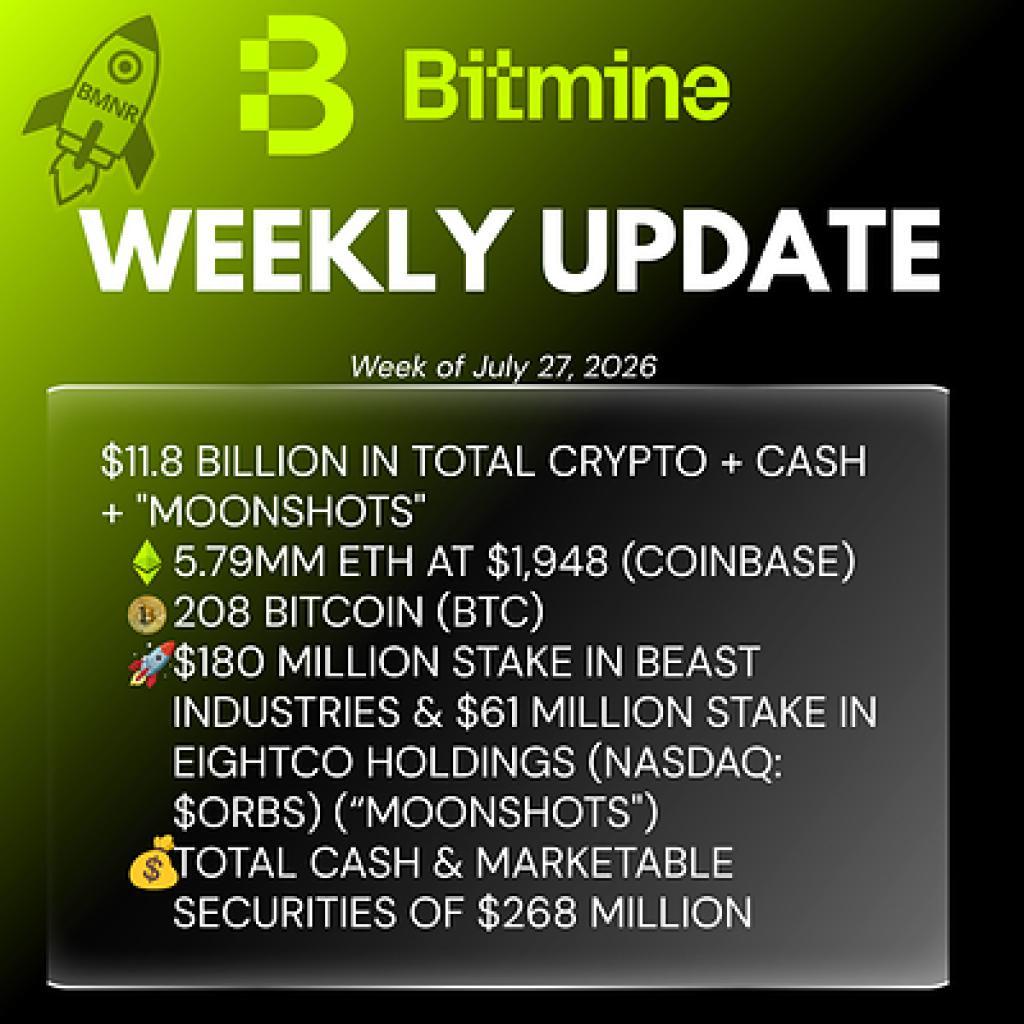
Bitmine Immersion Technologies (BMNR) Announces ETH Holdings Reach 5.79 Million Tokens, and Total Crypto and Total Cash Holdings of $11.8 Billion