U.S. Regulators Develop Stablecoin Rules One Year After GENIUS Act
One year after the GENIUS Act took effect, U.S. regulators are still developing the detailed stablecoin rules that will govern how payment stablecoin issuers operate, showing that the landmark law marked the beginning rather than the end of the country’s push to set clear U.S. stablecoin rules.
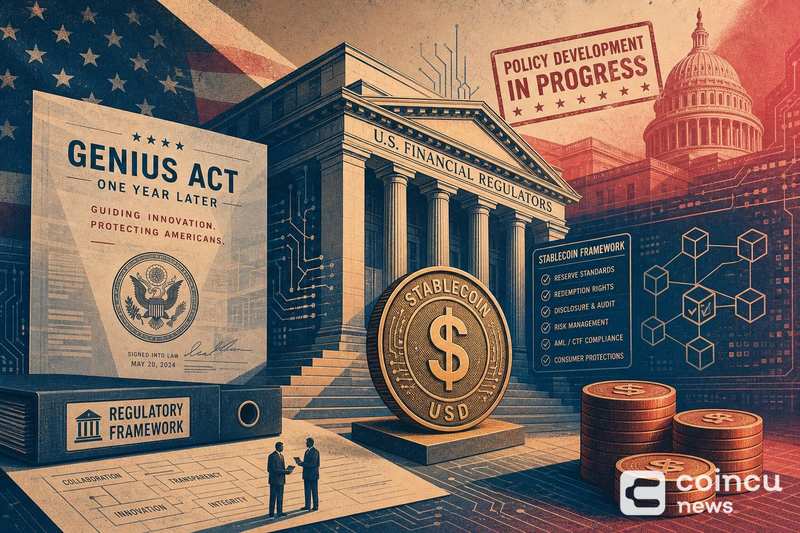
Why Stablecoin Rulemaking Is Still Active One Year After the GENIUS Act
The GENIUS Act was enacted as Public Law 119-27, establishing a federal framework for payment stablecoins, according to the official record on GovInfo. A statute taking effect is not the same as a fully operational regulatory regime. For related coverage, see UK FCA, Central Bank Advance Crypto Rules and Ease Stablecoin Limits.
Legislation sets the boundaries, but agencies still have to write the implementing rules, definitions, and supervisory procedures that make a law enforceable. That gap between law-on-paper and finished rulebook is why the process remains active. For related coverage, see Senators Urge Treasury to Preserve State Stablecoin Oversight in GENIUS Bill.
Unresolved Implementation Areas
Key questions around anti-money-laundering and sanctions compliance for payment stablecoin issuers remain open, an area the Bank Policy Institute and The Clearing House have addressed in formal comments on the GENIUS Act’s requirements. Comment processes like these typically precede final rules, indicating the framework is still being shaped. Notably, U.S. regulators have already missed the one-year deadline tied to GENIUS Act stablecoin rules.
Which U.S. Agencies Are Shaping the Next Phase of Stablecoin Oversight
U.S. stablecoin oversight generally spans multiple regulators rather than a single agency. The U.S. Treasury has been active on the file, publishing related announcements through its press office. For related coverage, see Philippines Tightens Crypto Rules, Bans Privacy Coins on Licensed Exchanges.
Banking Oversight and Issuer Supervision
Payment stablecoin issuers sit close to the banking system, so likely areas of oversight include reserve backing, redemption, and prudential supervision. The tension over how much authority states retain has already surfaced, with lawmakers urging Treasury to preserve state-level stablecoin oversight.
Market Conduct and AML Responsibilities
Beyond banking regulators, disclosure and financial-crime compliance form another pillar of the framework. The Brookings Institution has outlined next steps for GENIUS payment stablecoins, underscoring that interagency coordination is needed when a new law creates a broad compliance regime.
What New Rules Could Mean for Stablecoin Issuers and Crypto Platforms
For issuers, upcoming rules are likely to formalize obligations tied to reserves, reporting, redemption, and governance. Issuers face a compliance clock, with reporting suggesting the GENIUS Act deadline puts stablecoin issuers on the clock.
Exchanges and trading platforms carry a different set of potential obligations, spanning listing, custody, and disclosure practices. Distinguishing issuer duties from platform duties will matter as firms adapt operations to whatever final standards emerge.
Reserve Transparency and Redemption Standards
Reserve transparency and clear redemption rights are central to a payment stablecoin framework, and how regulators define them will shape competitive positioning and market access for issuers. Broader AML pressure is also rising, with the FATF urging stronger crypto AML enforcement as stablecoin-linked crime grows.
How Ongoing Rule Development Could Affect the Broader Crypto Market
Stablecoins function as core market infrastructure across trading and settlement, so their rules extend beyond issuers to the wider market. Clearer standards can support adoption and confidence, while prolonged rulemaking can extend uncertainty for projects and investors.
The outcome cuts both ways. Supportive, well-defined rules may improve liquidity and institutional participation, whereas overly restrictive requirements could constrain how stablecoins are used, mirroring how other jurisdictions such as the UK’s FCA has moved to ease stablecoin limits.
FAQ: Key Questions About U.S. Stablecoin Rules After the GENIUS Act
Why is rulemaking still ongoing a year later?
Because a law taking effect does not automatically produce the detailed rules, definitions, and supervisory procedures agencies must draft. Open items such as AML and sanctions requirements are still moving through comment and rule-development stages.
Who is most affected by the pending rules?
Payment stablecoin issuers face the most direct obligations around reserves, redemption, and reporting, while exchanges and custody providers may need to adjust listing and disclosure practices.
What comes next?
Regulators are expected to continue advancing implementing rules and interagency coordination. The exact timing remains unsettled, given that authorities have already passed the one-year milestone without a finished rulebook.
Disclaimer: This article is for informational purposes only and does not constitute financial or investment advice. Cryptocurrency and digital asset markets carry significant risk. Always do your own research before making decisions.
No tags available.


Other Posts








- China, US Conclude Trade Talks with Focus on Cooperation
- Crypto Weekly: NYSE Backs OKX, Kraken Gets Fed Access, BTC Sells
- Court Upholds Fed’s Rejection of Custodia Bank’s Request
- Former CFO Convicted for $35M Fraudulent Crypto Investment
- DeriW Launches Edge Hour Trading Competition Platform for Derivatives Traders
- Michael Saylor Denies Bitcoin Sell-Off Amid Large BTC Transfer
- Buy Dogecoin on eToro: Step-by-Step Guide for Beginners (2024)
- Kazakhstan Explores Crypto Reserves Backed by National Funds
- JPMorgan Increases Holdings in BlackRock’s Bitcoin ETF
- Nordea Bank Introduces Bitcoin ETP Trading for Nordic Customers
- XRP Spot ETF Launches on Nasdaq Amid Market Fluctuations
- Peter Schiff Challenges Michael Saylor on MSTR’s Business Model
- Thailand Orders Worldcoin to Delete 1.2 Million Biometric Records
- UK Proposes New DeFi Tax Framework to Ease User Burden
- WLFI Under Fire: Analyst Warns Hyperliquid Could Be Next
- Ancient Ethereum Whale Moves $1.19 Billion After Decade
- BlackRock Receives Large Crypto Transfers from Coinbase
- SEC Scrutiny on ALT5 Sigma’s Leadership Disclosure Timing
- Yala Injects $5.5 Million Amid Recovery Efforts
- Radiant Capital Faces $50M Loss in Major Security Breach
- China, US Conclude Trade Talks with Focus on Cooperation
- Crypto Weekly: NYSE Backs OKX, Kraken Gets Fed Access, BTC Sells
- Court Upholds Fed’s Rejection of Custodia Bank’s Request
- Former CFO Convicted for $35M Fraudulent Crypto Investment
- DeriW Launches Edge Hour Trading Competition Platform for Derivatives Traders
- Michael Saylor Denies Bitcoin Sell-Off Amid Large BTC Transfer
- Buy Dogecoin on eToro: Step-by-Step Guide for Beginners (2024)
- Kazakhstan Explores Crypto Reserves Backed by National Funds
- JPMorgan Increases Holdings in BlackRock’s Bitcoin ETF
- Nordea Bank Introduces Bitcoin ETP Trading for Nordic Customers
- XRP Spot ETF Launches on Nasdaq Amid Market Fluctuations
- Peter Schiff Challenges Michael Saylor on MSTR’s Business Model
- Thailand Orders Worldcoin to Delete 1.2 Million Biometric Records
- UK Proposes New DeFi Tax Framework to Ease User Burden
- WLFI Under Fire: Analyst Warns Hyperliquid Could Be Next
- Ancient Ethereum Whale Moves $1.19 Billion After Decade
- BlackRock Receives Large Crypto Transfers from Coinbase
- SEC Scrutiny on ALT5 Sigma’s Leadership Disclosure Timing
- Yala Injects $5.5 Million Amid Recovery Efforts
- Radiant Capital Faces $50M Loss in Major Security Breach
- China, US Conclude Trade Talks with Focus on Cooperation
- Crypto Weekly: NYSE Backs OKX, Kraken Gets Fed Access, BTC Sells
- Court Upholds Fed’s Rejection of Custodia Bank’s Request
- Former CFO Convicted for $35M Fraudulent Crypto Investment
- DeriW Launches Edge Hour Trading Competition Platform for Derivatives Traders
- Michael Saylor Denies Bitcoin Sell-Off Amid Large BTC Transfer
- Buy Dogecoin on eToro: Step-by-Step Guide for Beginners (2024)
- Kazakhstan Explores Crypto Reserves Backed by National Funds
- JPMorgan Increases Holdings in BlackRock’s Bitcoin ETF
- Nordea Bank Introduces Bitcoin ETP Trading for Nordic Customers
- XRP Spot ETF Launches on Nasdaq Amid Market Fluctuations
- Peter Schiff Challenges Michael Saylor on MSTR’s Business Model
- Thailand Orders Worldcoin to Delete 1.2 Million Biometric Records
- UK Proposes New DeFi Tax Framework to Ease User Burden
- WLFI Under Fire: Analyst Warns Hyperliquid Could Be Next
- Ancient Ethereum Whale Moves $1.19 Billion After Decade
- BlackRock Receives Large Crypto Transfers from Coinbase
- SEC Scrutiny on ALT5 Sigma’s Leadership Disclosure Timing
- Yala Injects $5.5 Million Amid Recovery Efforts
- Radiant Capital Faces $50M Loss in Major Security Breach

Brazil Tightens Crypto Fraud Controls With 24-Hour Wallet Delay


Over 100 Crypto Projects Shut Down in 2026 as Industry Shakeout Deepens

Cashelix Launches CASX Token Presale to Fuel the Future of Blockchain P2P Transactions
Bybit Sues North Korea and Lazarus Group, Secures Preliminary Injunction Freezing Stolen Assets in Landmark Crypto Asset Recovery Effort