Russia Hardware Wallet Sales More Than Double Ahead of New Crypto Rules
Russia hardware wallet sales have more than doubled on major online marketplaces ahead of new crypto rules taking effect on September 1, 2026, with retailer M.Video reporting a 107% jump in quarterly unit sales as more Russians move toward self-custody.
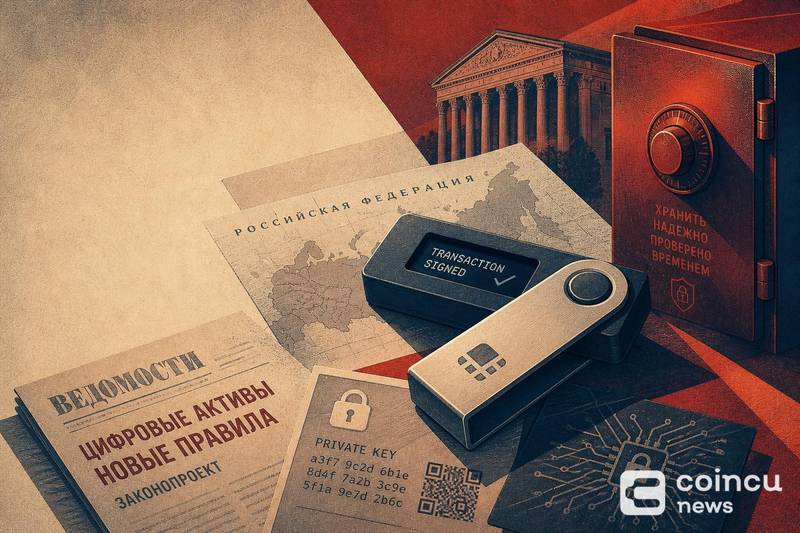
Russia Hardware Wallet Sales Surge Before New Crypto Rules
Electronics retailer M.Video said hardware-wallet unit sales on its marketplace rose 107% in the second quarter of 2026 compared with the first quarter, while category turnover climbed 92% over the same period. For related coverage, see Ready Crypto Card Suspended After Kulipa Collapse.
The turnover figure reflects a widening product assortment on the platform rather than higher prices alone, with the retailer’s Fedor Pavlenko noting that demand for hardware wallets grew by more than two times in the quarter as the range of devices expanded. For related coverage, see Wintermute Registers as SEC Broker-Dealer for Stocks, Options and Crypto ETFs.
The rise comes as Russia prepares to implement a new crypto-market framework. The timing has drawn attention, though neither retailer explicitly identified the regulation as the cause of the demand spike.
Why Russian Crypto Users Are Moving Toward Self-Custody
Hardware wallets let holders store private keys offline and outside custodial platforms, a form of self-custody that appeals to users during periods of regulatory uncertainty. The demand pattern mirrors moves elsewhere as Russia tightens oversight after it legalized crypto trading while keeping domestic crypto payments banned.
The trend is not limited to one retailer. RIA Novosti, citing marketplace operator RWB, reported that Wildberries hardware-wallet unit sales rose 84% in the first half of 2026 from a year earlier, while sales value rose 60%.
On Wildberries, the average hardware-wallet purchase was 7,900 rubles, down 13% year over year, according to the same RWB data. The falling ticket suggests buyers are choosing lower-cost devices even as unit volumes climb.
It should be noted that the retailer figures use different measurement windows and none disclosed nationwide unit totals, so a Russia-wide aggregate cannot be independently confirmed from these disclosures alone.
What the New Crypto Rules Could Mean for Russia’s Digital Asset Market
The Bank of Russia said the new crypto-market law enters into force on September 1, 2026, allowing regulated exchanges and digital depositories while maintaining the ban on domestic crypto payments.
Under the framework, unqualified investors will be limited to buying no more than 300,000 rubles of liquid cryptocurrencies per year through a single intermediary after passing testing. Market participants have a transition period until July 1, 2027 to obtain licenses and comply.
The central bank has been building toward this regime for some time, having earlier issued draft rules for the organized trading of digital assets and separate draft rules covering crypto exchanges and custodians.
The 300,000-ruble annual cap frames how self-custody fits into the picture. A 7,900-ruble wallet is a small accessory purchase relative to the newly permitted retail exposure, which helps separate affordability from any unproven claim that the rules themselves are driving demand.
Winners and Risks as Wallet Demand Accelerates
Established wallet vendors are the clearest beneficiaries. M.Video said Ledger accounted for almost 30% of unit sales and about 40% of turnover in the category, while Trezor made up about 20% of unit sales and more than 20% of turnover.
Rising demand also raises user responsibility. Self-custody shifts the burden of securing seed phrases, backups, and device setup entirely onto the holder, with no custodial recovery option if keys are lost.
Demand spikes historically attract counterfeit devices and phishing scams targeting new buyers, making purchase provenance and firmware verification important security considerations as first-time users enter the market.
The broader market backdrop remains cautious. Bitcoin traded at around $65,055 with the Crypto Fear & Greed Index at 30, in “Fear” territory, on August 8, 2026.
FAQ About Russia Hardware Wallet Sales and Crypto Rules
What is a hardware wallet? A hardware wallet is a physical device that stores a user’s private keys offline, enabling self-custody of cryptocurrency without relying on an exchange or custodial service.
Why are sales rising in Russia? Retailers M.Video and Wildberries reported sharp increases in unit sales in 2026, coinciding with the approach of new crypto rules, though neither retailer named a single driver behind the demand.
Do new crypto rules change how users store assets? The Bank of Russia framework taking effect September 1, 2026 regulates exchanges and caps retail exposure, but it does not restrict self-custody, which remains a lawful way for holders to store their assets.
Disclaimer: This article is for informational purposes only and does not constitute financial or investment advice. Cryptocurrency and digital asset markets carry significant risk. Always do your own research before making decisions.
No tags available.


Other Posts








- China, US Conclude Trade Talks with Focus on Cooperation
- Crypto Weekly: NYSE Backs OKX, Kraken Gets Fed Access, BTC Sells
- Court Upholds Fed’s Rejection of Custodia Bank’s Request
- Former CFO Convicted for $35M Fraudulent Crypto Investment
- DeriW Launches Edge Hour Trading Competition Platform for Derivatives Traders
- Michael Saylor Denies Bitcoin Sell-Off Amid Large BTC Transfer
- Buy Dogecoin on eToro: Step-by-Step Guide for Beginners (2024)
- Kazakhstan Explores Crypto Reserves Backed by National Funds
- JPMorgan Increases Holdings in BlackRock’s Bitcoin ETF
- Nordea Bank Introduces Bitcoin ETP Trading for Nordic Customers
- XRP Spot ETF Launches on Nasdaq Amid Market Fluctuations
- Peter Schiff Challenges Michael Saylor on MSTR’s Business Model
- Thailand Orders Worldcoin to Delete 1.2 Million Biometric Records
- UK Proposes New DeFi Tax Framework to Ease User Burden
- WLFI Under Fire: Analyst Warns Hyperliquid Could Be Next
- Ancient Ethereum Whale Moves $1.19 Billion After Decade
- BlackRock Receives Large Crypto Transfers from Coinbase
- SEC Scrutiny on ALT5 Sigma’s Leadership Disclosure Timing
- Yala Injects $5.5 Million Amid Recovery Efforts
- Radiant Capital Faces $50M Loss in Major Security Breach
- China, US Conclude Trade Talks with Focus on Cooperation
- Crypto Weekly: NYSE Backs OKX, Kraken Gets Fed Access, BTC Sells
- Court Upholds Fed’s Rejection of Custodia Bank’s Request
- Former CFO Convicted for $35M Fraudulent Crypto Investment
- DeriW Launches Edge Hour Trading Competition Platform for Derivatives Traders
- Michael Saylor Denies Bitcoin Sell-Off Amid Large BTC Transfer
- Buy Dogecoin on eToro: Step-by-Step Guide for Beginners (2024)
- Kazakhstan Explores Crypto Reserves Backed by National Funds
- JPMorgan Increases Holdings in BlackRock’s Bitcoin ETF
- Nordea Bank Introduces Bitcoin ETP Trading for Nordic Customers
- XRP Spot ETF Launches on Nasdaq Amid Market Fluctuations
- Peter Schiff Challenges Michael Saylor on MSTR’s Business Model
- Thailand Orders Worldcoin to Delete 1.2 Million Biometric Records
- UK Proposes New DeFi Tax Framework to Ease User Burden
- WLFI Under Fire: Analyst Warns Hyperliquid Could Be Next
- Ancient Ethereum Whale Moves $1.19 Billion After Decade
- BlackRock Receives Large Crypto Transfers from Coinbase
- SEC Scrutiny on ALT5 Sigma’s Leadership Disclosure Timing
- Yala Injects $5.5 Million Amid Recovery Efforts
- Radiant Capital Faces $50M Loss in Major Security Breach
- China, US Conclude Trade Talks with Focus on Cooperation
- Crypto Weekly: NYSE Backs OKX, Kraken Gets Fed Access, BTC Sells
- Court Upholds Fed’s Rejection of Custodia Bank’s Request
- Former CFO Convicted for $35M Fraudulent Crypto Investment
- DeriW Launches Edge Hour Trading Competition Platform for Derivatives Traders
- Michael Saylor Denies Bitcoin Sell-Off Amid Large BTC Transfer
- Buy Dogecoin on eToro: Step-by-Step Guide for Beginners (2024)
- Kazakhstan Explores Crypto Reserves Backed by National Funds
- JPMorgan Increases Holdings in BlackRock’s Bitcoin ETF
- Nordea Bank Introduces Bitcoin ETP Trading for Nordic Customers
- XRP Spot ETF Launches on Nasdaq Amid Market Fluctuations
- Peter Schiff Challenges Michael Saylor on MSTR’s Business Model
- Thailand Orders Worldcoin to Delete 1.2 Million Biometric Records
- UK Proposes New DeFi Tax Framework to Ease User Burden
- WLFI Under Fire: Analyst Warns Hyperliquid Could Be Next
- Ancient Ethereum Whale Moves $1.19 Billion After Decade
- BlackRock Receives Large Crypto Transfers from Coinbase
- SEC Scrutiny on ALT5 Sigma’s Leadership Disclosure Timing
- Yala Injects $5.5 Million Amid Recovery Efforts
- Radiant Capital Faces $50M Loss in Major Security Breach


Senate Keeps Clarity Act Alive With Crypto Bill Vote Set for September

Brazil Central Bank Orders Exchanges to Delay Large Crypto Transfers Abroad
Bybit Sues North Korea and Lazarus Group, Secures Preliminary Injunction Freezing Stolen Assets in Landmark Crypto Asset Recovery Effort

Spindex’s Real-Time Data Pipeline Surpasses 150 Million Tracked Gaming Events