Russia Signs Law Legalizing Crypto Trading While Crypto Payments Stay Banned
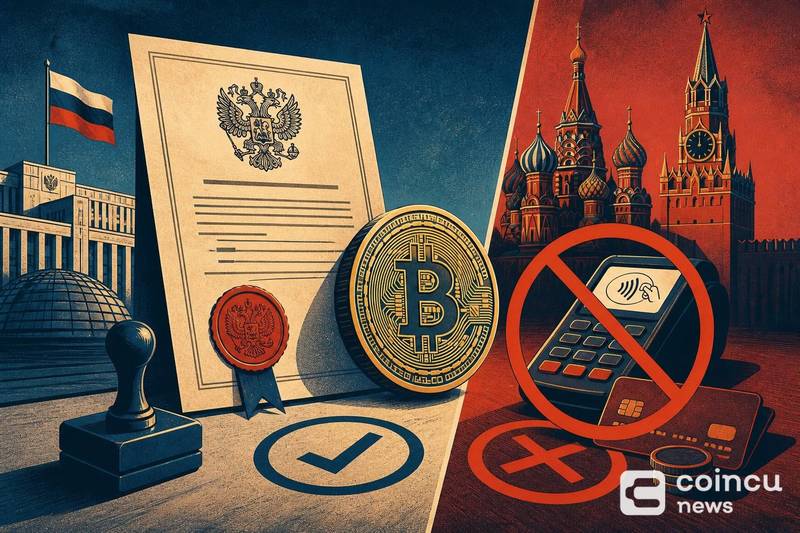
Russia has signed a law legalizing crypto trading while keeping crypto payments banned, marking a Russia crypto trading law that opens regulated access to digital assets as an investment without allowing them to be used as money.
What Russia’s New Crypto Law Changes
The measure was signed into law by President Vladimir Putin, establishing a formal regulatory change rather than a proposal, according to reporting on the signing. For related coverage, see Ready Crypto Card Suspended After Kulipa Collapse.
The core shift is that crypto trading is being legalized. This is presented as a signed law, not a draft bill, which distinguishes it from the earlier regulatory proposals that had circulated in Moscow. For related coverage, see OKX to Launch AEON/USDT Spot Trading Pair: Listing Details and Market Focus.
The change follows a series of steps toward a formal framework, including the earlier move when Putin signed a Russian law allowing regulated retail crypto trading.
Why Crypto Payments Are Still Banned in Russia
The law keeps crypto payments banned. Based on the signing, digital assets cannot be presented as legal tender or a permitted means of payment inside the country.
That creates a clear line between trading activity and payment use. Buying, holding, and selling digital assets within a regulated setting is treated differently from spending them on goods and services.
The distinction matters because it prevents readers from misreading the news as full crypto legalization. Russia has not made crypto legal for everyday transactions.
What the Trading-Payments Split Means for Russia’s Crypto Policy
The result is a two-track approach: permitted trading paired with banned payments. This points to a regulated-access stance rather than blanket acceptance of crypto.
The practical difference is between treating crypto as an investable asset and treating it as money. Under the signed law, the former is being opened up while the latter remains off-limits.
Any broader read on where Russian policy heads next is interpretation, not confirmed fact. The regulatory groundwork has been visible in earlier steps such as the Central Bank of Russia’s draft rules for crypto exchanges and custodians and separate draft rules for the organized trading of digital assets.
What Traders, Businesses, and the Market Will Watch Next
A signed law that legalizes trading raises implementation questions that the announcement itself does not resolve. Key areas to watch include:
- Implementation details: how regulated trading venues and compliance rules take shape in practice.
- Business usability: the continuing payments ban leaves unresolved questions for merchants and consumers.
- Market participation: how domestic institutions position around the new framework.
On the institutional side, Russia’s largest bank has moved toward the market, with Sberbank planning a crypto wallet launch, as Moscow cleared a path for the market.
FAQ About Russia’s Crypto Trading Law
Did Russia legalize crypto?
Russia signed a law legalizing crypto trading. It did not make crypto legal for all uses.
Can crypto be used for payments in Russia?
No. The signed law keeps crypto payments banned, so digital assets cannot be used as a permitted means of payment.
What changed with the new law?
The law formalizes legal crypto trading while preserving the existing restriction on using crypto for payments, creating a split between investment use and payment use.
Disclaimer: This article is for informational purposes only and does not constitute financial or investment advice. Cryptocurrency and digital asset markets carry significant risk. Always do your own research before making decisions.
No tags available.


Other Posts








- China, US Conclude Trade Talks with Focus on Cooperation
- Crypto Weekly: NYSE Backs OKX, Kraken Gets Fed Access, BTC Sells
- Court Upholds Fed’s Rejection of Custodia Bank’s Request
- Former CFO Convicted for $35M Fraudulent Crypto Investment
- DeriW Launches Edge Hour Trading Competition Platform for Derivatives Traders
- Michael Saylor Denies Bitcoin Sell-Off Amid Large BTC Transfer
- Buy Dogecoin on eToro: Step-by-Step Guide for Beginners (2024)
- Kazakhstan Explores Crypto Reserves Backed by National Funds
- JPMorgan Increases Holdings in BlackRock’s Bitcoin ETF
- Nordea Bank Introduces Bitcoin ETP Trading for Nordic Customers
- XRP Spot ETF Launches on Nasdaq Amid Market Fluctuations
- Peter Schiff Challenges Michael Saylor on MSTR’s Business Model
- Thailand Orders Worldcoin to Delete 1.2 Million Biometric Records
- UK Proposes New DeFi Tax Framework to Ease User Burden
- WLFI Under Fire: Analyst Warns Hyperliquid Could Be Next
- Ancient Ethereum Whale Moves $1.19 Billion After Decade
- BlackRock Receives Large Crypto Transfers from Coinbase
- SEC Scrutiny on ALT5 Sigma’s Leadership Disclosure Timing
- Yala Injects $5.5 Million Amid Recovery Efforts
- Radiant Capital Faces $50M Loss in Major Security Breach
- China, US Conclude Trade Talks with Focus on Cooperation
- Crypto Weekly: NYSE Backs OKX, Kraken Gets Fed Access, BTC Sells
- Court Upholds Fed’s Rejection of Custodia Bank’s Request
- Former CFO Convicted for $35M Fraudulent Crypto Investment
- DeriW Launches Edge Hour Trading Competition Platform for Derivatives Traders
- Michael Saylor Denies Bitcoin Sell-Off Amid Large BTC Transfer
- Buy Dogecoin on eToro: Step-by-Step Guide for Beginners (2024)
- Kazakhstan Explores Crypto Reserves Backed by National Funds
- JPMorgan Increases Holdings in BlackRock’s Bitcoin ETF
- Nordea Bank Introduces Bitcoin ETP Trading for Nordic Customers
- XRP Spot ETF Launches on Nasdaq Amid Market Fluctuations
- Peter Schiff Challenges Michael Saylor on MSTR’s Business Model
- Thailand Orders Worldcoin to Delete 1.2 Million Biometric Records
- UK Proposes New DeFi Tax Framework to Ease User Burden
- WLFI Under Fire: Analyst Warns Hyperliquid Could Be Next
- Ancient Ethereum Whale Moves $1.19 Billion After Decade
- BlackRock Receives Large Crypto Transfers from Coinbase
- SEC Scrutiny on ALT5 Sigma’s Leadership Disclosure Timing
- Yala Injects $5.5 Million Amid Recovery Efforts
- Radiant Capital Faces $50M Loss in Major Security Breach
- China, US Conclude Trade Talks with Focus on Cooperation
- Crypto Weekly: NYSE Backs OKX, Kraken Gets Fed Access, BTC Sells
- Court Upholds Fed’s Rejection of Custodia Bank’s Request
- Former CFO Convicted for $35M Fraudulent Crypto Investment
- DeriW Launches Edge Hour Trading Competition Platform for Derivatives Traders
- Michael Saylor Denies Bitcoin Sell-Off Amid Large BTC Transfer
- Buy Dogecoin on eToro: Step-by-Step Guide for Beginners (2024)
- Kazakhstan Explores Crypto Reserves Backed by National Funds
- JPMorgan Increases Holdings in BlackRock’s Bitcoin ETF
- Nordea Bank Introduces Bitcoin ETP Trading for Nordic Customers
- XRP Spot ETF Launches on Nasdaq Amid Market Fluctuations
- Peter Schiff Challenges Michael Saylor on MSTR’s Business Model
- Thailand Orders Worldcoin to Delete 1.2 Million Biometric Records
- UK Proposes New DeFi Tax Framework to Ease User Burden
- WLFI Under Fire: Analyst Warns Hyperliquid Could Be Next
- Ancient Ethereum Whale Moves $1.19 Billion After Decade
- BlackRock Receives Large Crypto Transfers from Coinbase
- SEC Scrutiny on ALT5 Sigma’s Leadership Disclosure Timing
- Yala Injects $5.5 Million Amid Recovery Efforts
- Radiant Capital Faces $50M Loss in Major Security Breach

Russia Signs Law Legalizing Crypto Trading While Crypto Payments Stay Banned



Zoomex Enhances Its Strategy Center With Advanced Strategy Trading Tools