Bitcoin’s BIP-110 soft fork attempt has entered its signaling phase at block 961,632, marking the point where miners begin indicating whether they support the proposed change. The milestone is a checkpoint in the upgrade process, not an activation, and it opens a window for the network to show how much backing the proposal actually has.
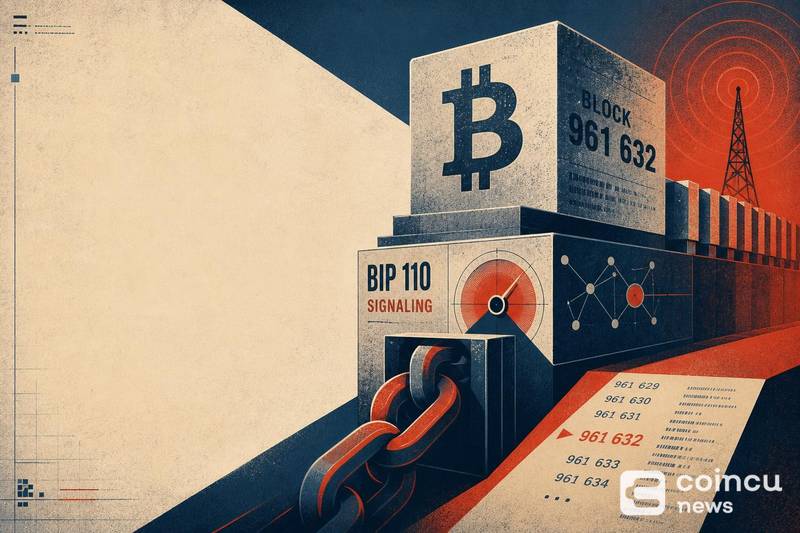
BIP-110 enters signaling at block 961,632
The signaling phase is the core of the news: from this block onward, miners can flag support for BIP-110 as the network watches whether momentum builds. Reaching signaling makes the soft fork attempt actionable for developers, miners, and node operators tracking Bitcoin governance. For related coverage, see Bitcoin ETF Inflows Hit $750M as Whales Add $1.2B BTC.
Early support appears limited. Reporting from CoinDesk noted BIP-110 entered mandatory signaling with less than 3% miner support, a figure that underscores how far the proposal sits from any activation threshold. Coincu previously covered the approaching signal window when the support rate stood at 2.64%.
What BIP-110 is trying to change
BIP-110 is a Bitcoin Improvement Proposal, the formal mechanism through which changes to the protocol are documented and put forward for consideration. The full technical specification is published in the BIP-110 document in the Bitcoin BIPs repository. For related coverage, see Bitcoin, Ether ETFs Draw $1.1B in Best Inflow Week Since April Despite Low Volume.
A proposal reaching the signaling stage does not mean it will be adopted. The intent of BIP-110 is separate from the question of whether miners and the wider community will coordinate to activate it. For related coverage, see Exploit Drains Bitcoin Lightning Payment Servers: What Happened.
Why the signaling phase matters
Signaling functions as an indicator of support rather than a guarantee of activation. It gives the network a measurable read on how many miners are willing to back the change during a defined window.
Bitcoin protocol changes depend on stakeholder coordination among miners, developers, and node operators, which is why soft fork attempts draw attention across the ecosystem. Readers can follow the live tally through the BIP-110 signaling monitor. Any assets a contested outcome might produce fall into the broader question of whether Bitcoin forks in 2026 hand holders new assets 1:1.
What happens next after signaling begins
The next thing to watch is the support trend, not a fixed outcome. Whether BIP-110 advances beyond signaling depends on whether sufficient miner support materializes over the window.
Monitoring milestones are distinct from final activation. A signaling phase can pass without a proposal reaching the level of coordination needed to lock in a change, so the current low support level is the key variable to track. Details on the proposal and its status are maintained at the official BIP-110 project site.
FAQ about Bitcoin BIP-110 and the signaling phase
What does block 961,632 mean for BIP-110? It is the block at which the BIP-110 signaling phase began, the point where miners can start flagging support for the proposal.
Does signaling mean activation is guaranteed? No. Signaling measures support during a window; it is not activation. BIP-110 entered signaling with less than 3% miner support, well short of any activation level.
Why does BIP-110 matter for Bitcoin? As a Bitcoin Improvement Proposal, it represents a potential protocol-level change, and its progress reflects how the network coordinates on upgrades.
Disclaimer: This article is for informational purposes only and does not constitute financial or investment advice. Cryptocurrency and digital asset markets carry significant risk. Always do your own research before making decisions.
No tags available.


Other Posts








- China, US Conclude Trade Talks with Focus on Cooperation
- Crypto Weekly: NYSE Backs OKX, Kraken Gets Fed Access, BTC Sells
- Court Upholds Fed’s Rejection of Custodia Bank’s Request
- Former CFO Convicted for $35M Fraudulent Crypto Investment
- DeriW Launches Edge Hour Trading Competition Platform for Derivatives Traders
- Michael Saylor Denies Bitcoin Sell-Off Amid Large BTC Transfer
- Buy Dogecoin on eToro: Step-by-Step Guide for Beginners (2024)
- Kazakhstan Explores Crypto Reserves Backed by National Funds
- JPMorgan Increases Holdings in BlackRock’s Bitcoin ETF
- Nordea Bank Introduces Bitcoin ETP Trading for Nordic Customers
- XRP Spot ETF Launches on Nasdaq Amid Market Fluctuations
- Peter Schiff Challenges Michael Saylor on MSTR’s Business Model
- Thailand Orders Worldcoin to Delete 1.2 Million Biometric Records
- UK Proposes New DeFi Tax Framework to Ease User Burden
- WLFI Under Fire: Analyst Warns Hyperliquid Could Be Next
- Ancient Ethereum Whale Moves $1.19 Billion After Decade
- BlackRock Receives Large Crypto Transfers from Coinbase
- SEC Scrutiny on ALT5 Sigma’s Leadership Disclosure Timing
- Yala Injects $5.5 Million Amid Recovery Efforts
- Radiant Capital Faces $50M Loss in Major Security Breach
- China, US Conclude Trade Talks with Focus on Cooperation
- Crypto Weekly: NYSE Backs OKX, Kraken Gets Fed Access, BTC Sells
- Court Upholds Fed’s Rejection of Custodia Bank’s Request
- Former CFO Convicted for $35M Fraudulent Crypto Investment
- DeriW Launches Edge Hour Trading Competition Platform for Derivatives Traders
- Michael Saylor Denies Bitcoin Sell-Off Amid Large BTC Transfer
- Buy Dogecoin on eToro: Step-by-Step Guide for Beginners (2024)
- Kazakhstan Explores Crypto Reserves Backed by National Funds
- JPMorgan Increases Holdings in BlackRock’s Bitcoin ETF
- Nordea Bank Introduces Bitcoin ETP Trading for Nordic Customers
- XRP Spot ETF Launches on Nasdaq Amid Market Fluctuations
- Peter Schiff Challenges Michael Saylor on MSTR’s Business Model
- Thailand Orders Worldcoin to Delete 1.2 Million Biometric Records
- UK Proposes New DeFi Tax Framework to Ease User Burden
- WLFI Under Fire: Analyst Warns Hyperliquid Could Be Next
- Ancient Ethereum Whale Moves $1.19 Billion After Decade
- BlackRock Receives Large Crypto Transfers from Coinbase
- SEC Scrutiny on ALT5 Sigma’s Leadership Disclosure Timing
- Yala Injects $5.5 Million Amid Recovery Efforts
- Radiant Capital Faces $50M Loss in Major Security Breach
- China, US Conclude Trade Talks with Focus on Cooperation
- Crypto Weekly: NYSE Backs OKX, Kraken Gets Fed Access, BTC Sells
- Court Upholds Fed’s Rejection of Custodia Bank’s Request
- Former CFO Convicted for $35M Fraudulent Crypto Investment
- DeriW Launches Edge Hour Trading Competition Platform for Derivatives Traders
- Michael Saylor Denies Bitcoin Sell-Off Amid Large BTC Transfer
- Buy Dogecoin on eToro: Step-by-Step Guide for Beginners (2024)
- Kazakhstan Explores Crypto Reserves Backed by National Funds
- JPMorgan Increases Holdings in BlackRock’s Bitcoin ETF
- Nordea Bank Introduces Bitcoin ETP Trading for Nordic Customers
- XRP Spot ETF Launches on Nasdaq Amid Market Fluctuations
- Peter Schiff Challenges Michael Saylor on MSTR’s Business Model
- Thailand Orders Worldcoin to Delete 1.2 Million Biometric Records
- UK Proposes New DeFi Tax Framework to Ease User Burden
- WLFI Under Fire: Analyst Warns Hyperliquid Could Be Next
- Ancient Ethereum Whale Moves $1.19 Billion After Decade
- BlackRock Receives Large Crypto Transfers from Coinbase
- SEC Scrutiny on ALT5 Sigma’s Leadership Disclosure Timing
- Yala Injects $5.5 Million Amid Recovery Efforts
- Radiant Capital Faces $50M Loss in Major Security Breach


Russia Hardware Wallet Sales More Than Double Ahead of New Crypto Rules

Senate Keeps Clarity Act Alive With Crypto Bill Vote Set for September
Bybit Sues North Korea and Lazarus Group, Secures Preliminary Injunction Freezing Stolen Assets in Landmark Crypto Asset Recovery Effort

Spindex’s Real-Time Data Pipeline Surpasses 150 Million Tracked Gaming Events