A transfer of 500 BTC, valued at roughly $31.9 million, was flagged as moving to Binance, drawing trader attention as a possible signal of exchange-bound activity. The details of the move remain only partially verified, and the transfer should be read as a reported event rather than an established market-moving fact.
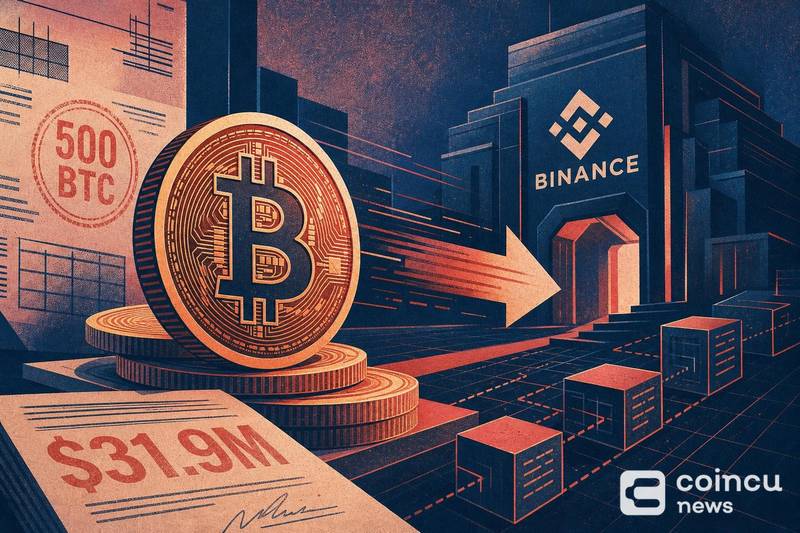
The movement was surfaced through a Whale Alert post on X, which flagged the 500 BTC transfer to Binance at an approximate valuation near $31.9 million. That alert is the primary reference point for the claim. For related coverage, see 24,500 SOL Moved From Anonymous Wallet to Binance Via Relay Addresses.
At this stage, the available research does not fully confirm the transaction details, including the originating wallet or the exact nature of the destination address. Readers should treat the reported figures with caution until independent on-chain confirmation is available. For related coverage, see New Wallet Withdraws 7,000 ETH From Binance and Stakes $13.46M.
What is confirmed and what remains unclear
What is confirmed is narrow: a public alert referencing the transfer was recorded. Beyond that, there is no secondary confirmation or transaction-hash analysis establishing the movement as verified. For related coverage, see Wallet Withdraws $99.96M in ETH and WBTC From Binance Since June 30.
The identity of the originating wallet is unclear. It is not established whether the sender is an individual holder, an institution, or an intermediary service.
It is also unclear whether the destination is a Binance deposit address, an internal exchange reshuffle, or an intermediary wallet routed toward the platform. Similar routing ambiguity appeared when 24,500 SOL moved to Binance via relay addresses.
Finally, it is unclear whether the transfer led to any spot selling or reflected routine treasury management. An inflow to an exchange does not, on its own, confirm intent to sell, as seen when a wallet deposited $15.65 million in ETH and WBTC to Binance.
Why a Binance-bound Bitcoin transfer matters to traders
Exchange inflows are commonly watched because coins moving onto trading platforms can precede sell-side activity. That interpretation is a heuristic, not a guarantee.
A single transfer is not enough to confirm directional pressure. Deposits also occur for collateral, market-making, custody rotation, or over-the-counter settlement that never touches the order book.
Institutional and treasury-management scenarios can closely resemble bearish inflows. Withdrawals in the opposite direction are equally routine, as seen when an address withdrew 40,000 ETH from Binance, underscoring that exchange flows run both ways.
Which data points would confirm market impact
The first checkpoint is the Bitcoin spot price reaction in the hours surrounding the reported transfer, measurable against live market data. A measurable move would strengthen the sell-pressure reading, while a flat response would weaken it.
The second is any shift in exchange inflows or reserves after the alert. Sustained reserve growth would point to accumulation on the platform, whereas an isolated deposit carries little signal.
The third is an identifiable transaction trail. A confirmed hash on a Bitcoin block explorer would let readers verify the amount, timestamp, and sender and receiver addresses directly, none of which is captured in the current evidence.
The final trigger to monitor is whether additional large transfers to Binance follow. Repeated inflows, similar to a multi-week series of Binance-linked movements, would be more meaningful than any one deposit.
FAQ
Does a transfer to Binance mean the BTC will be sold? No. Moving coins to an exchange can precede selling, but it can equally reflect custody, collateral, or settlement activity, and the current evidence does not establish intent.
How large is 500 BTC relative to typical whale transfers? The reported amount is a sizable single movement, but the available research does not benchmark it against a documented distribution of whale transfers.
What evidence should readers wait for? A verifiable transaction hash, the spot price reaction around the transfer window, exchange reserve changes, and any follow-on deposits to the same destination.
Additional source references: source document 1.
Disclaimer: This article is for informational purposes only and does not constitute financial or investment advice. Cryptocurrency and digital asset markets carry significant risk. Always do your own research before making decisions.
No tags available.


Other Posts








- China, US Conclude Trade Talks with Focus on Cooperation
- Crypto Weekly: NYSE Backs OKX, Kraken Gets Fed Access, BTC Sells
- Court Upholds Fed’s Rejection of Custodia Bank’s Request
- Former CFO Convicted for $35M Fraudulent Crypto Investment
- DeriW Launches Edge Hour Trading Competition Platform for Derivatives Traders
- Michael Saylor Denies Bitcoin Sell-Off Amid Large BTC Transfer
- Buy Dogecoin on eToro: Step-by-Step Guide for Beginners (2024)
- Kazakhstan Explores Crypto Reserves Backed by National Funds
- JPMorgan Increases Holdings in BlackRock’s Bitcoin ETF
- Nordea Bank Introduces Bitcoin ETP Trading for Nordic Customers
- XRP Spot ETF Launches on Nasdaq Amid Market Fluctuations
- Peter Schiff Challenges Michael Saylor on MSTR’s Business Model
- Thailand Orders Worldcoin to Delete 1.2 Million Biometric Records
- UK Proposes New DeFi Tax Framework to Ease User Burden
- WLFI Under Fire: Analyst Warns Hyperliquid Could Be Next
- Ancient Ethereum Whale Moves $1.19 Billion After Decade
- BlackRock Receives Large Crypto Transfers from Coinbase
- SEC Scrutiny on ALT5 Sigma’s Leadership Disclosure Timing
- Yala Injects $5.5 Million Amid Recovery Efforts
- Radiant Capital Faces $50M Loss in Major Security Breach
- China, US Conclude Trade Talks with Focus on Cooperation
- Crypto Weekly: NYSE Backs OKX, Kraken Gets Fed Access, BTC Sells
- Court Upholds Fed’s Rejection of Custodia Bank’s Request
- Former CFO Convicted for $35M Fraudulent Crypto Investment
- DeriW Launches Edge Hour Trading Competition Platform for Derivatives Traders
- Michael Saylor Denies Bitcoin Sell-Off Amid Large BTC Transfer
- Buy Dogecoin on eToro: Step-by-Step Guide for Beginners (2024)
- Kazakhstan Explores Crypto Reserves Backed by National Funds
- JPMorgan Increases Holdings in BlackRock’s Bitcoin ETF
- Nordea Bank Introduces Bitcoin ETP Trading for Nordic Customers
- XRP Spot ETF Launches on Nasdaq Amid Market Fluctuations
- Peter Schiff Challenges Michael Saylor on MSTR’s Business Model
- Thailand Orders Worldcoin to Delete 1.2 Million Biometric Records
- UK Proposes New DeFi Tax Framework to Ease User Burden
- WLFI Under Fire: Analyst Warns Hyperliquid Could Be Next
- Ancient Ethereum Whale Moves $1.19 Billion After Decade
- BlackRock Receives Large Crypto Transfers from Coinbase
- SEC Scrutiny on ALT5 Sigma’s Leadership Disclosure Timing
- Yala Injects $5.5 Million Amid Recovery Efforts
- Radiant Capital Faces $50M Loss in Major Security Breach
- China, US Conclude Trade Talks with Focus on Cooperation
- Crypto Weekly: NYSE Backs OKX, Kraken Gets Fed Access, BTC Sells
- Court Upholds Fed’s Rejection of Custodia Bank’s Request
- Former CFO Convicted for $35M Fraudulent Crypto Investment
- DeriW Launches Edge Hour Trading Competition Platform for Derivatives Traders
- Michael Saylor Denies Bitcoin Sell-Off Amid Large BTC Transfer
- Buy Dogecoin on eToro: Step-by-Step Guide for Beginners (2024)
- Kazakhstan Explores Crypto Reserves Backed by National Funds
- JPMorgan Increases Holdings in BlackRock’s Bitcoin ETF
- Nordea Bank Introduces Bitcoin ETP Trading for Nordic Customers
- XRP Spot ETF Launches on Nasdaq Amid Market Fluctuations
- Peter Schiff Challenges Michael Saylor on MSTR’s Business Model
- Thailand Orders Worldcoin to Delete 1.2 Million Biometric Records
- UK Proposes New DeFi Tax Framework to Ease User Burden
- WLFI Under Fire: Analyst Warns Hyperliquid Could Be Next
- Ancient Ethereum Whale Moves $1.19 Billion After Decade
- BlackRock Receives Large Crypto Transfers from Coinbase
- SEC Scrutiny on ALT5 Sigma’s Leadership Disclosure Timing
- Yala Injects $5.5 Million Amid Recovery Efforts
- Radiant Capital Faces $50M Loss in Major Security Breach



Schumer Proposes Anti-Corruption Agency Over Trump Crypto Ties

Performa Marks One Year Live with Major Upgrade for Digital-Native SMBs

Zoomex to Attend Coinfest Asia 2026 as Gold Sponsor and Host Summer Bay Party in Bali