Texas Crypto Kiosk Scam Losses Hit $56.8M in 2025 Amid Crackdown
Texas crypto kiosk scam losses reached $56.8 million in 2025, placing the state among the hardest hit by fraud tied to cryptocurrency ATMs and prompting lawmakers to weigh tougher consumer protection measures.
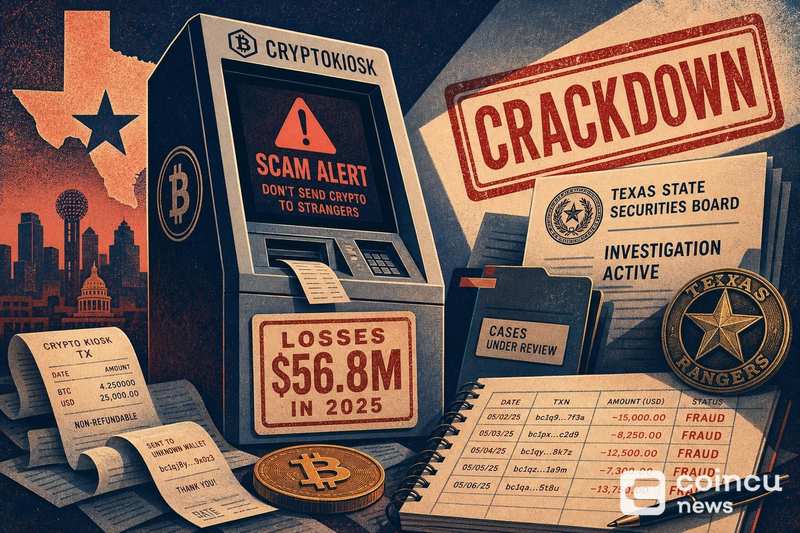
The figure specifically covers crypto kiosk fraud, the machines that convert cash into digital assets, rather than the broader universe of crypto scams. Texas ranked among the top states for such losses in 2025, alongside Florida. For related coverage, see Ready Crypto Card Suspended After Kulipa Collapse.
Reporting on the scale of the problem was detailed in a Texas Tribune investigation into how the machines have become a favored channel for defrauding residents. The volume of reported losses has kept the issue in front of state policymakers. For related coverage, see Poolin Bankruptcy Protection Filing: $52M Texas Mining Asset Sale Plan.
How Texas Crypto Kiosk Scams Typically Work
A crypto kiosk is a physical machine, often placed in convenience stores or gas stations, that lets a person insert cash and send cryptocurrency to a wallet address. Because the transaction settles on a blockchain, it is effectively irreversible once completed. For related coverage, see Minnesota Signs Bill Allowing Banks to Offer Crypto Custody Services.
Federal authorities describe a common pattern in which scammers contact a victim by phone or message, invent an urgent problem, and direct the person to deposit cash at a kiosk. The FBI Internet Crime Complaint Center has warned about this fraud flow.
Kiosks are attractive to scammers because they turn cash into crypto quickly, move funds across borders, and leave victims with little recourse once the transfer clears. That difficulty in recovering funds is a recurring theme in the reporting on these cases.
Why Texas Lawmakers Are Considering Tougher Measures
State officials have taken up the issue directly. Crypto kiosk oversight appears among the priorities laid out in the Texas Lieutenant Governor’s 2026 interim charges, which direct committees to study policy responses ahead of the next session.
Legislative attention has also been reflected in bill analysis at the state level, including the analysis of Senate Bill 1705. The measures under discussion are framed around consumer protection rather than restricting the underlying technology.
The push connects the rise in reported losses to the case for stricter rules on kiosk operators. Texas has repeatedly surfaced in crypto enforcement matters, including the SEC charges against a Texas man over an alleged crypto trading scam and a separate crypto kidnapping and extortion case involving Texas brothers.
What the Loss Figure Means for Consumers
A large statewide loss total suggests the tactic keeps working on new victims rather than being a one-off event. National data underscores the trend, with crypto-related complaints featured prominently in the 2025 IC3 Annual Report.
Warning signs include unsolicited calls or messages that create urgency, instructions to withdraw cash and feed it into a crypto machine, and any claim that paying in cryptocurrency will resolve a legal, tax, or account problem. Legitimate agencies do not demand payment through a kiosk.
Older adults are frequently cited as especially vulnerable to these schemes, given the social-engineering pressure involved. The practical takeaway is to pause before sending funds, verify any request through an independent channel, and treat kiosk payment demands as a red flag.
Texas Crypto Kiosk Scam FAQ
What is a crypto kiosk scam? It is fraud in which a victim is manipulated into depositing cash at a cryptocurrency ATM, sending the funds to a scammer’s wallet in a transaction that cannot be reversed.
How much have Texans lost to crypto kiosk scams in 2025? Reported losses for the year ranked Texas among the top states nationally for crypto ATM fraud.
Why are lawmakers considering tougher measures? The scale of losses has prompted state officials to study kiosk oversight and consumer protections through interim charges and pending legislation.
How can users avoid crypto kiosk fraud? Be skeptical of any urgent request to pay in cryptocurrency, never deposit cash at a kiosk on a stranger’s instruction, and verify requests independently before acting.
Disclaimer: This article is for informational purposes only and does not constitute financial or investment advice. Cryptocurrency and digital asset markets carry significant risk. Always do your own research before making decisions.
No tags available.


Other Posts








- China, US Conclude Trade Talks with Focus on Cooperation
- Crypto Weekly: NYSE Backs OKX, Kraken Gets Fed Access, BTC Sells
- Court Upholds Fed’s Rejection of Custodia Bank’s Request
- Former CFO Convicted for $35M Fraudulent Crypto Investment
- DeriW Launches Edge Hour Trading Competition Platform for Derivatives Traders
- Michael Saylor Denies Bitcoin Sell-Off Amid Large BTC Transfer
- Buy Dogecoin on eToro: Step-by-Step Guide for Beginners (2024)
- Kazakhstan Explores Crypto Reserves Backed by National Funds
- JPMorgan Increases Holdings in BlackRock’s Bitcoin ETF
- Nordea Bank Introduces Bitcoin ETP Trading for Nordic Customers
- XRP Spot ETF Launches on Nasdaq Amid Market Fluctuations
- Peter Schiff Challenges Michael Saylor on MSTR’s Business Model
- Thailand Orders Worldcoin to Delete 1.2 Million Biometric Records
- UK Proposes New DeFi Tax Framework to Ease User Burden
- WLFI Under Fire: Analyst Warns Hyperliquid Could Be Next
- Ancient Ethereum Whale Moves $1.19 Billion After Decade
- BlackRock Receives Large Crypto Transfers from Coinbase
- SEC Scrutiny on ALT5 Sigma’s Leadership Disclosure Timing
- Yala Injects $5.5 Million Amid Recovery Efforts
- Radiant Capital Faces $50M Loss in Major Security Breach
- China, US Conclude Trade Talks with Focus on Cooperation
- Crypto Weekly: NYSE Backs OKX, Kraken Gets Fed Access, BTC Sells
- Court Upholds Fed’s Rejection of Custodia Bank’s Request
- Former CFO Convicted for $35M Fraudulent Crypto Investment
- DeriW Launches Edge Hour Trading Competition Platform for Derivatives Traders
- Michael Saylor Denies Bitcoin Sell-Off Amid Large BTC Transfer
- Buy Dogecoin on eToro: Step-by-Step Guide for Beginners (2024)
- Kazakhstan Explores Crypto Reserves Backed by National Funds
- JPMorgan Increases Holdings in BlackRock’s Bitcoin ETF
- Nordea Bank Introduces Bitcoin ETP Trading for Nordic Customers
- XRP Spot ETF Launches on Nasdaq Amid Market Fluctuations
- Peter Schiff Challenges Michael Saylor on MSTR’s Business Model
- Thailand Orders Worldcoin to Delete 1.2 Million Biometric Records
- UK Proposes New DeFi Tax Framework to Ease User Burden
- WLFI Under Fire: Analyst Warns Hyperliquid Could Be Next
- Ancient Ethereum Whale Moves $1.19 Billion After Decade
- BlackRock Receives Large Crypto Transfers from Coinbase
- SEC Scrutiny on ALT5 Sigma’s Leadership Disclosure Timing
- Yala Injects $5.5 Million Amid Recovery Efforts
- Radiant Capital Faces $50M Loss in Major Security Breach
- China, US Conclude Trade Talks with Focus on Cooperation
- Crypto Weekly: NYSE Backs OKX, Kraken Gets Fed Access, BTC Sells
- Court Upholds Fed’s Rejection of Custodia Bank’s Request
- Former CFO Convicted for $35M Fraudulent Crypto Investment
- DeriW Launches Edge Hour Trading Competition Platform for Derivatives Traders
- Michael Saylor Denies Bitcoin Sell-Off Amid Large BTC Transfer
- Buy Dogecoin on eToro: Step-by-Step Guide for Beginners (2024)
- Kazakhstan Explores Crypto Reserves Backed by National Funds
- JPMorgan Increases Holdings in BlackRock’s Bitcoin ETF
- Nordea Bank Introduces Bitcoin ETP Trading for Nordic Customers
- XRP Spot ETF Launches on Nasdaq Amid Market Fluctuations
- Peter Schiff Challenges Michael Saylor on MSTR’s Business Model
- Thailand Orders Worldcoin to Delete 1.2 Million Biometric Records
- UK Proposes New DeFi Tax Framework to Ease User Burden
- WLFI Under Fire: Analyst Warns Hyperliquid Could Be Next
- Ancient Ethereum Whale Moves $1.19 Billion After Decade
- BlackRock Receives Large Crypto Transfers from Coinbase
- SEC Scrutiny on ALT5 Sigma’s Leadership Disclosure Timing
- Yala Injects $5.5 Million Amid Recovery Efforts
- Radiant Capital Faces $50M Loss in Major Security Breach

Bybit Launches US Stock Perpetual Contracts for UNH, GE, JPM, GILD, AMGN, REGN


Performa Marks One Year Live with Major Upgrade for Digital-Native SMBs

Zoomex to Attend Coinfest Asia 2026 as Gold Sponsor and Host Summer Bay Party in Bali