Three iPhone Users Sue Apple Over $1.8M Bitcoin Loss in Fake Sparrow Wallet Scam
Three iOS users have sued Apple, alleging they collectively lost $1.8 million in Bitcoin after downloading what they say was a fake version of Sparrow Wallet on their iPhones, in a case that puts the App Store’s role in policing crypto scams back under scrutiny.
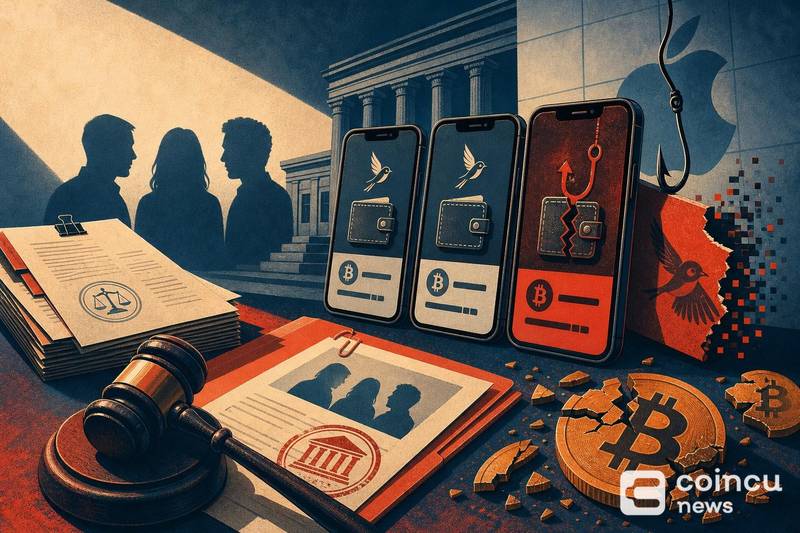
The claims are laid out in a lawsuit captioned Ramirez et al v. Apple Inc., filed against the iPhone maker and available as a court filing document. The plaintiffs allege the loss stemmed from a counterfeit Sparrow Wallet download. For related coverage, see Bitcoin Whale Sets 10 Targets, Eyes Longs if BTC Holds $64K.
At this stage these are allegations, not proven facts. The complaint has not been tested in court, and no ruling has established how the funds were lost. For related coverage, see US Spot Bitcoin ETFs See $225M Outflow, Ending 7-Day Streak.
What the three iOS users say happened
According to the filing, three iPhone users downloaded an app they believed to be Sparrow Wallet and subsequently lost Bitcoin worth a combined $1.8 million. The lawsuit frames the counterfeit download as the mechanism behind the theft. For related coverage, see Bitcoin Policy Institute, Palantir, Anduril Join State Freedom Tech Program.
The complaint names Apple Inc. as the defendant, tying the alleged harm to the platform through which the app was obtained. Beyond the named parties and the loss figure, the specific technical details of the scheme are not independently verified in the available materials. For related coverage, see MARA Holdings CEO Says AI Data Center Revenue per Unit of Power Beats Bitcoin Mining.
How the alleged fake Sparrow Wallet scheme worked
Sparrow Wallet is a legitimate, established Bitcoin wallet, with an official project site at sparrowwallet.com. The lawsuit concerns an allegedly fake version impersonating that real brand, not the genuine software.
Counterfeit wallet apps typically work by mimicking a trusted brand’s name, icon and branding closely enough that users believe they are installing the real thing. Once a user sets up a wallet or enters a recovery phrase into an impersonating app, an attacker can gain the access needed to move funds out.
The available materials do not spell out the exact steps in this case, so the precise path from download to loss remains an allegation rather than a documented sequence.
Why Apple is being sued
The suit targets Apple’s role in distributing apps and protecting users, rather than accusing Apple of directly taking any funds. By naming the platform, the plaintiffs put App Store review and anti-fraud safeguards at the center of the dispute.
Apple publishes guidance on App Store safety and how to report fraudulent apps and scams through its official support resources. That guidance reflects the company’s stated posture on user protection, but it does not indicate any position on this specific lawsuit.
The available evidence does not support any prediction of the case’s outcome or of potential damages beyond what the complaint itself claims.
What this signals about fake crypto wallet risks on mobile
The case underscores how counterfeit apps can exploit trust in well-known crypto brands, turning that recognition into an attack surface. Mobile download channels, where a convincing icon and name can be enough to earn a tap, create a high-risk environment, particularly for newer users.
Crypto losses have drawn heavy attention this cycle, with one trader noting that long-term Bitcoin holder losses have exceeded the FTX era, though those market-driven losses are a separate phenomenon from wallet-impersonation theft. The common thread is that Bitcoin’s irreversibility leaves little recourse once funds leave a wallet.
FAQ: Fake Sparrow Wallet lawsuit and user safety
Is Sparrow Wallet legitimate? Yes. Sparrow Wallet is a real Bitcoin wallet with an official site at sparrowwallet.com. The lawsuit concerns an allegedly fake version impersonating it.
Why is Apple being sued? The Ramirez et al v. Apple Inc. complaint targets Apple’s role in app distribution and user protection, alleging the counterfeit app was obtained through its platform.
Is the $1.8 million loss proven? No. The figure comes from allegations in a lawsuit that has not been decided in court.
How can users avoid fake wallet apps? Verify a wallet through its official website before downloading, check the developer name carefully, and never enter a recovery phrase into an app you are not certain is genuine.
Disclaimer: This article is for informational purposes only and does not constitute financial or investment advice. Cryptocurrency and digital asset markets carry significant risk. Always do your own research before making decisions.
No tags available.


Other Posts








- China, US Conclude Trade Talks with Focus on Cooperation
- Court Upholds Fed’s Rejection of Custodia Bank’s Request
- Crypto Weekly: NYSE Backs OKX, Kraken Gets Fed Access, BTC Sells
- Former CFO Convicted for $35M Fraudulent Crypto Investment
- DeriW Launches Edge Hour Trading Competition Platform for Derivatives Traders
- Michael Saylor Denies Bitcoin Sell-Off Amid Large BTC Transfer
- Buy Dogecoin on eToro: Step-by-Step Guide for Beginners (2024)
- Kazakhstan Explores Crypto Reserves Backed by National Funds
- JPMorgan Increases Holdings in BlackRock’s Bitcoin ETF
- Nordea Bank Introduces Bitcoin ETP Trading for Nordic Customers
- XRP Spot ETF Launches on Nasdaq Amid Market Fluctuations
- Peter Schiff Challenges Michael Saylor on MSTR’s Business Model
- Thailand Orders Worldcoin to Delete 1.2 Million Biometric Records
- UK Proposes New DeFi Tax Framework to Ease User Burden
- WLFI Under Fire: Analyst Warns Hyperliquid Could Be Next
- Ancient Ethereum Whale Moves $1.19 Billion After Decade
- BlackRock Receives Large Crypto Transfers from Coinbase
- SEC Scrutiny on ALT5 Sigma’s Leadership Disclosure Timing
- Yala Injects $5.5 Million Amid Recovery Efforts
- Radiant Capital Faces $50M Loss in Major Security Breach
- China, US Conclude Trade Talks with Focus on Cooperation
- Court Upholds Fed’s Rejection of Custodia Bank’s Request
- Crypto Weekly: NYSE Backs OKX, Kraken Gets Fed Access, BTC Sells
- Former CFO Convicted for $35M Fraudulent Crypto Investment
- DeriW Launches Edge Hour Trading Competition Platform for Derivatives Traders
- Michael Saylor Denies Bitcoin Sell-Off Amid Large BTC Transfer
- Buy Dogecoin on eToro: Step-by-Step Guide for Beginners (2024)
- Kazakhstan Explores Crypto Reserves Backed by National Funds
- JPMorgan Increases Holdings in BlackRock’s Bitcoin ETF
- Nordea Bank Introduces Bitcoin ETP Trading for Nordic Customers
- XRP Spot ETF Launches on Nasdaq Amid Market Fluctuations
- Peter Schiff Challenges Michael Saylor on MSTR’s Business Model
- Thailand Orders Worldcoin to Delete 1.2 Million Biometric Records
- UK Proposes New DeFi Tax Framework to Ease User Burden
- WLFI Under Fire: Analyst Warns Hyperliquid Could Be Next
- Ancient Ethereum Whale Moves $1.19 Billion After Decade
- BlackRock Receives Large Crypto Transfers from Coinbase
- SEC Scrutiny on ALT5 Sigma’s Leadership Disclosure Timing
- Yala Injects $5.5 Million Amid Recovery Efforts
- Radiant Capital Faces $50M Loss in Major Security Breach
- China, US Conclude Trade Talks with Focus on Cooperation
- Court Upholds Fed’s Rejection of Custodia Bank’s Request
- Crypto Weekly: NYSE Backs OKX, Kraken Gets Fed Access, BTC Sells
- Former CFO Convicted for $35M Fraudulent Crypto Investment
- DeriW Launches Edge Hour Trading Competition Platform for Derivatives Traders
- Michael Saylor Denies Bitcoin Sell-Off Amid Large BTC Transfer
- Buy Dogecoin on eToro: Step-by-Step Guide for Beginners (2024)
- Kazakhstan Explores Crypto Reserves Backed by National Funds
- JPMorgan Increases Holdings in BlackRock’s Bitcoin ETF
- Nordea Bank Introduces Bitcoin ETP Trading for Nordic Customers
- XRP Spot ETF Launches on Nasdaq Amid Market Fluctuations
- Peter Schiff Challenges Michael Saylor on MSTR’s Business Model
- Thailand Orders Worldcoin to Delete 1.2 Million Biometric Records
- UK Proposes New DeFi Tax Framework to Ease User Burden
- WLFI Under Fire: Analyst Warns Hyperliquid Could Be Next
- Ancient Ethereum Whale Moves $1.19 Billion After Decade
- BlackRock Receives Large Crypto Transfers from Coinbase
- SEC Scrutiny on ALT5 Sigma’s Leadership Disclosure Timing
- Yala Injects $5.5 Million Amid Recovery Efforts
- Radiant Capital Faces $50M Loss in Major Security Breach


Sources: Trump Expected to Attend White House Meeting With Crypto CEOs

Bitcoin Mining Rigs Shut Down in Capital of Major Mining Power
Bitmine Immersion Technologies Announces Record and Payment Dates for Cash Dividends on 9.50% Series A Perpetual Preferred Stock
Crypto Player Takes Home $1.749M After a Million PSG Bet on 1win