Top Crypto Audit Companies in 2026: Best Smart Contract Auditors Compared
Crypto audit companies help Web3 teams find smart contract, protocol, infrastructure, and operational security risks before attackers do. In 2026, the best audit partner is rarely the cheapest logo on a landing page.
Projects now need reviewers who understand protocol design, upgradeable contracts, bridges, token economics, account abstraction, zero-knowledge systems, cross-chain messaging, monitoring, and incident response.

This guide compares the leading crypto audit companies in 2026 based on public track record, current service coverage, audit transparency, technical depth, ecosystem trust, and fit for different project types. If you are still building background knowledge, Coincu also has explainers on blockchain, Ethereum, and DeFi.
| Key Takeaways – The best crypto audit company depends on the project type, codebase maturity, risk model, and amount of value at stake. – A smart contract audit is not a safety guarantee. Teams should also use internal testing, remediation review, monitoring, bug bounties, and repeat audits after major upgrades. – Before trusting any audit report, check the scope, commit hash, reviewed contracts, unresolved findings, remediation status, and whether deployed contracts match the audited code. |
Quick comparison of top crypto audit companies
| Company | Best for | Strengths | Watch-outs |
|---|---|---|---|
| Trail of Bits | Complex protocols, cryptography, infrastructure, high-assurance reviews | Deep research background, strong engineering reputation, broad security expertise | Often premium-priced and selective |
| OpenZeppelin | Ethereum, DeFi, governance, widely used smart contract systems | Recognized smart contract standards, high-end audit team, strong developer ecosystem | Best fit for serious teams with mature codebases |
| CertiK | Teams wanting audits plus monitoring, ratings, KYC/compliance, and broad Web3 security coverage | Large Web3 security platform, Skynet monitoring, formal verification, many public profiles | Public score should not replace a deep manual review |
| Hacken | Smart contract audits, exchange/security evidence, bug bounties, compliance-oriented Web3 teams | Large public audit library, senior-led review process, monitoring and bug bounty products | Confirm scope and auditor seniority before engagement |
| Halborn | Full-stack Web3 security, protocols, exchanges, wallets, infrastructure | Smart contract, L1, application, cloud, AI and red-team coverage | More suitable for teams needing broad security programs |
| ChainSecurity | DeFi, formal methods, high-value Ethereum and EVM protocols | Strong DeFi reputation and formal verification focus | Smaller visible footprint than platform-style providers |
| Cantina/Spearbit | Elite researcher network, competitive reviews, bug bounties, ongoing security programs | Spearbit network, Cantina platform, contests and managed reviews | Requires good scoping and active protocol-team involvement |
| Consensys Diligence | Ethereum tooling, fuzzing, formal analysis, EVM security research | MythX/Harvey-style research heritage and Ethereum specialization | Public marketing footprint is quieter than some competitors |
| Quantstamp | Web3 audits, infrastructure audits, economic exploit analysis | Public certificate library, long-running Web3 security brand | Check recent report volume for your exact stack |
| SlowMist | Asia-focused ecosystem, exchange/wallet/security intelligence, smart contract audits | More than 1,500 audited smart contracts claimed, threat intelligence and incident research | Confirm jurisdictional and language fit for global teams |
There is no single “best” audit company for every project. A lending protocol with complex liquidation logic should not choose the same way as a wallet, a Layer 1, a gaming NFT contract, or a centralized exchange. Use the table as a shortlist, then match the auditor to your threat model.
1. Trail of Bits
Trail of Bits is one of the strongest choices for teams building complex protocols, cryptographic systems, infrastructure, wallets, bridges, and high-value DeFi products. Its broader cybersecurity practice covers systems software, blockchain, cryptography, supply chain, machine learning, and open-source security, which makes it a good fit when the risk is not limited to Solidity code.

Trail of Bits is especially relevant when a project needs deep adversarial review, custom tooling, design assessment, or infrastructure-level thinking. The firm has long been associated with serious security research rather than quick, checklist-style audits.
Choose Trail of Bits if your project has:
- Complex protocol architecture
- Cryptographic assumptions
- Custom consensus, bridge, or validator logic
- High TVL or systemic market risk
- Need for rigorous engineering review beyond smart contracts
Trail of Bits may not be the best first choice for a small token contract with a tight budget and short timeline. For high-value systems, however, its depth is one of its biggest advantages.
2. OpenZeppelin
OpenZeppelin remains one of the most trusted names in Ethereum security. The company is widely known for OpenZeppelin Contracts, a standard library used across Ethereum and EVM development, and its security audit team focuses on high-value smart contract systems.
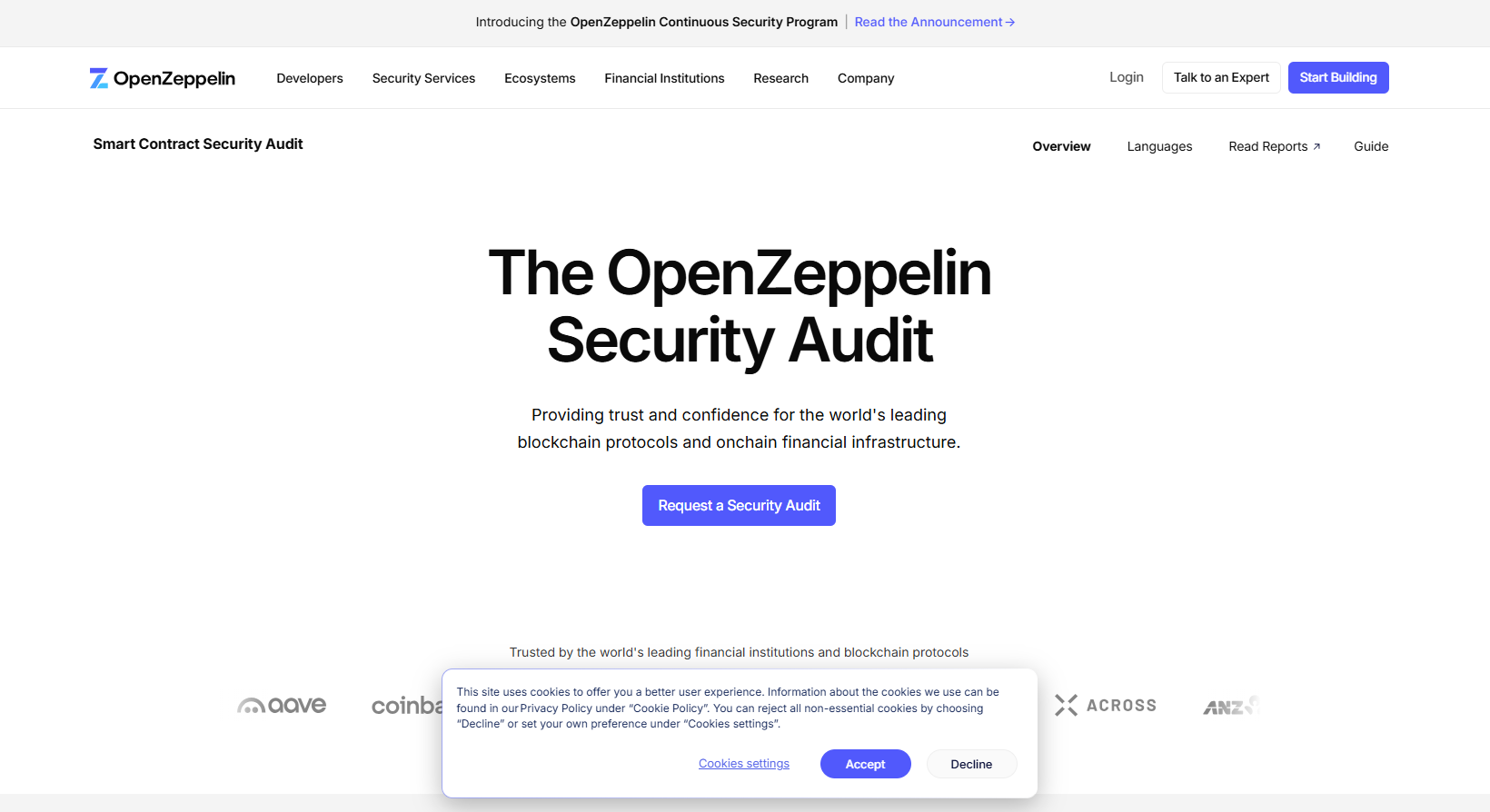
OpenZeppelin says it introduced its smart contract security work after launching the OpenZeppelin Contracts library in 2015. Its audit offering is strongest for serious DeFi protocols, governance systems, token infrastructure, upgradeable contracts, and EVM applications that need senior Ethereum expertise.
Choose OpenZeppelin if your project needs:
- Ethereum or EVM smart contract security review
- Governance and upgradeability review
- DeFi architecture review
- Strong alignment with widely used smart contract standards
- A premium brand trusted by technical crypto users
OpenZeppelin is best used when the codebase is already mature. Teams should prepare full documentation, tests, architecture diagrams, deployment plans, and upgrade controls before starting the audit.
3. CertiK
CertiK is one of the largest Web3 security brands and provides more than standalone smart contract audits. Its ecosystem includes security audits, penetration testing, Skynet ratings, monitoring, AML and compliance tooling, and validator services.
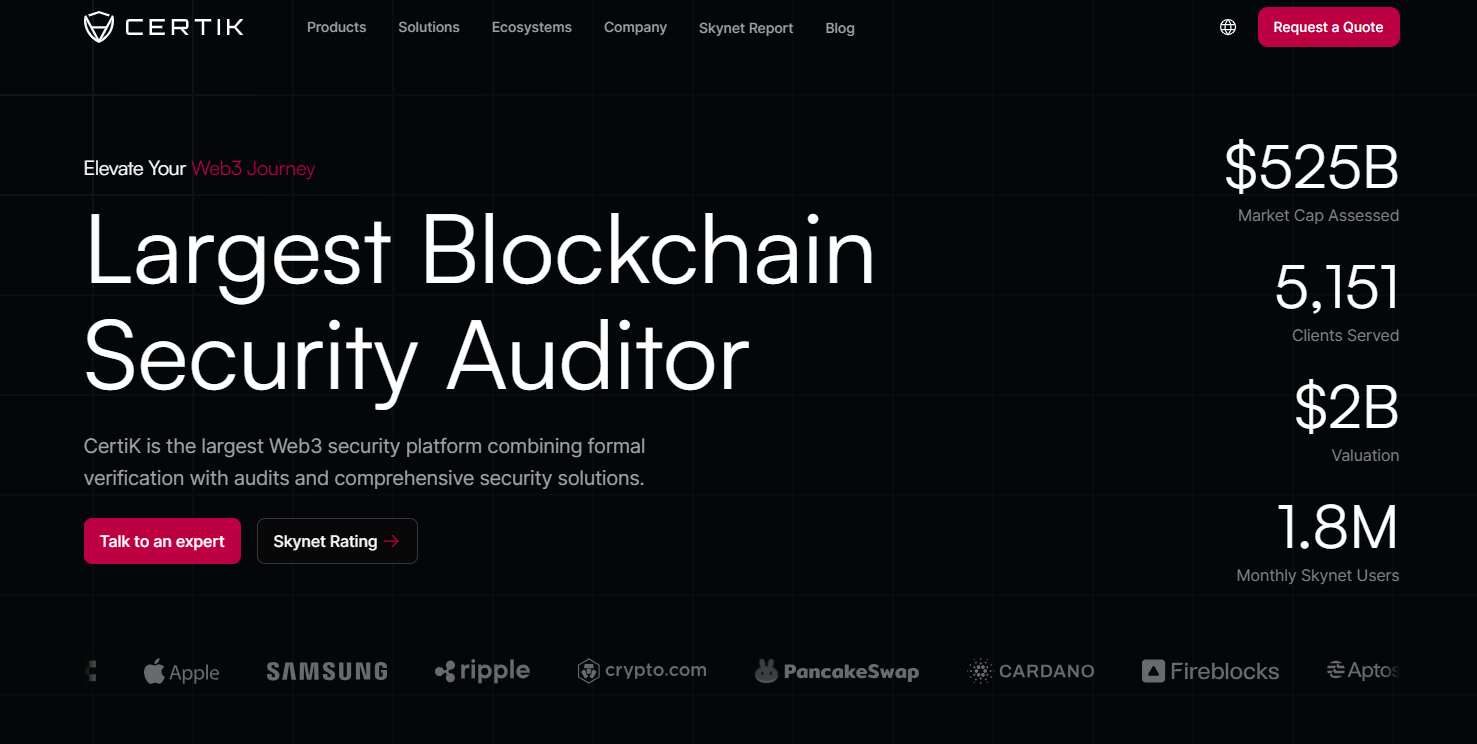
CertiK states that its platform has detected more than 115,000 vulnerabilities and assessed hundreds of billions of dollars in market capitalization. Its Skynet system provides real-time evaluation for more than 17,000 projects, exchanges, and wallets. CertiK also highlights formal verification work and security partnerships across major blockchain ecosystems.
Choose CertiK if your project needs:
- Smart contract audit plus public security profile
- Continuous monitoring or Skynet visibility
- Penetration testing for Web3 applications, wallets, custody, exchanges, or infrastructure
- Compliance, AML, or institutional security evidence
- A recognizable audit brand for retail-facing projects
The main caveat is that a score, badge, or public profile is not a substitute for reading the actual audit report. Users should check the scope, commit hash, unresolved findings, and whether deployed contracts match the audited code.
4. Hacken
Hacken is a blockchain security company offering smart contract audits, penetration testing, proof-of-reserves services, compliance evidence, bug bounties, and monitoring products. Hacken says its smart contract audit work is trusted by more than 1,500 projects and has helped secure more than $180 billion in digital assets.
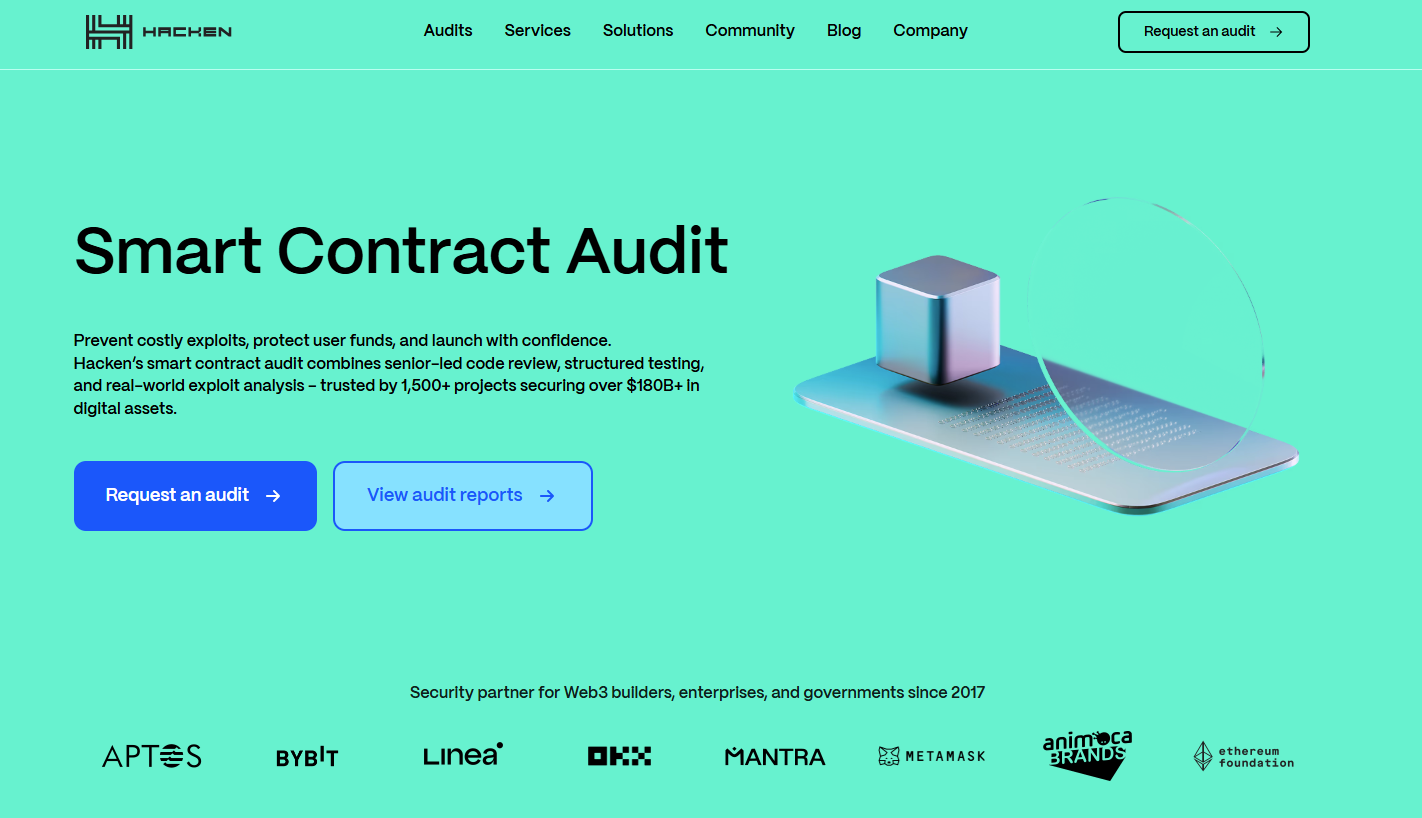
Hacken is useful for projects that want a combination of manual code review, structured reporting, public audit evidence, and security services after launch. Its public audit library and recent 2026 report examples make it easier for users and partners to verify work.
Choose Hacken if your project needs:
- Smart contract audit with public reporting
- Exchange, wallet, or infrastructure security review
- Bug bounty support through HackenProof
- Security evidence for partners, regulators, or institutional users
- Ongoing monitoring or threat response support
Before booking, ask who will audit the code, what the timeline includes, whether remediation review is included, and whether the final report can be public.
5. Halborn
Halborn is a strong option for teams that need more than a smart contract review. Its services cover smart contract assessments, Layer 1 assessments, code security audits, web application penetration testing, cloud infrastructure penetration testing, red-team work, AI red teaming, and broader digital asset security.
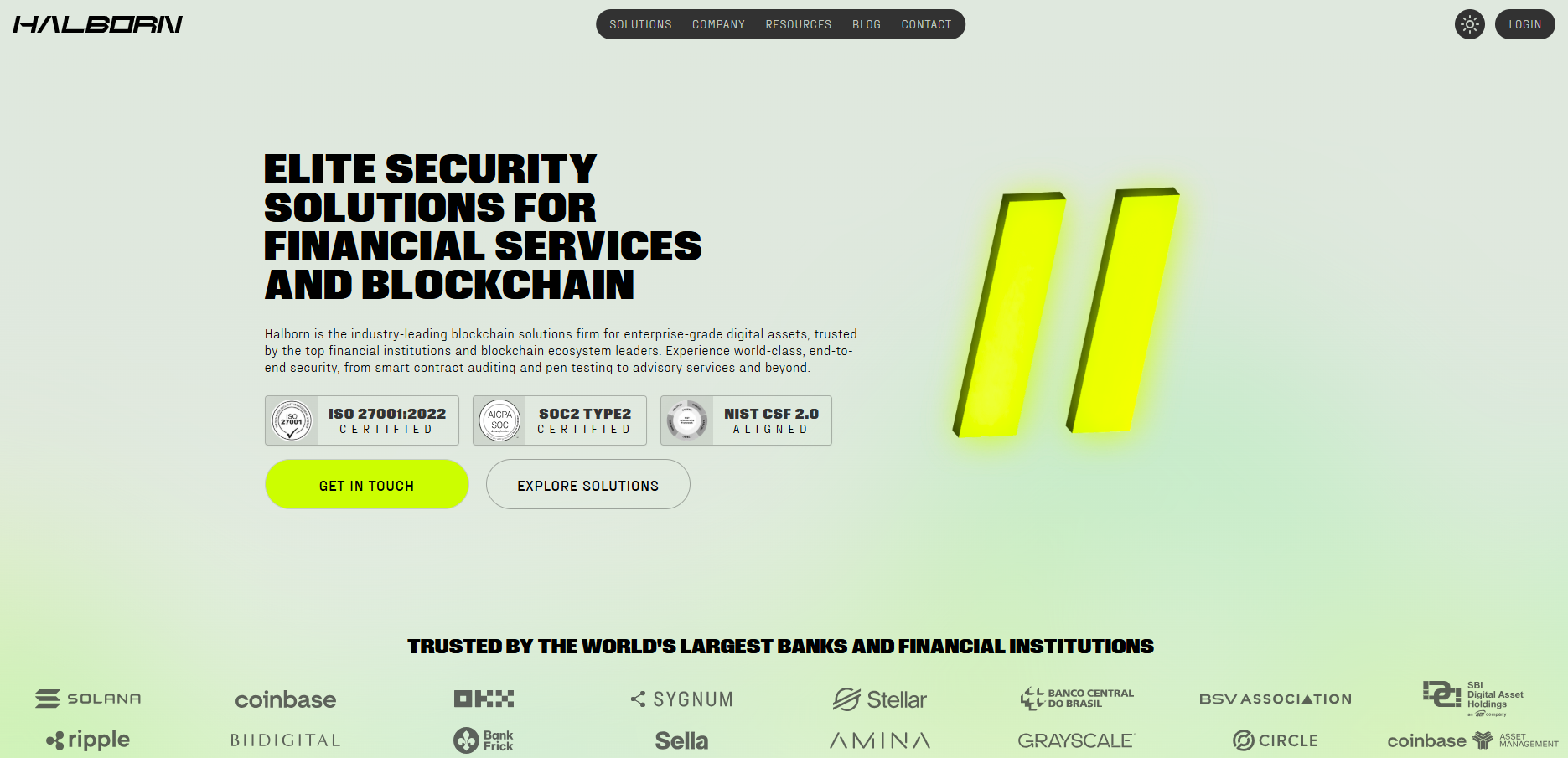
In 2026, Halborn has continued publishing security research and reports, including work on stablecoin risk and regulated ledger infrastructure. This makes the company relevant for exchanges, wallets, stablecoin projects, DeFi protocols, institutional crypto teams, and infrastructure providers.
Choose Halborn if your project needs:
- Smart contract and application security in one engagement
- Wallet, exchange, or custody security review
- Cloud, API, web app, or infrastructure penetration testing
- AI or red-team security assessment
- A long-term security partner rather than a one-off report
Halborn is a good fit when risk spans contracts, backend systems, keys, operations, cloud infrastructure, and user-facing applications.
6. ChainSecurity
ChainSecurity is a Switzerland-based smart contract audit firm known for DeFi and formal verification expertise. It is often considered a high-quality choice for teams that need precise review of protocol logic, financial flows, and Ethereum/EVM smart contracts.
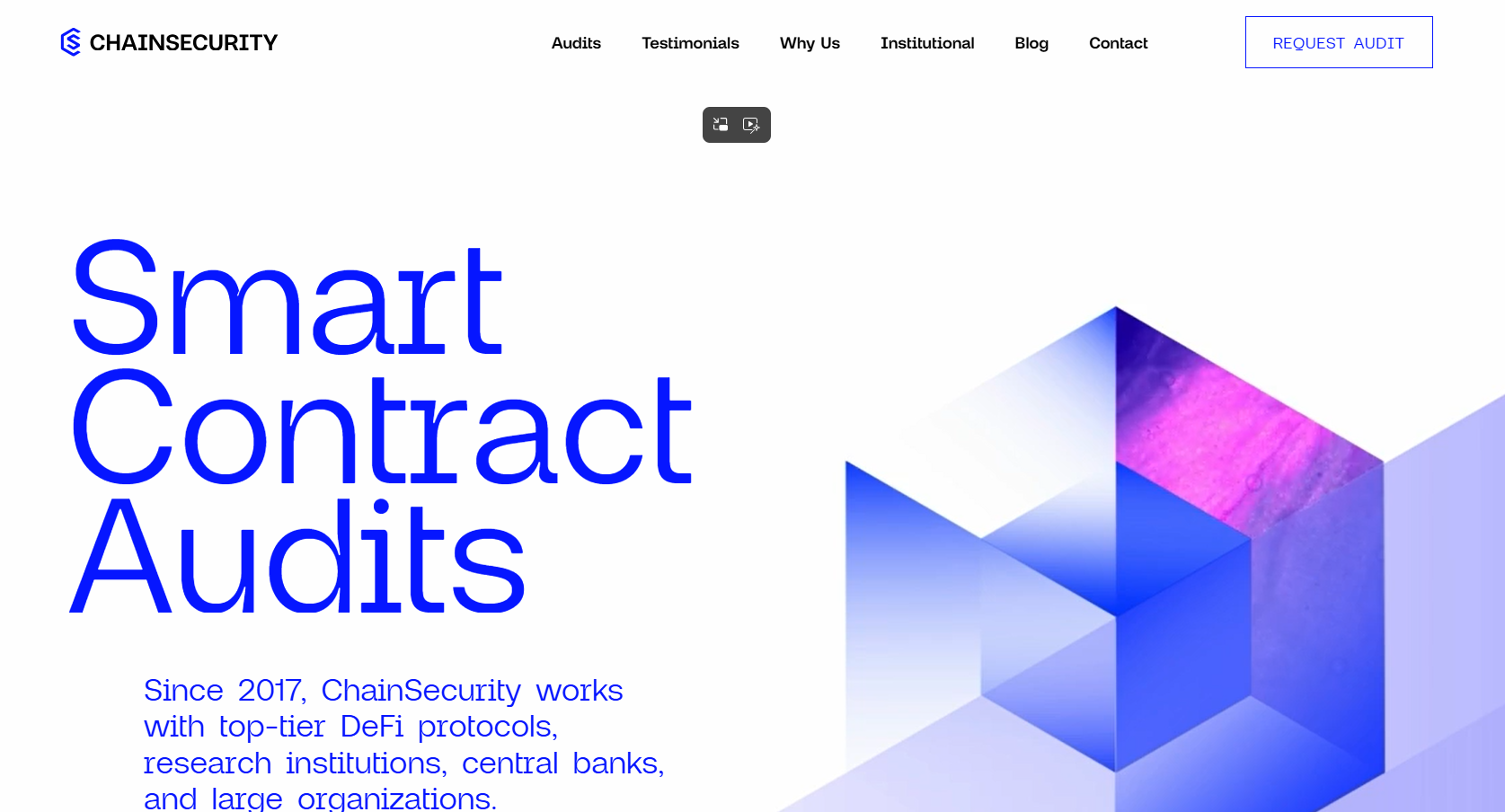
ChainSecurity may not have the same broad marketing footprint as larger platforms, but its reputation is strong among serious DeFi teams. Its website highlights client trust from teams such as Enzyme and shows ongoing technical writing around reviewed protocol features.
Choose ChainSecurity if your project needs:
- DeFi-focused smart contract review
- Formal methods or high-assurance reasoning
- Financial protocol logic review
- Ethereum and EVM expertise
- A focused audit team rather than a broad security marketplace
ChainSecurity is especially relevant for protocols where a small logic error can become a large economic loss.
7. Cantina and Spearbit
Cantina is an application security platform powered by the Spearbit network. It connects teams with researchers for smart contract audits, competitive reviews, bug bounties, penetration testing, and managed detection and response. Cantina says the platform is powered by more than 9,000 researchers and has helped secure more than $100 billion in TVL.
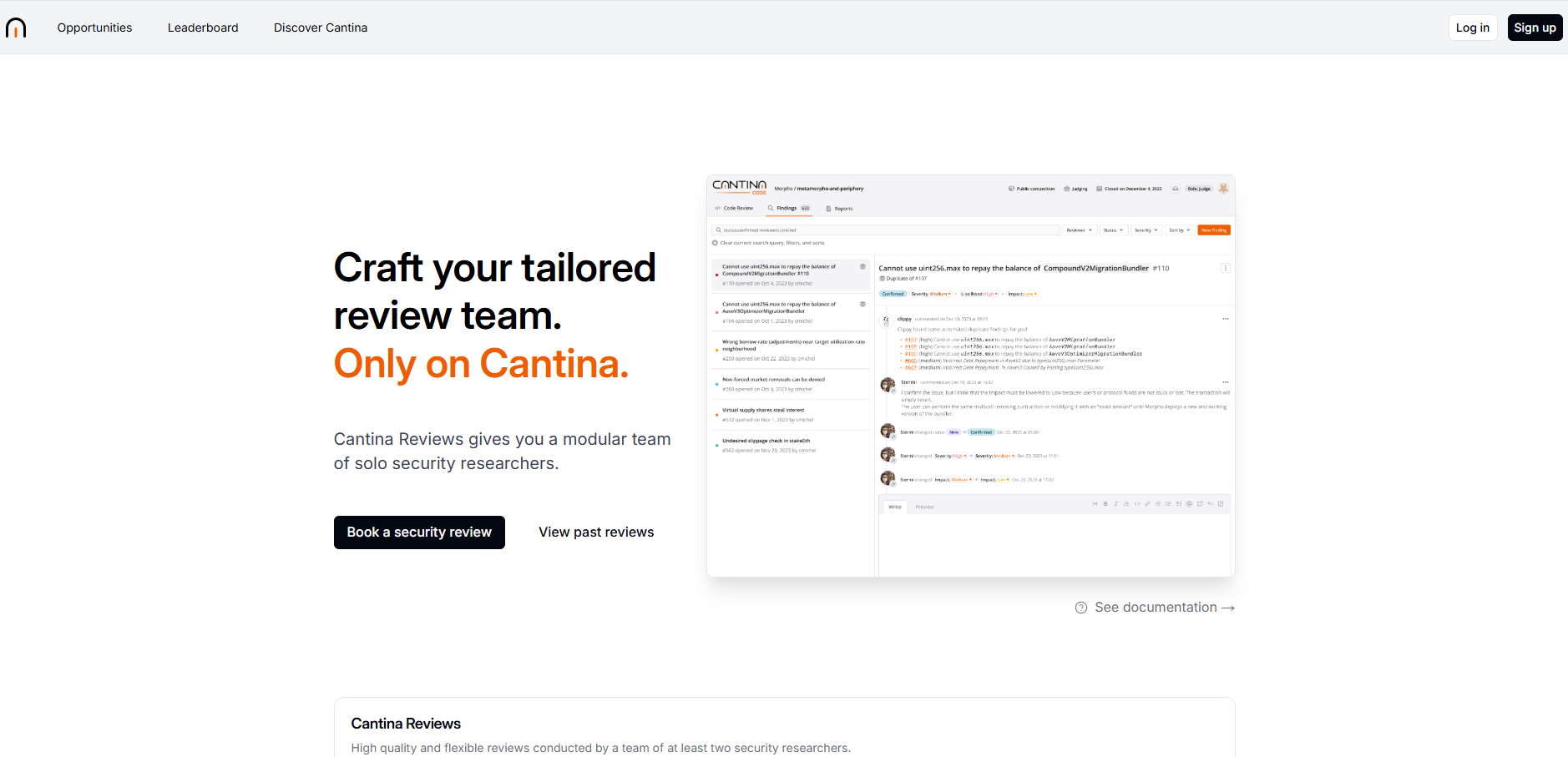
Spearbit-style reviews are useful when a project wants access to elite independent researchers instead of only a traditional audit firm structure. Cantina also supports competitive reviews and bug bounties, which can add breadth after a focused audit.
Choose Cantina/Spearbit if your project needs:
- Curated senior researchers
- Competitive review or audit contest
- Bug bounty program
- Ongoing security platform support
- A mix of private review and broader researcher coverage
This model works best when the protocol team can provide strong documentation, fast answers, clear scope, and active communication during the review.
8. Consensys Diligence
Consensys Diligence is a security team focused on Ethereum and Web3 systems. It is known for smart contract audits, fuzzing, formal analysis, and Ethereum security research. Its public work includes tools and research around smart contract analysis, testing, and fuzzing.
Consensys Diligence is especially relevant for teams building on Ethereum or EVM-compatible systems that want reviewers familiar with Ethereum infrastructure, developer tooling, and protocol-level assumptions.
Choose Consensys Diligence if your project needs:
- Ethereum or EVM smart contract audit
- Fuzzing and formal analysis expertise
- Protocol-specific security research
- Review from a team close to the Ethereum developer ecosystem
- Deep understanding of smart contract testing and tooling
Consensys Diligence is not always the loudest brand in comparison listicles, but it remains technically relevant for Ethereum-focused projects.
9. Quantstamp
Quantstamp is a long-running Web3 security company offering audits, infrastructure audits, audit readiness guidance, economic exploit analysis, and a public audit certificate library. It is a good fit for teams that want an established brand with experience across smart contracts, infrastructure, and economic attack surfaces.

Quantstamp is particularly useful when a project wants more than line-by-line code review. Its economic exploit analysis service is relevant for DeFi teams exposed to oracle manipulation, flash loan attacks, liquidation edge cases, governance capture, and incentive design risks.
Choose Quantstamp if your project needs:
- Smart contract audit from an established Web3 security provider
- Infrastructure or configuration security review
- Economic exploit analysis
- Public audit certificates
- Audit readiness support before a full engagement
For best results, ask for recent examples in your exact stack, such as Solidity, Rust, Move, Cosmos, Solana, or protocol-specific infrastructure.
10. SlowMist
SlowMist is a blockchain ecosystem security company with services covering smart contract audits, exchange security, wallet security, blockchain security, threat intelligence, and anti-money-laundering tools. SlowMist says it has audited more than 1,500 well-known smart contracts across Ethereum, EVM chains, EOS, Fabric, Solana, Klaytn, Aptos, and other platforms.
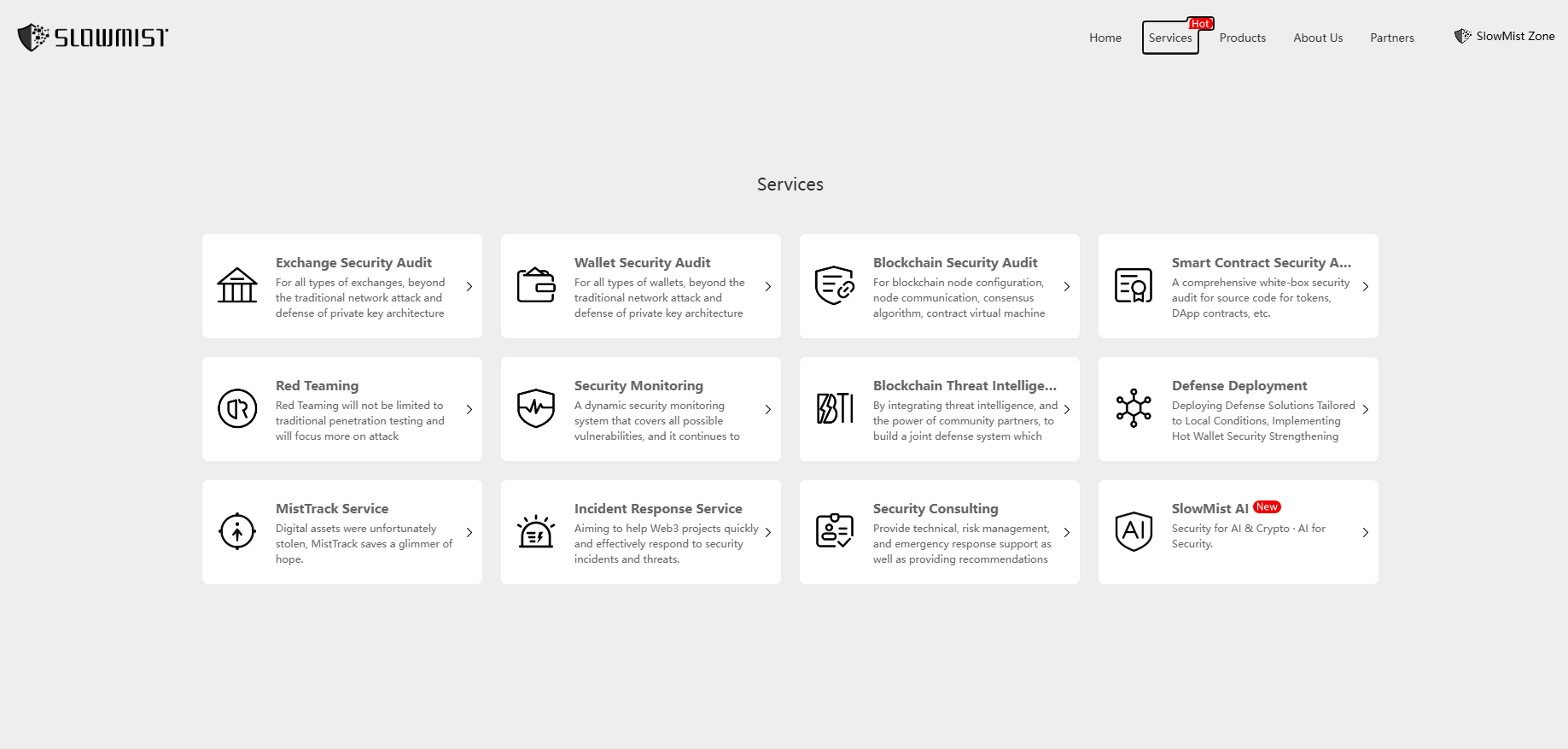
SlowMist is also known for incident analysis and threat intelligence. In January 2026, it published research on the Truebit Protocol exploit, showing continued activity in attack analysis.
Choose SlowMist if your project needs:
- Smart contract audit across multiple chains
- Exchange or wallet security review
- Threat intelligence and incident research
- Asia-market security partner
- AML or on-chain investigation capabilities
Teams should confirm jurisdiction, language, reporting format, and public-disclosure expectations before engagement.
How we selected these crypto audit companies
We evaluated companies using six criteria:
- Public audit history: whether the firm publishes reports, certificates, portfolios, or public project examples.
- Technical depth: ability to review complex smart contracts, protocol logic, cryptography, infrastructure, and economic attack surfaces.
- Current activity in 2025-2026: signs that the firm is still active, publishing research, reports, services, or recent client work.
- Ecosystem reputation: whether serious DeFi, infrastructure, exchange, wallet, or enterprise teams use the firm.
- Security coverage beyond one-time audits: bug bounties, monitoring, threat intelligence, penetration testing, formal verification, remediation review, or incident response.
- Transparency: clear process, public reports, disclosed scope, severity rating, remediation status, and verifiable links.
An audit is not a guarantee that a protocol is safe. It is a professional review of a specific codebase, scope, commit hash, architecture, and time period. The strongest teams combine internal testing, independent audits, bug bounties, formal verification where useful, monitoring, incident response planning, and repeat reviews after major upgrades.
What a good smart contract audit report should include
A useful audit report should make it clear what was reviewed, what was found, what was fixed, and what risk remains. If a report only says “passed” without scope, commit hash, findings, and limitations, it is weak evidence.
| Report section | What it should show |
|---|---|
| Scope and identity | Project name, repository, commit hash, reviewed contracts, excluded contracts, date range, auditor names or team information |
| Methodology and assumptions | Review method, threat model, protocol assumptions, external dependencies, oracle assumptions, admin controls, and known limitations |
| Findings | Severity classification, affected files or contracts, exploit scenario, proof of concept where possible, and business impact |
| Remediation | Clear remediation guidance, project response, fix review status, unresolved risks, and acknowledgement of accepted risks |
| Publication details | Whether the report is public, whether deployed contracts match audited code, and a disclaimer explaining the limits of the audit |
Readers should be able to connect the audit report to the actual deployed system. A report that does not identify the commit hash, scope, or remediation status is not enough for serious due diligence.
Conclusion
Audit pricing varies widely. A small token or NFT contract may cost a few thousand dollars. A serious DeFi protocol, bridge, Layer 1 module, or institutional wallet can cost tens or hundreds of thousands of dollars, especially if the scope includes multiple auditors, formal verification, fuzzing, infrastructure review, remediation, and public reporting.
The cheapest audit is not always cheaper in practice. If the auditor misses an economic attack, access-control issue, bridge flaw, oracle manipulation path, or upgrade-key risk, the cost can be much larger than the audit fee.
FAQ
Are crypto audits required before launching a token?
They are not always legally required, but they are expected for serious projects. Exchanges, launchpads, investors, and users often ask for a public audit report before trusting a protocol.
Does an audit mean a crypto project is safe?
No. An audit reduces risk for a defined scope and time period. It does not guarantee that every vulnerability is found, that future upgrades are safe, or that the team will deploy the same code that was reviewed.
Should projects get more than one audit?
High-value protocols often use multiple audits, contests, bug bounties, formal verification, and ongoing monitoring. One audit is usually not enough for complex DeFi, bridges, rollups, custody, or stablecoin infrastructure.
What is the difference between an audit firm and an audit contest?
An audit firm usually assigns a small team for a private review. An audit contest opens a scoped codebase to many researchers for a defined time window. Contests can add breadth, while private audits can provide deeper architectural review. Many mature teams use both.
What should users check before trusting an audit?
Users should check the audit date, scope, commit hash, deployed contract address, unresolved findings, severity levels, remediation status, and whether the project changed code after the audit.
Methodology
Coincu reviewed each crypto audit company using publicly available information as of May 17, 2026. We checked official company websites, audit service pages, public audit libraries, security product pages, documentation, and recent public activity. The list favors firms with verifiable security work, clear audit processes, strong smart contract expertise, and relevance to active Web3 teams in 2026.
This ranking is editorial, not a paid placement or a guarantee of security. We did not rank companies only by brand awareness, number of clients, or marketing claims. We prioritized evidence that a project team can verify before hiring an auditor: public reports, scope transparency, technical specialization, remediation process, monitoring or bug bounty support, and fit for high-risk crypto systems.
| DISCLAIMER: The information on this website is provided as general market commentary and does not constitute investment advice. We encourage you to do your own research before investing. |


Other Posts




- China, US Conclude Trade Talks with Focus on Cooperation
- Crypto Weekly: NYSE Backs OKX, Kraken Gets Fed Access, BTC Sells
- Court Upholds Fed’s Rejection of Custodia Bank’s Request
- Former CFO Convicted for $35M Fraudulent Crypto Investment
- DeriW Launches Edge Hour Trading Competition Platform for Derivatives Traders
- Michael Saylor Denies Bitcoin Sell-Off Amid Large BTC Transfer
- Buy Dogecoin on eToro: Step-by-Step Guide for Beginners (2024)
- Kazakhstan Explores Crypto Reserves Backed by National Funds
- JPMorgan Increases Holdings in BlackRock’s Bitcoin ETF
- Nordea Bank Introduces Bitcoin ETP Trading for Nordic Customers
- XRP Spot ETF Launches on Nasdaq Amid Market Fluctuations
- Peter Schiff Challenges Michael Saylor on MSTR’s Business Model
- Thailand Orders Worldcoin to Delete 1.2 Million Biometric Records
- UK Proposes New DeFi Tax Framework to Ease User Burden
- WLFI Under Fire: Analyst Warns Hyperliquid Could Be Next
- Ancient Ethereum Whale Moves $1.19 Billion After Decade
- BlackRock Receives Large Crypto Transfers from Coinbase
- SEC Scrutiny on ALT5 Sigma’s Leadership Disclosure Timing
- Yala Injects $5.5 Million Amid Recovery Efforts
- Radiant Capital Faces $50M Loss in Major Security Breach
- China, US Conclude Trade Talks with Focus on Cooperation
- Crypto Weekly: NYSE Backs OKX, Kraken Gets Fed Access, BTC Sells
- Court Upholds Fed’s Rejection of Custodia Bank’s Request
- Former CFO Convicted for $35M Fraudulent Crypto Investment
- DeriW Launches Edge Hour Trading Competition Platform for Derivatives Traders
- Michael Saylor Denies Bitcoin Sell-Off Amid Large BTC Transfer
- Buy Dogecoin on eToro: Step-by-Step Guide for Beginners (2024)
- Kazakhstan Explores Crypto Reserves Backed by National Funds
- JPMorgan Increases Holdings in BlackRock’s Bitcoin ETF
- Nordea Bank Introduces Bitcoin ETP Trading for Nordic Customers
- XRP Spot ETF Launches on Nasdaq Amid Market Fluctuations
- Peter Schiff Challenges Michael Saylor on MSTR’s Business Model
- Thailand Orders Worldcoin to Delete 1.2 Million Biometric Records
- UK Proposes New DeFi Tax Framework to Ease User Burden
- WLFI Under Fire: Analyst Warns Hyperliquid Could Be Next
- Ancient Ethereum Whale Moves $1.19 Billion After Decade
- BlackRock Receives Large Crypto Transfers from Coinbase
- SEC Scrutiny on ALT5 Sigma’s Leadership Disclosure Timing
- Yala Injects $5.5 Million Amid Recovery Efforts
- Radiant Capital Faces $50M Loss in Major Security Breach
- China, US Conclude Trade Talks with Focus on Cooperation
- Crypto Weekly: NYSE Backs OKX, Kraken Gets Fed Access, BTC Sells
- Court Upholds Fed’s Rejection of Custodia Bank’s Request
- Former CFO Convicted for $35M Fraudulent Crypto Investment
- DeriW Launches Edge Hour Trading Competition Platform for Derivatives Traders
- Michael Saylor Denies Bitcoin Sell-Off Amid Large BTC Transfer
- Buy Dogecoin on eToro: Step-by-Step Guide for Beginners (2024)
- Kazakhstan Explores Crypto Reserves Backed by National Funds
- JPMorgan Increases Holdings in BlackRock’s Bitcoin ETF
- Nordea Bank Introduces Bitcoin ETP Trading for Nordic Customers
- XRP Spot ETF Launches on Nasdaq Amid Market Fluctuations
- Peter Schiff Challenges Michael Saylor on MSTR’s Business Model
- Thailand Orders Worldcoin to Delete 1.2 Million Biometric Records
- UK Proposes New DeFi Tax Framework to Ease User Burden
- WLFI Under Fire: Analyst Warns Hyperliquid Could Be Next
- Ancient Ethereum Whale Moves $1.19 Billion After Decade
- BlackRock Receives Large Crypto Transfers from Coinbase
- SEC Scrutiny on ALT5 Sigma’s Leadership Disclosure Timing
- Yala Injects $5.5 Million Amid Recovery Efforts
- Radiant Capital Faces $50M Loss in Major Security Breach


Former FBI Agent Charged With Stealing Nearly $1 Million in Crypto

Coldcard Exploit Raises Questions About Air-Gapped Bitcoin Wallet Security
Bybit.eu Expands European Offering as Bybit Payments GmbH Secures Electronic Money Institution Licence

1win Introduces Seamless Web3 Login and Crypto Deposits via Trust Wallet, MetaMask, and WalletConnect