Updated July 9, 2026
Quick Answer
If you only want the short version, the four most important hardware wallet rules are:
- buy the device from an official or trusted source
- protect the recovery backup as carefully as the device itself
- verify transaction details on the device, not only on the computer or phone
- do not confuse cold storage with invincibility
That last point matters most. A hardware wallet reduces some online-key risk, but it does not make users immune to phishing, bad approvals, or sloppy setup.
Why Hardware Wallet Advice Still Goes Wrong
Many hardware wallet articles imply that buying the device solves the security problem.
It does not.
Ledger and Trezor both position their products around stronger key isolation and safer crypto storage. That is useful, but the device only works well when the user also follows good backup and signing habits.
Rule 1: Buy From a Trusted Source
Do not treat device sourcing as a trivial detail.
The safest default is to buy from the official manufacturer or a clearly trusted channel. If the package, initialization flow, or recovery setup looks wrong, stop.
This is one of the easiest places for users to lose the benefit of using hardware wallets in the first place.
Rule 2: Protect the Backup, Not Just the Device
A hardware wallet is not enough if the recovery backup is exposed.
If someone gets the recovery phrase, they may not need the physical device at all. That is why the backup should be stored offline and handled as the real recovery key to the funds.
Rule 3: Verify Transactions on the Device
The hardware wallet is valuable because it gives you a separate place to verify what you are signing.
That means you should check:
- the destination address
- the asset
- the amount
- any important confirmation details visible on the device
If you only trust what the browser or phone screen says, you are giving away part of the security benefit.
Rule 4: Cold Storage Does Not Replace Judgment
A hardware wallet reduces the risk of keeping the key exposed online, but it does not protect users from every category of mistake.
You can still lose funds through:
- phishing
- malicious approvals
- social engineering
- sending to the wrong address
- exposing the recovery backup
That is why a hardware wallet should be part of a security process, not a superstition.
Who Should Use a Hardware Wallet?
Hardware wallets make the most sense for:
- users with larger balances
- longer-term holders
- users who want stronger separation between daily activity and long-term storage
For many users, the practical answer is a layered setup:
- a hot wallet for active use
- a hardware-backed setup for larger or longer-term holdings
FAQ
Is a hardware wallet completely safe?
No. It is safer in important ways, especially for key isolation, but it does not remove all user-risk or transaction-risk.
Do I still need to protect the recovery phrase?
Yes. The recovery backup is still one of the most important pieces of your security setup.
Should beginners use a hardware wallet?
Often yes if they plan to hold meaningful value, but they still need to understand setup, backup, and transaction verification. Buying the device without learning those basics is not enough.
Further Reading
References


- China, US Conclude Trade Talks with Focus on Cooperation
- Crypto Weekly: NYSE Backs OKX, Kraken Gets Fed Access, BTC Sells
- Court Upholds Fed’s Rejection of Custodia Bank’s Request
- Former CFO Convicted for $35M Fraudulent Crypto Investment
- DeriW Launches Edge Hour Trading Competition Platform for Derivatives Traders
- Michael Saylor Denies Bitcoin Sell-Off Amid Large BTC Transfer
- Buy Dogecoin on eToro: Step-by-Step Guide for Beginners (2024)
- Kazakhstan Explores Crypto Reserves Backed by National Funds
- JPMorgan Increases Holdings in BlackRock’s Bitcoin ETF
- Nordea Bank Introduces Bitcoin ETP Trading for Nordic Customers
- XRP Spot ETF Launches on Nasdaq Amid Market Fluctuations
- Peter Schiff Challenges Michael Saylor on MSTR’s Business Model
- Thailand Orders Worldcoin to Delete 1.2 Million Biometric Records
- UK Proposes New DeFi Tax Framework to Ease User Burden
- WLFI Under Fire: Analyst Warns Hyperliquid Could Be Next
- Ancient Ethereum Whale Moves $1.19 Billion After Decade
- BlackRock Receives Large Crypto Transfers from Coinbase
- SEC Scrutiny on ALT5 Sigma’s Leadership Disclosure Timing
- Yala Injects $5.5 Million Amid Recovery Efforts
- Radiant Capital Faces $50M Loss in Major Security Breach
- China, US Conclude Trade Talks with Focus on Cooperation
- Crypto Weekly: NYSE Backs OKX, Kraken Gets Fed Access, BTC Sells
- Court Upholds Fed’s Rejection of Custodia Bank’s Request
- Former CFO Convicted for $35M Fraudulent Crypto Investment
- DeriW Launches Edge Hour Trading Competition Platform for Derivatives Traders
- Michael Saylor Denies Bitcoin Sell-Off Amid Large BTC Transfer
- Buy Dogecoin on eToro: Step-by-Step Guide for Beginners (2024)
- Kazakhstan Explores Crypto Reserves Backed by National Funds
- JPMorgan Increases Holdings in BlackRock’s Bitcoin ETF
- Nordea Bank Introduces Bitcoin ETP Trading for Nordic Customers
- XRP Spot ETF Launches on Nasdaq Amid Market Fluctuations
- Peter Schiff Challenges Michael Saylor on MSTR’s Business Model
- Thailand Orders Worldcoin to Delete 1.2 Million Biometric Records
- UK Proposes New DeFi Tax Framework to Ease User Burden
- WLFI Under Fire: Analyst Warns Hyperliquid Could Be Next
- Ancient Ethereum Whale Moves $1.19 Billion After Decade
- BlackRock Receives Large Crypto Transfers from Coinbase
- SEC Scrutiny on ALT5 Sigma’s Leadership Disclosure Timing
- Yala Injects $5.5 Million Amid Recovery Efforts
- Radiant Capital Faces $50M Loss in Major Security Breach
- China, US Conclude Trade Talks with Focus on Cooperation
- Crypto Weekly: NYSE Backs OKX, Kraken Gets Fed Access, BTC Sells
- Court Upholds Fed’s Rejection of Custodia Bank’s Request
- Former CFO Convicted for $35M Fraudulent Crypto Investment
- DeriW Launches Edge Hour Trading Competition Platform for Derivatives Traders
- Michael Saylor Denies Bitcoin Sell-Off Amid Large BTC Transfer
- Buy Dogecoin on eToro: Step-by-Step Guide for Beginners (2024)
- Kazakhstan Explores Crypto Reserves Backed by National Funds
- JPMorgan Increases Holdings in BlackRock’s Bitcoin ETF
- Nordea Bank Introduces Bitcoin ETP Trading for Nordic Customers
- XRP Spot ETF Launches on Nasdaq Amid Market Fluctuations
- Peter Schiff Challenges Michael Saylor on MSTR’s Business Model
- Thailand Orders Worldcoin to Delete 1.2 Million Biometric Records
- UK Proposes New DeFi Tax Framework to Ease User Burden
- WLFI Under Fire: Analyst Warns Hyperliquid Could Be Next
- Ancient Ethereum Whale Moves $1.19 Billion After Decade
- BlackRock Receives Large Crypto Transfers from Coinbase
- SEC Scrutiny on ALT5 Sigma’s Leadership Disclosure Timing
- Yala Injects $5.5 Million Amid Recovery Efforts
- Radiant Capital Faces $50M Loss in Major Security Breach

XRP Holders Can Borrow RLUSD on Ethereum Without Selling Crypto


Trump Family’s American Bitcoin Tops 8,000 BTC After Record Mining Quarter
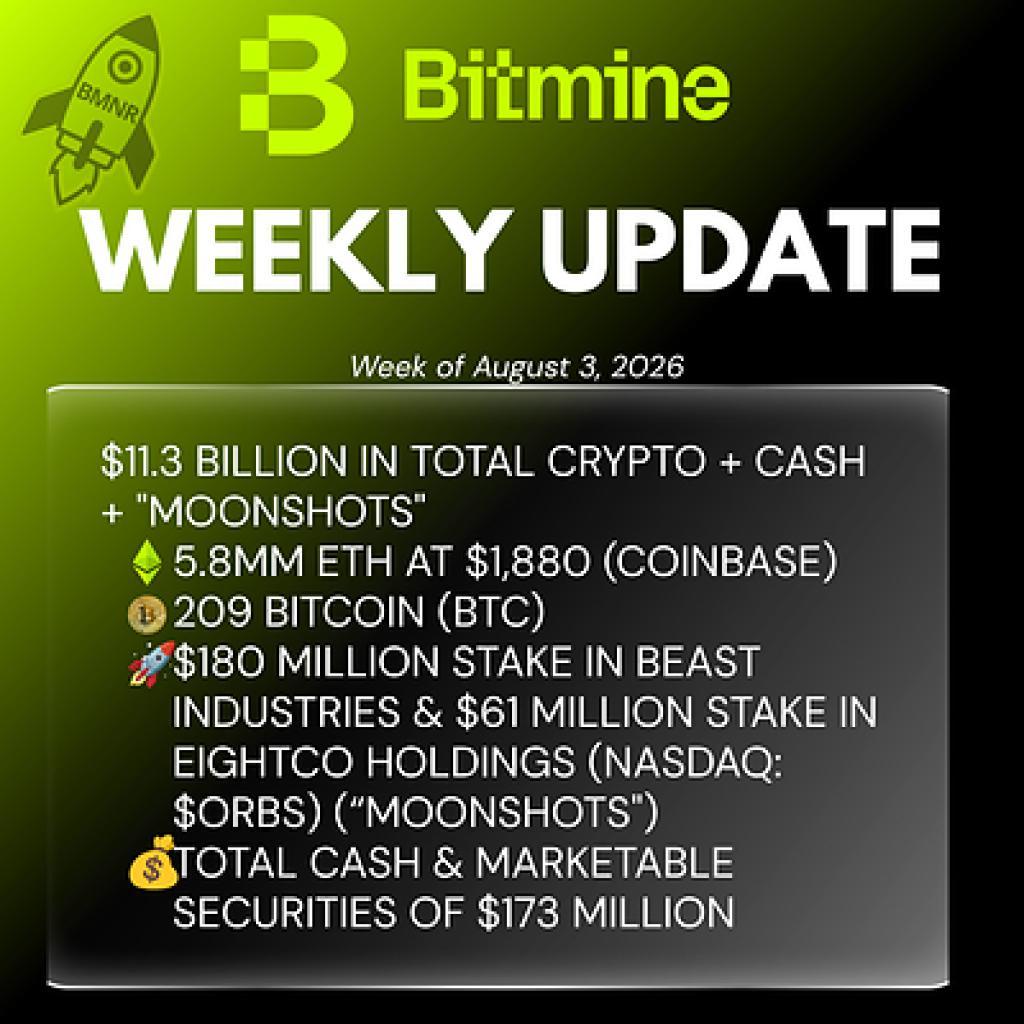
Bitmine Immersion Technologies (BMNR) Announces ETH Holdings Reach 5.8 Million Tokens, and Total Crypto and Total Cash Holdings of $11.3 Billion
Performa Marks One Year Live with Major Upgrade for Digital-Native SMBs