Best Solana DEXes in 2026: 7 Platforms Compared
Updated July 8, 2026
Quick Answer
If you want the short version, the best Solana DEXes in 2026 to compare are Jupiter, Raydium, Orca, Meteora, Phoenix, Drift, and Lifinity.
They are not interchangeable. Jupiter is the default routing layer for many Solana users. Raydium remains one of the most recognized liquidity venues. Orca is still one of the cleaner user experiences for swaps and concentrated liquidity. Meteora matters for liquidity infrastructure and vault-style products. Phoenix is relevant for order-book-based trading. Drift extends the comparison into onchain perpetuals and advanced trading. Lifinity remains part of the conversation because of its distinct market-making model on Solana.
The correct question is not “Which Solana DEX is number one?” It is “Which kind of Solana DEX fits the way you trade?”
Why Solana DEX Comparison Needs More Than TVL
Older Solana DEX roundups often ranked platforms as if they were all the same product.
That no longer works. On Solana, the DEX category now includes:
- swap aggregators
- AMMs
- concentrated liquidity platforms
- order-book trading venues
- perpetuals exchanges
- liquidity vault and market-making infrastructure
That is why this page compares product role first, not just brand familiarity.
How We Chose These DEXes
These platforms were chosen based on:
- strong association with Solana trading activity
- clear product role inside the ecosystem
- official documentation or product pages that make the use case legible
- practical relevance for real traders rather than just narrative visibility
This is a utility-led comparison, not a promise that one venue is always “best” for every trade.
Quick Comparison
| DEX | Best for | Product type | Strongest point | Main trade-off |
|---|---|---|---|---|
| Jupiter | most Solana users doing swaps | aggregator | broad route discovery and execution convenience | not a simple single-venue AMM comparison |
| Raydium | users who want a recognizable Solana liquidity venue | AMM and trading venue | deep ecosystem presence | product surface is broader and less minimal than some newer tools |
| Orca | users who want a cleaner swap and liquidity UX | AMM with concentrated liquidity features | approachable design | narrower product scope than aggregator-plus-derivatives stacks |
| Meteora | liquidity providers and yield-focused users | liquidity and vault infrastructure | specialized liquidity tooling | less beginner-friendly than plain swap-first interfaces |
| Phoenix | order-book-oriented users | onchain order book | different market structure from AMMs | less familiar for casual swap users |
| Drift | advanced traders and perpetuals users | onchain trading venue and perps | broader trading toolkit | more complexity than a simple DEX swap app |
| Lifinity | users interested in Solana-native market-making design | AMM / market-making model | distinct liquidity approach | less universal than the largest trading venues |
1. Jupiter
Jupiter belongs at the top of almost any Solana DEX comparison because it functions as a routing layer for a huge amount of user activity.
Jupiter’s product documentation positions it around swaps, routing, recurring buys, bridging, perpetuals, and other execution tools. That makes it more than a single DEX venue. For many users, it is the default interface for finding the best route across Solana liquidity.
Why it made the list:
- widely used entry point for Solana swaps
- routing model helps users avoid manually comparing venues
- increasingly broad product surface
What looks strongest in 2026:
- convenience
- strong relevance to everyday Solana trading
- useful even for users who do not care which underlying venue gets used
What remains weaker:
- it is not a clean one-venue DEX comparison case
- users who want to interact with a specific pool design may still go directly to another platform
2. Raydium
Raydium remains one of the defining names in Solana DeFi and still deserves a central place in any serious DEX list.
Its official site and docs emphasize swaps, liquidity, ecosystem integrations, and product features that have made it a long-standing part of Solana trading infrastructure.
Why it made the list:
- strong ecosystem recognition
- durable role in Solana DeFi history
- still relevant for direct venue participation
What looks strongest in 2026:
- recognizable trading venue
- strong liquidity identity
- useful for readers who want a direct Solana-native DEX brand rather than only an aggregator
What remains weaker:
- broader interface can feel heavier than ultra-simple swap tools
- some users may use Raydium indirectly through Jupiter rather than as a standalone first stop
3. Orca
Orca remains one of the easiest Solana DEX names to recommend to users who care about a cleaner product experience.
Orca’s documentation highlights token swaps, liquidity provision, and concentrated liquidity through Whirlpool-style tooling. That keeps it relevant as both a swap venue and a liquidity destination.
Why it made the list:
- cleaner UX than many DEX interfaces
- important concentrated-liquidity role
- approachable for users who want a direct AMM experience
What looks strongest in 2026:
- good product clarity
- strong fit for swap and LP users
- useful balance between depth and simplicity
What remains weaker:
- narrower scope than platforms that bundle routing, derivatives, and more advanced trading layers
- users seeking the broadest execution path may still default to an aggregator first
4. Meteora
Meteora matters because Solana DEX infrastructure is no longer just about basic swaps.
Meteora’s product materials focus on liquidity vaults, dynamic liquidity, and capital-efficiency tooling. That makes it more relevant to users thinking about how liquidity is deployed, not only where a token is swapped.
Why it made the list:
- specialized liquidity infrastructure
- clear role for LPs and yield-oriented users
- important example of how Solana DeFi has matured beyond simple AMMs
What looks strongest in 2026:
- liquidity design focus
- useful for advanced LP users
- meaningful ecosystem role even if casual traders never use every feature directly
What remains weaker:
- less intuitive for total beginners
- product complexity is higher than a straightforward swap-first DEX
5. Phoenix
Phoenix deserves inclusion because it brings an onchain order-book model into a Solana DEX conversation that is often dominated by AMMs.
Its official materials position it as an order-book exchange built for speed and composability on Solana. That makes it structurally different from most DEX brands ordinary users first encounter.
Why it made the list:
- different market structure from AMMs
- useful for readers who want order-book exposure onchain
- expands the comparison beyond the same AMM template repeated seven times
What looks strongest in 2026:
- order-book design
- differentiated product logic
- useful for more execution-sensitive users
What remains weaker:
- not the most obvious product for casual swap users
- can be harder to understand if your only mental model is AMM trading
6. Drift
Drift belongs in this roundup because “best Solana DEXes” in 2026 is also partly a question about what kind of trading a user wants to do.
Drift’s docs and product materials cover perpetuals, spot access, and more advanced onchain trading tools. That makes it less of a simple swap venue and more of a broader Solana trading platform.
Why it made the list:
- advanced trading relevance
- strong product identity for perpetuals users
- expands the page beyond basic spot swap interfaces
What looks strongest in 2026:
- broader toolkit for active traders
- stronger fit for users who want more than token swaps
- meaningful role in Solana trading infrastructure
What remains weaker:
- too complex for beginners who only want occasional swaps
- not the cleanest first choice for purely passive users
7. Lifinity
Lifinity remains worth comparing because it represents a distinct approach to liquidity and market-making on Solana.
Its documentation and product positioning emphasize a different market-making model from standard constant-product assumptions. That alone makes it useful in a comparison article, because it helps explain that Solana DEX design is not one-size-fits-all.
Why it made the list:
- differentiated liquidity model
- long-standing Solana-native relevance
- useful contrast against simpler AMM-first venues
What looks strongest in 2026:
- distinct product design
- still relevant for readers studying Solana market structure
- broadens the category beyond the largest brand names
What remains weaker:
- not the first venue many casual users start with
- requires more context to appreciate the difference
Which Solana DEX Is Best for Different Users?
If you only want a practical chooser:
- choose Jupiter if you mainly care about getting a good route for swaps
- choose Raydium if you want a recognizable direct Solana trading venue
- choose Orca if you want a cleaner AMM and LP experience
- choose Meteora if you care about liquidity design and vault-style infrastructure
- choose Phoenix if you want an order-book model on Solana
- choose Drift if you are an advanced trader or perpetuals user
- choose Lifinity if you want to compare Solana-native market-making models more closely
What Most Solana DEX Lists Still Get Wrong
The main mistake is treating every platform like the same kind of exchange.
That creates weak rankings because an aggregator, an AMM, an order book, and a perps venue are not solving the same problem.
A stronger comparison starts with:
- what kind of execution the user wants
- whether the user is swapping, LPing, or trading perpetuals
- whether the user wants convenience, control, or advanced tooling
FAQ
What is the best Solana DEX in 2026?
There is no single answer for every user. Jupiter is often the easiest answer for everyday swaps, but Raydium, Orca, Meteora, Phoenix, Drift, and Lifinity each make sense for different trading styles.
Is Jupiter a DEX or an aggregator?
Jupiter is best understood as an aggregator and execution layer rather than just a single AMM venue. That is exactly why it is so relevant in Solana trading.
Which Solana DEX is best for beginners?
Jupiter and Orca are often the easiest starting points. Jupiter simplifies route discovery, while Orca tends to be easier to parse for users who want a direct swap interface.
Which Solana DEX is best for advanced traders?
Drift and Phoenix are more relevant for advanced users because they expand the comparison beyond basic swaps into broader trading tooling and order-book execution.
Final Takeaway
The best Solana DEXes in 2026 are not fighting for one universal ranking slot.
Jupiter is the convenience layer many users touch first. Raydium and Orca remain major direct trading venues. Meteora helps explain the rise of Solana liquidity infrastructure. Phoenix and Drift bring different trading models into the same ecosystem. Lifinity still matters as a distinct Solana-native design.
That is the practical way to compare this category now: by use case, execution model, and product depth, not by old listicle ranking theater.
References
- Jupiter: https://jup.ag/
- Jupiter docs: https://station.jup.ag/
- Raydium: https://raydium.io/
- Raydium docs: https://docs.raydium.io/
- Orca: https://www.orca.so/
- Orca docs: https://docs.orca.so/
- Meteora: https://www.meteora.ag/
- Meteora docs: https://docs.meteora.ag/
- Phoenix: https://www.phoenix.trade/
- Phoenix docs: https://docs.phoenix.trade/
- Drift: https://www.drift.trade/
- Drift docs: https://docs.drift.trade/
- Lifinity: https://lifinity.io/
- Lifinity docs: https://docs.lifinity.io/
Internal Link Opportunities
- Solana explorers page: https://coincu.com/top-solana-explorers/
- Best crypto wallet explainer: https://coincu.com/best-crypto-wallet/
- WalletConnect or custody explainer where useful
- nearest live Solana ecosystem explainer on Coincu if available
Media Plan
Featured image:
- a Solana trading map showing aggregator, AMM, order book, and perps layers
Suggested inline media:
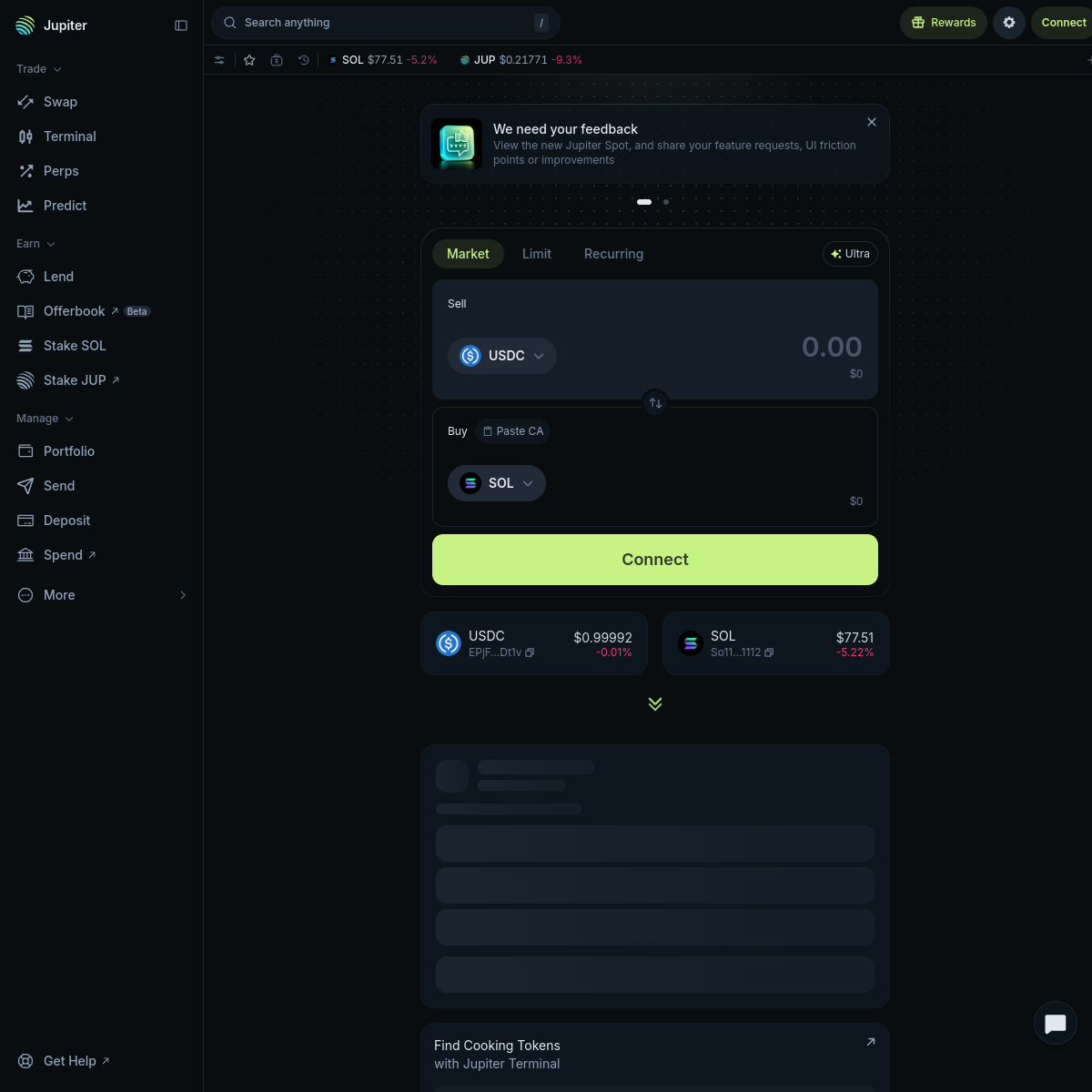
- Jupiter interface capture
- Orca docs capture
- Drift docs or platform overview capture
Caption direction:
- emphasize exchange type and user fit
Disclosure
This article is for informational purposes only and does not constitute investment advice. Trading features, liquidity conditions, supported tokens, and fee structures can change, so readers should verify the latest official documentation before executing trades or providing liquidity.




- China, US Conclude Trade Talks with Focus on Cooperation
- Crypto Weekly: NYSE Backs OKX, Kraken Gets Fed Access, BTC Sells
- Court Upholds Fed’s Rejection of Custodia Bank’s Request
- Former CFO Convicted for $35M Fraudulent Crypto Investment
- DeriW Launches Edge Hour Trading Competition Platform for Derivatives Traders
- Michael Saylor Denies Bitcoin Sell-Off Amid Large BTC Transfer
- Buy Dogecoin on eToro: Step-by-Step Guide for Beginners (2024)
- Kazakhstan Explores Crypto Reserves Backed by National Funds
- JPMorgan Increases Holdings in BlackRock’s Bitcoin ETF
- Nordea Bank Introduces Bitcoin ETP Trading for Nordic Customers
- XRP Spot ETF Launches on Nasdaq Amid Market Fluctuations
- Peter Schiff Challenges Michael Saylor on MSTR’s Business Model
- Thailand Orders Worldcoin to Delete 1.2 Million Biometric Records
- UK Proposes New DeFi Tax Framework to Ease User Burden
- WLFI Under Fire: Analyst Warns Hyperliquid Could Be Next
- Ancient Ethereum Whale Moves $1.19 Billion After Decade
- BlackRock Receives Large Crypto Transfers from Coinbase
- SEC Scrutiny on ALT5 Sigma’s Leadership Disclosure Timing
- Yala Injects $5.5 Million Amid Recovery Efforts
- Radiant Capital Faces $50M Loss in Major Security Breach
- China, US Conclude Trade Talks with Focus on Cooperation
- Crypto Weekly: NYSE Backs OKX, Kraken Gets Fed Access, BTC Sells
- Court Upholds Fed’s Rejection of Custodia Bank’s Request
- Former CFO Convicted for $35M Fraudulent Crypto Investment
- DeriW Launches Edge Hour Trading Competition Platform for Derivatives Traders
- Michael Saylor Denies Bitcoin Sell-Off Amid Large BTC Transfer
- Buy Dogecoin on eToro: Step-by-Step Guide for Beginners (2024)
- Kazakhstan Explores Crypto Reserves Backed by National Funds
- JPMorgan Increases Holdings in BlackRock’s Bitcoin ETF
- Nordea Bank Introduces Bitcoin ETP Trading for Nordic Customers
- XRP Spot ETF Launches on Nasdaq Amid Market Fluctuations
- Peter Schiff Challenges Michael Saylor on MSTR’s Business Model
- Thailand Orders Worldcoin to Delete 1.2 Million Biometric Records
- UK Proposes New DeFi Tax Framework to Ease User Burden
- WLFI Under Fire: Analyst Warns Hyperliquid Could Be Next
- Ancient Ethereum Whale Moves $1.19 Billion After Decade
- BlackRock Receives Large Crypto Transfers from Coinbase
- SEC Scrutiny on ALT5 Sigma’s Leadership Disclosure Timing
- Yala Injects $5.5 Million Amid Recovery Efforts
- Radiant Capital Faces $50M Loss in Major Security Breach
- China, US Conclude Trade Talks with Focus on Cooperation
- Crypto Weekly: NYSE Backs OKX, Kraken Gets Fed Access, BTC Sells
- Court Upholds Fed’s Rejection of Custodia Bank’s Request
- Former CFO Convicted for $35M Fraudulent Crypto Investment
- DeriW Launches Edge Hour Trading Competition Platform for Derivatives Traders
- Michael Saylor Denies Bitcoin Sell-Off Amid Large BTC Transfer
- Buy Dogecoin on eToro: Step-by-Step Guide for Beginners (2024)
- Kazakhstan Explores Crypto Reserves Backed by National Funds
- JPMorgan Increases Holdings in BlackRock’s Bitcoin ETF
- Nordea Bank Introduces Bitcoin ETP Trading for Nordic Customers
- XRP Spot ETF Launches on Nasdaq Amid Market Fluctuations
- Peter Schiff Challenges Michael Saylor on MSTR’s Business Model
- Thailand Orders Worldcoin to Delete 1.2 Million Biometric Records
- UK Proposes New DeFi Tax Framework to Ease User Burden
- WLFI Under Fire: Analyst Warns Hyperliquid Could Be Next
- Ancient Ethereum Whale Moves $1.19 Billion After Decade
- BlackRock Receives Large Crypto Transfers from Coinbase
- SEC Scrutiny on ALT5 Sigma’s Leadership Disclosure Timing
- Yala Injects $5.5 Million Amid Recovery Efforts
- Radiant Capital Faces $50M Loss in Major Security Breach


Ethereum Foundation Says AI Found Node Risks: What Verification Operators Need to Know

AFX Surpasses $1.1 Billion in Total Trading Volume, Highlighting Capital Efficiency in On-Chain Derivatives