Best Cross-Chain Bridges in 2026: 5 Crypto Bridges Compared
Best Cross-Chain Bridges in 2026: 5 Crypto Bridges Compared
Updated July 8, 2026
Quick Answer
If you want the short version, the cross-chain bridges worth comparing in 2026 are Stargate, Across, Wormhole, deBridge, and Synapse.
They are not interchangeable. Stargate is closely tied to LayerZero-powered liquidity transfers. Across is widely associated with cross-chain routing and intents-style execution. Wormhole is a large interoperability network with bridge functionality across major ecosystems. deBridge is relevant for cross-chain messaging and execution. Synapse still matters as a bridge-plus-interoperability brand, especially for users who have been around multiple cycles.
The right question is not just “Which bridge is biggest?” It is “Which bridge model matches the chains, assets, and risk profile I actually need?”

Why Bridge Comparison Needs More Than a Brand List
Bridge users often compare products as if they all work the same way.
They do not.
A cross-chain bridge can rely on:
- pooled liquidity
- messaging and verification layers
- intent-based routing
- native or wrapped asset paths
- app-specific or ecosystem-specific transfer rails
That is why the most useful comparison starts with structure and supported use case, not with vague claims about being “fast” or “secure.”
How We Chose These Bridges
These five were chosen based on:
- visible cross-chain relevance in crypto markets
- official documentation and product clarity
- differentiated model or ecosystem reach
- practical use for moving assets across chains
This article is not a guarantee list. Bridges are one of the most failure-sensitive categories in crypto, so readers should treat every transfer as a risk decision, not only a convenience choice.
Quick Comparison
| Bridge | Best for | Main model | Strongest point | Main trade-off |
|---|---|---|---|---|
| Stargate | users moving assets across LayerZero-connected liquidity routes | pooled liquidity plus LayerZero messaging | strong native-asset transfer identity | mostly best understood inside the LayerZero/Stargate context |
| Across | users who want broad route convenience | intents / relayer-style bridging | clean user experience and broad route appeal | route experience depends on ecosystem coverage and liquidity conditions |
| Wormhole | users bridging across major ecosystem boundaries | cross-chain messaging and asset transfer network | large ecosystem footprint | model complexity is higher than a simple swap tool suggests |
| deBridge | users who care about cross-chain messaging and execution | messaging plus transfer infrastructure | good fit for builders and advanced users | less beginner-friendly than simple retail bridge interfaces |
| Synapse | users familiar with older bridge-plus-interoperability stacks | bridge and interoperability platform | long-standing brand relevance | product positioning has evolved over time and can feel less cleanly categorized |
1. Stargate
Stargate belongs near the top of any bridge comparison because it is one of the clearest examples of a bridge built around deep liquidity infrastructure rather than just a wrapped-token interface.
LayerZero’s own docs describe Stargate as both a set of onchain contracts providing cross-chain liquidity infrastructure and a unified bridge frontend routing omnichain transfers for Stargate assets and LayerZero OFTs.
Why it made the list:
- strong native-asset bridge identity
- clear infrastructure role
- direct connection to a major interoperability stack
What looks strongest in 2026:
- practical transfer utility
- strong recognition for LayerZero-connected bridging
- useful for users who already operate across supported EVM and appchain environments
What remains weaker:
- best understood in the context of the LayerZero ecosystem
- not every user needs its specific model for every transfer
2. Across
Across remains a strong bridge to compare because it built a reputation around a cleaner cross-chain user flow and routing-focused design.
Its official product materials emphasize fast cross-chain transfers and route execution across supported networks. For many users, Across feels less like an infrastructure essay and more like a practical bridge interface.
Why it made the list:
- straightforward route-focused user experience
- strong relevance in modern bridge discussions
- useful for users who care about execution convenience first
What looks strongest in 2026:
- accessible interface
- strong general-purpose bridge fit
- good for users who want a practical transfer tool rather than a deep protocol study
What remains weaker:
- route quality still depends on supported networks and liquidity conditions
- simpler UX does not eliminate bridge risk
3. Wormhole
Wormhole belongs in this list because the bridge conversation is not only about asset routing. It is also about interoperability at ecosystem scale.
Wormhole’s docs frame the network around cross-chain messaging, token transfers, and application connectivity across many chains. That gives it a broader footprint than a simple one-interface bridge comparison.
Why it made the list:
- large ecosystem reach
- strong cross-chain brand recognition
- relevant for both users and builders
What looks strongest in 2026:
- major interoperability presence
- broad chain coverage logic
- useful for readers who move across very different ecosystems
What remains weaker:
- model complexity is higher than a retail bridge user may want to parse
- users still need to confirm whether the specific transfer path they need is supported cleanly
4. deBridge
deBridge is relevant because it shows how the bridge category overlaps with cross-chain messaging, liquidity movement, and execution tooling.
Its official materials emphasize moving assets and messages across chains with developer and application use cases in mind. That makes it more than a simple “send token from chain A to chain B” brand.
Why it made the list:
- strong messaging-plus-transfer identity
- useful for more advanced cross-chain use cases
- relevant for users who want to understand the infrastructure layer beneath app-level transfers
What looks strongest in 2026:
- broader interoperability logic
- good fit for builders and more advanced users
- meaningful role in the modern cross-chain stack
What remains weaker:
- less beginner-friendly than the most retail-focused bridge interfaces
- not every user needs its more advanced infrastructure context
5. Synapse
Synapse remains worth comparing because it has been one of the longer-standing names in bridge and interoperability discussions.
Its official site and docs position it around cross-chain interoperability and transfer infrastructure, which keeps it relevant even as the bridge market has become more crowded and structurally diverse.
Why it made the list:
- long-standing bridge category relevance
- still useful as a comparison point against newer designs
- recognizable brand across multiple crypto cycles
What looks strongest in 2026:
- broad familiarity
- interoperability identity beyond a one-feature bridge
- useful for readers comparing current and older bridge models
What remains weaker:
- category messaging can feel broader and less focused than more specialized newer products
- users should check current live route relevance before relying on older brand familiarity
Which Cross-Chain Bridge Is Best for Different Users?
If you only want a practical chooser:
- choose Stargate if you want a major LayerZero-connected liquidity bridge
- choose Across if you want a route-first general bridge experience
- choose Wormhole if you move across larger multi-ecosystem environments
- choose deBridge if you care about messaging and more advanced execution logic
- choose Synapse if you want a long-standing interoperability brand to compare against newer tools
What to Check Before Using Any Bridge
Before bridging assets, check:
- whether the source and destination chains are both supported
- whether you are receiving a native asset or another representation
- bridge fees and destination gas requirements
- whether the route is app-specific or general
- whether the bridge model matches your risk tolerance
The best bridge is not always the one with the biggest name. It is the one whose transfer logic you actually understand.
FAQ
What is the best cross-chain bridge in 2026?
There is no single answer for every user. Stargate, Across, Wormhole, deBridge, and Synapse all make sense for different cross-chain needs.
Are cross-chain bridges risky?
Yes. Bridge use adds technical, operational, and sometimes counterparty-like risk on top of ordinary token transfers. That is why users should verify routes carefully and avoid treating bridges as risk-free infrastructure.
Which bridge is easiest for beginners?
Across is often one of the easier starting points because the user flow is more straightforward. But ease of use does not remove the need to verify asset, network, and destination details.
What is the difference between a bridge and an interoperability protocol?
A bridge is usually the user-facing tool for moving assets or messages across chains. An interoperability protocol is the deeper infrastructure layer that enables those movements or app connections.
Final Takeaway
The best cross-chain bridges in 2026 are not one homogeneous category.
Stargate, Across, Wormhole, deBridge, and Synapse all matter, but they matter for different reasons: liquidity design, routing convenience, ecosystem reach, messaging infrastructure, or long-standing interoperability relevance.
That is the better way to evaluate this category now: by bridge model, route fit, and risk understanding, not by shallow “top 5” ranking theater.
References
- Stargate / LayerZero docs: https://docs.layerzero.network/v2/concepts/applications/stargate-finance
- Stargate app: https://stargate.finance/
- Across: https://across.to/
- Across docs: https://docs.across.to/
- Wormhole: https://wormhole.com/
- Wormhole docs: https://wormhole.com/docs/
- deBridge: https://debridge.finance/
- deBridge docs: https://docs.debridge.finance/
- Synapse: https://synapseprotocol.com/
- Synapse docs: https://docs.synapseprotocol.com/
Internal Link Opportunities
- Solana DEXes page: https://coincu.com/top-5-dex-on-solana-update/
- crypto custody explainer: https://coincu.com/what-is-crypto-custody/
- best crypto wallet: https://coincu.com/best-crypto-wallet/
- LayerZero-specific article if refreshed later
Media Plan
Featured image:
- network map showing chain A to chain B transfer paths across five bridge models
Suggested inline media:
- Stargate docs capture
- Across interface capture
- Wormhole docs or homepage capture
Caption direction:
- emphasize route model and user-fit differences
Disclosure
This article is for informational purposes only and does not constitute investment advice. Bridge support, fees, route availability, and security posture can change, so readers should verify live product pages and network conditions before transferring assets.


- China, US Conclude Trade Talks with Focus on Cooperation
- Crypto Weekly: NYSE Backs OKX, Kraken Gets Fed Access, BTC Sells
- Court Upholds Fed’s Rejection of Custodia Bank’s Request
- Former CFO Convicted for $35M Fraudulent Crypto Investment
- DeriW Launches Edge Hour Trading Competition Platform for Derivatives Traders
- Michael Saylor Denies Bitcoin Sell-Off Amid Large BTC Transfer
- Buy Dogecoin on eToro: Step-by-Step Guide for Beginners (2024)
- Kazakhstan Explores Crypto Reserves Backed by National Funds
- JPMorgan Increases Holdings in BlackRock’s Bitcoin ETF
- Nordea Bank Introduces Bitcoin ETP Trading for Nordic Customers
- XRP Spot ETF Launches on Nasdaq Amid Market Fluctuations
- Peter Schiff Challenges Michael Saylor on MSTR’s Business Model
- Thailand Orders Worldcoin to Delete 1.2 Million Biometric Records
- UK Proposes New DeFi Tax Framework to Ease User Burden
- WLFI Under Fire: Analyst Warns Hyperliquid Could Be Next
- Ancient Ethereum Whale Moves $1.19 Billion After Decade
- BlackRock Receives Large Crypto Transfers from Coinbase
- SEC Scrutiny on ALT5 Sigma’s Leadership Disclosure Timing
- Yala Injects $5.5 Million Amid Recovery Efforts
- Radiant Capital Faces $50M Loss in Major Security Breach
- China, US Conclude Trade Talks with Focus on Cooperation
- Crypto Weekly: NYSE Backs OKX, Kraken Gets Fed Access, BTC Sells
- Court Upholds Fed’s Rejection of Custodia Bank’s Request
- Former CFO Convicted for $35M Fraudulent Crypto Investment
- DeriW Launches Edge Hour Trading Competition Platform for Derivatives Traders
- Michael Saylor Denies Bitcoin Sell-Off Amid Large BTC Transfer
- Buy Dogecoin on eToro: Step-by-Step Guide for Beginners (2024)
- Kazakhstan Explores Crypto Reserves Backed by National Funds
- JPMorgan Increases Holdings in BlackRock’s Bitcoin ETF
- Nordea Bank Introduces Bitcoin ETP Trading for Nordic Customers
- XRP Spot ETF Launches on Nasdaq Amid Market Fluctuations
- Peter Schiff Challenges Michael Saylor on MSTR’s Business Model
- Thailand Orders Worldcoin to Delete 1.2 Million Biometric Records
- UK Proposes New DeFi Tax Framework to Ease User Burden
- WLFI Under Fire: Analyst Warns Hyperliquid Could Be Next
- Ancient Ethereum Whale Moves $1.19 Billion After Decade
- BlackRock Receives Large Crypto Transfers from Coinbase
- SEC Scrutiny on ALT5 Sigma’s Leadership Disclosure Timing
- Yala Injects $5.5 Million Amid Recovery Efforts
- Radiant Capital Faces $50M Loss in Major Security Breach
- China, US Conclude Trade Talks with Focus on Cooperation
- Crypto Weekly: NYSE Backs OKX, Kraken Gets Fed Access, BTC Sells
- Court Upholds Fed’s Rejection of Custodia Bank’s Request
- Former CFO Convicted for $35M Fraudulent Crypto Investment
- DeriW Launches Edge Hour Trading Competition Platform for Derivatives Traders
- Michael Saylor Denies Bitcoin Sell-Off Amid Large BTC Transfer
- Buy Dogecoin on eToro: Step-by-Step Guide for Beginners (2024)
- Kazakhstan Explores Crypto Reserves Backed by National Funds
- JPMorgan Increases Holdings in BlackRock’s Bitcoin ETF
- Nordea Bank Introduces Bitcoin ETP Trading for Nordic Customers
- XRP Spot ETF Launches on Nasdaq Amid Market Fluctuations
- Peter Schiff Challenges Michael Saylor on MSTR’s Business Model
- Thailand Orders Worldcoin to Delete 1.2 Million Biometric Records
- UK Proposes New DeFi Tax Framework to Ease User Burden
- WLFI Under Fire: Analyst Warns Hyperliquid Could Be Next
- Ancient Ethereum Whale Moves $1.19 Billion After Decade
- BlackRock Receives Large Crypto Transfers from Coinbase
- SEC Scrutiny on ALT5 Sigma’s Leadership Disclosure Timing
- Yala Injects $5.5 Million Amid Recovery Efforts
- Radiant Capital Faces $50M Loss in Major Security Breach



Midnight Foundation Says Wanchain Cardano BNB Bridge Was Attacked
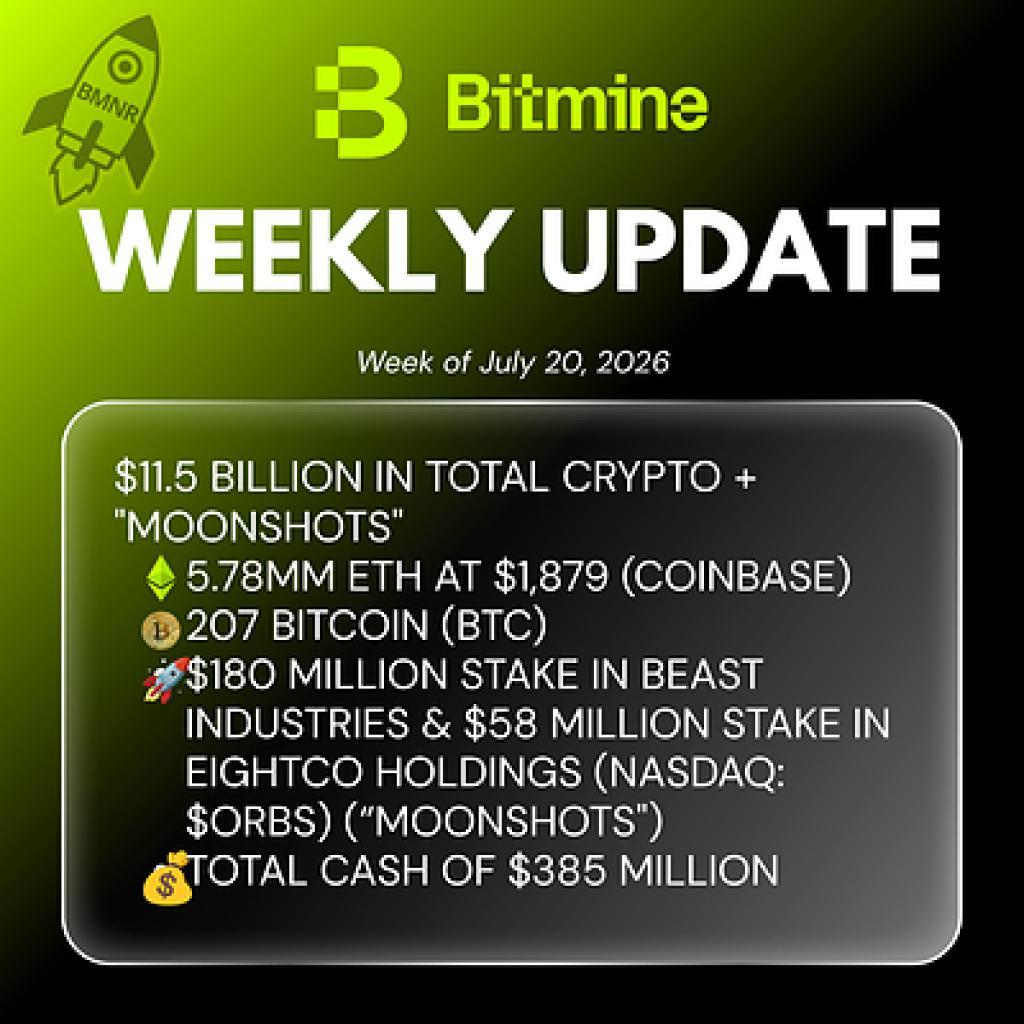
Bitmine Immersion Technologies (BMNR) Announces ETH Holdings Reach 5.78 Million Tokens, and Total Crypto and Total Cash Holdings of $11.5 Billion

GLOBAL MEDIA PROCUREMENT: THE 500-YEAR YIXING ZISHA TEAPOTS PARADIGM