Kelp Contributes 2,000 ETH to DeFi United Fund for rsETH Recovery
Kelp has committed 2,000 ETH to the DeFi United Recovery Fund, a coordinated effort aimed at restoring rsETH backing after a major exploit impacted the liquid restaking token. The contribution marks one of the largest individual protocol pledges to the recovery initiative.
Kelp’s 2,000 ETH Commitment Explained
The 2,000 ETH contribution from Kelp is directed specifically to the DeFi United Recovery Fund, a vehicle established to address the fallout from the rsETH depeg event. The fund was created after an exploit disrupted rsETH’s backing, prompting a coalition of DeFi protocols to pool resources for affected users.
DeFi United, which coordinates the recovery effort, has outlined its approach to restoring rsETH holder value through structured fund contributions from ecosystem participants. Kelp’s pledge represents a significant capital deployment toward that goal.
The contribution follows broader ecosystem coordination around the rsETH incident. Multiple DeFi protocols have pledged support to the relief effort, with Kelp’s commitment being among the more substantial individual contributions announced to date.
How the DeFi United Recovery Fund Fits the rsETH Recovery Effort
rsETH is a liquid restaking token that allows holders to earn staking yields while maintaining liquidity. When the exploit compromised its backing, holders faced potential losses as the token’s value diverged from its intended peg to ETH.
The DeFi United Recovery Fund serves as the central mechanism for collecting and distributing recovery capital. According to an Aave governance proposal discussing the incident funding update, the recovery process involves structured contributions from protocols with exposure to or involvement in the rsETH ecosystem.
Key details about the fund’s distribution mechanics, including eligibility criteria for affected users, timelines for disbursement, and the total recovery target, have not been fully disclosed. Readers should treat any specifics beyond the announced contribution amounts as pending confirmation from official sources.
The technical implementation of the recovery process reportedly involves coordination between multiple protocols. ETH Daily has covered the technical framework underpinning DeFi United’s approach, though full operational details remain subject to ongoing governance discussions.
What rsETH Holders and DeFi Users Should Watch Next
For rsETH holders, the 2,000 ETH commitment from Kelp is a positive signal, but the practical impact depends on details that are still being finalized. Users should monitor official communications from both Kelp and DeFi United for updates on fund deployment.
On-chain fund movements will serve as an important confirmation signal. When the ETH actually moves from Kelp’s treasury to the recovery fund’s designated address, that transfer will be verifiable on Etherscan and will provide concrete evidence that the commitment has been executed.
Affected users should watch for clarity on several fronts: who qualifies for recovery distributions, what proportion of losses the fund aims to cover, and whether additional protocols will contribute. The Aave governance forums remain a primary venue for tracking these discussions.
Large ETH transfers have continued drawing market attention across the ecosystem. BlackRock recently moved 16,609 ETH to Coinbase Prime, illustrating how institutional-scale movements remain a focal point for participants monitoring capital flows tied to Ethereum-based assets.
Why the 2,000 ETH Contribution Matters for DeFi Confidence
Kelp’s decision to allocate capital toward user recovery sends a specific signal about protocol accountability. Rather than treating the rsETH depeg as an external event, Kelp is actively deploying resources to address the impact on its users.
This type of treasury-backed crisis response has become an increasingly important factor in how DeFi protocols maintain user trust. When protocols commit real capital to recovery efforts rather than issuing statements alone, it creates a measurable accountability standard.
The move also reinforces confidence in the liquid restaking sector more broadly. As liquid restaking protocols grow in total value locked, the risk management frameworks surrounding them face increasing scrutiny. Kelp’s contribution suggests that at least some protocols in the space are prepared to back their products with capital commitments when incidents occur.
The DeFi sector’s coordinated response to the rsETH incident, as reported in coverage of DeFi United’s restoration plan, stands in contrast to earlier eras of DeFi where exploits often left users with no recourse. Capital deployment across the digital asset space is accelerating on multiple fronts, with developments such as AI Financial’s planned Block Street acquisition and MARA’s $1.5 billion Long Ridge Energy deal reflecting broader institutional commitment.
FAQ About Kelp, rsETH, and the Recovery Fund
What did Kelp announce?
Kelp committed 2,000 ETH to the DeFi United Recovery Fund, a coordinated effort to restore value for rsETH holders affected by an exploit that disrupted the token’s backing.
What is rsETH?
rsETH is a liquid restaking token that enables holders to earn staking rewards on Ethereum while retaining the ability to use their tokens across DeFi protocols.
Why is the contribution significant?
It represents one of the larger individual protocol pledges to the recovery effort and signals that Kelp is willing to deploy substantial treasury resources to address user losses.
Who may be affected and what details are still pending?
rsETH holders who experienced losses during the depeg event are the primary affected group. Key details still pending include exact eligibility criteria, the timeline for distributions, the total fund target, and the proportion of losses the fund aims to cover.
Where should readers watch for official recovery updates?
The DeFi United website, Aave governance forums, and official Kelp protocol channels are the primary sources for verified updates on the recovery process and fund distribution timeline.
Disclaimer: This article is for informational purposes only and does not constitute financial or investment advice. Cryptocurrency and digital asset markets carry significant risk. Always do your own research before making decisions.

No tags available.


Other Posts









- Amplify 2024: Ohio’s Premier Blockchain Summit
- Polymarket Announces U.S. Beta Relaunch Amid Market Buzz
- China, US Conclude Trade Talks with Focus on Cooperation
- Crypto Weekly: NYSE Backs OKX, Kraken Gets Fed Access, BTC Sells
- CELO holds as Celo reviews Opera 160M token claim
- DeriW Launches Edge Hour Trading Competition Platform for Derivatives Traders
- Michael Saylor Denies Bitcoin Sell-Off Amid Large BTC Transfer
- Court Upholds Fed’s Rejection of Custodia Bank’s Request
- EU Opens Antitrust Probe Into Deutsche Boerse and Nasdaq Derivatives Dealings
- Kazakhstan Explores Crypto Reserves Backed by National Funds
- JPMorgan Increases Holdings in BlackRock’s Bitcoin ETF
- Nordea Bank Introduces Bitcoin ETP Trading for Nordic Customers
- XRP Spot ETF Launches on Nasdaq Amid Market Fluctuations
- JPMorgan Chase Launches 24/7 Digital Deposit Token for Clients
- Crypto Leaders Address Macro Volatility Amid Market Shifts
- Former CFO Convicted for $35M Fraudulent Crypto Investment
- Peter Schiff Challenges Michael Saylor on MSTR’s Business Model
- Thailand Orders Worldcoin to Delete 1.2 Million Biometric Records
- UK Proposes New DeFi Tax Framework to Ease User Burden
- U.S. Treasury Proposes New Tax Relief Regulations
- Amplify 2024: Ohio’s Premier Blockchain Summit
- Polymarket Announces U.S. Beta Relaunch Amid Market Buzz
- China, US Conclude Trade Talks with Focus on Cooperation
- Crypto Weekly: NYSE Backs OKX, Kraken Gets Fed Access, BTC Sells
- CELO holds as Celo reviews Opera 160M token claim
- DeriW Launches Edge Hour Trading Competition Platform for Derivatives Traders
- Michael Saylor Denies Bitcoin Sell-Off Amid Large BTC Transfer
- Court Upholds Fed’s Rejection of Custodia Bank’s Request
- EU Opens Antitrust Probe Into Deutsche Boerse and Nasdaq Derivatives Dealings
- Kazakhstan Explores Crypto Reserves Backed by National Funds
- JPMorgan Increases Holdings in BlackRock’s Bitcoin ETF
- Nordea Bank Introduces Bitcoin ETP Trading for Nordic Customers
- XRP Spot ETF Launches on Nasdaq Amid Market Fluctuations
- JPMorgan Chase Launches 24/7 Digital Deposit Token for Clients
- Crypto Leaders Address Macro Volatility Amid Market Shifts
- Former CFO Convicted for $35M Fraudulent Crypto Investment
- Peter Schiff Challenges Michael Saylor on MSTR’s Business Model
- Thailand Orders Worldcoin to Delete 1.2 Million Biometric Records
- UK Proposes New DeFi Tax Framework to Ease User Burden
- U.S. Treasury Proposes New Tax Relief Regulations
- Amplify 2024: Ohio’s Premier Blockchain Summit
- Polymarket Announces U.S. Beta Relaunch Amid Market Buzz
- China, US Conclude Trade Talks with Focus on Cooperation
- Crypto Weekly: NYSE Backs OKX, Kraken Gets Fed Access, BTC Sells
- CELO holds as Celo reviews Opera 160M token claim
- DeriW Launches Edge Hour Trading Competition Platform for Derivatives Traders
- Michael Saylor Denies Bitcoin Sell-Off Amid Large BTC Transfer
- Court Upholds Fed’s Rejection of Custodia Bank’s Request
- EU Opens Antitrust Probe Into Deutsche Boerse and Nasdaq Derivatives Dealings
- Kazakhstan Explores Crypto Reserves Backed by National Funds
- JPMorgan Increases Holdings in BlackRock’s Bitcoin ETF
- Nordea Bank Introduces Bitcoin ETP Trading for Nordic Customers
- XRP Spot ETF Launches on Nasdaq Amid Market Fluctuations
- JPMorgan Chase Launches 24/7 Digital Deposit Token for Clients
- Crypto Leaders Address Macro Volatility Amid Market Shifts
- Former CFO Convicted for $35M Fraudulent Crypto Investment
- Peter Schiff Challenges Michael Saylor on MSTR’s Business Model
- Thailand Orders Worldcoin to Delete 1.2 Million Biometric Records
- UK Proposes New DeFi Tax Framework to Ease User Burden
- U.S. Treasury Proposes New Tax Relief Regulations
Latest



Trump family-linked AI Financial plans Block Street acquisition worth up to $43M
Press Release
VerifyVASP acquires Sygna, consolidating the global Travel Rule network
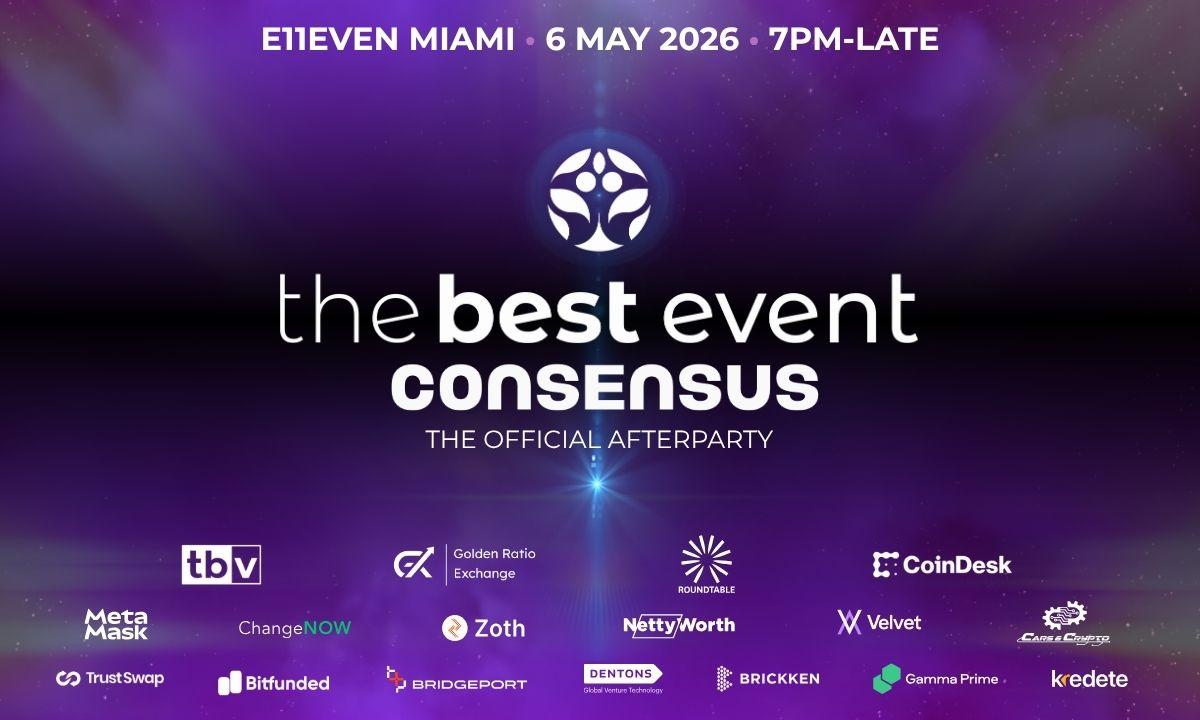
The Best Event hosts Consensus Miami 2026 Afterparty, Transforming Deal Flow Into an Unforgettable Night