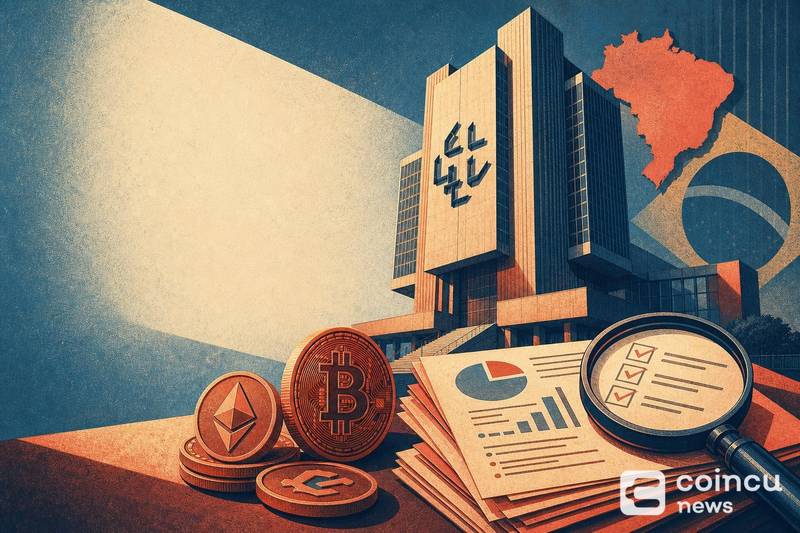
Brazil’s central bank has introduced mandatory financial audits for crypto service providers and tightened licensing requirements, raising the compliance bar for companies operating in one of Latin America’s largest digital asset markets.
What Brazil’s central bank changed for crypto service providers
The Banco Central do Brasil published new rules targeting virtual asset service providers, centering on two key changes: a requirement for independent financial audits and stricter conditions for obtaining and maintaining operating licenses. The announcement was posted on the central bank’s official news page.
The regulatory update comes through a normative instruction, Instrucao Normativa BCB No. 739, which sets out the specific obligations for firms classified as crypto service providers under Brazilian law. The move positions the central bank as the primary supervisory authority over the sector’s financial integrity.
The legal foundation for this oversight traces back to a 2023 presidential decree that designated the central bank as the regulator responsible for virtual asset service providers, establishing the framework under which these new rules operate.
Why financial audits are now a key compliance requirement
The audit mandate means crypto service providers in Brazil must submit to formal financial scrutiny by independent auditors. This is a significant step beyond basic registration or reporting, as it requires firms to maintain documentation standards comparable to those of traditional financial institutions.
Audit requirements serve a dual purpose in financial supervision. They force companies to maintain transparent, verifiable books, and they give regulators a mechanism to detect irregularities before they escalate into consumer protection failures. For crypto firms accustomed to lighter oversight, this represents a material increase in operational compliance costs.
The distinction between reporting obligations and licensing conditions matters here. Reporting tells the regulator what a firm is doing; licensing conditions determine whether a firm is allowed to operate at all. By embedding audits into the licensing framework, Brazil’s central bank has made financial transparency a prerequisite for market access, not just a periodic obligation. This approach mirrors how regulators in other jurisdictions have moved to track and verify fund flows across digital asset platforms.
How the licensing changes tighten Brazil’s crypto oversight
The tighter licensing rules signal that Brazil is narrowing the entry requirements for crypto service providers. Rather than allowing a broad range of firms to register and operate with minimal conditions, the updated framework raises both the initial threshold for approval and the ongoing standards firms must meet to retain their licenses.
This direction fits a broader global pattern in which regulators are moving from passive registration models to active supervision of crypto firms. Brazil’s approach, however, is notable because it places the central bank, rather than a securities regulator, at the center of the licensing process.
The tightening also suggests that firms already operating in Brazil may face new compliance demands. Existing licensees could be required to meet the updated audit and documentation standards within a transition period, though the specific timelines and thresholds require confirmation from the full regulatory text. The move echoes broader concerns about how digital assets move between platforms and the need for consistent oversight across service providers.
For international firms with Brazilian operations, the licensing changes may require structural adjustments, including appointing local compliance officers, establishing audit relationships with approved firms, and maintaining financial records that meet Brazilian regulatory standards.
What crypto firms in Brazil should watch next
Several details remain to be confirmed from the full rule text. Implementation timelines, minimum capital thresholds, and the specific scope of the audit requirement, including whether it applies uniformly to all crypto service providers or varies by size and activity type, are areas where firms should seek clarification.
Compliance teams should monitor the central bank for supplementary guidance that may accompany the normative instruction. Regulatory transitions in the crypto sector often involve consultation periods, phased enforcement, and interpretive notes that define how rules apply in practice. Similar regulatory tightening in other markets has sometimes prompted firms to reassess their operational strategies ahead of enforcement deadlines.
Firms should also watch for signals about enforcement priority. Whether the central bank plans to audit existing licensees immediately or focus first on new applicants will shape how quickly the industry feels the impact of these changes.
FAQ about Brazil’s new crypto audit and licensing rules
What changed? Brazil’s central bank now requires crypto service providers to undergo independent financial audits and has tightened the conditions for obtaining and keeping operating licenses.
Who is affected? Virtual asset service providers operating in Brazil, including exchanges, custodians, and other firms that fall under the central bank’s regulatory scope.
Why do audits matter? Audits force firms to maintain transparent financial records and give regulators a tool to detect problems early. They raise the compliance standard closer to what traditional financial institutions face.
When do the rules take effect? The specific implementation timeline has not been confirmed in available sources. Firms should consult the full text of Instrucao Normativa BCB No. 739 for transition periods and deadlines.
What should firms do now? Monitor the central bank for supplementary guidance, review current financial documentation practices, and assess whether existing audit arrangements meet the new standards.
Disclaimer: This article is for informational purposes only and does not constitute financial or investment advice. Cryptocurrency and digital asset markets carry significant risk. Always do your own research before making decisions.
No tags available.


Other Posts








- China, US Conclude Trade Talks with Focus on Cooperation
- Crypto Weekly: NYSE Backs OKX, Kraken Gets Fed Access, BTC Sells
- Court Upholds Fed’s Rejection of Custodia Bank’s Request
- Former CFO Convicted for $35M Fraudulent Crypto Investment
- DeriW Launches Edge Hour Trading Competition Platform for Derivatives Traders
- Michael Saylor Denies Bitcoin Sell-Off Amid Large BTC Transfer
- Buy Dogecoin on eToro: Step-by-Step Guide for Beginners (2024)
- Kazakhstan Explores Crypto Reserves Backed by National Funds
- JPMorgan Increases Holdings in BlackRock’s Bitcoin ETF
- Nordea Bank Introduces Bitcoin ETP Trading for Nordic Customers
- XRP Spot ETF Launches on Nasdaq Amid Market Fluctuations
- Peter Schiff Challenges Michael Saylor on MSTR’s Business Model
- Thailand Orders Worldcoin to Delete 1.2 Million Biometric Records
- UK Proposes New DeFi Tax Framework to Ease User Burden
- WLFI Under Fire: Analyst Warns Hyperliquid Could Be Next
- Ancient Ethereum Whale Moves $1.19 Billion After Decade
- BlackRock Receives Large Crypto Transfers from Coinbase
- SEC Scrutiny on ALT5 Sigma’s Leadership Disclosure Timing
- Yala Injects $5.5 Million Amid Recovery Efforts
- Radiant Capital Faces $50M Loss in Major Security Breach
- China, US Conclude Trade Talks with Focus on Cooperation
- Crypto Weekly: NYSE Backs OKX, Kraken Gets Fed Access, BTC Sells
- Court Upholds Fed’s Rejection of Custodia Bank’s Request
- Former CFO Convicted for $35M Fraudulent Crypto Investment
- DeriW Launches Edge Hour Trading Competition Platform for Derivatives Traders
- Michael Saylor Denies Bitcoin Sell-Off Amid Large BTC Transfer
- Buy Dogecoin on eToro: Step-by-Step Guide for Beginners (2024)
- Kazakhstan Explores Crypto Reserves Backed by National Funds
- JPMorgan Increases Holdings in BlackRock’s Bitcoin ETF
- Nordea Bank Introduces Bitcoin ETP Trading for Nordic Customers
- XRP Spot ETF Launches on Nasdaq Amid Market Fluctuations
- Peter Schiff Challenges Michael Saylor on MSTR’s Business Model
- Thailand Orders Worldcoin to Delete 1.2 Million Biometric Records
- UK Proposes New DeFi Tax Framework to Ease User Burden
- WLFI Under Fire: Analyst Warns Hyperliquid Could Be Next
- Ancient Ethereum Whale Moves $1.19 Billion After Decade
- BlackRock Receives Large Crypto Transfers from Coinbase
- SEC Scrutiny on ALT5 Sigma’s Leadership Disclosure Timing
- Yala Injects $5.5 Million Amid Recovery Efforts
- Radiant Capital Faces $50M Loss in Major Security Breach
- China, US Conclude Trade Talks with Focus on Cooperation
- Crypto Weekly: NYSE Backs OKX, Kraken Gets Fed Access, BTC Sells
- Court Upholds Fed’s Rejection of Custodia Bank’s Request
- Former CFO Convicted for $35M Fraudulent Crypto Investment
- DeriW Launches Edge Hour Trading Competition Platform for Derivatives Traders
- Michael Saylor Denies Bitcoin Sell-Off Amid Large BTC Transfer
- Buy Dogecoin on eToro: Step-by-Step Guide for Beginners (2024)
- Kazakhstan Explores Crypto Reserves Backed by National Funds
- JPMorgan Increases Holdings in BlackRock’s Bitcoin ETF
- Nordea Bank Introduces Bitcoin ETP Trading for Nordic Customers
- XRP Spot ETF Launches on Nasdaq Amid Market Fluctuations
- Peter Schiff Challenges Michael Saylor on MSTR’s Business Model
- Thailand Orders Worldcoin to Delete 1.2 Million Biometric Records
- UK Proposes New DeFi Tax Framework to Ease User Burden
- WLFI Under Fire: Analyst Warns Hyperliquid Could Be Next
- Ancient Ethereum Whale Moves $1.19 Billion After Decade
- BlackRock Receives Large Crypto Transfers from Coinbase
- SEC Scrutiny on ALT5 Sigma’s Leadership Disclosure Timing
- Yala Injects $5.5 Million Amid Recovery Efforts
- Radiant Capital Faces $50M Loss in Major Security Breach

Brazil Central Bank Orders Exchanges to Delay Large Crypto Transfers Abroad

Bitcoin, Ether ETFs Draw $1.1B in Best Inflow Week Since April Despite Low Volume

T. Rowe Price Includes Memecoins in Its Crypto ETF: Why It Matters
Bybit Sues North Korea and Lazarus Group, Secures Preliminary Injunction Freezing Stolen Assets in Landmark Crypto Asset Recovery Effort

Spindex’s Real-Time Data Pipeline Surpasses 150 Million Tracked Gaming Events