Bitcoin Options With $1.89B Notional Value Expire: What It Means
Bitcoin options contracts carrying $1.89 billion in notional value have expired, drawing attention from derivatives traders monitoring potential short-term volatility around the event.

The expiry involved approximately 27,000 BTC options contracts settling on Deribit, the dominant crypto options exchange. Notional value represents the total underlying asset value covered by the contracts, not the premium paid by traders, making it a measure of market exposure rather than capital at risk.
Large scheduled expiries tend to concentrate trader attention because open positions either settle in the money or expire worthless. The resulting shift in hedging activity and delta exposure can temporarily influence spot market behavior as market makers adjust their books.
Call-put dynamics shaped positioning into expiry
Options expiries of this scale typically reveal how traders were positioned heading into the event. The balance between call options, which represent bullish bets, and put options, which represent bearish ones, offers a snapshot of aggregate sentiment across the derivatives market.
Deribit’s own analysis has previously highlighted balanced options positioning in Bitcoin markets, suggesting that neither bulls nor bears held an overwhelming advantage heading into recent expiry cycles.
Strike clustering, where large numbers of contracts concentrate at specific price levels, can create temporary price magnetism. Market makers hedging their exposure near these levels may buy or sell spot Bitcoin to stay delta-neutral, producing localized buying or selling pressure around the most populated strikes.
The concept of “max pain,” the price level at which the largest number of options expire worthless, is closely watched by traders as a potential short-term attractor. While max pain does not guarantee price convergence, it reflects the point of maximum loss for option holders and maximum gain for option writers.
Short-term volatility window around settlement
Pre-expiry periods often see compressed volatility as hedging flows offset each other. The hours immediately following settlement can then release that compression, as expired positions no longer require hedging and market makers unwind their delta-neutral books.
This dynamic creates what traders call a “volatility release,” where spot prices may move more freely once the gravitational pull of expiring strikes disappears. The $1.89 billion notional size of this expiry makes the potential release more significant than smaller weekly settlements.
However, options expiry alone does not guarantee a directional move. The settlement can just as easily lead to a period of reduced activity if no new catalyst emerges to drive positioning in either direction. Traders who expect a breakout purely from expiry mechanics without confirming spot volume often find themselves caught in choppy, directionless price action.
The distinction between pre-expiry pressure and post-expiry release is important. Moves that occur in the final hours before settlement frequently reverse once the contracts are cleared, as the temporary hedging flows that drove them evaporate.
Practical considerations for traders watching this event
For active traders, the primary signal to monitor after a large expiry is open interest in the next expiry cycle. A rapid rebuild of open interest at new strike levels indicates that traders are re-establishing positions and can signal emerging directional conviction.
Volume in the spot market during and after settlement provides another gauge. If spot volume remains thin following the expiry, any price movement is more likely noise than signal. Sustained volume alongside a directional move carries more weight as a genuine shift in sentiment.
Risk management around expiry events matters more than directional prediction. The temporary liquidity distortions that large settlements create can trigger stops and liquidations at levels that would otherwise hold, particularly for leveraged positions. Traders active in funding rate-sensitive strategies may find that derivatives-driven volatility spills over into perpetual contract pricing as well.
It is also worth distinguishing between trader sentiment and confirmed trend reversal. A single expiry event, even one of this magnitude, reflects positioning in a specific contract cycle rather than a fundamental shift in Bitcoin’s trajectory. The broader derivatives landscape, including developments in regulated crypto derivatives markets, provides more durable signals about institutional positioning than any single settlement event.
FAQ about the Bitcoin options expiry
What does Bitcoin options expiry mean?
Options expiry is the date when Bitcoin options contracts reach their settlement date. Holders of in-the-money options can exercise them, while out-of-the-money options expire worthless. On Deribit, Bitcoin options settle in cash based on a calculated settlement price.
Why does notional value matter?
Notional value measures the total underlying Bitcoin exposure covered by the expiring contracts. A $1.89 billion notional expiry means that contracts covering that amount of Bitcoin value are settling simultaneously, which indicates the scale of hedging adjustments that market makers may need to execute.
Does options expiry always move Bitcoin’s price?
No. While large expiries can create short-term volatility due to hedging adjustments, many settlements pass without meaningful spot price impact. The outcome depends on how concentrated open interest is at specific strikes, whether spot market volume confirms any directional move, and what other catalysts are present in the market at the time. Regulatory developments, such as shifting policy stances on crypto transfers, often carry more lasting price impact than derivatives mechanics alone.
Disclaimer: This article is for informational purposes only and does not constitute financial or investment advice. Cryptocurrency and digital asset markets carry significant risk. Always do your own research before making decisions.
No tags available.


Other Posts








- China, US Conclude Trade Talks with Focus on Cooperation
- Crypto Weekly: NYSE Backs OKX, Kraken Gets Fed Access, BTC Sells
- Court Upholds Fed’s Rejection of Custodia Bank’s Request
- Former CFO Convicted for $35M Fraudulent Crypto Investment
- DeriW Launches Edge Hour Trading Competition Platform for Derivatives Traders
- Michael Saylor Denies Bitcoin Sell-Off Amid Large BTC Transfer
- Buy Dogecoin on eToro: Step-by-Step Guide for Beginners (2024)
- Kazakhstan Explores Crypto Reserves Backed by National Funds
- JPMorgan Increases Holdings in BlackRock’s Bitcoin ETF
- Nordea Bank Introduces Bitcoin ETP Trading for Nordic Customers
- XRP Spot ETF Launches on Nasdaq Amid Market Fluctuations
- Peter Schiff Challenges Michael Saylor on MSTR’s Business Model
- Thailand Orders Worldcoin to Delete 1.2 Million Biometric Records
- UK Proposes New DeFi Tax Framework to Ease User Burden
- WLFI Under Fire: Analyst Warns Hyperliquid Could Be Next
- Ancient Ethereum Whale Moves $1.19 Billion After Decade
- BlackRock Receives Large Crypto Transfers from Coinbase
- SEC Scrutiny on ALT5 Sigma’s Leadership Disclosure Timing
- Yala Injects $5.5 Million Amid Recovery Efforts
- Radiant Capital Faces $50M Loss in Major Security Breach
- China, US Conclude Trade Talks with Focus on Cooperation
- Crypto Weekly: NYSE Backs OKX, Kraken Gets Fed Access, BTC Sells
- Court Upholds Fed’s Rejection of Custodia Bank’s Request
- Former CFO Convicted for $35M Fraudulent Crypto Investment
- DeriW Launches Edge Hour Trading Competition Platform for Derivatives Traders
- Michael Saylor Denies Bitcoin Sell-Off Amid Large BTC Transfer
- Buy Dogecoin on eToro: Step-by-Step Guide for Beginners (2024)
- Kazakhstan Explores Crypto Reserves Backed by National Funds
- JPMorgan Increases Holdings in BlackRock’s Bitcoin ETF
- Nordea Bank Introduces Bitcoin ETP Trading for Nordic Customers
- XRP Spot ETF Launches on Nasdaq Amid Market Fluctuations
- Peter Schiff Challenges Michael Saylor on MSTR’s Business Model
- Thailand Orders Worldcoin to Delete 1.2 Million Biometric Records
- UK Proposes New DeFi Tax Framework to Ease User Burden
- WLFI Under Fire: Analyst Warns Hyperliquid Could Be Next
- Ancient Ethereum Whale Moves $1.19 Billion After Decade
- BlackRock Receives Large Crypto Transfers from Coinbase
- SEC Scrutiny on ALT5 Sigma’s Leadership Disclosure Timing
- Yala Injects $5.5 Million Amid Recovery Efforts
- Radiant Capital Faces $50M Loss in Major Security Breach
- China, US Conclude Trade Talks with Focus on Cooperation
- Crypto Weekly: NYSE Backs OKX, Kraken Gets Fed Access, BTC Sells
- Court Upholds Fed’s Rejection of Custodia Bank’s Request
- Former CFO Convicted for $35M Fraudulent Crypto Investment
- DeriW Launches Edge Hour Trading Competition Platform for Derivatives Traders
- Michael Saylor Denies Bitcoin Sell-Off Amid Large BTC Transfer
- Buy Dogecoin on eToro: Step-by-Step Guide for Beginners (2024)
- Kazakhstan Explores Crypto Reserves Backed by National Funds
- JPMorgan Increases Holdings in BlackRock’s Bitcoin ETF
- Nordea Bank Introduces Bitcoin ETP Trading for Nordic Customers
- XRP Spot ETF Launches on Nasdaq Amid Market Fluctuations
- Peter Schiff Challenges Michael Saylor on MSTR’s Business Model
- Thailand Orders Worldcoin to Delete 1.2 Million Biometric Records
- UK Proposes New DeFi Tax Framework to Ease User Burden
- WLFI Under Fire: Analyst Warns Hyperliquid Could Be Next
- Ancient Ethereum Whale Moves $1.19 Billion After Decade
- BlackRock Receives Large Crypto Transfers from Coinbase
- SEC Scrutiny on ALT5 Sigma’s Leadership Disclosure Timing
- Yala Injects $5.5 Million Amid Recovery Efforts
- Radiant Capital Faces $50M Loss in Major Security Breach

Minnesota Prediction Market Ban Paused for Kalshi and Polymarket


TradeXYZ Contributed $215K to $241.8K of Hyperliquid Revenue in 24 Hours
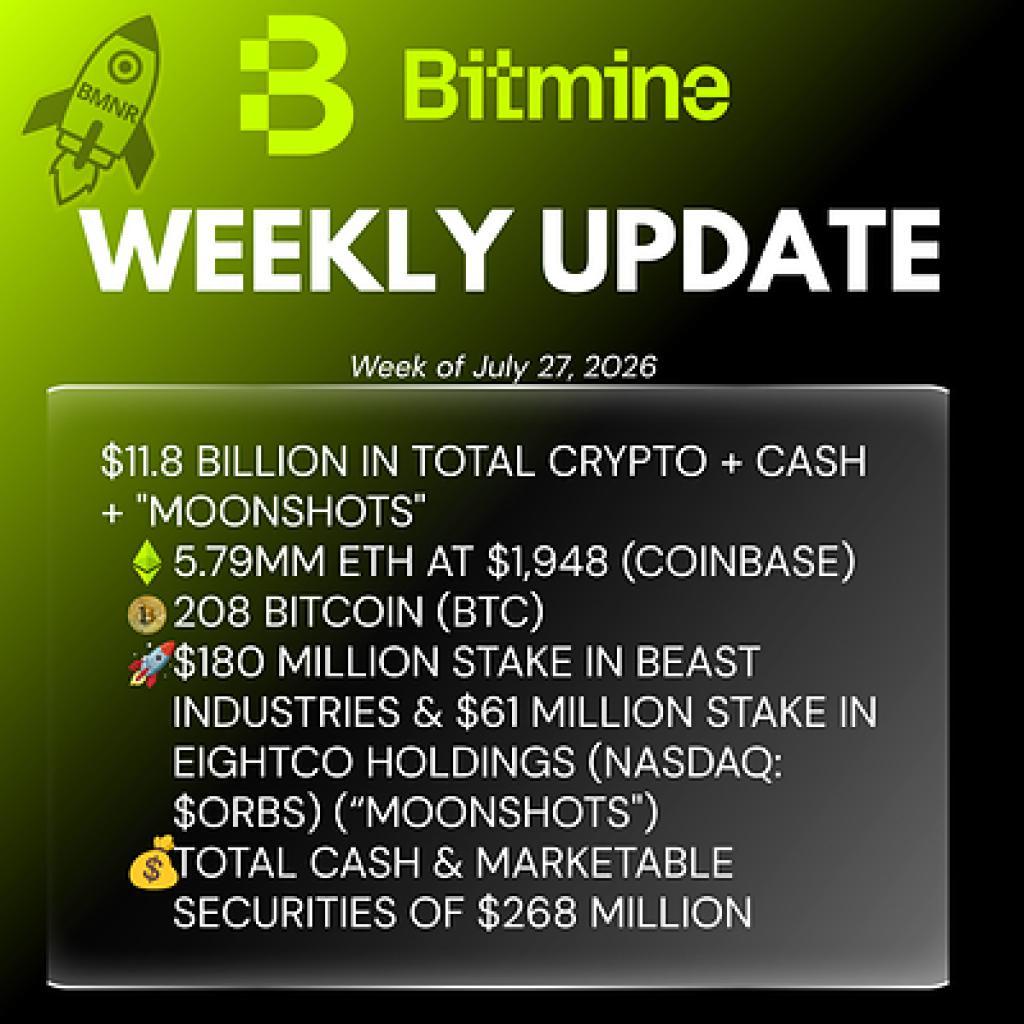
Bitmine Immersion Technologies (BMNR) Announces ETH Holdings Reach 5.79 Million Tokens, and Total Crypto and Total Cash Holdings of $11.8 Billion
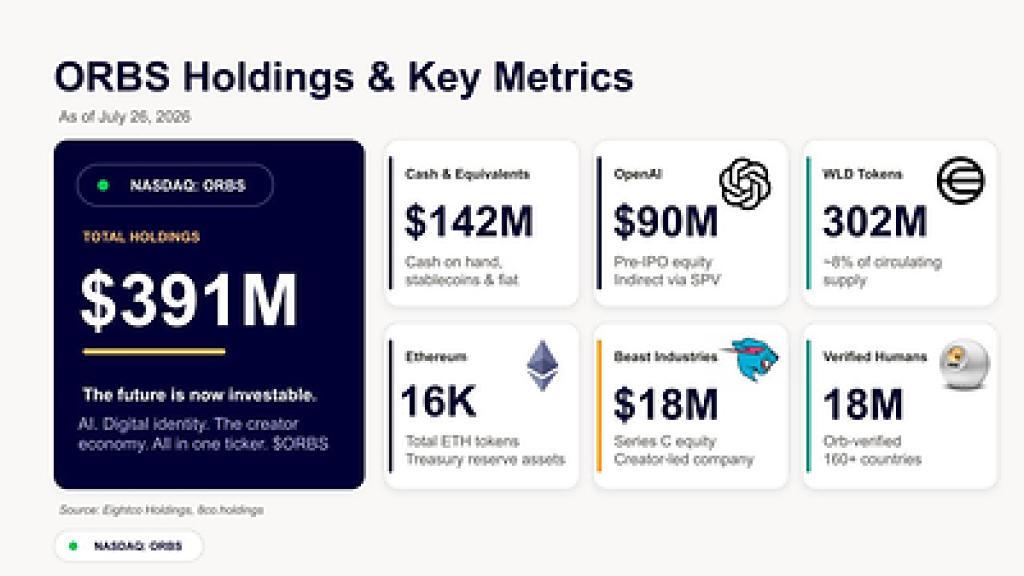
Eightco Holdings (NASDAQ: ORBS) Announces its Participation in World Foundation’s $52.5M funding round as World Shifts From Building the Network to Scaling Utility