Illinois has moved to impose a 0.2% tax on cryptocurrency transactions as part of its fiscal year 2027 budget package, making it one of the first U.S. states to target digital asset trading with a dedicated transaction levy.
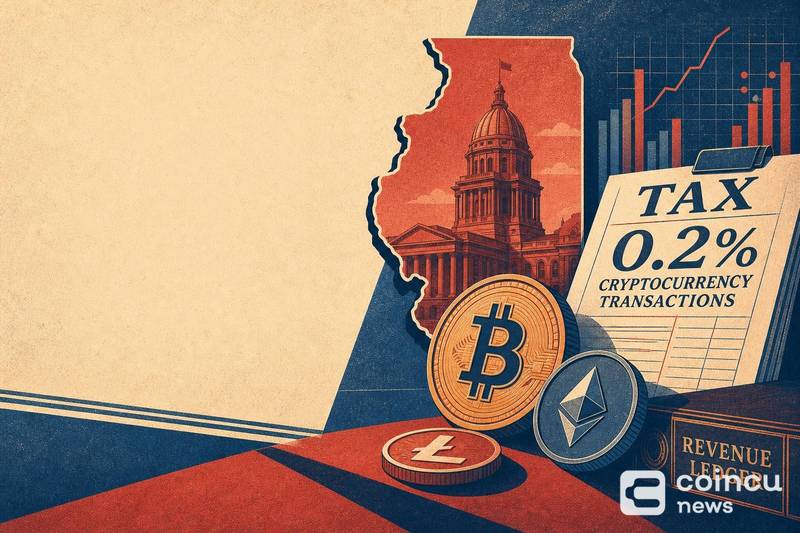
The measure is contained in Senate Bill 3019, which passed through the Illinois General Assembly as part of a broader budget package. The bill introduces a 0.2% tax applied to cryptocurrency transactions conducted within the state.
The legislation was bundled alongside provisions covering prediction markets and fantasy sports, signaling that Illinois lawmakers view digital asset activity as a taxable category comparable to other forms of speculative financial activity.
What the 0.2% transaction tax means in practice
A 0.2% transaction tax means that for every $1,000 in crypto traded, $2 would go to the state. For retail investors making occasional purchases, the impact is marginal.
For high-frequency traders and market makers, however, the cost compounds quickly. A trader executing $1 million in daily volume would face $2,000 in daily tax liability, or roughly $730,000 annually, a figure large enough to influence where firms choose to operate.
The tax applies to transactions rather than capital gains, which is an important distinction. Unlike federal capital gains taxes that only trigger on profitable sales, a transaction tax applies regardless of whether the trade results in a gain or a loss.
Compliance burden for crypto businesses
Crypto exchanges and platforms serving Illinois residents would likely need to build new reporting and collection infrastructure. Transaction taxes require real-time or near-real-time calculation at the point of trade, a different technical challenge than end-of-year tax reporting.
Businesses already navigating the patchwork of state-level regulatory requirements would need to add Illinois-specific tax logic to their systems. This raises the question of whether smaller platforms might simply restrict service to Illinois users rather than absorb the compliance cost.
The proposal also creates questions around decentralized exchanges and peer-to-peer transactions, where no centralized intermediary exists to collect and remit the tax.
Illinois in the broader crypto tax debate
Cryptocurrency taxation remains an active policy issue across multiple U.S. jurisdictions. Federal lawmakers have separately been working on comprehensive crypto tax frameworks, including proposals that target stablecoins, staking, and mining activity at the national level.
Illinois’ approach differs from federal efforts by taxing the transaction itself rather than the income derived from it. This places it closer to a financial transaction tax model, similar in structure to proposals that have circulated in Congress for traditional securities trading.
The state-level nature of the tax raises jurisdictional questions. Crypto trading is inherently borderless, and determining whether a transaction occurs “within” Illinois depends on how the law defines the taxable nexus, whether by the user’s residence, the platform’s location, or some other criterion.
Key questions that remain unanswered
The enrolled legislation leaves several implementation details that will determine the tax’s real-world impact.
Which transactions are covered? It is not yet clear whether the tax applies only to trades on centralized exchanges, or also to transfers between wallets, DeFi swaps, NFT purchases, and staking operations.
Are there exemptions? Many transaction tax proposals include thresholds or exemptions for small traders. Whether Illinois has included such carve-outs will affect how broadly the tax reaches.
When does it take effect? As part of the FY2027 budget package, the tax would align with the state’s fiscal calendar, but the specific enforcement date and any phase-in period remain key details for affected traders.
How will it be enforced? Collection mechanisms for a state-level crypto transaction tax have no established precedent, making enforcement design one of the most consequential decisions ahead.
Traders monitoring the evolving regulatory environment, including shifts in funding rates and derivatives activity, should watch for implementing regulations from the Illinois Department of Revenue that will clarify these open questions.
Disclaimer: This article is for informational purposes only and does not constitute financial or investment advice. Cryptocurrency and digital asset markets carry significant risk. Always do your own research before making decisions.
No tags available.


Other Posts








- China, US Conclude Trade Talks with Focus on Cooperation
- Crypto Weekly: NYSE Backs OKX, Kraken Gets Fed Access, BTC Sells
- Court Upholds Fed’s Rejection of Custodia Bank’s Request
- Former CFO Convicted for $35M Fraudulent Crypto Investment
- DeriW Launches Edge Hour Trading Competition Platform for Derivatives Traders
- Michael Saylor Denies Bitcoin Sell-Off Amid Large BTC Transfer
- Buy Dogecoin on eToro: Step-by-Step Guide for Beginners (2024)
- Kazakhstan Explores Crypto Reserves Backed by National Funds
- JPMorgan Increases Holdings in BlackRock’s Bitcoin ETF
- Nordea Bank Introduces Bitcoin ETP Trading for Nordic Customers
- XRP Spot ETF Launches on Nasdaq Amid Market Fluctuations
- Peter Schiff Challenges Michael Saylor on MSTR’s Business Model
- Thailand Orders Worldcoin to Delete 1.2 Million Biometric Records
- UK Proposes New DeFi Tax Framework to Ease User Burden
- WLFI Under Fire: Analyst Warns Hyperliquid Could Be Next
- Ancient Ethereum Whale Moves $1.19 Billion After Decade
- BlackRock Receives Large Crypto Transfers from Coinbase
- SEC Scrutiny on ALT5 Sigma’s Leadership Disclosure Timing
- Yala Injects $5.5 Million Amid Recovery Efforts
- Radiant Capital Faces $50M Loss in Major Security Breach
- China, US Conclude Trade Talks with Focus on Cooperation
- Crypto Weekly: NYSE Backs OKX, Kraken Gets Fed Access, BTC Sells
- Court Upholds Fed’s Rejection of Custodia Bank’s Request
- Former CFO Convicted for $35M Fraudulent Crypto Investment
- DeriW Launches Edge Hour Trading Competition Platform for Derivatives Traders
- Michael Saylor Denies Bitcoin Sell-Off Amid Large BTC Transfer
- Buy Dogecoin on eToro: Step-by-Step Guide for Beginners (2024)
- Kazakhstan Explores Crypto Reserves Backed by National Funds
- JPMorgan Increases Holdings in BlackRock’s Bitcoin ETF
- Nordea Bank Introduces Bitcoin ETP Trading for Nordic Customers
- XRP Spot ETF Launches on Nasdaq Amid Market Fluctuations
- Peter Schiff Challenges Michael Saylor on MSTR’s Business Model
- Thailand Orders Worldcoin to Delete 1.2 Million Biometric Records
- UK Proposes New DeFi Tax Framework to Ease User Burden
- WLFI Under Fire: Analyst Warns Hyperliquid Could Be Next
- Ancient Ethereum Whale Moves $1.19 Billion After Decade
- BlackRock Receives Large Crypto Transfers from Coinbase
- SEC Scrutiny on ALT5 Sigma’s Leadership Disclosure Timing
- Yala Injects $5.5 Million Amid Recovery Efforts
- Radiant Capital Faces $50M Loss in Major Security Breach
- China, US Conclude Trade Talks with Focus on Cooperation
- Crypto Weekly: NYSE Backs OKX, Kraken Gets Fed Access, BTC Sells
- Court Upholds Fed’s Rejection of Custodia Bank’s Request
- Former CFO Convicted for $35M Fraudulent Crypto Investment
- DeriW Launches Edge Hour Trading Competition Platform for Derivatives Traders
- Michael Saylor Denies Bitcoin Sell-Off Amid Large BTC Transfer
- Buy Dogecoin on eToro: Step-by-Step Guide for Beginners (2024)
- Kazakhstan Explores Crypto Reserves Backed by National Funds
- JPMorgan Increases Holdings in BlackRock’s Bitcoin ETF
- Nordea Bank Introduces Bitcoin ETP Trading for Nordic Customers
- XRP Spot ETF Launches on Nasdaq Amid Market Fluctuations
- Peter Schiff Challenges Michael Saylor on MSTR’s Business Model
- Thailand Orders Worldcoin to Delete 1.2 Million Biometric Records
- UK Proposes New DeFi Tax Framework to Ease User Burden
- WLFI Under Fire: Analyst Warns Hyperliquid Could Be Next
- Ancient Ethereum Whale Moves $1.19 Billion After Decade
- BlackRock Receives Large Crypto Transfers from Coinbase
- SEC Scrutiny on ALT5 Sigma’s Leadership Disclosure Timing
- Yala Injects $5.5 Million Amid Recovery Efforts
- Radiant Capital Faces $50M Loss in Major Security Breach

Bitcoin BIP-110 Signal Window Opens in Under Two Weeks as Support Hits 2.64%


BlackRock ETF Wallet Moves $271M in BTC and ETH to Coinbase Prime
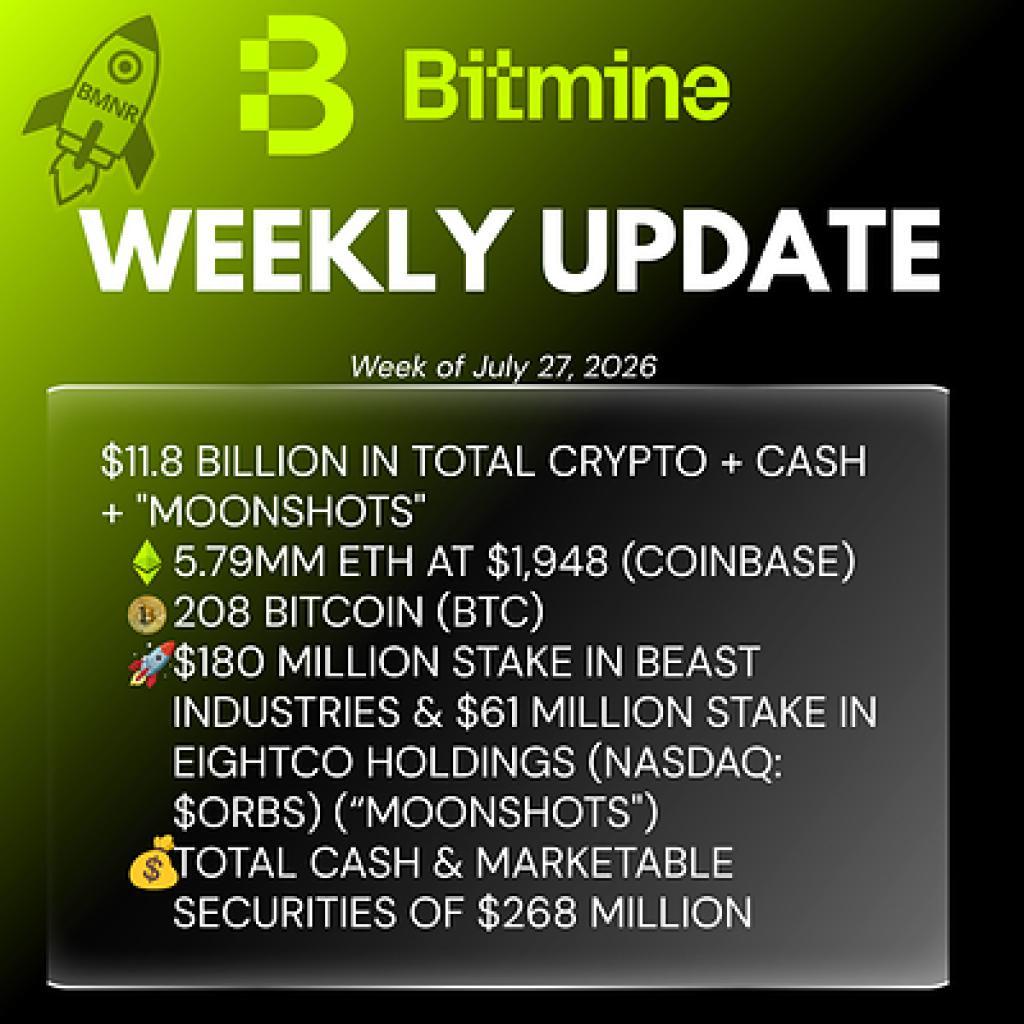
Bitmine Immersion Technologies (BMNR) Announces ETH Holdings Reach 5.79 Million Tokens, and Total Crypto and Total Cash Holdings of $11.8 Billion