Adam Iza, a 25-year-old California man, pleaded guilty on June 1, 2026, to conspiracy to interfere with commerce by robbery in connection with a violent Bitcoin kidnapping and carjacking in Danbury, Connecticut. He faces up to 20 years in prison and is scheduled to be sentenced on August 12.
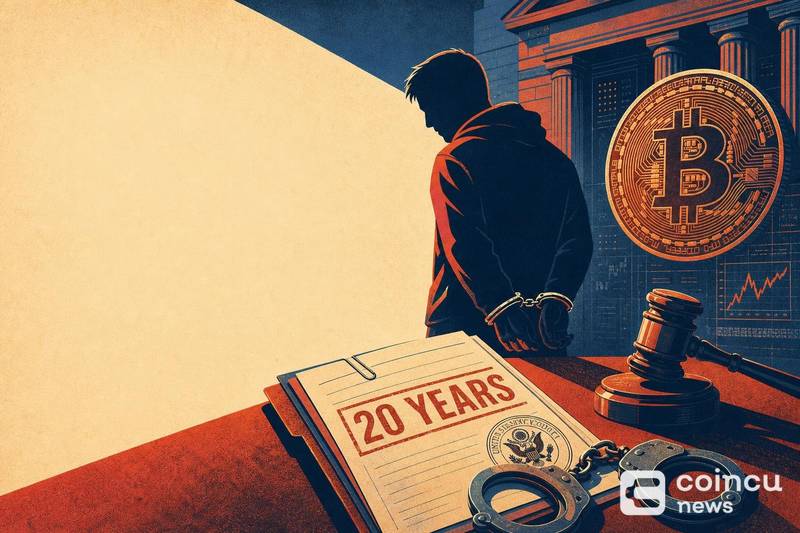
The plea, entered in Bridgeport federal court, resolves one defendant’s role in a case that combined cryptocurrency theft attempts with violent crime. The charge, a Hobbs Act robbery conspiracy under 18 U.S.C. 1951, carries a statutory maximum of 20 years in federal prison.
The Danbury kidnapping and carjacking
The case stems from an August 25, 2024, incident in which Danbury police arrested six Florida men after a violent carjacking of a Lamborghini Urus and the kidnapping of the vehicle’s two occupants. The DOJ said the attack was part of an effort to steal Bitcoin from the victims.
The two kidnapping victims were the parents of a young man tied to a separate $245 million Bitcoin theft case. AP News identified that individual as Veer Chetal. All six of the Florida men arrested at the scene have since pleaded guilty.
A November 21, 2025, superseding indictment in Connecticut charged Iza alongside James Schwab and Saif Faiq as alleged planners of the kidnapping conspiracy. That indictment also included a conspiracy to commit kidnapping charge, which carries up to life in prison.
How Bitcoin became central to the case
Bitcoin was not incidental to this crime. The DOJ framed the entire conspiracy around an attempt to rob cryptocurrency holders, making the digital asset the direct motive for the violent acts. The case has drawn attention from crypto media because it represents one of the more extreme examples of physical violence tied to digital asset holdings.
The distinction matters for the broader crypto community. The criminal conduct here, kidnapping and armed carjacking, is not a vulnerability in Bitcoin’s technology. It is a consequence of publicly identifiable wealth attracting violent actors, a pattern that has prompted discussions about security risks for high-value crypto holders.
The connection to the separate $245 million theft case adds another layer. Physical attacks targeting individuals suspected of holding large amounts of cryptocurrency have become a recurring pattern in federal criminal cases, and the Danbury incident stands out for the scale of violence involved.
What the 20-year maximum sentence signals
A 20-year statutory maximum reflects the severity federal law assigns to Hobbs Act robbery conspiracy. That ceiling does not guarantee Iza will receive the full term; federal sentencing guidelines, cooperation, and judicial discretion all factor into the final sentence.
The August 12 sentencing date will be a key moment. Federal judges consider the defendant’s role in the offense, criminal history, and whether a guilty plea included cooperation with prosecutors. Iza’s plea to a single count rather than the broader kidnapping conspiracy charge could suggest a negotiated agreement.
The earlier superseding indictment’s kidnapping conspiracy count, which carries a potential life sentence, was brought against the alleged planners. The gap between a 20-year maximum and a life maximum underscores how federal prosecutors use charge selection to differentiate roles within a conspiracy.
Broader implications for crypto-related violent crime
This case joins a growing list of federal prosecutions involving physical violence motivated by cryptocurrency theft. Unlike exchange hacks or smart contract exploits, these crimes target individuals directly, raising personal security concerns that institutional adoption discussions rarely address.
The guilty plea is a concrete legal outcome, not a rumor or an arrest announcement. That distinction matters in crypto media, where unresolved allegations often dominate coverage. Iza’s admission of guilt and the pending sentencing provide a clear narrative arc for accountability.
Criminal misuse does not define Bitcoin as a technology. However, cases like this one highlight that as Bitcoin’s value and visibility grow, so does the risk profile for individuals known to hold significant amounts. The crypto Fear and Greed Index currently sits at 8, indicating Extreme Fear, reflecting a market environment where security concerns, both digital and physical, weigh heavily on sentiment.
The case also illustrates how federal prosecutors are applying existing violent crime statutes to cryptocurrency-motivated offenses rather than relying solely on financial fraud frameworks. The Hobbs Act, originally designed to combat racketeering that interferes with interstate commerce, has become a tool for prosecuting crypto-related robbery schemes that threaten the broader ecosystem.
FAQ
What did the accomplice plead guilty to?
Adam Iza pleaded guilty to one count of conspiracy to interfere with commerce by robbery, a federal charge under the Hobbs Act. The charge relates to his role in planning a violent Bitcoin robbery and kidnapping in Danbury, Connecticut, in August 2024.
How much prison time could the accomplice face?
The Hobbs Act conspiracy charge carries a statutory maximum of 20 years in federal prison. The actual sentence will be determined at the August 12 hearing, where a federal judge will consider sentencing guidelines and other factors.
Why is Bitcoin mentioned in the case?
The entire conspiracy was motivated by an attempt to steal Bitcoin. The victims were targeted because of their connection to a family member linked to a separate $245 million cryptocurrency theft case.
What details are still pending?
The final sentence for Iza remains unknown until the August 12 hearing. The cases against alleged co-planners James Schwab and Saif Faiq, who were named in the November 2025 superseding indictment, are also still progressing through federal court.
Disclaimer: This article is for informational purposes only and does not constitute financial or investment advice. Cryptocurrency and digital asset markets carry significant risk. Always do your own research before making decisions.
No tags available.


Other Posts








- China, US Conclude Trade Talks with Focus on Cooperation
- Crypto Weekly: NYSE Backs OKX, Kraken Gets Fed Access, BTC Sells
- Court Upholds Fed’s Rejection of Custodia Bank’s Request
- Former CFO Convicted for $35M Fraudulent Crypto Investment
- DeriW Launches Edge Hour Trading Competition Platform for Derivatives Traders
- Michael Saylor Denies Bitcoin Sell-Off Amid Large BTC Transfer
- Buy Dogecoin on eToro: Step-by-Step Guide for Beginners (2024)
- Kazakhstan Explores Crypto Reserves Backed by National Funds
- JPMorgan Increases Holdings in BlackRock’s Bitcoin ETF
- Nordea Bank Introduces Bitcoin ETP Trading for Nordic Customers
- XRP Spot ETF Launches on Nasdaq Amid Market Fluctuations
- Peter Schiff Challenges Michael Saylor on MSTR’s Business Model
- Thailand Orders Worldcoin to Delete 1.2 Million Biometric Records
- UK Proposes New DeFi Tax Framework to Ease User Burden
- WLFI Under Fire: Analyst Warns Hyperliquid Could Be Next
- Ancient Ethereum Whale Moves $1.19 Billion After Decade
- BlackRock Receives Large Crypto Transfers from Coinbase
- SEC Scrutiny on ALT5 Sigma’s Leadership Disclosure Timing
- Yala Injects $5.5 Million Amid Recovery Efforts
- Radiant Capital Faces $50M Loss in Major Security Breach
- China, US Conclude Trade Talks with Focus on Cooperation
- Crypto Weekly: NYSE Backs OKX, Kraken Gets Fed Access, BTC Sells
- Court Upholds Fed’s Rejection of Custodia Bank’s Request
- Former CFO Convicted for $35M Fraudulent Crypto Investment
- DeriW Launches Edge Hour Trading Competition Platform for Derivatives Traders
- Michael Saylor Denies Bitcoin Sell-Off Amid Large BTC Transfer
- Buy Dogecoin on eToro: Step-by-Step Guide for Beginners (2024)
- Kazakhstan Explores Crypto Reserves Backed by National Funds
- JPMorgan Increases Holdings in BlackRock’s Bitcoin ETF
- Nordea Bank Introduces Bitcoin ETP Trading for Nordic Customers
- XRP Spot ETF Launches on Nasdaq Amid Market Fluctuations
- Peter Schiff Challenges Michael Saylor on MSTR’s Business Model
- Thailand Orders Worldcoin to Delete 1.2 Million Biometric Records
- UK Proposes New DeFi Tax Framework to Ease User Burden
- WLFI Under Fire: Analyst Warns Hyperliquid Could Be Next
- Ancient Ethereum Whale Moves $1.19 Billion After Decade
- BlackRock Receives Large Crypto Transfers from Coinbase
- SEC Scrutiny on ALT5 Sigma’s Leadership Disclosure Timing
- Yala Injects $5.5 Million Amid Recovery Efforts
- Radiant Capital Faces $50M Loss in Major Security Breach
- China, US Conclude Trade Talks with Focus on Cooperation
- Crypto Weekly: NYSE Backs OKX, Kraken Gets Fed Access, BTC Sells
- Court Upholds Fed’s Rejection of Custodia Bank’s Request
- Former CFO Convicted for $35M Fraudulent Crypto Investment
- DeriW Launches Edge Hour Trading Competition Platform for Derivatives Traders
- Michael Saylor Denies Bitcoin Sell-Off Amid Large BTC Transfer
- Buy Dogecoin on eToro: Step-by-Step Guide for Beginners (2024)
- Kazakhstan Explores Crypto Reserves Backed by National Funds
- JPMorgan Increases Holdings in BlackRock’s Bitcoin ETF
- Nordea Bank Introduces Bitcoin ETP Trading for Nordic Customers
- XRP Spot ETF Launches on Nasdaq Amid Market Fluctuations
- Peter Schiff Challenges Michael Saylor on MSTR’s Business Model
- Thailand Orders Worldcoin to Delete 1.2 Million Biometric Records
- UK Proposes New DeFi Tax Framework to Ease User Burden
- WLFI Under Fire: Analyst Warns Hyperliquid Could Be Next
- Ancient Ethereum Whale Moves $1.19 Billion After Decade
- BlackRock Receives Large Crypto Transfers from Coinbase
- SEC Scrutiny on ALT5 Sigma’s Leadership Disclosure Timing
- Yala Injects $5.5 Million Amid Recovery Efforts
- Radiant Capital Faces $50M Loss in Major Security Breach


TradeXYZ Contributed $215K to $241.8K of Hyperliquid Revenue in 24 Hours

Bitcoin BIP-110 Signal Window Opens in Under Two Weeks as Support Hits 2.64%

Bitmine Immersion Technologies (BMNR) Announces ETH Holdings Reach 5.79 Million Tokens, and Total Crypto and Total Cash Holdings of $11.8 Billion
Eightco Holdings (NASDAQ: ORBS) Announces its Participation in World Foundation’s $52.5M funding round as World Shifts From Building the Network to Scaling Utility