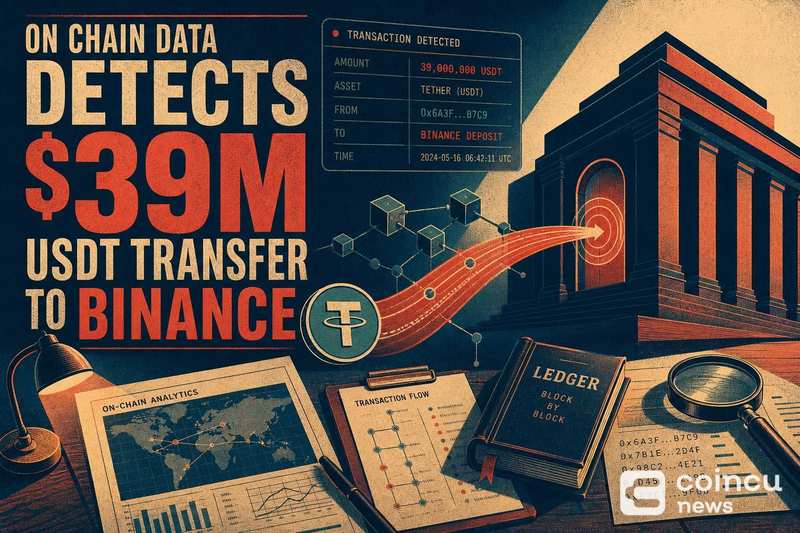
On-chain monitoring systems have flagged a transfer of 39 million USDT to a wallet associated with Binance, drawing attention from traders who track large stablecoin movements as potential signals of upcoming market activity.
What the On-Chain Data Shows About the Transfer
The transfer of 39 million USDT was detected through blockchain tracking tools that monitor labeled exchange wallets. The transaction appeared on the TRON network, where a significant share of USDT circulation occurs due to low fees and high throughput on the TRON-based stablecoin infrastructure.
The destination was identified as Binance based on publicly labeled wallet addresses. On-chain data confirms the movement amount, timing, and destination label, but does not reveal the sender’s identity or the purpose behind the transfer.
The event was also noted by ChainCatcher’s on-chain alerts coverage, which tracks notable whale-sized transactions across major blockchains.
Why a Large USDT Inflow to Binance Matters
USDT is the most widely used stablecoin for trading on centralized exchanges. When a large amount moves to an exchange like Binance, it can indicate that capital is being positioned for spot purchases or derivatives activity.
However, a transfer to an exchange does not confirm that any trade has been or will be executed. The funds could sit idle, be used for over-the-counter settlement, or serve internal treasury purposes. The distinction between liquidity preparation and confirmed trade execution is critical for interpreting these movements.
Binance’s deep order books and high trading volume mean that large stablecoin deposits there tend to attract disproportionate attention. Companies with substantial digital asset holdings routinely move funds between wallets and exchanges for portfolio management purposes, making context essential.
Possible Market Implications Traders Will Watch Next
Price reaction in Bitcoin and major altcoins in the hours following the deposit could reveal whether capital deployment follows. A sustained move higher after a large stablecoin inflow would be consistent with buy-side activity, though not proof of it.
Exchange netflow trends are the next data point to watch. If the 39 million USDT deposit is part of a broader pattern of inflows, the signal carries more weight than an isolated transfer. Traders monitoring exchange-level asset flows will look for confirmation across multiple data points.
Derivatives metrics, including open interest changes and funding rates, may help confirm whether the funds are being deployed actively. One transfer alone is not a complete market signal, and follow-through data across spot and futures markets is needed before drawing directional conclusions.
Limits of Reading On-Chain Exchange Transfers
Transfer intent cannot be determined from the transaction alone. Internal wallet reshuffling by exchanges can produce alerts that resemble external deposits. Institutional or OTC-related transfers may never reach the open market.
Wallet labels used by blockchain monitoring services are not always complete or up to date. A wallet tagged as “Binance” may be a deposit address, a hot wallet, or a custody-related address, each implying different activity. Token movements across networks, including those involving actively traded digital assets, require careful interpretation before conclusions are drawn.
Traders who rely on exchange inflow data typically look for patterns across multiple transactions and timeframes rather than reacting to a single movement. Order-book depth changes and derivatives open interest would be needed to draw any directional conclusion.
FAQ About the 39 Million USDT Transfer to Binance
What does a USDT transfer to Binance mean?
It means that USDT moved from an external wallet to a Binance-associated address. This could signal intent to trade, but it could also reflect custody management, OTC settlement, or routine treasury operations. The transaction alone does not confirm any specific market action.
Is this transfer bullish or bearish?
Neither conclusion is supported by the transfer data alone. A stablecoin deposit to an exchange is sometimes interpreted as buying preparation, but without confirmation of subsequent trades, it remains ambiguous.
Who sent the USDT?
The sender’s identity has not been publicly confirmed. On-chain data shows the originating wallet address, but unless that address is linked to a known entity, the source remains unknown.
What should traders watch next?
Follow-through signals matter more than the initial transfer. Traders will monitor exchange netflows, spot and derivatives volume on Binance, and whether additional large stablecoin deposits follow in the same timeframe.
Disclaimer: This article is for informational purposes only and does not constitute financial or investment advice. Cryptocurrency and digital asset markets carry significant risk. Always do your own research before making decisions.
No tags available.


Other Posts








- China, US Conclude Trade Talks with Focus on Cooperation
- Crypto Weekly: NYSE Backs OKX, Kraken Gets Fed Access, BTC Sells
- Court Upholds Fed’s Rejection of Custodia Bank’s Request
- Former CFO Convicted for $35M Fraudulent Crypto Investment
- DeriW Launches Edge Hour Trading Competition Platform for Derivatives Traders
- Michael Saylor Denies Bitcoin Sell-Off Amid Large BTC Transfer
- Buy Dogecoin on eToro: Step-by-Step Guide for Beginners (2024)
- Kazakhstan Explores Crypto Reserves Backed by National Funds
- JPMorgan Increases Holdings in BlackRock’s Bitcoin ETF
- Nordea Bank Introduces Bitcoin ETP Trading for Nordic Customers
- XRP Spot ETF Launches on Nasdaq Amid Market Fluctuations
- Peter Schiff Challenges Michael Saylor on MSTR’s Business Model
- Thailand Orders Worldcoin to Delete 1.2 Million Biometric Records
- UK Proposes New DeFi Tax Framework to Ease User Burden
- WLFI Under Fire: Analyst Warns Hyperliquid Could Be Next
- Ancient Ethereum Whale Moves $1.19 Billion After Decade
- BlackRock Receives Large Crypto Transfers from Coinbase
- SEC Scrutiny on ALT5 Sigma’s Leadership Disclosure Timing
- Yala Injects $5.5 Million Amid Recovery Efforts
- Radiant Capital Faces $50M Loss in Major Security Breach
- China, US Conclude Trade Talks with Focus on Cooperation
- Crypto Weekly: NYSE Backs OKX, Kraken Gets Fed Access, BTC Sells
- Court Upholds Fed’s Rejection of Custodia Bank’s Request
- Former CFO Convicted for $35M Fraudulent Crypto Investment
- DeriW Launches Edge Hour Trading Competition Platform for Derivatives Traders
- Michael Saylor Denies Bitcoin Sell-Off Amid Large BTC Transfer
- Buy Dogecoin on eToro: Step-by-Step Guide for Beginners (2024)
- Kazakhstan Explores Crypto Reserves Backed by National Funds
- JPMorgan Increases Holdings in BlackRock’s Bitcoin ETF
- Nordea Bank Introduces Bitcoin ETP Trading for Nordic Customers
- XRP Spot ETF Launches on Nasdaq Amid Market Fluctuations
- Peter Schiff Challenges Michael Saylor on MSTR’s Business Model
- Thailand Orders Worldcoin to Delete 1.2 Million Biometric Records
- UK Proposes New DeFi Tax Framework to Ease User Burden
- WLFI Under Fire: Analyst Warns Hyperliquid Could Be Next
- Ancient Ethereum Whale Moves $1.19 Billion After Decade
- BlackRock Receives Large Crypto Transfers from Coinbase
- SEC Scrutiny on ALT5 Sigma’s Leadership Disclosure Timing
- Yala Injects $5.5 Million Amid Recovery Efforts
- Radiant Capital Faces $50M Loss in Major Security Breach
- China, US Conclude Trade Talks with Focus on Cooperation
- Crypto Weekly: NYSE Backs OKX, Kraken Gets Fed Access, BTC Sells
- Court Upholds Fed’s Rejection of Custodia Bank’s Request
- Former CFO Convicted for $35M Fraudulent Crypto Investment
- DeriW Launches Edge Hour Trading Competition Platform for Derivatives Traders
- Michael Saylor Denies Bitcoin Sell-Off Amid Large BTC Transfer
- Buy Dogecoin on eToro: Step-by-Step Guide for Beginners (2024)
- Kazakhstan Explores Crypto Reserves Backed by National Funds
- JPMorgan Increases Holdings in BlackRock’s Bitcoin ETF
- Nordea Bank Introduces Bitcoin ETP Trading for Nordic Customers
- XRP Spot ETF Launches on Nasdaq Amid Market Fluctuations
- Peter Schiff Challenges Michael Saylor on MSTR’s Business Model
- Thailand Orders Worldcoin to Delete 1.2 Million Biometric Records
- UK Proposes New DeFi Tax Framework to Ease User Burden
- WLFI Under Fire: Analyst Warns Hyperliquid Could Be Next
- Ancient Ethereum Whale Moves $1.19 Billion After Decade
- BlackRock Receives Large Crypto Transfers from Coinbase
- SEC Scrutiny on ALT5 Sigma’s Leadership Disclosure Timing
- Yala Injects $5.5 Million Amid Recovery Efforts
- Radiant Capital Faces $50M Loss in Major Security Breach

Japan May Ease Crypto’s 2x Leverage Limit to Restore Liquidity

OKX to Launch AEON/USDT Spot Trading Pair: Listing Details and Market Focus

WEMIX Contract Ownership Compromised, 5.22M Tokens Illegally Minted
RISEx Launches ‘Ignite’ Season 1 Points Program, Following $3B in Volume During the Early Access Phase

Zoomex X Space Recap With Fernando Llorente and the World Cup Final Panel