BTC Long Liquidations Could Hit $951M on Major CEXs Below $61,327
Bitcoin long liquidations on major centralized exchanges could reach $951 million if the price drops below $61,327, based on derivatives positioning data. The figure highlights a concentrated zone of leveraged long exposure that, if triggered, would force exchanges to automatically close positions at a loss.
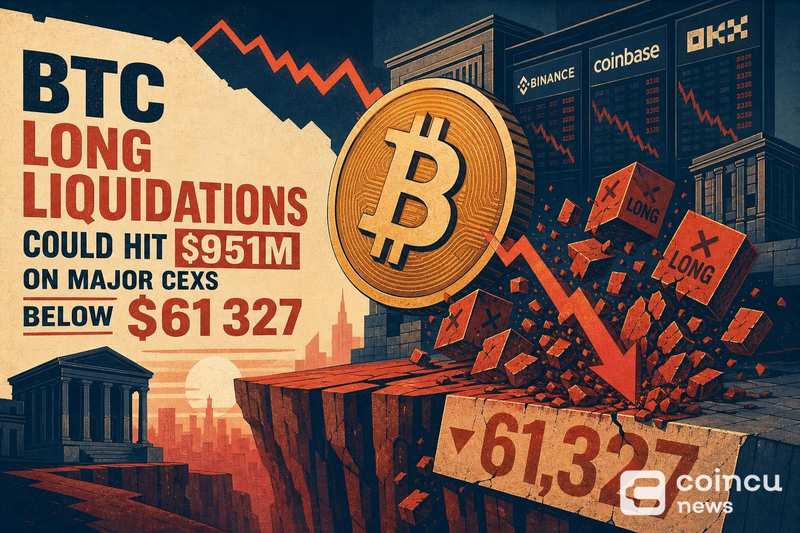
BTC Liquidation Risk Centers on the $61,327 Price Level
The $61,327 threshold represents a price level where a large cluster of leveraged long positions on major centralized exchanges would fall below their margin requirements. When that happens, exchange liquidation engines automatically sell the underlying collateral to cover losses, converting open positions into market sell orders.
Long liquidations occur when traders holding leveraged bets on higher prices are forced out by a price decline. The $951 million estimate reflects the cumulative value of long positions that would be liquidated across major exchanges if Bitcoin breaches that level, according to Coinglass liquidation map data.
Traders monitor these clustered liquidation zones because they can act as magnets for price action. Market makers and algorithmic traders are aware of where large liquidation pools sit, and a move toward those levels can accelerate as participants front-run the expected cascade.
How Major CEX Liquidation Maps Turn a BTC Drop Into Forced Selling
Leverage is the core driver. Traders using 10x, 20x, or higher leverage on Bitcoin futures need only a small adverse price move to breach their maintenance margin. Once one cluster of positions is liquidated, the resulting sell pressure can push the price further down, triggering the next cluster.
The concentration of this exposure on centralized exchanges is significant. Unlike decentralized venues where liquidations are handled by on-chain keepers, CEX liquidation engines operate with lower latency and can process large volumes of forced selling within seconds. The growing institutional role of centralized platforms, underscored by developments like Kraken being named the official crypto exchange for the 2026 FIFA World Cup, means these venues handle substantial leveraged volume.
Isolated margin accounts, where each position has its own collateral pool, are especially vulnerable to cascading liquidations. Cross-margin accounts share collateral across positions and offer more buffer, but can result in larger total losses when liquidation does occur.
It is important to distinguish between liquidation estimates and guaranteed outcomes. The $951 million figure represents potential exposure at a specific price point, not a prediction that Bitcoin will reach that level. Traders may close or reduce positions before the threshold is hit, and new positions may change the liquidation map entirely.
What a $951 Million BTC Long Squeeze Could Mean for Short-Term Market Structure
A liquidation event of this scale would likely produce a sharp intraday price swing. Spot traders and derivatives traders tend to respond differently: spot holders may see a buying opportunity at lower prices, while leveraged traders face forced exits regardless of their longer-term thesis.
Liquidation cascades can temporarily distort long/short ratios, as the forced closure of long positions shifts aggregate positioning sharply toward shorts. This shift can create a snapback if the selling exhausts quickly and spot demand absorbs the pressure.
Bitcoin’s current market conditions add context to the risk. Concentrated leverage zones have historically acted as short-term inflection points, sometimes triggering sharp reversals as over-leveraged participants were flushed out, and other times marking the beginning of sustained moves lower.
Key Signals Traders Should Monitor Around the BTC Liquidation Zone
Open interest, which measures the total value of outstanding futures contracts, can signal whether leveraged positions are building or unwinding as price approaches the $61,327 level.
Funding rates on perpetual futures contracts provide another signal. Persistently positive funding rates indicate that long positions are paying shorts to maintain their exposure, suggesting crowded bullish positioning. A sudden flip to negative funding can confirm that sentiment has shifted.
Volume is the confirmation layer. A move toward $61,327 on low volume may lack the momentum to trigger the full liquidation cascade, while a high-volume decline increases the probability that the threshold is breached. Exchange-specific volume data, particularly from venues where the liquidation exposure is concentrated, carries more weight than aggregate figures.
The broader crypto derivatives landscape also faces regulatory uncertainty. Recent legal challenges, including the case where Kalshi and Polymarket sued Kentucky over a proposed 14.25% tax, highlight how regulatory shifts can introduce sudden volatility into leveraged markets.
Risk management remains critical around these setups. A single liquidation forecast does not guarantee a breakdown. Market participants who have followed discussions around Ethereum’s revaluation and foundation neutrality know that market structure can shift rapidly on new information, invalidating previously dominant positioning.
FAQ
What are BTC long liquidations?
BTC long liquidations occur when traders who have placed leveraged bets on Bitcoin’s price rising are forced out of their positions because the price has fallen enough to breach their margin requirements. The exchange automatically sells their collateral to prevent further losses.
Why is $61,327 an important BTC level in this setup?
The $61,327 level is where a large concentration of leveraged long positions across major centralized exchanges would hit their liquidation thresholds. This clustering creates a zone where forced selling could cascade if the price reaches it.
Does a $951 million liquidation estimate guarantee Bitcoin will fall?
No. The estimate reflects the value of positions that would be liquidated at a specific price, not a forecast that Bitcoin will reach that price. Traders may adjust their positions before the level is reached, and market conditions can change the liquidation map at any time.
Disclaimer: This article is for informational purposes only and does not constitute financial or investment advice. Cryptocurrency and digital asset markets carry significant risk. Always do your own research before making decisions.
No tags available.


Other Posts







- China, US Conclude Trade Talks with Focus on Cooperation
- Crypto Weekly: NYSE Backs OKX, Kraken Gets Fed Access, BTC Sells
- Court Upholds Fed’s Rejection of Custodia Bank’s Request
- Former CFO Convicted for $35M Fraudulent Crypto Investment
- DeriW Launches Edge Hour Trading Competition Platform for Derivatives Traders
- Michael Saylor Denies Bitcoin Sell-Off Amid Large BTC Transfer
- Buy Dogecoin on eToro: Step-by-Step Guide for Beginners (2024)
- Kazakhstan Explores Crypto Reserves Backed by National Funds
- JPMorgan Increases Holdings in BlackRock’s Bitcoin ETF
- Nordea Bank Introduces Bitcoin ETP Trading for Nordic Customers
- XRP Spot ETF Launches on Nasdaq Amid Market Fluctuations
- Peter Schiff Challenges Michael Saylor on MSTR’s Business Model
- Thailand Orders Worldcoin to Delete 1.2 Million Biometric Records
- UK Proposes New DeFi Tax Framework to Ease User Burden
- WLFI Under Fire: Analyst Warns Hyperliquid Could Be Next
- Ancient Ethereum Whale Moves $1.19 Billion After Decade
- BlackRock Receives Large Crypto Transfers from Coinbase
- SEC Scrutiny on ALT5 Sigma’s Leadership Disclosure Timing
- Yala Injects $5.5 Million Amid Recovery Efforts
- Radiant Capital Faces $50M Loss in Major Security Breach
- China, US Conclude Trade Talks with Focus on Cooperation
- Crypto Weekly: NYSE Backs OKX, Kraken Gets Fed Access, BTC Sells
- Court Upholds Fed’s Rejection of Custodia Bank’s Request
- Former CFO Convicted for $35M Fraudulent Crypto Investment
- DeriW Launches Edge Hour Trading Competition Platform for Derivatives Traders
- Michael Saylor Denies Bitcoin Sell-Off Amid Large BTC Transfer
- Buy Dogecoin on eToro: Step-by-Step Guide for Beginners (2024)
- Kazakhstan Explores Crypto Reserves Backed by National Funds
- JPMorgan Increases Holdings in BlackRock’s Bitcoin ETF
- Nordea Bank Introduces Bitcoin ETP Trading for Nordic Customers
- XRP Spot ETF Launches on Nasdaq Amid Market Fluctuations
- Peter Schiff Challenges Michael Saylor on MSTR’s Business Model
- Thailand Orders Worldcoin to Delete 1.2 Million Biometric Records
- UK Proposes New DeFi Tax Framework to Ease User Burden
- WLFI Under Fire: Analyst Warns Hyperliquid Could Be Next
- Ancient Ethereum Whale Moves $1.19 Billion After Decade
- BlackRock Receives Large Crypto Transfers from Coinbase
- SEC Scrutiny on ALT5 Sigma’s Leadership Disclosure Timing
- Yala Injects $5.5 Million Amid Recovery Efforts
- Radiant Capital Faces $50M Loss in Major Security Breach
- China, US Conclude Trade Talks with Focus on Cooperation
- Crypto Weekly: NYSE Backs OKX, Kraken Gets Fed Access, BTC Sells
- Court Upholds Fed’s Rejection of Custodia Bank’s Request
- Former CFO Convicted for $35M Fraudulent Crypto Investment
- DeriW Launches Edge Hour Trading Competition Platform for Derivatives Traders
- Michael Saylor Denies Bitcoin Sell-Off Amid Large BTC Transfer
- Buy Dogecoin on eToro: Step-by-Step Guide for Beginners (2024)
- Kazakhstan Explores Crypto Reserves Backed by National Funds
- JPMorgan Increases Holdings in BlackRock’s Bitcoin ETF
- Nordea Bank Introduces Bitcoin ETP Trading for Nordic Customers
- XRP Spot ETF Launches on Nasdaq Amid Market Fluctuations
- Peter Schiff Challenges Michael Saylor on MSTR’s Business Model
- Thailand Orders Worldcoin to Delete 1.2 Million Biometric Records
- UK Proposes New DeFi Tax Framework to Ease User Burden
- WLFI Under Fire: Analyst Warns Hyperliquid Could Be Next
- Ancient Ethereum Whale Moves $1.19 Billion After Decade
- BlackRock Receives Large Crypto Transfers from Coinbase
- SEC Scrutiny on ALT5 Sigma’s Leadership Disclosure Timing
- Yala Injects $5.5 Million Amid Recovery Efforts
- Radiant Capital Faces $50M Loss in Major Security Breach



SKHYNIX Contract Holdings Reach $571M on Hyperliquid, $115M on Binance

Performa Marks One Year Live with Major Upgrade for Digital-Native SMBs

Zoomex to Attend Coinfest Asia 2026 as Gold Sponsor and Host Summer Bay Party in Bali