A whale holding an Ethereum short position worth more than $90 million is facing heightened liquidation risk, with the estimated liquidation price sitting at approximately $1,674, according to on-chain tracking data. The claim, surfaced by Lookonchain, has drawn attention across crypto derivatives markets, but key details about the position remain unverified.
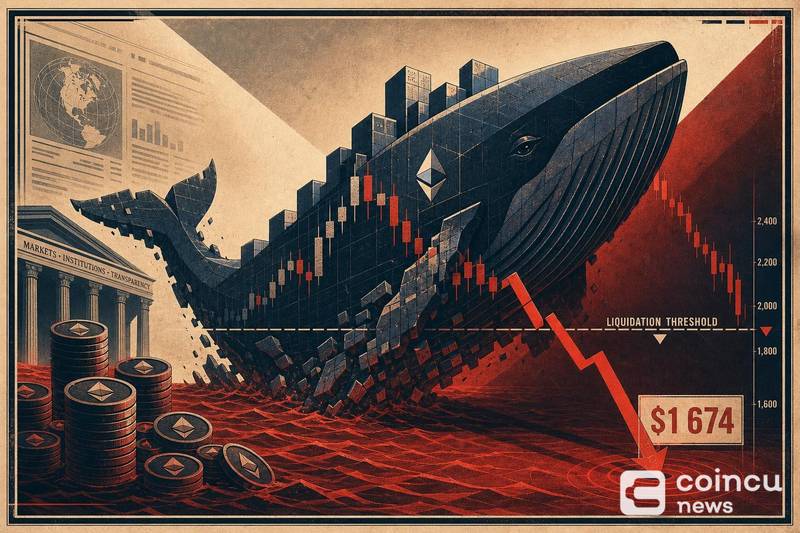
What Has Been Reported About the $90 Million ETH Short
On-chain analyst platform Lookonchain flagged a large ETH short position exceeding $90 million that faces growing liquidation pressure. The reported liquidation price sits near $1,674. For related coverage, see Fed Warns Low Employment Growth May Be the New Normal Amid War Risk.
The position appears to be linked to a wallet tracked on Hypurrscan, a derivatives-focused block explorer. However, independent verification of the position’s full parameters, including leverage ratio, entry price, and collateral breakdown, has not been completed.
This is not the first time a large ETH short has attracted market attention. Earlier this year, a whale opened a $35 million short on 22,000 ETH using 25x leverage, highlighting how concentrated derivatives bets can ripple through sentiment.
Why the $1,674 Liquidation Level Is the Key Number
A liquidation price is the threshold at which a leveraged position’s collateral becomes insufficient to maintain the trade. When ETH’s spot price approaches that level from below on a short, the position holder must either add collateral or face forced closure.
The distinction matters: this is a report of rising liquidation risk, not a completed liquidation event. The whale’s short remains open. If ETH trades into the $1,674 zone, the position would face forced unwinding, potentially adding buy pressure to the market as the short is closed.
Large liquidations can trigger cascading effects. When Ethereum faced $114 million in potential liquidations near $1,472 in a previous episode, the proximity of clustered liquidation levels amplified volatility in both directions.
The size of this position, above $90 million, means its liquidation would represent a meaningful forced buy order. For traders watching ETH derivatives, the $1,674 level now functions as a known pressure point.
Where Verification Gaps Remain
Several critical details about this position have not been independently confirmed. The leverage multiple is unknown, which determines how sensitive the position is to small price moves. A 5x leveraged short behaves very differently from a 25x one.
The entry price and collateral composition are also unverified. Without knowing when the short was opened, it is impossible to calculate the trader’s current unrealized profit or loss. The collateral type, whether stablecoins, ETH, or other assets, affects the liquidation dynamics.
The research behind this report is explicitly incomplete, with confidence rated at 0.35 out of 1.0. The primary source is a single Lookonchain post. No secondary confirmation from exchange-linked data or independent on-chain analysis has been identified.
Whale activity on Ethereum’s DeFi protocols has been elevated recently, with separate reports showing a crypto whale borrowing $142 million in USDT on Aave to buy 87,680 ETH within a 30-hour window. Large directional bets in both directions suggest divided conviction among major holders.
What Traders Should Watch Before Calling It a Liquidation Event
No liquidation has occurred yet. For traders monitoring this situation, three confirmation signals matter most.
First, whether ETH spot price trades into the cited $1,674 liquidation zone. Price proximity is the primary trigger. Traders tracking smart money ETH positions and their floating losses will want to watch how the broader whale cohort is positioned around this level.
Second, whether Lookonchain or another on-chain analytics platform posts a follow-up confirming that the position has been liquidated, partially closed, or had its collateral adjusted. Whales frequently manage positions by adding margin before liquidation.
Third, whether exchange-linked or on-chain evidence identifies the final outcome. A verified liquidation transaction on a block explorer would be the definitive proof. Until then, the $90 million figure and the $1,674 threshold remain single-source claims.
FAQ: ETH Whale Short Liquidation Risk Explained
What does a liquidation price mean for a short position?
A liquidation price is the asset price at which a trader’s collateral can no longer cover the position’s losses. For a short, this happens when the price rises above the threshold. The exchange or protocol then forcibly closes the trade to prevent further losses.
Has this whale already been liquidated?
No. As of the latest available data, the position remains open. The report describes increasing liquidation risk, not a completed liquidation. The outcome depends on whether ETH approaches or exceeds $1,674 and whether the trader adds collateral.
Why does a single large ETH short matter to the broader market?
A forced closure of a $90 million short would generate a large buy order as the position unwinds. This can push prices higher, potentially triggering additional liquidations of other short positions clustered near the same level, creating a cascade effect.
Disclaimer: This article is for informational purposes only and does not constitute financial or investment advice. Cryptocurrency and digital asset markets carry significant risk. Always do your own research before making decisions.
No tags available.


Other Posts








- China, US Conclude Trade Talks with Focus on Cooperation
- Crypto Weekly: NYSE Backs OKX, Kraken Gets Fed Access, BTC Sells
- Court Upholds Fed’s Rejection of Custodia Bank’s Request
- Former CFO Convicted for $35M Fraudulent Crypto Investment
- DeriW Launches Edge Hour Trading Competition Platform for Derivatives Traders
- Michael Saylor Denies Bitcoin Sell-Off Amid Large BTC Transfer
- Buy Dogecoin on eToro: Step-by-Step Guide for Beginners (2024)
- Kazakhstan Explores Crypto Reserves Backed by National Funds
- JPMorgan Increases Holdings in BlackRock’s Bitcoin ETF
- Nordea Bank Introduces Bitcoin ETP Trading for Nordic Customers
- XRP Spot ETF Launches on Nasdaq Amid Market Fluctuations
- Peter Schiff Challenges Michael Saylor on MSTR’s Business Model
- Thailand Orders Worldcoin to Delete 1.2 Million Biometric Records
- UK Proposes New DeFi Tax Framework to Ease User Burden
- WLFI Under Fire: Analyst Warns Hyperliquid Could Be Next
- Ancient Ethereum Whale Moves $1.19 Billion After Decade
- BlackRock Receives Large Crypto Transfers from Coinbase
- SEC Scrutiny on ALT5 Sigma’s Leadership Disclosure Timing
- Yala Injects $5.5 Million Amid Recovery Efforts
- Radiant Capital Faces $50M Loss in Major Security Breach
- China, US Conclude Trade Talks with Focus on Cooperation
- Crypto Weekly: NYSE Backs OKX, Kraken Gets Fed Access, BTC Sells
- Court Upholds Fed’s Rejection of Custodia Bank’s Request
- Former CFO Convicted for $35M Fraudulent Crypto Investment
- DeriW Launches Edge Hour Trading Competition Platform for Derivatives Traders
- Michael Saylor Denies Bitcoin Sell-Off Amid Large BTC Transfer
- Buy Dogecoin on eToro: Step-by-Step Guide for Beginners (2024)
- Kazakhstan Explores Crypto Reserves Backed by National Funds
- JPMorgan Increases Holdings in BlackRock’s Bitcoin ETF
- Nordea Bank Introduces Bitcoin ETP Trading for Nordic Customers
- XRP Spot ETF Launches on Nasdaq Amid Market Fluctuations
- Peter Schiff Challenges Michael Saylor on MSTR’s Business Model
- Thailand Orders Worldcoin to Delete 1.2 Million Biometric Records
- UK Proposes New DeFi Tax Framework to Ease User Burden
- WLFI Under Fire: Analyst Warns Hyperliquid Could Be Next
- Ancient Ethereum Whale Moves $1.19 Billion After Decade
- BlackRock Receives Large Crypto Transfers from Coinbase
- SEC Scrutiny on ALT5 Sigma’s Leadership Disclosure Timing
- Yala Injects $5.5 Million Amid Recovery Efforts
- Radiant Capital Faces $50M Loss in Major Security Breach
- China, US Conclude Trade Talks with Focus on Cooperation
- Crypto Weekly: NYSE Backs OKX, Kraken Gets Fed Access, BTC Sells
- Court Upholds Fed’s Rejection of Custodia Bank’s Request
- Former CFO Convicted for $35M Fraudulent Crypto Investment
- DeriW Launches Edge Hour Trading Competition Platform for Derivatives Traders
- Michael Saylor Denies Bitcoin Sell-Off Amid Large BTC Transfer
- Buy Dogecoin on eToro: Step-by-Step Guide for Beginners (2024)
- Kazakhstan Explores Crypto Reserves Backed by National Funds
- JPMorgan Increases Holdings in BlackRock’s Bitcoin ETF
- Nordea Bank Introduces Bitcoin ETP Trading for Nordic Customers
- XRP Spot ETF Launches on Nasdaq Amid Market Fluctuations
- Peter Schiff Challenges Michael Saylor on MSTR’s Business Model
- Thailand Orders Worldcoin to Delete 1.2 Million Biometric Records
- UK Proposes New DeFi Tax Framework to Ease User Burden
- WLFI Under Fire: Analyst Warns Hyperliquid Could Be Next
- Ancient Ethereum Whale Moves $1.19 Billion After Decade
- BlackRock Receives Large Crypto Transfers from Coinbase
- SEC Scrutiny on ALT5 Sigma’s Leadership Disclosure Timing
- Yala Injects $5.5 Million Amid Recovery Efforts
- Radiant Capital Faces $50M Loss in Major Security Breach

Bitcoin Slips Toward $64,000 Ahead of Wednesday Inflation Test

Bitcoin Holds Steady as ETF Inflows Offset Selling Ahead of U.S. Inflation Data

ForumPay Expands Payment Infrastructure with New Card and Bank Transfer Acceptance Solution

Newest Assets, Improved User Promotions & Much Greater Crypto Experience_ Xxkk Trade Exchange Reinforces Its Trade Environment