Bitcoin was trading under the headline threshold as geopolitical stress around Middle East shipping routes pushed investors toward a broader risk-off stance, leaving crypto to react more like a macro-sensitive asset than an isolated digital market.
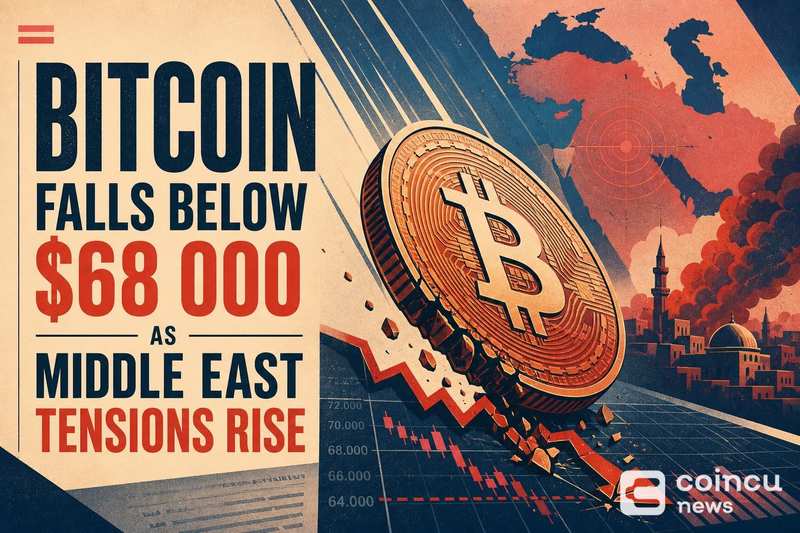
Bitcoin traded below $68,000 on Aug. 7, 2026, with the asset changing hands near $64,819 as traders reassessed Middle East risk and trimmed exposure to volatile assets.
Why Bitcoin fell under the headline threshold as Middle East tensions escalated
Confirmed market move, not a crypto-specific trigger
The evidence set points to a macro shock rather than a crypto policy event: Bitcoin near $64,700, Brent crude above $83 per barrel, and gold up 1.5% all moved together in the same session, which is why the selloff reads as a cross-market reaction instead of a digital-asset-specific catalyst.
The move also reinforces how quickly Bitcoin can swing with macro sentiment, much as it did in Bitcoin Rises Above $65,000 After June U.S. PPI Misses Forecasts, when traders responded to a U.S. data surprise instead of a crypto-native trigger. For related coverage, see Bitcoin Falls Below 64,000 USDT, Down 2.18% in 24 Hours.
What the market data says about sentiment around Bitcoin
Fear remains elevated, but the data does not prove causation on its own
The Fear and Greed Index stood at 29, a Fear reading, while Bitcoin’s 24-hour change of about 0.36%, market cap near $1.30 trillion, and 24-hour volume above $18.7 billion showed that liquidity stayed active even as sentiment weakened.
That combination of a Fear reading and still-heavy turnover suggests repositioning rather than total disengagement, and it is a different setup from the steadier flow backdrop described in U.S. Bitcoin ETFs Add 1,321 BTC as Ethereum ETFs See 2,353 ETH Outflow.
How Strait of Hormuz risk is feeding the broader risk-off trade
Shipping disruption risk is lifting oil and defensive assets
AP reported that about one-fifth of the world’s traded oil and natural gas moved through the Strait of Hormuz before the war, which explains why renewed shipping stress can hit global markets well beyond energy.
Lloyd’s List Intelligence data cited by AP showed 84 transits from July 27 to August 2, up from 45 the prior week but still far below the roughly 700 weekly transits seen in normal conditions, giving traders a concrete gauge of how abnormal shipping conditions remain.
That shipping data lines up with the cross-asset reaction reported by CoinDesk, which said Brent crude topped $83 per barrel and gold rose 1.5% while Bitcoin traded near $64,700; the point is not that oil mechanically prices Bitcoin, but that the same geopolitical stress was pushing money toward traditional hedges and away from risk assets.
What traders should watch next for Bitcoin and macro markets
Immediate watchpoints after the risk-off shock
The next phase depends on whether Bitcoin can stabilize near $64,819, whether the Fear and Greed Index improves from 29, and whether oil above $83 or gold up 1.5% keeps signaling macro stress.
Without verified public liquidation data, stronger claims about forced positioning would go beyond the evidence, so the cleaner checklist is price stability, sentiment direction, and whether the shipping figures highlighted by AP’s Hormuz coverage keep improving or deteriorating.
For context on how fast narrative can flip when macro pressure eases, readers can compare this setup with Bitcoin Falls Below 64,000 USDT, Down 2.18% in 24 Hours and Bitcoin Vacuum Zone $72,000–$82,000: Upward Momentum Still Unconfirmed, which bracket the recent downside and still-unresolved upside case.
FAQ: Bitcoin below $68,000 amid Middle East tensions
What pushed Bitcoin below the headline threshold?
The immediate backdrop was a cross-market risk-off move: oil above $83 and gold up 1.5% rose as traders digested geopolitical stress, while Bitcoin traded at $64,819.
Does the move reflect broader market fear?
Yes, but the evidence is contextual rather than absolute: the Fear and Greed Index sat at 29, and AP’s 84 Hormuz transits from July 27 to August 2 showed why regional stress was still shaping macro sentiment.
What should traders watch next?
Watch whether Bitcoin holds near $64,819, whether the Fear and Greed Index moves out of Fear, and whether the Hormuz shipping data and oil-and-gold reaction start to normalize.
Disclaimer: This article is for informational purposes only and does not constitute financial or investment advice. Cryptocurrency and digital asset markets carry significant risk. Always do your own research before making decisions.
No tags available.


Other Posts








- China, US Conclude Trade Talks with Focus on Cooperation
- Crypto Weekly: NYSE Backs OKX, Kraken Gets Fed Access, BTC Sells
- Court Upholds Fed’s Rejection of Custodia Bank’s Request
- Former CFO Convicted for $35M Fraudulent Crypto Investment
- DeriW Launches Edge Hour Trading Competition Platform for Derivatives Traders
- Michael Saylor Denies Bitcoin Sell-Off Amid Large BTC Transfer
- Buy Dogecoin on eToro: Step-by-Step Guide for Beginners (2024)
- Kazakhstan Explores Crypto Reserves Backed by National Funds
- JPMorgan Increases Holdings in BlackRock’s Bitcoin ETF
- Nordea Bank Introduces Bitcoin ETP Trading for Nordic Customers
- XRP Spot ETF Launches on Nasdaq Amid Market Fluctuations
- Peter Schiff Challenges Michael Saylor on MSTR’s Business Model
- Thailand Orders Worldcoin to Delete 1.2 Million Biometric Records
- UK Proposes New DeFi Tax Framework to Ease User Burden
- WLFI Under Fire: Analyst Warns Hyperliquid Could Be Next
- Ancient Ethereum Whale Moves $1.19 Billion After Decade
- BlackRock Receives Large Crypto Transfers from Coinbase
- SEC Scrutiny on ALT5 Sigma’s Leadership Disclosure Timing
- Yala Injects $5.5 Million Amid Recovery Efforts
- Radiant Capital Faces $50M Loss in Major Security Breach
- China, US Conclude Trade Talks with Focus on Cooperation
- Crypto Weekly: NYSE Backs OKX, Kraken Gets Fed Access, BTC Sells
- Court Upholds Fed’s Rejection of Custodia Bank’s Request
- Former CFO Convicted for $35M Fraudulent Crypto Investment
- DeriW Launches Edge Hour Trading Competition Platform for Derivatives Traders
- Michael Saylor Denies Bitcoin Sell-Off Amid Large BTC Transfer
- Buy Dogecoin on eToro: Step-by-Step Guide for Beginners (2024)
- Kazakhstan Explores Crypto Reserves Backed by National Funds
- JPMorgan Increases Holdings in BlackRock’s Bitcoin ETF
- Nordea Bank Introduces Bitcoin ETP Trading for Nordic Customers
- XRP Spot ETF Launches on Nasdaq Amid Market Fluctuations
- Peter Schiff Challenges Michael Saylor on MSTR’s Business Model
- Thailand Orders Worldcoin to Delete 1.2 Million Biometric Records
- UK Proposes New DeFi Tax Framework to Ease User Burden
- WLFI Under Fire: Analyst Warns Hyperliquid Could Be Next
- Ancient Ethereum Whale Moves $1.19 Billion After Decade
- BlackRock Receives Large Crypto Transfers from Coinbase
- SEC Scrutiny on ALT5 Sigma’s Leadership Disclosure Timing
- Yala Injects $5.5 Million Amid Recovery Efforts
- Radiant Capital Faces $50M Loss in Major Security Breach
- China, US Conclude Trade Talks with Focus on Cooperation
- Crypto Weekly: NYSE Backs OKX, Kraken Gets Fed Access, BTC Sells
- Court Upholds Fed’s Rejection of Custodia Bank’s Request
- Former CFO Convicted for $35M Fraudulent Crypto Investment
- DeriW Launches Edge Hour Trading Competition Platform for Derivatives Traders
- Michael Saylor Denies Bitcoin Sell-Off Amid Large BTC Transfer
- Buy Dogecoin on eToro: Step-by-Step Guide for Beginners (2024)
- Kazakhstan Explores Crypto Reserves Backed by National Funds
- JPMorgan Increases Holdings in BlackRock’s Bitcoin ETF
- Nordea Bank Introduces Bitcoin ETP Trading for Nordic Customers
- XRP Spot ETF Launches on Nasdaq Amid Market Fluctuations
- Peter Schiff Challenges Michael Saylor on MSTR’s Business Model
- Thailand Orders Worldcoin to Delete 1.2 Million Biometric Records
- UK Proposes New DeFi Tax Framework to Ease User Burden
- WLFI Under Fire: Analyst Warns Hyperliquid Could Be Next
- Ancient Ethereum Whale Moves $1.19 Billion After Decade
- BlackRock Receives Large Crypto Transfers from Coinbase
- SEC Scrutiny on ALT5 Sigma’s Leadership Disclosure Timing
- Yala Injects $5.5 Million Amid Recovery Efforts
- Radiant Capital Faces $50M Loss in Major Security Breach



Pump.fun Let Staff Go Just Before Their Tokens Were Due to Pay Out