The Crypto Fear and Greed Index has slipped into clear fear territory, with the most widely tracked version of the gauge reading in the high 20s and signaling a cautious, risk-off mood across the Bitcoin and broader digital-asset market on July 19, 2026.
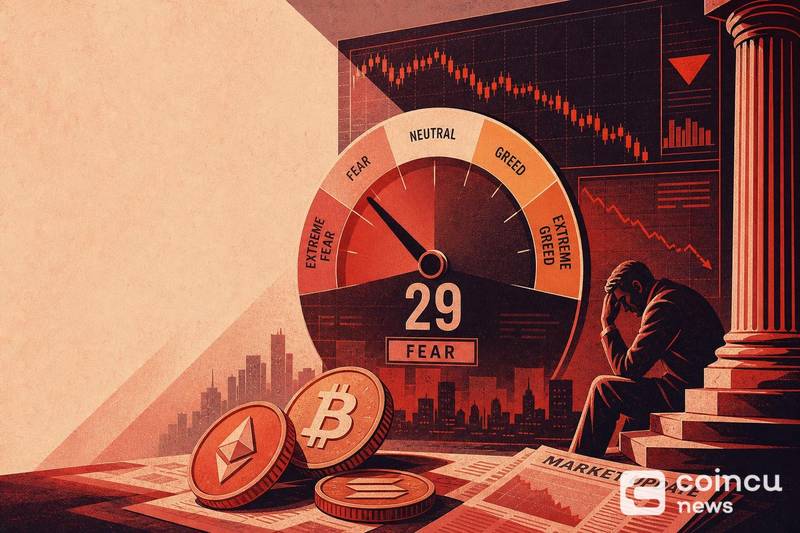
What a Crypto Fear and Greed Index Reading Near 29 Means
How the index works
The Crypto Fear & Greed Index is a daily sentiment gauge for Bitcoin and other large cryptocurrencies, compressing market inputs into a single 0-to-100 score. Alternative.me, which publishes the reference version, describes it as a mood snapshot rather than a price forecast. For related coverage, see Kraken Named Official Crypto Exchange for the 2026 FIFA World Cup.
Readings between roughly 25 and 46 fall in the fear band, below the neutral midpoint and well short of greed. A score in the high 20s therefore sits firmly in fear rather than neutral or greed territory. For related coverage, see Coinbase Every Asset Every Market One Platform Strategy Advances in H1.
Alternative.me’s live index returned a current value of 28 in the Fear category on July 19, 2026, with comparison points of 25 a day earlier, 26 a week earlier, and 14 a month earlier. Some third-party trackers referenced a reading of 29 for the same day, according to unconfirmed reports, but the primary source and its readable mirrors showed 28. For related coverage, see SharpLink Gaming Added to Russell Index as Ethereum Treasury Strategy Unlocks U.S. Fund Access.
Why the reading matters now
Independent mirrors reinforce the same picture. Bitbo’s live Fear & Greed chart, which cites Alternative.me as its data source, displayed “Today: 28” and “Now 28 · Fear” when checked, matching the primary reading.
Because the index measures sentiment and not guaranteed direction, a fear score describes how participants feel about risk, not where prices must go next. It typically reflects defensive positioning rather than a mechanical sell signal.
What Could Be Driving Fear Across the Crypto Market
Sentiment indices usually reflect a blend of inputs rather than one isolated trigger, so a move into deeper fear may reflect several forces acting together. Short-term volatility, liquidation pressure, and softer trading momentum are among the common catalysts that pull the score lower.
The backdrop remains cautious even with Bitcoin holding modest gains. BTC traded at $64,670, up 1.18% over 24 hours, with a market capitalization near $1.30 trillion and 24-hour volume of about $15.28 billion.
A green day for the largest asset paired with a fear reading likely signals lingering caution rather than conviction. The pattern suggests traders remain defensive even as spot prices stabilize, which methodology differences across trackers can amplify.
That methodology gap is worth flagging. Proprietary trackers using different inputs showed higher fear scores for the same day, so the exact number varies by provider even when the underlying “Fear” classification agrees.
How Fear Readings Can Affect Bitcoin, Altcoins, and Trading Behavior
Bitcoin’s role in anchoring sentiment
Bitcoin dominance stood at roughly 56.5% of a total crypto market capitalized near $2.30 trillion, underscoring how much BTC anchors overall sentiment. When the largest asset sets a cautious tone, the index tends to follow.
Fear conditions often coincide with lower conviction, defensive positioning, and choppier price action. Bitcoin’s relative stability at current levels has not been enough to push the gauge back toward neutral.
Altcoin spillover
Altcoins frequently see amplified reactions during fearful stretches, moving more sharply in both directions than Bitcoin as liquidity thins. High dominance near 56.5% reinforces that smaller tokens are ceding ground while risk appetite stays subdued.
Some participants treat extreme fear as a contrarian signal, reasoning that pessimism can mark local bottoms. Timing remains uncertain, and a fear reading alone offers no guarantee of a reversal.
What Traders Should Watch Next for a Sentiment Shift
The most direct tell is the next move in the index itself. A drift back toward the mid-20s would show sentiment deteriorating, while a climb toward the neutral band would suggest stabilization; the current 28 sits above last month’s 14, hinting the mood is less fragile than it was.
Price stability, volume, and momentum serve as practical confirmation signals alongside the score. Steady spot prices with recovering volume would strengthen the case for a sentiment floor, much as market-wide events like exchange circuit-breaker triggers can jolt short-term positioning.
One reading should be interpreted in context with broader market action rather than in isolation. Sentiment gauges work best as a supplement to price and flow data, not a standalone trigger, a point echoed by strategy shifts from major venues such as Coinbase’s multi-asset platform push.
FAQ About the Crypto Fear and Greed Index
What does a score near 29 mean?
A score in the high 20s falls in the fear band, below the neutral midpoint of 50. The reference reading of 28 on July 19, 2026 signals cautious, risk-off sentiment across Bitcoin and large-cap crypto.
Is fear good or bad for crypto prices?
Fear is context-dependent, not automatically bullish or bearish. It reflects mood rather than direction, and some traders read extreme fear as a contrarian opportunity while others see it as confirmation of weakness. Regulatory shifts, such as South Africa’s draft crypto tax guidance, can also color sentiment independently of the index.
Can the index be used alone for trading decisions?
No. The index is a sentiment supplement best paired with price action, volume, and momentum. Different providers use different methodologies, so the same day can show varying scores even when the “Fear” label agrees.
Disclaimer: This article is for informational purposes only and does not constitute financial or investment advice. Cryptocurrency and digital asset markets carry significant risk. Always do your own research before making decisions.
No tags available.


Other Posts








- China, US Conclude Trade Talks with Focus on Cooperation
- Crypto Weekly: NYSE Backs OKX, Kraken Gets Fed Access, BTC Sells
- Court Upholds Fed’s Rejection of Custodia Bank’s Request
- Former CFO Convicted for $35M Fraudulent Crypto Investment
- DeriW Launches Edge Hour Trading Competition Platform for Derivatives Traders
- Michael Saylor Denies Bitcoin Sell-Off Amid Large BTC Transfer
- Buy Dogecoin on eToro: Step-by-Step Guide for Beginners (2024)
- Kazakhstan Explores Crypto Reserves Backed by National Funds
- JPMorgan Increases Holdings in BlackRock’s Bitcoin ETF
- Nordea Bank Introduces Bitcoin ETP Trading for Nordic Customers
- XRP Spot ETF Launches on Nasdaq Amid Market Fluctuations
- Peter Schiff Challenges Michael Saylor on MSTR’s Business Model
- Thailand Orders Worldcoin to Delete 1.2 Million Biometric Records
- UK Proposes New DeFi Tax Framework to Ease User Burden
- WLFI Under Fire: Analyst Warns Hyperliquid Could Be Next
- Ancient Ethereum Whale Moves $1.19 Billion After Decade
- BlackRock Receives Large Crypto Transfers from Coinbase
- SEC Scrutiny on ALT5 Sigma’s Leadership Disclosure Timing
- Yala Injects $5.5 Million Amid Recovery Efforts
- Radiant Capital Faces $50M Loss in Major Security Breach
- China, US Conclude Trade Talks with Focus on Cooperation
- Crypto Weekly: NYSE Backs OKX, Kraken Gets Fed Access, BTC Sells
- Court Upholds Fed’s Rejection of Custodia Bank’s Request
- Former CFO Convicted for $35M Fraudulent Crypto Investment
- DeriW Launches Edge Hour Trading Competition Platform for Derivatives Traders
- Michael Saylor Denies Bitcoin Sell-Off Amid Large BTC Transfer
- Buy Dogecoin on eToro: Step-by-Step Guide for Beginners (2024)
- Kazakhstan Explores Crypto Reserves Backed by National Funds
- JPMorgan Increases Holdings in BlackRock’s Bitcoin ETF
- Nordea Bank Introduces Bitcoin ETP Trading for Nordic Customers
- XRP Spot ETF Launches on Nasdaq Amid Market Fluctuations
- Peter Schiff Challenges Michael Saylor on MSTR’s Business Model
- Thailand Orders Worldcoin to Delete 1.2 Million Biometric Records
- UK Proposes New DeFi Tax Framework to Ease User Burden
- WLFI Under Fire: Analyst Warns Hyperliquid Could Be Next
- Ancient Ethereum Whale Moves $1.19 Billion After Decade
- BlackRock Receives Large Crypto Transfers from Coinbase
- SEC Scrutiny on ALT5 Sigma’s Leadership Disclosure Timing
- Yala Injects $5.5 Million Amid Recovery Efforts
- Radiant Capital Faces $50M Loss in Major Security Breach
- China, US Conclude Trade Talks with Focus on Cooperation
- Crypto Weekly: NYSE Backs OKX, Kraken Gets Fed Access, BTC Sells
- Court Upholds Fed’s Rejection of Custodia Bank’s Request
- Former CFO Convicted for $35M Fraudulent Crypto Investment
- DeriW Launches Edge Hour Trading Competition Platform for Derivatives Traders
- Michael Saylor Denies Bitcoin Sell-Off Amid Large BTC Transfer
- Buy Dogecoin on eToro: Step-by-Step Guide for Beginners (2024)
- Kazakhstan Explores Crypto Reserves Backed by National Funds
- JPMorgan Increases Holdings in BlackRock’s Bitcoin ETF
- Nordea Bank Introduces Bitcoin ETP Trading for Nordic Customers
- XRP Spot ETF Launches on Nasdaq Amid Market Fluctuations
- Peter Schiff Challenges Michael Saylor on MSTR’s Business Model
- Thailand Orders Worldcoin to Delete 1.2 Million Biometric Records
- UK Proposes New DeFi Tax Framework to Ease User Burden
- WLFI Under Fire: Analyst Warns Hyperliquid Could Be Next
- Ancient Ethereum Whale Moves $1.19 Billion After Decade
- BlackRock Receives Large Crypto Transfers from Coinbase
- SEC Scrutiny on ALT5 Sigma’s Leadership Disclosure Timing
- Yala Injects $5.5 Million Amid Recovery Efforts
- Radiant Capital Faces $50M Loss in Major Security Breach

Senate Keeps Clarity Act Alive With Crypto Bill Vote Set for September

Brazil Central Bank Orders Exchanges to Delay Large Crypto Transfers Abroad

Bitcoin, Ether ETFs Draw $1.1B in Best Inflow Week Since April Despite Low Volume
Bybit Sues North Korea and Lazarus Group, Secures Preliminary Injunction Freezing Stolen Assets in Landmark Crypto Asset Recovery Effort

Spindex’s Real-Time Data Pipeline Surpasses 150 Million Tracked Gaming Events