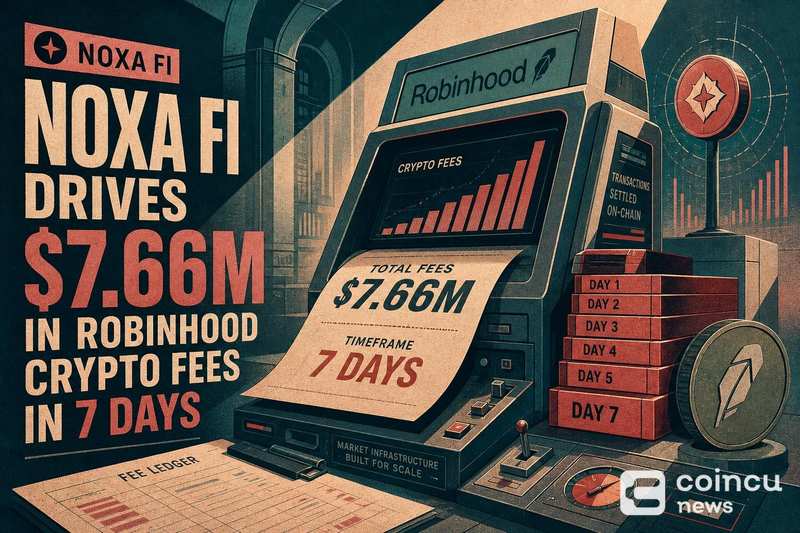

Noxa Fi generated about $7.66 million in Robinhood crypto fees over a seven-day period, according to on-chain data tracking activity on the Robinhood chain. The figure highlights a concentrated burst of trading activity flowing through the platform’s crypto infrastructure during a single week.
Noxa Fi records about $7.66 million in Robinhood crypto fees over seven days
The $7.66 million in fees represents activity specifically tied to Robinhood’s crypto operations over a rolling seven-day window. Noxa Fi, which operates a trading interface connected to the Robinhood chain, served as the primary venue driving this fee generation.
The fees are attributed to crypto transactions processed through the Robinhood chain, a blockchain infrastructure that has seen a surge in on-chain activity. The measurement captures trading fees generated by users interacting with tokens and memecoins launched via the Noxa Fi platform.

Robinhood’s crypto fee structure operates on a tiered model, where transaction costs vary based on trade size and asset type. The seven-day total reflects the cumulative fees collected from all crypto trades routed through the chain during that period.
What appears to be driving the Robinhood crypto fee surge
The Robinhood chain experienced a significant transactions surge that positioned it as a competitor to established Layer 2 networks like Base. This spike in on-chain activity directly correlates with the fee generation observed through Noxa Fi.
Memecoin trading and tokenized stock activity appear to be the primary catalysts. The Robinhood chain’s first week of operation attracted traders launching and trading speculative tokens, a pattern consistent with fee spikes seen on other new chains during their initial launch periods.
On-chain analytics from Dune dashboards tracking Robinhood chain activity provide granular data on transaction volumes and fee accumulation. The data suggests concentrated bursts of trading rather than steady, distributed activity.

Noxa Fi’s role as a token launchpad, similar to pump.fun on Solana, means each new token creation and subsequent trades generate fees. The platform’s interface funnels user activity directly into Robinhood’s fee-generating infrastructure.
Why the seven-day fee number matters for Robinhood’s crypto business
Fee generation is one of the most direct measures of platform engagement in crypto. A $7.66 million figure over just seven days, if sustained, would annualize to roughly $400 million in crypto transaction revenue for the chain’s ecosystem.
For Robinhood, which has been expanding its crypto operations amid evolving U.S. regulatory frameworks, chain-level fee revenue represents a new monetization layer beyond traditional brokerage commissions. The company’s crypto fee tier structure shows its deliberate approach to capturing value from on-chain activity.
The figure also signals user demand. Fees are a byproduct of real transactions, meaning traders willingly paid millions in costs to access tokens and trading opportunities on the Robinhood chain during its first week.
However, first-week metrics for any new chain carry an inherent novelty premium. Early adopters, airdrop hunters, and speculators often inflate initial activity far beyond what becomes the steady-state baseline. The short-term trading dynamics that drive such spikes do not always translate into durable revenue.
What traders and investors should watch after the fee spike
Volume sustainability
The critical question is whether week-two fees maintain a comparable pace or decline sharply. Most new chain launches see a 50-80% drop in activity after the initial excitement fades. Traders should monitor the Dune dashboard for daily fee trends over the next 14 days.
Token activity depth
If the fee generation was driven primarily by memecoin launches, sustainability depends on whether those tokens retain trading volume or go to zero. A healthy sign would be diversification of fee sources beyond pure speculation into utility-driven transactions.
Risk of reversal
Short bursts of high fee generation do not imply a durable trend. The broader crypto market environment and competing chains will influence whether traders continue allocating attention and capital to the Robinhood chain. A single week of data, while notable, requires follow-through to be meaningful for long-term positioning.
Traders should also watch for any changes to Robinhood’s fee structure that could either encourage or dampen activity. Platform incentives, liquidity mining programs, or fee reductions could artificially extend the initial momentum.
FAQ
What is Noxa Fi?
Noxa Fi is a token launchpad and trading platform built on the Robinhood chain. It enables users to create and trade tokens, generating transaction fees in the process. In this context, it is the primary application driving fee revenue on Robinhood’s blockchain infrastructure.
Who collects the $7.66 million in fees?
The fees are generated through crypto transactions on the Robinhood chain. They represent costs paid by traders using the Noxa Fi platform, with fees flowing to the chain’s fee-collection mechanism as part of Robinhood’s crypto ecosystem.
Why does the seven-day timeframe matter?
Seven days represents the Robinhood chain’s first full week of on-chain activity. The concentrated timeframe makes the fee figure notable because it demonstrates immediate demand, but also raises questions about whether the pace is sustainable beyond the launch period.
Disclaimer: This article is for informational purposes only and does not constitute financial or investment advice. Cryptocurrency and digital asset markets carry significant risk. Always do your own research before making decisions.