SharpLink Gaming Added to Russell Index as Ethereum Treasury Strategy Unlocks U.S. Fund Access
SharpLink Gaming (Nasdaq: SBET) will join the Russell 2000 and Russell 3000 indexes effective June 29, 2026, making one of the world’s largest corporate Ethereum holders accessible to trillions of dollars in passively managed U.S. stock funds for the first time.
FTSE Russell published its preliminary list of index changes on May 22, 2026, confirming SharpLink’s inclusion in both benchmark indexes. Approximately $12.2 trillion in assets are benchmarked against the Russell US Indexes, with $21.20 trillion benchmarked to all FTSE Russell indexes globally.
The inclusion means that index-tracking ETFs and mutual funds will be required to purchase SBET shares during the June 29 rebalance, creating automatic institutional demand for a company whose primary balance sheet asset is Ether.
SharpLink Gaming Confirmed for Russell 2000 and Russell 3000
SharpLink, headquartered in Miami, Florida and founded in 2019, has built its corporate identity around an Ethereum treasury strategy. The company held 589,305 ETH, valued at approximately $1.2 billion, as of March 31, 2026, according to its Q1 2026 financial results.
The company’s ETH-per-share metric has more than doubled since launching its treasury strategy in June 2025, rising from 2.0 to 4.02. SharpLink has also earned 18,800 ETH in total staking rewards since that launch.
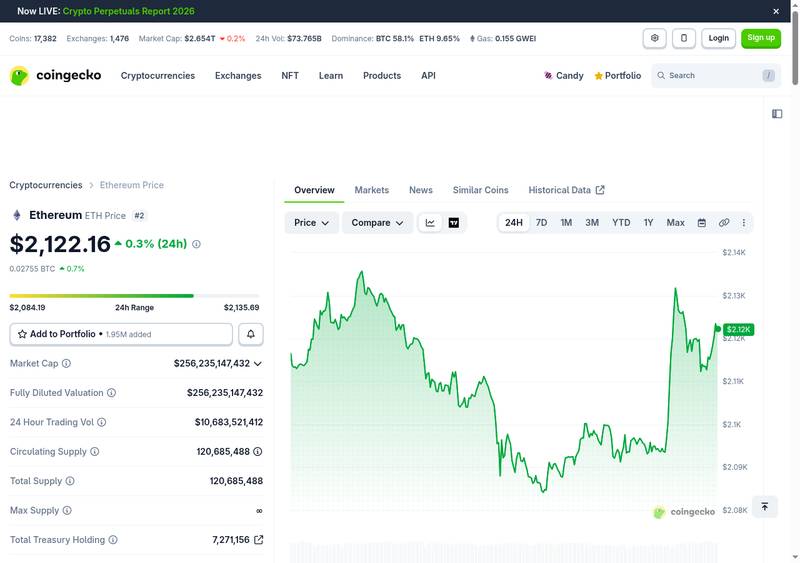
ETH traded at $2,121.58 at press time, up 0.26% over 24 hours, with a market cap of $255.8 billion. At that price, SharpLink’s Q1 treasury position would be worth roughly $1.25 billion.
CEO Joseph Chalom called the index inclusion “a meaningful validation of SharpLink’s institutional-grade ETH treasury strategy,” adding that “Ethereum sits at the center of four secular trends reshaping finance today: stablecoins, tokenization, onchain finance, and the emerging agentic economy.”
At SharpLink, we’re building Ethereum-backed value per share with institutional-grade discipline and full transparency
Our mission is simple: accumulate ETH, stake ETH, and grow ETH-per-share as the most trusted Ethereum treasury in the world
That’s why our Board just… https://t.co/BqUR5vtpjE
— Sharplink (@Sharplink) August 22, 2025
Source: @Sharplink on X
According to unconfirmed reports, SharpLink’s ETH holdings may have grown to 872,984 ETH reflecting post-quarter accumulation, though the last audited figure remains 589,305 ETH as of March 31.
Why Russell Inclusion Forces U.S. Fund Exposure to Ethereum
Russell Index inclusion is not symbolic. Passively managed funds benchmarked to the Russell 2000 and Russell 3000 are required to hold constituent stocks in proportion to their index weight. When SBET enters the index on June 29, every fund tracking these benchmarks must buy shares.
Tom Lee of Fundstrat noted that passively managed index funds and ETFs typically hold 20-25% of a member company’s total market cap, representing a significant potential liquidity catalyst. He also observed that many active managers restrict their equity universe to Russell 1000 members, though SBET enters the broader Russell 2000.
The structural significance is clear: U.S. pension funds, 401(k) plans, and mutual funds that are prohibited from holding cryptocurrency directly can now gain indirect Ethereum exposure through an equity position in SharpLink. The distinction between holding ETH (blocked for many institutional mandates) and holding shares of a Nasdaq-listed company with an ETH treasury (permitted) is the regulatory arbitrage at the core of this strategy.
SharpLink’s institutional ownership has already reached 46% according to the latest 13F filings, suggesting that sophisticated investors recognized this dynamic before index inclusion formalized it.
The Corporate Ethereum Treasury Playbook
SharpLink is not operating in isolation. BitMine Immersion Technologies (BMNR) was also added to the Russell 3000 Index in the same 2026 reconstitution cycle. Both companies follow a playbook pioneered by Strategy (formerly MicroStrategy, MSTR), which was added to the Russell 1000 in June 2024 following a 146% share price surge tied to its Bitcoin accumulation strategy.
Where Strategy built its treasury around Bitcoin, SharpLink and BitMine have anchored theirs to Ethereum. The approach mirrors the same logic: accumulate a scarce digital asset on the corporate balance sheet, use public equity markets to raise capital for further purchases, and track a per-share metric that measures dilution-adjusted asset growth. Coverage of BitMine’s ETH holdings reaching 5.39 million tokens underscores the scale at which Ethereum treasury strategies are operating.
Other crypto-related companies joining the 2026 Russell reconstitution include Gemini Space Station (GEMI), Galaxy Digital, IREN Limited, CoreWeave, and Soluna Holdings, signaling that the crypto-in-public-equity trend is broadening well beyond a single company.
What Forced Passive Buying Means for ETH Demand
The connection between equity index inclusion and Ethereum demand is indirect but mechanical. As passive funds buy SBET shares, SharpLink’s market cap and access to capital increase. The company has explicitly committed to an “accumulate ETH, stake ETH, and grow ETH-per-share” strategy, meaning higher equity demand translates into further ETH purchases.
This dynamic creates a feedback loop: index inclusion drives share demand, share demand enables capital raises, capital raises fund ETH accumulation, and ETH accumulation supports the per-share metric that attracted institutional interest in the first place. This corporate treasury approach to building Ethereum exposure echoes how stablecoin issuers like Tether maintain reserve strategies that indirectly influence broader crypto market dynamics.
The timing is notable. The crypto Fear & Greed Index sits at 34 (Fear), suggesting retail sentiment remains cautious. Yet institutional activity around Ethereum treasury stocks is moving in the opposite direction, with Russell inclusion representing a structural, calendar-driven catalyst independent of short-term market sentiment.
If multiple Ethereum treasury companies achieve index inclusion simultaneously, the aggregate effect compounds. SBET and BMNR entering the Russell indexes together means passive funds gain forced exposure to corporate ETH holdings through multiple positions, not just one.
Catalysts to Watch for Ethereum Treasury Stocks
The Russell reconstitution takes effect on June 29, 2026, when the actual rebalancing and associated buying pressure will occur. The next annual Russell reconstitution is scheduled for June 2027, with preliminary lists typically published in May.
SharpLink’s next earnings report will provide updated ETH holdings figures and reveal whether the company accelerated accumulation ahead of index inclusion. Investors tracking corporate Ethereum strategies should also monitor BitMine’s filings, as corporate crypto reserve strategies continue gaining traction across public companies.
Regulatory developments around corporate crypto holdings remain a variable. The SEC has not issued specific guidance restricting public companies from holding digital assets on their balance sheets, but any change in accounting treatment or disclosure requirements could affect the strategy’s viability.
Ethereum network catalysts, including spot ETH ETF flows and staking yield dynamics, will also influence treasury valuations. SharpLink’s staking rewards of 18,800 ETH since June 2025 demonstrate that Ethereum’s native yield adds a compounding element absent from Bitcoin treasury strategies.
FAQ: SharpLink, Russell Index, and Ethereum Treasury Stocks
What is the Russell 2000 Index?
The Russell 2000 is a stock market index measuring the performance of approximately 2,000 smaller-company U.S. equities. It is a subset of the broader Russell 3000 Index. Approximately $12.2 trillion in assets are benchmarked against the Russell US Indexes, meaning funds tracking the index must hold constituent stocks.
When does SharpLink’s Russell Index inclusion take effect?
The inclusion becomes effective on June 29, 2026, following the annual Russell reconstitution. FTSE Russell published the preliminary list of additions on May 22, 2026. The actual passive fund buying pressure occurs on and around the effective date.
Can U.S. mutual funds now invest in Ethereum through SharpLink?
Not directly. Buying SBET shares gives funds exposure to a company whose primary asset is Ethereum, but this is not equivalent to holding ETH or investing in a spot Ethereum ETF. The distinction matters: funds restricted from holding crypto directly can hold SharpLink equity because it is a Nasdaq-listed stock, not a digital asset.
How much Ethereum does SharpLink hold?
As of March 31, 2026, SharpLink held 589,305 ETH valued at approximately $1.2 billion. The company has reported continued accumulation since that date, with one source citing 872,984 ETH, though this higher figure has not been confirmed in audited filings.
Is this the same as a U.S. Ethereum ETF?
No. A spot Ethereum ETF directly holds ETH and tracks its price. SharpLink is an operating company that uses Ethereum as its primary treasury asset. Its stock price reflects company-specific factors, including management decisions, share dilution, and operational costs, in addition to ETH price movements.
Disclaimer: This article is for informational purposes only and does not constitute financial or investment advice. Cryptocurrency and digital asset markets carry significant risk. Always do your own research before making decisions.
No tags available.


Other Posts








- China, US Conclude Trade Talks with Focus on Cooperation
- Crypto Weekly: NYSE Backs OKX, Kraken Gets Fed Access, BTC Sells
- Court Upholds Fed’s Rejection of Custodia Bank’s Request
- Former CFO Convicted for $35M Fraudulent Crypto Investment
- DeriW Launches Edge Hour Trading Competition Platform for Derivatives Traders
- Michael Saylor Denies Bitcoin Sell-Off Amid Large BTC Transfer
- Buy Dogecoin on eToro: Step-by-Step Guide for Beginners (2024)
- Kazakhstan Explores Crypto Reserves Backed by National Funds
- JPMorgan Increases Holdings in BlackRock’s Bitcoin ETF
- Nordea Bank Introduces Bitcoin ETP Trading for Nordic Customers
- XRP Spot ETF Launches on Nasdaq Amid Market Fluctuations
- Peter Schiff Challenges Michael Saylor on MSTR’s Business Model
- Thailand Orders Worldcoin to Delete 1.2 Million Biometric Records
- UK Proposes New DeFi Tax Framework to Ease User Burden
- WLFI Under Fire: Analyst Warns Hyperliquid Could Be Next
- Ancient Ethereum Whale Moves $1.19 Billion After Decade
- BlackRock Receives Large Crypto Transfers from Coinbase
- SEC Scrutiny on ALT5 Sigma’s Leadership Disclosure Timing
- Yala Injects $5.5 Million Amid Recovery Efforts
- Radiant Capital Faces $50M Loss in Major Security Breach
- China, US Conclude Trade Talks with Focus on Cooperation
- Crypto Weekly: NYSE Backs OKX, Kraken Gets Fed Access, BTC Sells
- Court Upholds Fed’s Rejection of Custodia Bank’s Request
- Former CFO Convicted for $35M Fraudulent Crypto Investment
- DeriW Launches Edge Hour Trading Competition Platform for Derivatives Traders
- Michael Saylor Denies Bitcoin Sell-Off Amid Large BTC Transfer
- Buy Dogecoin on eToro: Step-by-Step Guide for Beginners (2024)
- Kazakhstan Explores Crypto Reserves Backed by National Funds
- JPMorgan Increases Holdings in BlackRock’s Bitcoin ETF
- Nordea Bank Introduces Bitcoin ETP Trading for Nordic Customers
- XRP Spot ETF Launches on Nasdaq Amid Market Fluctuations
- Peter Schiff Challenges Michael Saylor on MSTR’s Business Model
- Thailand Orders Worldcoin to Delete 1.2 Million Biometric Records
- UK Proposes New DeFi Tax Framework to Ease User Burden
- WLFI Under Fire: Analyst Warns Hyperliquid Could Be Next
- Ancient Ethereum Whale Moves $1.19 Billion After Decade
- BlackRock Receives Large Crypto Transfers from Coinbase
- SEC Scrutiny on ALT5 Sigma’s Leadership Disclosure Timing
- Yala Injects $5.5 Million Amid Recovery Efforts
- Radiant Capital Faces $50M Loss in Major Security Breach
- China, US Conclude Trade Talks with Focus on Cooperation
- Crypto Weekly: NYSE Backs OKX, Kraken Gets Fed Access, BTC Sells
- Court Upholds Fed’s Rejection of Custodia Bank’s Request
- Former CFO Convicted for $35M Fraudulent Crypto Investment
- DeriW Launches Edge Hour Trading Competition Platform for Derivatives Traders
- Michael Saylor Denies Bitcoin Sell-Off Amid Large BTC Transfer
- Buy Dogecoin on eToro: Step-by-Step Guide for Beginners (2024)
- Kazakhstan Explores Crypto Reserves Backed by National Funds
- JPMorgan Increases Holdings in BlackRock’s Bitcoin ETF
- Nordea Bank Introduces Bitcoin ETP Trading for Nordic Customers
- XRP Spot ETF Launches on Nasdaq Amid Market Fluctuations
- Peter Schiff Challenges Michael Saylor on MSTR’s Business Model
- Thailand Orders Worldcoin to Delete 1.2 Million Biometric Records
- UK Proposes New DeFi Tax Framework to Ease User Burden
- WLFI Under Fire: Analyst Warns Hyperliquid Could Be Next
- Ancient Ethereum Whale Moves $1.19 Billion After Decade
- BlackRock Receives Large Crypto Transfers from Coinbase
- SEC Scrutiny on ALT5 Sigma’s Leadership Disclosure Timing
- Yala Injects $5.5 Million Amid Recovery Efforts
- Radiant Capital Faces $50M Loss in Major Security Breach

Exploit Drains Bitcoin Lightning Payment Servers: What Happened

New XRP Ledger Amendments Target $530M in Tokenized Wall Street Assets

U.S. sanctions two more Iranian crypto exchanges amid enforcement push
Bybit Sues North Korea and Lazarus Group, Secures Preliminary Injunction Freezing Stolen Assets in Landmark Crypto Asset Recovery Effort

Spindex’s Real-Time Data Pipeline Surpasses 150 Million Tracked Gaming Events