Crypto Liquidations Top $70M in One Hour as BTC Hits $45.65M
The crypto market recorded more than $70 million in liquidations within a single hour, with Bitcoin accounting for $45.65 million of the total, highlighting the degree of leveraged positioning across derivatives markets.
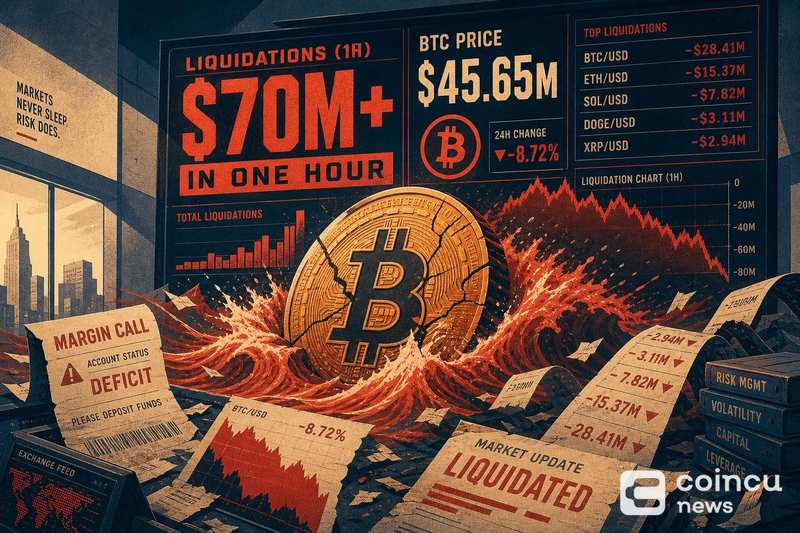
The rapid forced closure of positions signals that a significant number of traders were caught offside during a sharp price move. Liquidations occur when a leveraged position loses enough value that the exchange forcibly closes it to prevent further losses, returning whatever collateral remains. For related coverage, see Ethereum Monthly Transactions Top 70M as Median Fee Hits Record Low.
A $70 million liquidation event compressed into one hour is notable not for the dollar figure alone but for the speed. Liquidations of that magnitude over a full day are routine, but a single-hour concentration points to a sudden, directional move that swept through clustered stop levels and margin thresholds. For related coverage, see Bitmine Immersion Technologies (BMNR) Announces Total Crypto and Cash Holdings Top $11.1 Billion Now.
Bitcoin Absorbed Nearly Two-Thirds of the Liquidation Wave
Bitcoin’s $45.65 million share represented roughly 65% of the total liquidations recorded in that window, according to Coinglass liquidation data. That concentration is consistent with BTC’s role as the most heavily traded asset in crypto derivatives markets. For related coverage, see South Korea to Introduce Civil Seizure Rules for Crypto Assets on October 1.
When Bitcoin moves sharply, it tends to drag correlated assets with it. The remaining roughly $25 million in liquidations likely spread across major altcoins, though a precise asset-by-asset breakdown beyond BTC was not confirmed at the time of reporting. For related coverage, see CertiK Hack3D Report: Web3 Losses Top $1.3B in H1 2026.
BTC’s outsized share also reflects how much open interest in perpetual futures is denominated in Bitcoin. Traders using high leverage on BTC positions face tighter liquidation bands, meaning even moderate percentage moves can trigger cascading forced closures. For related coverage, see Coinbase to List Grove (GROVE): What the Listing Means.
What One-Hour Liquidation Spikes Reveal About Leverage
Forced liquidations differ from ordinary spot selling. In spot markets, a seller chooses to exit. In leveraged derivatives, the exchange closes the position automatically once margin requirements are breached. The distinction matters because liquidations can accelerate a move rather than simply reflect it.
When a cluster of leveraged positions gets liquidated, the exchange sells (or buys) the underlying collateral into the market, adding directional pressure that can trigger further liquidations. This feedback loop is what produces sharp, fast wicks on price charts, similar to the dynamics seen when Ethereum transaction volumes surge and network conditions shift rapidly.
The one-hour time frame suggests that positioning was crowded on one side of the trade. Whether the liquidations were predominantly long or short was not confirmed in available data, but the speed of the unwind points to a directional consensus that broke down quickly.
Risk Signals for Traders Watching Derivatives Markets
A liquidation spike of this scale serves as a volatility marker. It does not, on its own, confirm whether the broader trend is reversing or continuing. What it does confirm is that leverage was elevated and that a meaningful number of positions were sized too aggressively for the volatility that materialized.
For traders managing open positions, the event underscores the importance of margin buffers. Tight stop-losses and high leverage create fragile positions that are vulnerable to exactly this type of rapid market move, a risk that extends well beyond BTC-only exposure given Bitcoin’s influence on broader crypto market valuations.
Liquidation data also functions as a sentiment indicator. When leverage builds up in one direction and gets flushed, it can reset positioning and create conditions for the next leg, though the direction of that leg depends on factors beyond the liquidation event itself.
FAQ
What is a crypto liquidation?
A liquidation occurs when an exchange forcibly closes a leveraged trading position because the trader’s collateral no longer meets the minimum margin requirement. The exchange sells the collateral to cover the position, and the trader loses part or all of their deposited margin.
Why did Bitcoin account for such a large share of the liquidations?
Bitcoin is the most liquid and most heavily traded asset in crypto derivatives markets. More open interest is concentrated in BTC perpetual futures than in any other single asset, which means BTC naturally absorbs the largest share of liquidations during broad market volatility events.
Does a one-hour liquidation spike confirm a trend reversal?
Not necessarily. A liquidation spike confirms that leverage was elevated and that positions were forcibly closed. It resets some of the crowded positioning in the market but does not, by itself, determine whether prices will continue in the direction of the liquidation move or reverse. Subsequent price action, volume, and new positioning data provide more reliable trend signals.
Disclaimer: This article is for informational purposes only and does not constitute financial or investment advice. Cryptocurrency and digital asset markets carry significant risk. Always do your own research before making decisions.
No tags available.


Other Posts








- China, US Conclude Trade Talks with Focus on Cooperation
- Court Upholds Fed’s Rejection of Custodia Bank’s Request
- Crypto Weekly: NYSE Backs OKX, Kraken Gets Fed Access, BTC Sells
- Former CFO Convicted for $35M Fraudulent Crypto Investment
- DeriW Launches Edge Hour Trading Competition Platform for Derivatives Traders
- Michael Saylor Denies Bitcoin Sell-Off Amid Large BTC Transfer
- Buy Dogecoin on eToro: Step-by-Step Guide for Beginners (2024)
- Kazakhstan Explores Crypto Reserves Backed by National Funds
- JPMorgan Increases Holdings in BlackRock’s Bitcoin ETF
- Nordea Bank Introduces Bitcoin ETP Trading for Nordic Customers
- XRP Spot ETF Launches on Nasdaq Amid Market Fluctuations
- Peter Schiff Challenges Michael Saylor on MSTR’s Business Model
- Thailand Orders Worldcoin to Delete 1.2 Million Biometric Records
- UK Proposes New DeFi Tax Framework to Ease User Burden
- WLFI Under Fire: Analyst Warns Hyperliquid Could Be Next
- Ancient Ethereum Whale Moves $1.19 Billion After Decade
- BlackRock Receives Large Crypto Transfers from Coinbase
- SEC Scrutiny on ALT5 Sigma’s Leadership Disclosure Timing
- Yala Injects $5.5 Million Amid Recovery Efforts
- Radiant Capital Faces $50M Loss in Major Security Breach
- China, US Conclude Trade Talks with Focus on Cooperation
- Court Upholds Fed’s Rejection of Custodia Bank’s Request
- Crypto Weekly: NYSE Backs OKX, Kraken Gets Fed Access, BTC Sells
- Former CFO Convicted for $35M Fraudulent Crypto Investment
- DeriW Launches Edge Hour Trading Competition Platform for Derivatives Traders
- Michael Saylor Denies Bitcoin Sell-Off Amid Large BTC Transfer
- Buy Dogecoin on eToro: Step-by-Step Guide for Beginners (2024)
- Kazakhstan Explores Crypto Reserves Backed by National Funds
- JPMorgan Increases Holdings in BlackRock’s Bitcoin ETF
- Nordea Bank Introduces Bitcoin ETP Trading for Nordic Customers
- XRP Spot ETF Launches on Nasdaq Amid Market Fluctuations
- Peter Schiff Challenges Michael Saylor on MSTR’s Business Model
- Thailand Orders Worldcoin to Delete 1.2 Million Biometric Records
- UK Proposes New DeFi Tax Framework to Ease User Burden
- WLFI Under Fire: Analyst Warns Hyperliquid Could Be Next
- Ancient Ethereum Whale Moves $1.19 Billion After Decade
- BlackRock Receives Large Crypto Transfers from Coinbase
- SEC Scrutiny on ALT5 Sigma’s Leadership Disclosure Timing
- Yala Injects $5.5 Million Amid Recovery Efforts
- Radiant Capital Faces $50M Loss in Major Security Breach
- China, US Conclude Trade Talks with Focus on Cooperation
- Court Upholds Fed’s Rejection of Custodia Bank’s Request
- Crypto Weekly: NYSE Backs OKX, Kraken Gets Fed Access, BTC Sells
- Former CFO Convicted for $35M Fraudulent Crypto Investment
- DeriW Launches Edge Hour Trading Competition Platform for Derivatives Traders
- Michael Saylor Denies Bitcoin Sell-Off Amid Large BTC Transfer
- Buy Dogecoin on eToro: Step-by-Step Guide for Beginners (2024)
- Kazakhstan Explores Crypto Reserves Backed by National Funds
- JPMorgan Increases Holdings in BlackRock’s Bitcoin ETF
- Nordea Bank Introduces Bitcoin ETP Trading for Nordic Customers
- XRP Spot ETF Launches on Nasdaq Amid Market Fluctuations
- Peter Schiff Challenges Michael Saylor on MSTR’s Business Model
- Thailand Orders Worldcoin to Delete 1.2 Million Biometric Records
- UK Proposes New DeFi Tax Framework to Ease User Burden
- WLFI Under Fire: Analyst Warns Hyperliquid Could Be Next
- Ancient Ethereum Whale Moves $1.19 Billion After Decade
- BlackRock Receives Large Crypto Transfers from Coinbase
- SEC Scrutiny on ALT5 Sigma’s Leadership Disclosure Timing
- Yala Injects $5.5 Million Amid Recovery Efforts
- Radiant Capital Faces $50M Loss in Major Security Breach


Sources: Trump Expected to Attend White House Meeting With Crypto CEOs

Bitcoin Mining Rigs Shut Down in Capital of Major Mining Power
Bitmine Immersion Technologies Announces Record and Payment Dates for Cash Dividends on 9.50% Series A Perpetual Preferred Stock
Crypto Player Takes Home $1.749M After a Million PSG Bet on 1win