South Korea to Introduce Civil Seizure Rules for Crypto Assets on October 1
South Korea is set to introduce civil seizure rules for crypto assets on October 1, marking a significant step in the country’s effort to bring digital assets under the same legal enforcement framework that applies to traditional property.
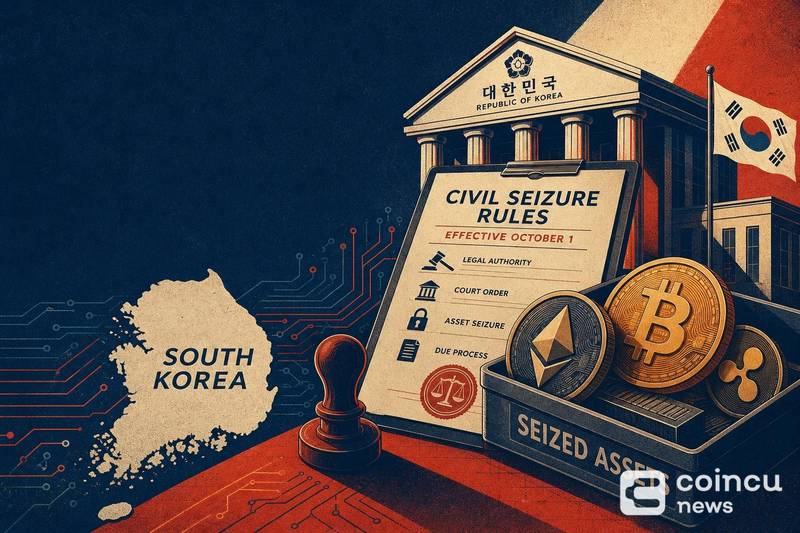
The development, reported by the Seoul Economic Daily, signals that South Korea’s Supreme Court is moving to codify procedures for seizing cryptocurrency in civil cases. The rule change would establish a formal legal basis for courts to treat crypto holdings as attachable assets in debt recovery and other civil proceedings. For related coverage, see Crypto Fear & Greed Index at 24 Signals Extreme Fear in the Market.
What Civil Seizure Rules for Crypto Assets Actually Mean
Civil seizure, in legal terms, refers to the court-ordered attachment of a debtor’s assets to satisfy a judgment or secure a claim. Until now, South Korean courts have lacked a standardized process for applying this mechanism to cryptocurrency.
The new rules would allow creditors to petition courts to freeze and seize crypto assets held by debtors, similar to how bank accounts or real estate can be seized under existing civil enforcement law. This represents a policy shift that formally recognizes crypto as property subject to court orders.
It is important to note that the confirmed details remain limited to the core announcement. The specific procedural mechanics, such as how exchanges will be required to comply with seizure orders or how self-custodied wallets will be handled, have not yet been publicly detailed.
Why the October 1 Start Date Matters
The fixed October 1 implementation date indicates this is a scheduled regulatory change moving through formal channels, not a proposal or discussion draft. A concrete rollout date suggests the underlying legal amendments have already been finalized or are in their final stages.
For crypto holders, exchanges, and legal practitioners in South Korea, the roughly three-month window between now and October 1 represents the preparation period. Exchanges operating in the country will likely need to develop or update internal processes to respond to court-issued seizure orders.
The timing also places South Korea among a growing number of jurisdictions working to integrate crypto assets into existing legal enforcement systems. The UK recently pushed a property bill to recognize crypto as a legitimate asset, reflecting a broader global trend toward legal clarity for digital holdings.
Who Could Be Affected
The most directly affected parties would be individuals holding crypto assets who are subject to civil judgments, such as unpaid debts, divorce settlements, or contractual disputes. Creditors with court orders would gain a new enforcement tool.
Licensed crypto exchanges operating in South Korea, known as Virtual Asset Service Providers (VASPs), would likely serve as intermediaries in the seizure process. These platforms already comply with know-your-customer requirements under the country’s existing framework, which could facilitate asset identification.
Several open questions remain. It is unclear whether the rules will apply to all types of crypto assets or only those held on regulated exchanges. The treatment of decentralized wallets, staked assets, and DeFi positions has not been addressed in available reporting.
South Korea’s Broader Crypto Regulatory Direction
South Korea has been one of the more active regulators in the crypto space in Asia. The country implemented the Virtual Asset Users Protection Act in 2024, which established investor protection requirements and gave the Financial Services Commission (FSC) oversight authority over digital asset markets.
The move toward civil seizure rules builds on this foundation. South Korean regulators have also been reviewing platforms like Polymarket over concerns about illegal gambling, demonstrating an enforcement posture that extends across different types of crypto activity.
The civil seizure framework addresses a gap that has existed in many jurisdictions: while criminal authorities in South Korea have previously seized crypto in fraud and money laundering cases, civil courts lacked equivalent tools. The October 1 rules would close that gap.
Other countries are grappling with similar questions. South Africa’s tax authority recently issued crypto tax guidance as part of its own effort to bring digital assets into established legal and fiscal frameworks, and the SARS draft guidance set an August 31 feedback deadline, underscoring how governments worldwide are working on parallel timelines.
FAQ About South Korea’s New Crypto Seizure Rules
What is changing on October 1?
South Korea plans to implement formal rules that allow civil courts to order the seizure of crypto assets. This creates a legal procedure for attaching digital holdings in civil cases such as debt recovery.
Which assets or parties could be affected?
Crypto holders who are subject to civil court judgments and the exchanges that custody their assets are the most likely affected parties. Creditors seeking to enforce judgments would gain the ability to target crypto holdings.
What remains unclear?
The full procedural details, including how seizure orders will be executed against self-custodied wallets, whether all token types are covered, and what compliance obligations exchanges will face, have not been publicly released as of this reporting. Further guidance from South Korea’s Supreme Court or the FSC is expected before the October 1 effective date.
Additional source references: source document 1.
Disclaimer: This article is for informational purposes only and does not constitute financial or investment advice. Cryptocurrency and digital asset markets carry significant risk. Always do your own research before making decisions.
No tags available.


Other Posts








- China, US Conclude Trade Talks with Focus on Cooperation
- Court Upholds Fed’s Rejection of Custodia Bank’s Request
- Crypto Weekly: NYSE Backs OKX, Kraken Gets Fed Access, BTC Sells
- Former CFO Convicted for $35M Fraudulent Crypto Investment
- DeriW Launches Edge Hour Trading Competition Platform for Derivatives Traders
- Michael Saylor Denies Bitcoin Sell-Off Amid Large BTC Transfer
- Buy Dogecoin on eToro: Step-by-Step Guide for Beginners (2024)
- Kazakhstan Explores Crypto Reserves Backed by National Funds
- JPMorgan Increases Holdings in BlackRock’s Bitcoin ETF
- Nordea Bank Introduces Bitcoin ETP Trading for Nordic Customers
- XRP Spot ETF Launches on Nasdaq Amid Market Fluctuations
- Peter Schiff Challenges Michael Saylor on MSTR’s Business Model
- Thailand Orders Worldcoin to Delete 1.2 Million Biometric Records
- UK Proposes New DeFi Tax Framework to Ease User Burden
- WLFI Under Fire: Analyst Warns Hyperliquid Could Be Next
- Ancient Ethereum Whale Moves $1.19 Billion After Decade
- BlackRock Receives Large Crypto Transfers from Coinbase
- SEC Scrutiny on ALT5 Sigma’s Leadership Disclosure Timing
- Yala Injects $5.5 Million Amid Recovery Efforts
- Radiant Capital Faces $50M Loss in Major Security Breach
- China, US Conclude Trade Talks with Focus on Cooperation
- Court Upholds Fed’s Rejection of Custodia Bank’s Request
- Crypto Weekly: NYSE Backs OKX, Kraken Gets Fed Access, BTC Sells
- Former CFO Convicted for $35M Fraudulent Crypto Investment
- DeriW Launches Edge Hour Trading Competition Platform for Derivatives Traders
- Michael Saylor Denies Bitcoin Sell-Off Amid Large BTC Transfer
- Buy Dogecoin on eToro: Step-by-Step Guide for Beginners (2024)
- Kazakhstan Explores Crypto Reserves Backed by National Funds
- JPMorgan Increases Holdings in BlackRock’s Bitcoin ETF
- Nordea Bank Introduces Bitcoin ETP Trading for Nordic Customers
- XRP Spot ETF Launches on Nasdaq Amid Market Fluctuations
- Peter Schiff Challenges Michael Saylor on MSTR’s Business Model
- Thailand Orders Worldcoin to Delete 1.2 Million Biometric Records
- UK Proposes New DeFi Tax Framework to Ease User Burden
- WLFI Under Fire: Analyst Warns Hyperliquid Could Be Next
- Ancient Ethereum Whale Moves $1.19 Billion After Decade
- BlackRock Receives Large Crypto Transfers from Coinbase
- SEC Scrutiny on ALT5 Sigma’s Leadership Disclosure Timing
- Yala Injects $5.5 Million Amid Recovery Efforts
- Radiant Capital Faces $50M Loss in Major Security Breach
- China, US Conclude Trade Talks with Focus on Cooperation
- Court Upholds Fed’s Rejection of Custodia Bank’s Request
- Crypto Weekly: NYSE Backs OKX, Kraken Gets Fed Access, BTC Sells
- Former CFO Convicted for $35M Fraudulent Crypto Investment
- DeriW Launches Edge Hour Trading Competition Platform for Derivatives Traders
- Michael Saylor Denies Bitcoin Sell-Off Amid Large BTC Transfer
- Buy Dogecoin on eToro: Step-by-Step Guide for Beginners (2024)
- Kazakhstan Explores Crypto Reserves Backed by National Funds
- JPMorgan Increases Holdings in BlackRock’s Bitcoin ETF
- Nordea Bank Introduces Bitcoin ETP Trading for Nordic Customers
- XRP Spot ETF Launches on Nasdaq Amid Market Fluctuations
- Peter Schiff Challenges Michael Saylor on MSTR’s Business Model
- Thailand Orders Worldcoin to Delete 1.2 Million Biometric Records
- UK Proposes New DeFi Tax Framework to Ease User Burden
- WLFI Under Fire: Analyst Warns Hyperliquid Could Be Next
- Ancient Ethereum Whale Moves $1.19 Billion After Decade
- BlackRock Receives Large Crypto Transfers from Coinbase
- SEC Scrutiny on ALT5 Sigma’s Leadership Disclosure Timing
- Yala Injects $5.5 Million Amid Recovery Efforts
- Radiant Capital Faces $50M Loss in Major Security Breach

Israel’s Bank Leumi to Revisit Bitcoin Trading: Key Implications


Norway Wealth Fund’s Indirect Bitcoin Exposure Reaches Record High as Strategy Makes Up 86%
Bitmine Immersion Technologies Announces Record and Payment Dates for Cash Dividends on 9.50% Series A Perpetual Preferred Stock

Crypto Player Takes Home $1.749M After a Million PSG Bet on 1win